United Ostomy Associations of America
  • HOME
  • OSTOMY INFORMATION
    • Ostomy Information
      • What Is An Ostomy?
      • Living with an Ostomy: FAQs
      • Diet + Nutrition
      • Ostomy Skin Care
      • Sexuality
      • Bill Of Rights
      • New Ostomy Patient Guide
    • My Ostomy
      • Ileostomy
      • Colostomy
      • Urostomy
      • J-Pouch
      • Continent Diversions + Other Ostomy Types
      • Temporary Ostomy
      • Short Bowel Syndrome
      • Español
    • Children to Young Adults with Ostomies
      • Infant/Toddler (0-3 Years)
      • Preschool (3-5 Years)
      • Elementary School (6-9 Years)
      • Pre-Adolescent (10-13 Years)
      • Adolescent (14-18 Years)
      • Young Adult (18-25 Years)
      • Parents & Clinicians Resources
      • Know Your Rights
      • What To Expect After Surgery
      • Odor Control
      • Fast Facts
      • Ostomy Game
    • Crohn’s Disease & Ulcerative Colitis Information
      • Defining, Caring and Treating
      • Preparing for Ostomy Surgery
      • Common Issues, Managing Diet, Mental Health
      • Intimacy, Fertility and Pregnancy
      • Resources
    • General Information
      • UOAA Ostomy Marketplace
      • Product + Supply Information
      • UOAA Resources Library
      • Resources for Nurses/Home Health
      • Travel Tips + TSA
      • Donate Your Ostomy Supplies
      • Emergency Supplies
      • Related Links
      • UOAA Virtual Ostomy Clinic
      • Outpatient Ostomy Services Locator
  • SUPPORT
      • discussion
        Ostomy 101:
        Easily communicate “What is an ostomy?" with our infographic.

        Read More

    • Find Support
      • Support Group Finder
      • Support Group Websites
      • UOAA Virtual Ostomy Clinic
      • Online Peer and Ostomy Support Programs
      • Outpatient Ostomy Services Locator
      • Find a Mental Health Provider
      • Find an Ostomy Nurse
      • Online Discussion Board
      • Apps for Ostomates
      • Emotional Concerns
    • Connect With Us
      • Start/Affiliate Your Group With UOAA
      • Resources For ASGs
      • National Membership
      • Sign Up for Our E-Newsletter
    • Participate
      • Attend An Event
      • Become An Advocate
      • Join Us for a Conference
      • Make A Donation
      • Become a Member of The Phoenix Society
      • Donate Your Ostomy Supplies
      • Take A Survey
  • ADVOCACY
      • portal
        Roadmap to Establishing Outpatient Ostomy Services
        Documents that are available as PDFs to download and print.

        Read More

    • About
      • Advocacy Program
      • Advocacy Priorities
      • 10 Questions to Help You Speak Up and Self-Advocate
    • Get Involved
      • Understanding the Medicare Competitive Bidding Program 2025 Ruling
      • Take Action
      • Join Advocacy Network
      • How to Be An Ostomy Champion
      • Ostomy Awareness Day
      • Roadmap to Establishing Outpatient Ostomy Services
    • Tools and Resources Library
      • Non-Medical Switching Resources
      • Ostomy and Continent Diversion Patient Bill of Rights
      • Restroom Access Self-Advocacy Tools
      • Travel Tips + TSA Communication Card
      • Swimming with an Ostomy
      • Mythbusters Infographic
      • Workplace Resources
      • Aging with an Ostomy or CD
    • Take Control of your Healthcare
      • UOAA Virtual Ostomy Clinic
      • Know Your Ostomy Checklist
      • Know Your Ostomy Supplies Checklist
      • Physician Visit Checklist
      • Know Your Health Care Insurance
      • Know Your Pouching System
      • Know What’s in Your Medical Record
  • WHO WE ARE
      • Have a Question for Us?
        UOAA is a 501(c)(3) nonprofit organization that supports, empowers, and advocates for people who have had or who will have ostomy or continent diversion surgery.

        Contact Us

    • About Us
      • Our Mission + History
      • Our Leaders
      • National Sponsors + Partners
      • National Membership
      • Contact Us
    • How We Help
      • Advocacy
      • Awareness
      • Support
      • National Conference
      • Ostomy Nurse Scholarship
    • Get Involved
      • Volunteer
      • Become A Leader
      • Join A Committee
      • Career Opportunities
      • Sign Up for Our E-Newsletter
  • LATEST
  • EVENTS
    • Ostomy Awareness Day
    • Run For Resilience 5K
    • Ostomy Academy
    • Educational Webinars
    • 2025 National Conference
    • Calendar
  • GIVE NOW
  • SEARCH
  • Menu Menu

I Found My Calling in Life, But It Came at the Price of My Colon

Body Image, IBD, Ileostomy, J-Pouch, Patient Stories, Teens, Young Adult

What started with mozzarella sticks, orange chicken, and a giant chocolate chip cookie from Applebee’s changed the course of my life.

I was 17 years old, touring colleges with my parents and preparing for what I thought would be the next exciting chapter of my life when everything changed.

It started with bloody stools and abdominal cramping. At first, my symptoms were dismissed as hemorrhoids. During that time, after taking antibiotics for cystic hormonal acne, I developed C. difficile. Even after treatment, my symptoms persisted for weeks, and two months later a colonoscopy finally provided the answer: ulcerative colitis.

I was a senior in high school.

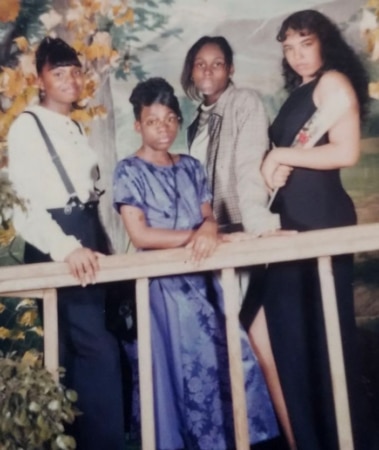
Senior Prom (2010): Weeks after my first surgery, I attended prom with my ileostomy.

Instead of worrying about prom, graduation, and college, I found myself navigating doctor’s appointments, medications, hospitalizations, and the uncertainty that comes with living with a chronic invisible illness. Over the next year, ulcerative colitis slowly stole pieces of my life. I was exhausted, constantly sick, and missing out on experiences that most teenagers take for granted. I kept wondering, “How can anyone live a normal life with this disease?” As my illness progressed, so did my fears. I found myself wondering if I would need surgery, whether anyone would notice my ostomy, if anyone would ever love me, and if life would ever feel normal again. At 17 years old, I wasn’t just grieving my health – I was grieving the future I thought I was going to have.

Throughout my illness and recovery, my parents – especially my mom – never stopped believing I would get my life back, even during the moments when I couldn’t believe it myself.

Eventually, after a year-long ulcerative colitis flare, my gastroenterologist referred me to a colorectal surgeon. I expected another consultation, another conversation about treatment options. Instead, after examining me that day, he told me my colon was too diseased to save and that I needed surgery. Just one week later, I was in the operating room. I had spent more than a year fighting to keep my colon, hoping each new medication would be the one that finally worked. Accepting surgery didn’t feel like a choice; it felt like admitting defeat. But my body had reached a point where there were no other options. What I couldn’t see then was that surgery wasn’t the end of my life as I knew it. It was my chance to get it back.

At 18 years old, I underwent the first stage of a planned three-stage J-pouch (IPAA) surgery. I woke up with an ileostomy, suddenly trying to make sense of a body that looked and functioned differently than it had before.  I couldn’t imagine it then, but the surgery I had fought so hard to avoid would become the beginning of my recovery.

Something unexpected happened almost immediately. For the first time in over a year, I wasn’t running to the bathroom. The urgency and frequency were gone. Even though I had just undergone major surgery, I felt better than I had in months. It was only then that I realized how sick I had truly been.

High School Graduation (2010): Graduating with my ileostomy just two months after undergoing major surgery.

I won’t pretend it was easy. Living with an ostomy at 18 brought fears I never imagined I’d face. Like many young people facing ostomy surgery, I was scared. I worried about how I looked, what other people would think, and whether I would ever feel normal again. Going back to high school with an ostomy felt almost as intimidating as the surgery itself. I wasn’t worried about classes – I was worried about using the bathroom, whether my ostomy would make noise, whether anyone would notice my pouch, and whether I would ever feel like a normal teenager again.

One of the most meaningful moments during that time occurred when a nurse arranged for me to meet another young woman living with an ostomy. Until that moment, I thought my future had been taken from me. Watching her laugh, smile, and live her life changed everything. For the first time, I could picture a future for myself. What I didn’t realize then was that this single act would shape the rest of my life.

From that day forward, little by little, I made a decision: I wasn’t going to let my ostomy stop me from living my life.

I returned to high school. I graduated with my class. I went to my senior prom. I started college. I dated. I wore a bikini. I continued lifeguarding and teaching swim lessons, worked at a boutique shoe store, and even posed for a photoshoot.

None of those moments happened because I stopped being afraid. They happened because I refused to let fear make my decisions.

Looking back, I realized my ostomy wasn’t taking my life away – it was giving it back.

During my first hospitalization, something happened that I never expected. The nurses who cared for me inspired me to become a nurse. Their compassion, patience, and encouragement showed me what it meant to care for someone during one of the most vulnerable moments of life. They didn’t just help me recover, they changed the trajectory of my life. While I was still in the hospital, I knew I wanted to become a nurse. I also knew that one day I wanted to care for patients facing the same fears and life-changing surgeries that I was experiencing. That dream guided every step of my career. I earned my Bachelor of Science in Nursing (BSN), became a Registered Nurse (RN), later completed my Master of Science (MSN) in Nursing as an Adult-Gerontology Acute Care Nurse Practitioner (AGACNP-BC), and ultimately achieved board certification as an Advanced Practice Wound, Ostomy, and Continence Nurse (CWOCN-AP) – the very field that had once cared for me.

I know what it feels like to believe that no one else understands. And I know how powerful it is when someone says, “I’ve been where you are.”

I didn’t become a Wound, Ostomy, and Continence Nurse despite my experience as a patient. I became one because of it.

Today, I work in colorectal surgery, caring for patients with colon and rectal cancer and other complex colorectal conditions. Many are preparing for life with a permanent ostomy, and I have the privilege of helping them navigate that journey. There’s something uniquely powerful about caring for patients when you’ve been the patient yourself.

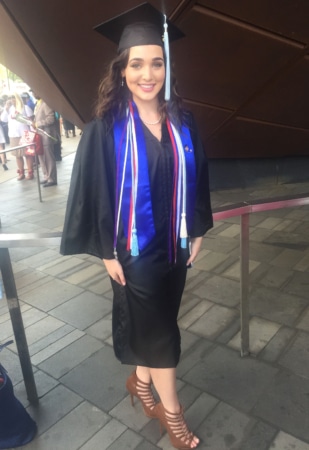
Bachelor of Science in Nursing (BSN) Graduation (2015): Earning my BSN and beginning the journey toward becoming the nurse I once needed.

Every day, I care for patients facing many of the same fears, decisions, and questions that once terrified me.  I sit beside patients preparing for ostomy surgery. I answer the questions they’re often afraid to ask.  Most importantly, I remind them that an ostomy is not the end of their story – it’s the beginning of a new chapter.

Because once upon a time, someone did that for me.

Because I’ve been there.

I know what it feels like to wake up after surgery and wonder what comes next.

I know what it feels like to look in the mirror and see a body that has changed.

I know what it feels like to believe that no one else understands.

And I know how powerful it is when someone says, “I’ve been where you are.”

More than a decade later, those fears didn’t end with me. I still hear the very same questions. With tears in their eyes, patients ask me the same questions I once asked myself:

Will anyone notice?

Will I ever feel normal again?

In that moment, I realize I’m not answering as someone who simply studied ostomy care.

I’m answering as someone who has lived it.

I often tell patients that while I would never have chosen ulcerative colitis, I wouldn’t trade the perspective it has given me. My surgeries didn’t restore the life I had before ulcerative colitis; they gave me a different life – one that still includes challenges, but also purpose, gratitude, and the privilege of helping others navigate the path I once walked.

Looking back, ulcerative colitis changed the trajectory of my life in ways I never could have imagined. If you had told my 18-year-old self that one day I would dedicate my career to caring for ostomy patients, I wouldn’t have believed you.

The disease that once felt like the greatest obstacle in my life ultimately led me to my purpose. It took me years to realize that while ulcerative colitis changed my body forever, it also revealed a calling I never knew I was meant to find. Every time I meet a frightened patient preparing for surgery, I think back to the young woman who met with me all those years ago.

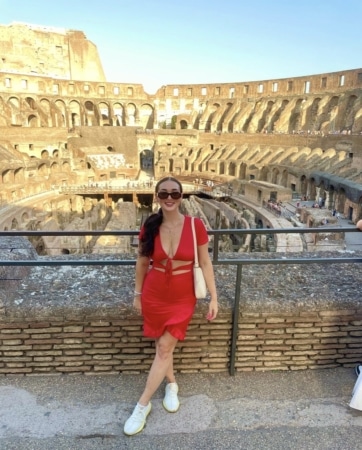
Living Life with a J-pouch: Sixteen years later, traveling the world and proving that life after ulcerative colitis surgery can be full of adventure.

She probably had no idea how much that conversation would shape my life.  For years, I kept my story mostly private, sharing it only when I thought it might help a patient. Sixteen years later, I’m sharing it publicly for the same reason someone once shared theirs with me: because sometimes, all it takes is seeing someone who’s been there to believe you’ll be okay.

I hope that by sharing my story, I can be that person for someone else.

Because sometimes the thing that changes your life isn’t the surgery itself.

It’s meeting someone who’s already walked the path you’re about to begin.

It’s realizing you don’t have to face it alone.

It’s realizing your story isn’t ending.

It’s just beginning. ❤️


Kelly Mendello, MSN, AGACNP-BC, CWOCN-AP, OCN, is a Colorectal surgery Nurse Practitioner, Advanced Practice Wound, Ostomy, and Continence Nurse, former ostomy patient, and ostomy advocate. Drawing from both her personal journey and her experience caring for patients with ostomies, she is passionate about patient education, mentorship, and helping others navigate life with confidence after ostomy surgery.

Instagram: @withkellyxo
Email:
kellymendellonp@gmail.com

July 27, 2026
https://www.ostomy.org/wp-content/uploads/2026/07/Kelly-story-woc-nurse.jpeg 779 1179 Contributor https://www.ostomy.org/wp-content/uploads/2017/02/UOAAlogofinal2.png Contributor2026-07-27 09:14:292026-07-27 10:49:45I Found My Calling in Life, But It Came at the Price of My Colon

Finding Bladder Cancer Support Everywhere

Bladder Cancer, Patient Stories, Support Resources, Urostomy, Young Adult

Younger women are not the typical bladder cancer and urostomy patients, but a variety of support and resources do exist to help you

By Liz Hiles

In August 2016, when I was diagnosed with bladder cancer, there was very little information about WOMEN and bladder cancer, let alone finding adequate support for anyone with bladder cancer.  Receiving a diagnosis that I hadn’t even heard of before, didn’t know the symptoms for, and had never heard of anyone I knew who had faced the diagnosis, my first thought at 40 years old was, “I’m too young to die.”

I really thought that I would surely die when I received my diagnosis, especially since I had been going to the Emergency Room periodically for years and was gaslit, ignored, and brushed off every single time. I was a deer in headlights and didn’t know what was coming or where to look for what I needed.

Going into a cancer diagnosis, many have cancer blinders on — meaning the only thing they can think about is cancer, treatment, and trying to survive. For 8 months to a year, I lived with those blinders on. I was too exhausted to think outside of any box or do any extra activities. When I went back to work in April 2017, it was all I could do for several months was make it through the work day and get home. Outside of that, I slept deeply.

While I was waiting for surgery, I tried finding a bladder cancer support group near me. There was absolutely nothing. When I asked my urology oncology surgeon, his only suggestion was to “try Facebook.” Yes, there absolutely are lots of groups on Facebook. I’m always a bit wary of those, as they are not always run ethically and are never moderated by licensed therapists or social workers, so the information and support you get is not always accurate or appropriate. I proceeded with caution there. 

At some point during treatment, I found some support websites and even an online chat via website or app that I was able to utilize. All focused on cancer in some way. They were moderately helpful, but I didn’t feel a strong connection, inclusivity on multiple levels, and a deeper understanding of my experiences. After I struck out at my local Cancer Support Community location, I recalled my WOC nurse telling me about an ostomy group. I couldn’t remember the name or find the information she gave me, so I called her up. After a brief but extremely helpful conversation about several issues I was having, I had the name of my local UOAA Affiliated Support Group written down and sought them out. 

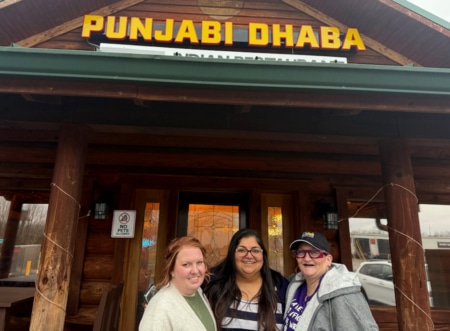
That’s really when the support factor clicked in for me. The first meeting I went to was a social one, at a local restaurant. We met for dinner. There was one gentleman who like me, was also a bladder cancer survivor with a urostomy. Everyone else had fecal diversions of various types. Still, I found more compassion, empathy, and understanding for everything I went through there than I did from any other source I had tried to date. 

Support is like putting together a salad and tossing it well. A salad is horrible with just lettuce – you need lots of other ingredients to make it delicious!

Since that time, I’ve expanded my support circles, finding the right mix of cancer, bladder cancer, young adult cancer, ostomy, and spoonie support. I have made connections via the internet, Zoom, and even in person at events like UOAA’s National Conference. My experiences have helped me through some of the most challenging times of the last 10 years.

When it comes to support, my advice to anyone facing a new diagnosis is always two-fold:

  1. Welcome support into your life. You will need it. 
  2. Try a plethora of different support venues: via social media, Zoom, or in-person. Try everything at least twice before making the decision of whether or not you will fit in with the group. 

No single group or organization will fit all of your resource or support needs. Support is like putting together a salad and tossing it well. A salad is horrible with just lettuce – you need lots of other ingredients to make it delicious!

Throughout the years, I have managed to come together with individuals and organizations like UOAA to build a wonderful support network for myself. Without support, I would not have made it this far. Without support, I would not have come into the various opportunities that I’ve been fortunate enough to experience and collaborate on. 

In January 2026, I had the opportunity to come together with the Tigerlily Foundation and fellow survivors, Dee Masters and Brittney Tellekampto to bring bladder cancer to the forefront of conversations in women’s health and bring more awareness to the disease beyond the stereotypical patient: old, white, chain-smoking, male. 

The organization chose to highlight the three of us various backgrounds and experiences. 

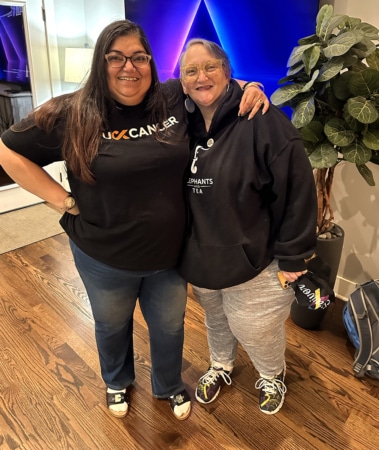
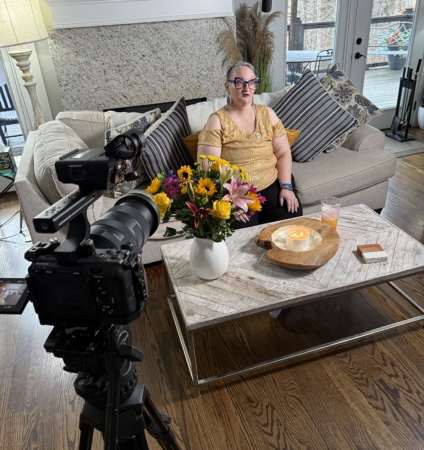
The three of us were flown into Nashville, TN, for a weekend retreat to film our personal bladder cancer stories and a panel discussion while getting to converse, support, and bond over being launched into a mutual club that no one ever wants to join: the cancer club. 

Support continues to help make my life complete. It drives me through the hard days and inspires me to pay acts of kindness forward. 

Dee Master is a woman of Indian descent living in the Knoxville, TN area, was diagnosed at 33 with a recurrence 4 years later. She has experienced multiple procedures, including numerous cystoscopies, undergone various treatments, and has managed to retain her bladder. 

Brittney Tellekamp was diagnosed  with Stage IV Metastatic Bladder Cancer at the age of 28 and underwent a radical cystectomy, full hysterectomy, lymphadenectomy, and received an ileal conduit (stoma). She is speaking out with TigerLilly about sexual health issues for young women with bladder cancer. 

One of the most common themes we noticed was the challenges we faced in finding support that fit our needs and how rare it was to find other young adult women in the bladder cancer realm – especially those willing to talk about their journeys. 

Finding support is a critical part of surviving treatment and succeeding in survivorship. Yet it is an area that is often overlooked or ignored by the clinical teams who treat cancer patients. 

On May 1, 2026, the Tigerlily Foundation launched its brand new bladder cancer awareness campaign with a new resource page going live on its website. Throughout May and June, more information will be shared, along with video releases of our stories and panel discussion. The organization also plans on concentrated social media posts in October in support of ostomy awareness as well. 

Support continues to help make my life complete. It drives me through the hard days and inspires me to pay acts of kindness forward. 

_______________________________________

Liz is now 50 years old. A lifelong Cincinnati resident, she works in a school system by day and in her free time, she spends it advocating for various health issues, including bladder cancer, young adult cancer and ostomies.  To connect with Liz, go to her Linktree.

Follow the Tigerlily Foundation on Facebook, Instagram, LinkedIn, TikTok, YouTube, and Bluesky to connect with this campaign as it rolls out. To To connect with Dee, find her on Instagram @mamadragon9.

May 14, 2026
https://www.ostomy.org/wp-content/uploads/2026/05/Copy-of-IMG_8797-scaled.jpg 2560 1920 Contributor https://www.ostomy.org/wp-content/uploads/2017/02/UOAAlogofinal2.png Contributor2026-05-14 08:58:402026-05-14 08:58:40Finding Bladder Cancer Support Everywhere

10 Tips for Intimacy with an Ostomy

Body Image, Colostomy, Digital Sponsor, Emotional Health, Ileostomy, Sexuality, Social Life, Urostomy, Young Adult

Life with an ostomy can stir up deeply vulnerable questions: Will anyone love me like this? Does my ostomy bag make me unattractive? How can I be intimate while managing it? These anxieties often settle in the quieter corners of ostomy life, where many ostomates fear their bodies may never be chosen or desired.

Chloe Olsen has spent her whole life learning what it means to live with an ostomy. In this blog, she draws on more than 20 years of lived experience to share an honest perspective on connection, communication, and confidence. Her insights offer reassurance, perspective, and a reminder to fellow ostomates that they are worthy of love without conditions.

10 tips for intimacy with an ostomy (from a 20+ year ostomate)

Unlike most other ostomates, I never had a “before my ostomy.” I didn’t have to relearn intimacy because I’ve had an ostomy my whole life. This means I learned intimacy with an ostomy bag—first crushes, first touch, first relationships. For me, there was no “before my ostomy” to mourn—just figuring things out in real time like everyone else.

This is the only body I’ve ever been intimate in. Every version of intimacy I’ve ever known has included my ostomy bag. And that’s why I know you don’t owe anyone everything.

This topic in particular is especially important to me because I didn’t grow up seeing bodies like mine being desired or sexualized. I had no idea what intimacy would look like for me because there wasn’t anyone like me out there talking about it. After a lifetime of trial and error, of tender moments and of ones I’d rather forget, I’m sharing my tried and tested intimacy tips for any ostomate who needs straightforward honesty—not sugarcoating.

  1. You don’t owe anyone your medical history.

When meeting someone new, we can sometimes feel obligated to share our medical past. Don’t forget—you get to decide when and how much you share. There were times I would over-explain out of fear, thinking clarity would protect me. It didn’t—boundaries did.

You are not obligated to provide any details you don’t want to share, and this includes any questions you don’t feel comfortable with. A simple explanation is enough.

  1. You get to decide when to tell someone about your ostomy.

The pressure of this used to weigh on me a lot. If I didn’t tell someone soon enough, I would feel as if I were lying to them somehow, like keeping this secret from them was a form of deception. But if I told them right away, it would sometimes change their view of me—or even the way they treated me.

My advice: if you really like someone, tell them about your ostomy bag as soon as possible, as soon as you feel comfortable. Personally, I would always tell them right away, because I find it to be an excellent detector of who isn’t meant to be.

  1. Phrasing is important. Confidence is everything.

If you do decide to tell your intimate partner about your ostomy, your own attitude can make the biggest difference. If you frame it as something positive, like that it gave you your life back, they probably will too! But if you say, “Now I’m forced to live with this for the rest of my life!” it gives your ostomy a negative connotation, and they may be more likely to react negatively as well.

I know it’s easier said than done, but confidence really is everything! If you go in with no fear, as if your ostomy is no big deal, it likely won’t be a big deal to them either.

  1. If someone is uncomfortable, it’s not a reflection of your self-worth.

Not everyone handles it well, and learning not to internalize those reactions took time. But over time, you learn the difference between curiosity and discomfort—and you stop internalizing reactions that don’t belong to you.

Discomfort doesn’t mean you’re undesirable. It means they’re not equipped for your body or your honesty—and that’s not yours to fix.

  1. One-night stands are NOT off the table.

This is one of the biggest things I wish someone had told me! Having only known ostomy life, I let the stigma surrounding it convince me that one-night stands weren’t possible for me—but that’s actually the furthest thing from the truth. Hearing from my close ostomate friends a little bit older than myself, I learned that it’s actually not a big deal. Although it can be scary at first (how would this random stranger react?), one-night stands with an ostomy are not harder, just more intentional. Only share what’s necessary, and prep more so you can think less.

Most importantly, make sure you feel safe. Believe it or not, your ostomy will likely not be their primary focus—in fact, they may not even notice it at all.

  1. Communication is key.

Intimacy isn’t mind-reading, it’s communication—and that goes both ways. At first, I didn’t know how to communicate effectively during intimacy. Partners would assume they could accidentally “break” my bag or hurt me somehow. I learned to speak up for myself through trial, error, and a lot of unlearning silence. Don’t be afraid to just tell them, “I’m not fragile,” or educate them in the moment so they feel comfortable. Communication doesn’t ruin the moment—it makes it possible, and more enjoyable when they better understand your body.

And if they don’t want to take that extra moment of care, then maybe they aren’t worth your time and energy, and that’s your choice to make. Remember—you can always back out or say no.

  1. Prep is not unsexy.

Emptying your ostomy bag beforehand, wearing something that makes you feel secure, maybe even putting on a fresh bag—all these extra steps we take are just taking care of your body, an important part of intimacy. I know it can detract from the spontaneity, but take it from me, you don’t want to risk having a leak during an intimate moment—major mood killer.

Trust me, it’s worth taking the extra time—having peace of mind changes everything.

  1. The right intimacy doesn’t make you feel like your body is a problem.

I’ve felt the difference between being accommodated and being wanted. And once you feel the latter, you stop settling for the former. For too long, I stayed in unhealthy relationships because I didn’t think I deserved better. I believed I was “defective” or “damaged,” and therefore not in a position to be picky or stand up for myself. It took a while, but once I let myself believe that I was worthy to be loved the way I wanted, I never looked back.

You’re not something to tolerate, work around, or “get past.” You’re not less deserving because of your ostomy. You’re the body someone gets to be close to.

  1. Desire without shame.

I grew up feeling a lot of shame around my body, not because of my ostomy, but because of what I was taught to believe about it. In navigating intimacy, I’ve learned that it’s okay to crave it, and it’s okay to communicate your needs.

Desire doesn’t disappear because you have an ostomy or disability—it adapts, like everything else.

  1. There’s no “right” way to do this.

Reminder: You don’t owe intimacy to prove confidence, healing, or normalcy. There’s no timeline for feeling ready. Confidence with intimacy isn’t a finish line. It shifts with age, partners, energy, and life. And that’s normal—ostomy or not. It comes with time and learning to be comfortable in your own body before you can be comfortable with someone else.

If you’re just learning intimacy in your body—you’re not behind, you’re doing it.

Find more support for intimacy with an ostomy on Instagram and in Coloplast’s free e‑book, The Ostomate’s Guide to Intimacy.

Coloplast 
develops products and services that make life easier for people with intimate healthcare needs. Working closely with the people who use our products, we create solutions that are sensitive to their special needs. Our business includes ostomy care, continence care, advanced wound care, interventional urology, and voice & respiratory care.

Chloe is a Coloplast product user who received compensation from Coloplast to provide this information. Each person’s situation is unique, so your experience may not be the same. Talk to your healthcare professional about which product might be right for you.

Follow Coloplast on Instagram, Facebook, and YouTube, or visit us online at https://www.coloplast.us/


Editor’s note: This blog is from a UOAA digital sponsor, Coloplast. Sponsor support along with donations from readers like you help to maintain our website and the free trusted resources of UOAA, a 501(c)(3) nonprofit organization.


February 11, 2026
https://www.ostomy.org/wp-content/uploads/2026/02/Chloe-Olsen-Intimacy-with-an-ostomy.png 550 1000 Contributor https://www.ostomy.org/wp-content/uploads/2017/02/UOAAlogofinal2.png Contributor2026-02-11 10:18:502026-02-11 15:38:3310 Tips for Intimacy with an Ostomy

Navigating Body Image After Ostomy Surgery

Body Image, Colostomy, Digital Sponsor, Emotional Health, Ileostomy, Ostomy Tips, Teens, Urostomy, Young Adult

When you get an ostomy, most of the advice you’ll hear is practical. It comes in boxes and routines: bags and baseplates, barrier strips and rings. There’s talk of wear time and skin prep, of what to eat and when to empty. These logistics matter, of course; they’re a necessary first step after a major surgery. But beneath this adjustment is often another layer of healing, one that goes beyond the physical.

An ostomy doesn’t just change how your body works. It can also change how you feel inside. It can shift how you see your body, yourself, and your worth, affecting everything from what you wear, to where you go, to how close you let others get. Amid all this change, you might even start to wonder: How could I ever accept myself like this?

For many, life with an ostomy involves the ongoing work of making peace with your body—to meet it not with shame, but with patience, gentleness, and ultimately acceptance. It’s about rebuilding trust with a body that may suddenly feel unfamiliar and allowing that body to once again feel like home.

Body image after ostomy surgery

More than just how you look, body image is about comfort, confidence, and feeling like yourself. Ostomy surgery can profoundly disrupt that sense of self-connection.

A 2018 research review found that poor body image is one of the most common emotional challenges after ostomy surgery. Even when recovery is technically going well—when a WOCN nurse smiles and says, “You’re doing great”—you might hear a voice inside that replies, “Yeah, right,” as waves of self-consciousness or grief roll in.

For many, social stigma only adds weight. Harmful myths that say ostomies are dirty or shameful can take root internally. One study found that nearly half of people with permanent colostomies experience this kind of stigma, which can erode emotional well-being and self-worth.

Even when surrounded by love, you might find yourself hiding. The shirt once worn with pride might get folded away, replaced by oversized clothes chosen more for camouflage than comfort. You might avoid mirrors, not out of vanity, but out of grief for a body that once felt like yours. Intimacy may feel distant, shadowed by the fear of being seen, touched, or rejected.

In all of this, you’re not alone.

What factors shape body image after ostomy surgery?

Body image isn’t fixed; it’s shaped by your history, current circumstances, and how you emotionally process change. Several key factors can influence how someone adjusts:

1. Age and stage of life: Research shows that younger adults often experience greater body image distress after ostomy surgery. This is a time when identity, sexuality, and self-expression are still being shaped—when you’re still learning who you are and how you want to be seen.

In this context, everyday moments can take on new complexity. You may find yourself doing quiet check-ins throughout the day: Is the bag visible? Is it full? Is it leaking? These small, repeated considerations can influence how you move through the world, especially in a culture where bodies with ostomies are rarely represented.

2. Reason for surgery. The reason behind an ostomy may also impact how you adjust to life with it. Even with the same procedure, the emotional meaning is shaped by the life story it enters—and that story can be the lens through which the body is seen.

Research suggests that people who undergo ostomy surgery due to cancer, for instance, may report lower levels of body image distress. While an ostomy can be life-saving in many contexts, cancer survivors may be more likely to see it that way: as a visible mark of survival and strength.

For others, the emotional meaning may feel more complex. When surgery follows years of chronic illness, misdiagnosis, or medical trauma, for example, the experience can carry different associations. Perhaps it’s not triumph, but relief, fatigue, or even resignation. One study found that some participants with inflammatory bowel disease (IBD) viewed their stoma as an embarrassing complication of their condition—something tied more to shame than strength.

But meaning isn’t fixed. With time, support, and self-compassion, your relationship with your ostomy can evolve, no matter the reason behind it.

3. Temporary vs. permanent ostomy. Research also shows that temporary stomas can lead to greater body image distress. When your ostomy isn’t permanent, it can feel like you’re living in a body that doesn’t quite belong to you—just a version you’re passing through. This in-between state can create a kind of psychological limbo: it’s hard to fully grieve what’s been lost and hard to fully accept what is.

While permanent ostomies can bring their own grief, they may also bring a sense of clarity that limbo does not. When you know this is your body now, you may be better equipped to make peace with it.

What can help: Tips for navigating body image after ostomy surgery

1. Find the right ostomy products for you. It’s hard to feel at ease in your body when the products meant to support it don’t feel reliable. Worrying about leaks, irritation, or a poor fit can quietly wear on your confidence. But when your pouching system truly works for you, it can create space for deeper healing and acceptance.

If the medical look or rustling sound of your ostomy pouch makes you feel more self-conscious, know this: not all pouches are the same. Some are designed to move with your body, to bend and stretch as you do. Some fold into a smaller shape that tucks easily under clothes. Some come in colors like black or gray, offering an alternative to a medical beige. Pair these ostomy bags with supporting products like barrier strips and moldable rings, as needed, and you can find a system that fits both your ostomy and your life.

2. Remember what your body is for. After ostomy surgery—after the shock, the healing, and the slow return to everyday life—it’s easy to forget what your body is still doing for you.

It breathes without asking. It heals, even when you’re not watching. It adapts in ways you never expected, creating space for you to live the life you want. Your body allows you to laugh, cry, rest, move, connect, and wake up to a new day. Again and again, that is something worth honoring.

3. Focus on what lights you up. On tough body image days, it can help to shift your focus away from your body. Try asking:

  • What reminds me that I’m still me, despite all I’ve been through?
  • Who or what helps me feel seen beyond how I look?
  • What brings me joy, even for a moment?

Maybe it’s the warmth of your morning tea. A dog’s thumping tail when you pass through the door. A text that says, I get it.

These small lights matter. They can remind you that your life is bigger than managing a stoma, and that you’re here to live in ways that have nothing to do with appearance.

4. Let go of the timeline. Healing isn’t linear. There is no “right” time to feel okay in your body again. No checklist or countdown—just you, moving through it all in your own way, in your own time.

Some days might feel lighter, like body acceptance is just within reach. Other days may stir up discomfort or grief in places you thought had healed. That doesn’t mean you’re failing; it means you’re human. Release the pressure to arrive somewhere quickly and trust that just showing up for yourself is its own kind of progress.

Your body is still worthy after ostomy surgery

After ostomy surgery, your body is not broken. It is changed. It is not less worthy, just newly shaped.

You don’t have to love every part of it. You don’t have to feel grateful all the time. But your body, with its stoma and its pouch, is still here.

It’s still breathing. Still yours. And still deserving of care and peace.

References

Ayaz-Alkaya S. (2019). Overview of psychosocial problems in individuals with stoma: A review of literature. International wound journal, 16(1), 243–249. https://doi.org/10.1111/iwj.13018

Guo, L., Rohde, J., & Farraye, F. A. (2020). Stigma and disclosure in patients with inflammatory bowel disease. Inflammatory Bowel Diseases, 26(7), 1010–1016. https://doi.org/10.1093/ibd/izz260

Jayarajah, U., & Samarasekera, D. N. (2017). Psychological adaptation to alteration of body image among stoma patients: A descriptive study. Indian Journal of Psychological Medicine, 39(1), 63–68. https://doi.org/10.4103/0253-7176.198944

Mahjoubi, B., Mirzaei, R., Azizi, R., Jafarinia, M., & Zahedi-Shoolami, L. (2012). A cross-sectional survey of quality of life in colostomates: A report from Iran. Health and Quality of Life Outcomes, 10, 136. https://doi.org/10.1186/1477-7525-10-136

Simmons, K. L., Smith, J. A., Bobb, K. A., & Liles, L. L. (2007). Adjustment to colostomy: Stoma acceptance, stoma care self-efficacy and interpersonal relationships. Journal of Advanced Nursing, 60(6), 627–635. https://doi.org/10.1111/j.1365-2648.2007.04446.x

Yuan, J. M., Zhang, J. E., Zheng, M. C., & Bu, X. Q. (2018). Stigma and its influencing factors among Chinese patients with stoma. Psycho-Oncology, 27(6), 1565–1571. https://doi.org/10.1002/pon.4695

Coloplast develops products and services that make life easier for people with intimate healthcare needs. Working closely with the people who use our products, we create solutions that are sensitive to their special needs. Our business includes ostomy care, continence care, advanced wound care, interventional urology, and voice & respiratory care.

Follow Coloplast on Instagram, Facebook, and YouTube, or visit us online at https://www.coloplast.us/

Editor’s note: This blog is from a UOAA digital sponsor, Coloplast. Sponsor support along with donations from readers like you help to maintain our website and the free trusted resources of UOAA, a 501(c)(3) nonprofit organization.
July 30, 2025
https://www.ostomy.org/wp-content/uploads/2025/07/Blog-image-Body-Image-After-Ostomy-Surgery-Coloplast.png 550 1000 Contributor https://www.ostomy.org/wp-content/uploads/2017/02/UOAAlogofinal2.png Contributor2025-07-30 11:06:512025-07-30 11:06:51Navigating Body Image After Ostomy Surgery

Ostomy Anxiety: Horror in the Grocery Store?

Colostomy, Emotional Health, Ileostomy, Ostomy Basics, Ostomy Tips, Personal, Urostomy, Young Adult

By Robin Glover

Wallet, cell phone, keys…I’ve always had my essentials when I leave the house. But for the past several years, I’ve added something else to my checklist: ostomy supplies.

When you have an ostomy, you have to be ready for anything. The instant fill, the gas attack, and of course, the leak. Oh, the dreaded leak. It can happen anytime. Or, so it seems. But does it really?

I have this image in my head of catastrophe. There I am, in the middle of the grocery store aisle, my bag has completely fallen off as I stand in a puddle of stool that’s splashed across the floor while output shoots out of me like an over-the-top 80’s horror movie as I stand petrified, children crying out and everyone staring and pointing in disgust.

It always seems to be fear that holds me back more than my ostomy.

I mean, pretty worst-case-scenario stuff. But, it’s hard not to go there. Imagine, worrying about poop (or pee for urostomates) coming out of a hole in your stomach. Like, your front. Where everybody sees. This isn’t some “oopsie” you can pretend never happened. This is a big ol’ brown or yellow stain on the front of your shirt. And nobody’s been drinking coffee.

But is this image even real? I do have a tendency to imagine the worst. Some may even say it’s a talent. My therapist calls it a “cognitive distortion.”

In reality, I’ve had leaks in public. And that’s all they’ve ever been – leaks. Small little leaks that can be covered with tape until I’m able to get to a good spot. In the rare case (two times), it’s been a bigger leak, I was still able to get home and take care of it.

So, it’s fear more than reality. I’m scared of being embarrassed in public due to my ostomy bag. It’s a common fear. Everyone is afraid of being embarrassed. It’s a deep-rooted fear. But my ostomy seems to add a lack of control. I can control things like what I wear and how I act, but I have this stoma with a mind of its own.

It’s like having that “one friend.” Sure, they’re great at home when no one else is around, but take them out in public and you have to constantly worry about what they say. Or, perhaps what they ”blurt out” without warning. (However, unlike a loud friend, you are allowed to use tape to control ostomy pouch leaks).

My ostomy (ileostomy) is permanent. I will have it for life. I need to improve my relationship with it. One way I’m doing that is by being prepared. That’s really all I can do. Before I go somewhere, I check to make sure it’s good. Check the seal. Check the stoma. I now use ostomy pouches with a see-through window just for peace of mind.

I try to carry tape with me everywhere I go. It’s simple athletic tape, but it seals leaks and I can add a lot if need be. That I put in my pocket.

In a smaller bag/sweet fanny pack, I have extra precut ostomy bags, disposable bed pads (brand new, out-of-the-box, they’re very thin and easy to fit into a small bag), ostomy paste, paper towels (I use blue Scott Shop Towels because they’re soft and extra absorbent), and extra trash bags (the ones that come with the pouches). I have everything I need for a quick change. If I’m going somewhere where I’m a little worried I might not be able to find a place to change fast, I carry a backpack with more supplies and a complete change of clothes.

I try to carry tape with me everywhere I go.

More than that, I’ve been working on “decatastrophizing” before I even leave the house. Instead of simply imagining the worst, I think about the realistic possibility of it actually happening. I’ve worn an ostomy pouch for over four years and have never come close to the disaster I envision. It’s basically physically impossible for the bag to simply fall off. Every part of the wafer would have to come loose at once. Plus, I typically wear an ostomy wrap (and just got an ostomy belt). So…not going to happen.

There might be a leak. But I’ve got that handled. I’ve handled it before. It’s not a big deal.

It always seems to be fear that holds me back more than my ostomy. That’s good news, though. Because while I can’t control what comes out of me and when, I can control how I deal with my anxiety about it.

Robin Glover is a writer based in the Houston area. He has a permanent ostomy after being diagnosed with Crohn’s Disease in 2017.

July 8, 2025
https://www.ostomy.org/wp-content/uploads/2025/07/Ostomy-Anxiety-blog.png 1260 2240 Contributor https://www.ostomy.org/wp-content/uploads/2017/02/UOAAlogofinal2.png Contributor2025-07-08 14:18:122025-07-08 14:18:12Ostomy Anxiety: Horror in the Grocery Store?

Why do some people with ostomies name their stoma?

Colostomy, Digital Sponsor, Emotional Health, Ileostomy, Pediatric Ostomy, Teens, Uncategorized, Urostomy, Young Adult

Stella. Betty Poop. Homer the Stoma.

To some, stoma names may seem silly or childish. A stoma is not a pet, after all. Not a car or childhood stuffed animal. People don’t typically name their liver or spleen—so why, then, would anyone name a stoma?

For many people with ostomies, naming their stoma isn’t just a quirky custom; it’s a meaningful practice. It’s not about trivializing a potentially life-saving surgery or minimizing the complexity of ostomy life. Rather, it’s a tool for healing. Naming may be a way to reclaim agency in moments of powerlessness, to bring levity to something heavy, and to create connection—with yourself and others—amid profound change.

Naming your stoma as a coping strategy

Seeing your stoma for the first time may be a deeply jarring experience. That small section of intestine or urinary tract, visible through your abdominal wall, can trigger a range of emotions: shock, grief, maybe even a sense of bodily betrayal. Your stoma may feel like a glaring marker of surgery, illness, or loss—a visible reminder of all you’ve been through or what makes you feel different.

Adapting to an ostomy is a deeply personal journey, shaped by physical, psychological, and social factors. For many, the experience goes far beyond ordering ostomy supplies or managing pouch changes. It touches self-image, identity, and the core questions we ask in moments of significant change: Who am I now? What does this mean for my life?

While there’s no single path through this process, research shows that how you relate to your stoma matters. How you view it, speak about it, and ultimately integrate it into your life could play a pivotal role in emotional and psychological adaptation.

One surprising but potentially powerful tool in the process? Naming your stoma.

In a 2018 survey by ostomy care nurses Jane Cook and Jackie Hatton, 75% of respondents who named their stoma said it helped them cope with the aftermath of surgery. As one participant explained, naming their stoma helped it “become part of [them]”—less foreign, more personal.

In this way, naming may be an act of reclamation, a powerful gesture when you have a new body part stitched into place, a system rerouted and reimagined. New language—pancaking, flange, peristomal skin—comes with new routines and instructions. When so much is out of your control, naming your stoma might be one thing you get to choose. It’s one way to say: I didn’t choose all this, but I can choose how I meet it.

The role of humor and connection in adapting to ostomy life

Naming a stoma isn’t just about finding agency or control; it may also bring humor, creativity, and connection into an experience that is often heavy.

Many people with ostomies choose names that reflect the “personality” of their stoma. Maybe it’s Sassy Sasha, if it has a flair for dramatic entrances. Great Gassy, if it’s mysterious but persistent. Or Mildred, if it’s all business. With a name, suddenly the stoma isn’t just a surgical site. It’s Oscar, having a bad day and making sure everyone knows it. It’s Lola, the life of the party when you’re trying to focus. It’s Hank, sneaking up at the most inopportune moment. These names may transform the stoma from something clinical into something human, giving you language to talk about it, joke about it, even roll your eyes at it.

As playful as many stoma names are, it’s not just about cracking jokes for the sake of it. Research shows suggests that humor may be a valuable coping strategy for some people with ostomies, helping to promote acceptance and psychological resilience. With a little wit, the stoma may shift from a source of shame or discomfort into a character in the story of healing: sometimes annoying, sometimes funny, but no longer invisible or feared.

This reframe may also help break down the stigma surrounding ostomies by encouraging open communication. In one study, a survey participant shared how their family shouts, “Shut up, Lily!” when their stoma acts up, turning what might otherwise be an isolating experience into shared laughter. What once felt unspeakable becomes something everyone can talk about—a starting point for connection and support.

Respecting personal choice: Not everyone names their stoma

While naming a stoma can be a meaningful part of the healing process for some, it’s not for everyone—and that’s okay. Choosing not to name a stoma can be just as intentional as a name like Rosie or Winnie the “Poo.” In fact, some people with ostomies say that naming can create a sense of separation they don’t want. They don’t see their stoma as something “other,” something that needs to be softened or humanized. The stoma is simply “my stoma.” No need for nicknames or extra narrative—it just is.

Interestingly, for those who do choose to name their stoma, that relationship may change over time. Some ostomates who initially name their stoma eventually stop using the name. For them, what began as a coping mechanism may be less necessary as the stoma becomes just another part of their body. As the name fades, so does the need to frame the stoma as anything other than a part of moving forward.

Living with an ostomy: Your story, your terms

What naming offers isn’t a right or wrong way to “do” life with a stoma. It simply offers space for choice, connection, and self-expression. Some stoma names will stick. Others won’t. Some may only be whispered in private, while others are worn like a badge of resilience or pride.

What matters most isn’t whether you call your stoma Stanley or Scooby-Poo or nothing at all. It’s that you get to choose. That even after illness and surgery—even after everything—you get to choose how your story goes.

References

Cook, J., & Hatton, J. (2018). Giving a stoma a name: A mixed-methods study of naming habits and attitudes among ostomates. Gastrointestinal Nursing, 16(7). https://doi.org/10.12968/gasn.2018.16.7.28

Jayarajah, U., & Samarasekera, D. N. (2017). Psychological Adaptation to Alteration of Body Image among Stoma Patients: A Descriptive Study. Indian journal of psychological medicine, 39(1), 63–68. https://doi.org/10.4103/0253-7176.198944

Simpson, E., Pourshahidi, K., Davis, J., Slevin, M., Lawther, R., O’Connor, G., Porrett, T., Marley, J., & Gill, C. (2023). Living with and without an intestinal stoma: Factors that promote psychological well-being and self-care: A cross-sectional study. Nursing open, 10(12), 7811–7825. https://doi.org/10.1002/nop2.2030


Coloplast develops products and services that make life easier for people with intimate healthcare needs. Working closely with the people who use our products, we create solutions that are sensitive to their special needs. Our business includes ostomy care, continence care, advanced wound care, interventional urology, and voice & respiratory care.

Follow Coloplast on Instagram, Facebook, and YouTube, or visit us online at https://www.coloplast.us/


Editor’s note: This blog is from a UOAA digital sponsor, Coloplast. Sponsor support along with donations from readers like you help to maintain our website and the free trusted resources of UOAA, a 501(c)(3) nonprofit organization.
 

May 27, 2025
https://www.ostomy.org/wp-content/uploads/2025/05/Photo-Why-Do-Some-People-with-Ostomies-Name-Their-Stoma-Coloplast.png 550 1000 Contributor https://www.ostomy.org/wp-content/uploads/2017/02/UOAAlogofinal2.png Contributor2025-05-27 11:30:382025-05-27 14:56:45Why do some people with ostomies name their stoma?

From Pain to Purpose: How a Professional Pickleball Player Reclaimed His Life After Colostomy Surgery

Colostomy, Exercise/Sports, IBD, Ileostomy, Ostomy Awareness, Ostomy News, Patient Stories, Young Adult

Rob Nunnery is returning to professional sports—and raising awareness about living fully with an ostomy.

When Rob Nunnery stepped onto the pickleball court for the first time post-surgery, it wasn’t just about hitting balls. It was about proving—to himself and others—that life after a colostomy isn’t just livable. It can be powerful.

The professional pickleball player and podcast host spent the better part of two years in unrelenting pain, battling what turned out to be severe perianal Crohn’s disease. It began in March 2022 with a painful abscess—but quickly spiraled into a complex web of fistulas, surgeries, and daily limitations.

“I tried to manage it for as long as I could,” Rob says. “But the pain never really left. I couldn’t sit. I couldn’t train. I was just trying to survive.”

Through it all, Rob kept competing—and remarkably, he reached the #1 ranking in men’s doubles at points during both 2023 and 2024. But by early 2025, after five colorectal surgeries and years of pushing through chronic pain, Rob made a life-changing decision: he underwent a colostomy.

A New Chapter Begins

Rob had the surgery on February 20, 2025—a choice he once feared, but now credits with giving him his life back.

“I was scared. I had all the same questions and doubts,” he says. “But I reached a point where I had nothing left to prove to anyone—and everything to gain if I could just get out of pain.”

Just seven weeks post-op, Rob was preparing to return to competition. His first tournament back was the Dubai Open this May and despite it being a lot to manage physically he won in pro men’s doubles and got silver in pro mixed doubles! “I‘m proud that I went and even more proud of the result being my first tournament back,” Rob says.

Up next, you can follow his return to the Association of Pickleball Players’ APP Tour with the New York City Open May 20-25.

Rebuilding from scratch, this New York stop is where he won both men’s and mixed doubles two years earlier.

Breaking the Silence

For Rob, this comeback is about more than rankings. It’s about visibility and impact.

“I want to show that thriving with an ostomy is not just possible—it’s powerful.”

“There’s so much stigma around ostomies, especially in men and athletes,” he says. “I want to show people that you can still perform at the highest level. You can still live fully. You can still compete.”

He’s deeply aware that not everyone sees examples of active adults—let alone professional athletes—thriving with an ostomy. That’s why he’s choosing to speak out, and to live publicly in a way that helps others feel less alone.

Support and Strength

Rob credits his significant other, Malan Doty, as his rock throughout this entire journey.

“She’s been through it all with me. Every surgery, every setback, every painful day—she never left,” he says. “There’s no way I’d be here without her support.”

Now, Rob wants to be that kind of support for others—especially young people, men, and athletes facing ostomy surgery.

Rob was told of UOAA by his stoma nurse at the Mayo Clinic. “The (ostomy.org) website has been my go-to in terms of education and learning how to navigate having an ostomy from supplies to nutrition to exercise. The travel info was super helpful on my recent trip to compete too.”

Rob is thankful for the work UOAA does to support the ostomy community. “It has made a huge difference in my own journey.”

Rob Nunnery and Pro Mixed Doubles Partner Vivian Glozman | Photo by: Lucas Boland

More Than a Comeback

As Rob steps back onto the court, he’s not just chasing points. He’s showing that strength can look different than it used to—and that adapting is its own form of power.

“I want to show that thriving with an ostomy is not just possible—it’s powerful.”

Tips he’d give to other ostomates on being active? “Ease into it. Listen to your body, don’t try to do too much too soon. Going on walks was so grounding for me. I’m lucky to live close to a beach, so feet in the sand and having less pain during walks have been amazing. And good for me mentally too.” Rob shares.

“My colostomy gave me my life back. If I can help just one person stop feeling ashamed or afraid because of their bag, then all of this will have meant something more.”

You can follow Rob on (Instagram @robnunnery) and sign-up for his daily newsletter link at (read.robnunnery.com)

You can also see Rob at UOAA’s 2025 National Conference where he will be a co-speaker for a session entitled Health, Fitness and Active Living on Saturday, August 16 in Orlando, Florida.

May 19, 2025
https://www.ostomy.org/wp-content/uploads/2025/05/Rob-Nunnery-pickleball-01.jpg 1397 2200 Contributor https://www.ostomy.org/wp-content/uploads/2017/02/UOAAlogofinal2.png Contributor2025-05-19 14:53:092025-06-09 11:08:51From Pain to Purpose: How a Professional Pickleball Player Reclaimed His Life After Colostomy Surgery

Friends and Fun: How I was able to Maintain Friendships and Enjoy Social Activities While Living with an Ostomy

Emotional Health, IBD, Ostomy Tips, Pediatric Ostomy, Personal, Social Life, Teens, Young Adult

By LaTesha Harrison-Thompson

Living with an ostomy can bring about significant changes in your life, but it doesn’t mean you have to give up your social life or let go of cherished friendships. Here’s my story of how I kept my friendships and social life intact while living with an ostomy during my teenage/young adult years.

My friends were more than willing to make small accommodations, whether that meant picking a restaurant with accessible restrooms or planning less physically demanding outings.

Open Communication

Although this was extremely hard, transparency was my first step. I found it helpful to explain my condition to my close friends. It wasn’t always easy, but being honest about my needs and limitations made a world of difference. Their support and understanding grew out of their awareness of my situation, turning what could have been an awkward subject into a source of mutual trust and strength. I didn’t reveal my condition to everyone and most family did not know but the small core that did know was understanding and accepting. Trusting your friends and family to care for you when you are unable is a huge step.

Choosing Comfort and Confidence

I took some time to learn about my new normal, which included finding the right ostomy supplies that worked for me. Comfortable and discreet options boosted my confidence, making me feel more at ease in social settings. This confidence was key to enjoying myself without constantly worrying about my ostomy.

Planning Ahead

For outings and get-togethers, a bit of planning went a long way. I always carried a small kit with extra supplies, and scouted out restrooms when I arrived at new places. This allowed me to relax and have fun without the nagging fear of unexpected issues.

Adapting Activities

I realized that while some activities might require slight adjustments, I didn’t have to miss out. Whether it was cheerleading, going to the mall, or just a night out, finding ways to adapt and participate fully kept my social life vibrant and my confidence boosted. My friends were more than willing to make small accommodations, whether that meant picking a restaurant with accessible restrooms or planning less physically demanding outings.

Lean on Support Groups

Connecting with others who have similar experiences can provide a unique form of support and camaraderie. Although I didn’t have this opportunity growing up, joining an ostomy support group can offer practical tips and emotional encouragement, and you can make great friends who truly understand your journey.


Staying Positive and Proactive

Maintaining a positive attitude was crucial. Instead of focusing on limitations, I embraced what I could still do and enjoyed the moments with friends to the fullest. By staying proactive in managing my health and well-being, I found that my ostomy became just a small part of my life rather than a barrier.

Living with an ostomy certainly comes with its challenges, but with the right mindset and strategies, friendships and social activities don’t have to take a backseat. By prioritizing communication, confidence, and adaptability, I discovered that I could still lead a fulfilling and fun-filled life.

February 3, 2025
https://www.ostomy.org/wp-content/uploads/2025/02/LaTesha-and-Friends.jpg 1536 2048 Contributor https://www.ostomy.org/wp-content/uploads/2017/02/UOAAlogofinal2.png Contributor2025-02-03 10:20:192026-05-18 10:35:49Friends and Fun: How I was able to Maintain Friendships and Enjoy Social Activities While Living with an Ostomy

Our Categories

Advocacy (78) Body Image (3) Caregivers (20) Colorectal Cancer (19) Colostomy (139) Continent Diversions (8) Digital Sponsor (77) Disaster Preparation (4) Emotional Health (63) Events (32) Exercise/Sports (48) Fashion/Clothing (11) Healthcare (22) IBD (56) Ileostomy (186) J-Pouch (8) jejunostomy (7) Membership (3) Nutrition (19) Ostomy 5k (20) Ostomy 5k (16) Ostomy Awareness (55) Ostomy Basics (55) Ostomy News (94) Ostomy Nurse (13) ostomy reversals (12) Ostomy Tips (93) Ostomy Videos (4) Patient Stories (100) Pediatric Ostomy (5) Personal (66) Research (3) Sexuality (12) Short Bowel Syndrome (17) Skin Care (9) Social Life (5) Support Group News (13) Support Resources (15) Teens (4) Travel (11) UOAA Conference (18) UOAA History (3) UOAA Volunteers (5) Urostomy (112) Young Adult (8)

Support Us:

Your Donation Funds UOAA Educational Programs:

DONATE TODAY
SUSTAINING GIFT
BECOME A MEMBER
UOAA E-NEWS SIGN UP
Get updates on events, national advocacy and important topics in the ostomy and continent diversion community.

Contact Us


United Ostomy Associations of America
P.O. Box 2293
Biddeford, ME 04005-2293

Virtual Ostomy Clinic

Contact UOAA

Donate Your Supplies

Call us toll-free at: 1-800-826-0826.
Our Information Line hours are Monday-Friday, 9am to 3pm EST. If you have an emergency, please dial 911 or contact your local medical professional.

Please understand that UOAA is a private, nonprofit, advocacy and informational organization. We are not a medical facility and we do not have medical or legal professionals on staff. Therefore, UOAA does not provide Medical, Mental Health, Insurance or Legal Advice. Visit UOAA Virtual Ostomy Clinic provided by The Wound Company for non-emergency, virtual ostomy support.

Privacy Policy

Get Involved

UOAA is the leading organization proactively advocating on behalf of the ostomy community. Recognizing that we are always stronger together, we encourage everyone to get involved by joining our Advocacy Network. We’ve also created several Advocacy Tools and Resources to help you successfully advocate on behalf of the ostomy community to ensure every ostomate receives quality care.

UOAA Run for Resilience Logo

UOAA does not and shall not discriminate on the basis of race, color, religion (creed), gender, gender expression, age, national origin (ancestry), disability, marital status, sexual orientation, or military status, in any of its activities or operations.

Digital Health Award
© 2005-2026, UOAA. All Rights Reserved l Design by Tap House Media
  • Link to Facebook
  • Link to X
  • Link to Pinterest
  • Link to LinkedIn
  • Link to Youtube
  • Link to Mail
  • Link to Instagram
Scroll to top Scroll to top Scroll to top