United Ostomy Associations of America
  • HOME
  • OSTOMY INFORMATION
    • Ostomy Information
      • What Is An Ostomy?
      • Living with an Ostomy: FAQs
      • Diet + Nutrition
      • Ostomy Skin Care
      • Sexuality
      • Bill Of Rights
      • New Ostomy Patient Guide
    • My Ostomy
      • Ileostomy
      • Colostomy
      • Urostomy
      • J-Pouch
      • Continent Diversions + Other Ostomy Types
      • Temporary Ostomy
      • Short Bowel Syndrome
      • Español
    • Children to Young Adults with Ostomies
      • Infant/Toddler (0-3 Years)
      • Preschool (3-5 Years)
      • Elementary School (6-9 Years)
      • Pre-Adolescent (10-13 Years)
      • Adolescent (14-18 Years)
      • Young Adult (18-25 Years)
      • Parents & Clinicians Resources
      • Know Your Rights
      • What To Expect After Surgery
      • Odor Control
      • Fast Facts
      • Ostomy Game
    • Crohn’s Disease & Ulcerative Colitis Information
      • Defining, Caring and Treating
      • Preparing for Ostomy Surgery
      • Common Issues, Managing Diet, Mental Health
      • Intimacy, Fertility and Pregnancy
      • Resources
    • General Information
      • UOAA Ostomy Marketplace
      • Product + Supply Information
      • UOAA Resources Library
      • Resources for Nurses/Home Health
      • Travel Tips + TSA
      • Donate Your Ostomy Supplies
      • Emergency Supplies
      • Related Links
      • UOAA Virtual Ostomy Clinic
      • Outpatient Ostomy Services Locator
  • SUPPORT
      • discussion
        Ostomy 101:
        Easily communicate “What is an ostomy?" with our infographic.

        Read More

    • Find Support
      • Support Group Finder
      • Support Group Websites
      • UOAA Virtual Ostomy Clinic
      • Online Peer and Ostomy Support Programs
      • Outpatient Ostomy Services Locator
      • Find a Mental Health Provider
      • Find an Ostomy Nurse
      • Online Discussion Board
      • Apps for Ostomates
      • Emotional Concerns
    • Connect With Us
      • Start/Affiliate Your Group With UOAA
      • Resources For ASGs
      • National Membership
      • Sign Up for Our E-Newsletter
    • Participate
      • Attend An Event
      • Become An Advocate
      • Join Us for a Conference
      • Make A Donation
      • Become a Member of The Phoenix Society
      • Donate Your Ostomy Supplies
      • Take A Survey
  • ADVOCACY
      • portal
        Roadmap to Establishing Outpatient Ostomy Services
        Documents that are available as PDFs to download and print.

        Read More

    • About
      • Advocacy Program
      • Advocacy Priorities
      • 10 Questions to Help You Speak Up and Self-Advocate
    • Get Involved
      • Understanding the Medicare Competitive Bidding Program 2025 Ruling
      • Take Action
      • Join Advocacy Network
      • How to Be An Ostomy Champion
      • Ostomy Awareness Day
      • Roadmap to Establishing Outpatient Ostomy Services
    • Tools and Resources Library
      • Non-Medical Switching Resources
      • Ostomy and Continent Diversion Patient Bill of Rights
      • Restroom Access Self-Advocacy Tools
      • Travel Tips + TSA Communication Card
      • Swimming with an Ostomy
      • Mythbusters Infographic
      • Workplace Resources
      • Aging with an Ostomy or CD
    • Take Control of your Healthcare
      • UOAA Virtual Ostomy Clinic
      • Know Your Ostomy Checklist
      • Know Your Ostomy Supplies Checklist
      • Physician Visit Checklist
      • Know Your Health Care Insurance
      • Know Your Pouching System
      • Know What’s in Your Medical Record
  • WHO WE ARE
      • Have a Question for Us?
        UOAA is a 501(c)(3) nonprofit organization that supports, empowers, and advocates for people who have had or who will have ostomy or continent diversion surgery.

        Contact Us

    • About Us
      • Our Mission + History
      • Our Leaders
      • National Sponsors + Partners
      • National Membership
      • Contact Us
    • How We Help
      • Advocacy
      • Awareness
      • Support
      • National Conference
      • Ostomy Nurse Scholarship
    • Get Involved
      • Volunteer
      • Become A Leader
      • Join A Committee
      • Career Opportunities
      • Sign Up for Our E-Newsletter
  • LATEST
  • EVENTS
    • Ostomy Awareness Day
    • Run For Resilience 5K
    • Ostomy Academy
    • Educational Webinars
    • 2025 National Conference
    • Calendar
  • GIVE NOW
  • SEARCH
  • Menu Menu

How an ostomy can bring couples closer together

Bladder Cancer, Caregivers, Emotional Health, Social Life, Support Resources, Urostomy

While managing a serious illness and ostomy surgery can be a brutal reality, many couples find the experience transforms their relationships for the better, replacing trivial arguments with deep appreciation and forging an unbreakable bond built on acceptance.

By H. Dennis Beaver, Esq.

Suppose we were having a cup of coffee in my office, and I asked you, “Can you think of something really good about having bladder cancer?” You would probably look at me as if I had a screw loose.

Well, the response I’ve received from couples who read our recent article We’ve Survived Bladder Cancer, But Live With the Effects of Surgery. Tough Love Isn’t What We Need is proof that something indeed very good can result despite the tragedy of experiencing this life-altering disease.

Within hours of the article being online, emails and phone calls arrived from people affected by bladder cancer, including the spouses of attorneys (lots of attorneys), business executives, retired military, law enforcement — people used to being in charge — who had the same message:

Having bladder cancer made them — or me, depending on who reached out — a better spouse. The readers talked about how their spouse stopped being their work self at home, arguing over little, stupid, petty things. They were more appreciative of their spouse than they had been in years.

“Mr. Beaver,” one woman said, “bladder cancer brought us closer, and we both had a lot to learn. Would you please address these important issues?”

So I spoke with Dr. Patricia Pedreira, a postdoctoral associate at Duke University School of Medicine specializing in psycho-oncology. She works with cancer patients and their families, navigating the psychological impact of diagnosis, treatment and survivorship. This is a summary of our interview. (Have a box of Kleenex nearby. I’m glad that I did.)

Bringing couples closer together

The daily realities of living with a urostomy can either drive couples apart or bring them closer together. The difference often comes down to how the partner responds in their spouse’s most vulnerable moments.

High-achieving spouses frequently tell me the same thing: I realized my behavior was hurting my spouse at a time when that was the last thing I wanted to do.

How small things suddenly matter

Bladder cancer recalibrates what’s considered worthy conflict. Couples describe how arguments that used to dominate their relationship (finances, household tasks, who said what) suddenly feel absurdly trivial.

When you’re dealing with the daily reality of an ostomy, who forgot to take out the trash doesn’t register anymore.

Also, small kindnesses become massive. Such as when a spouse keeps extra supplies stocked without being asked. Or warms the bathroom before a pouch change in winter. Or doesn’t wrinkle their nose or look away.

These gestures communicate acceptance and love more powerfully than any words.

Partners also notice what you don’t do. Such as not complaining about middle-of-the-night accidents. Not making a big deal about canceled plans because of not feeling well. What a spouse doesn’t say speaks volumes.

Identity and dignity

Losing bladder function strips away dignity in a way that’s hard to describe if you haven’t experienced it. The person may feel like less of an adult, less of a partner, less attractive, less capable. These feelings are real and valid.

As their spouse, it’s not your job to talk them out of these feelings. It’s to show them through your actions that you still see them as your partner, not a patient. You still find them attractive. You still respect them. You still want to build a life with them.

This means maintaining aspects of your relationship that have nothing to do with cancer or the ostomy.

  • Keep watching your show together
  • Keep your Sunday morning coffee ritual
  • Keep planning for the future
  • Don’t let “bladder cancer patient” become their entire identity in your eyes or in the relationship.

How bladder cancer can strengthen a marriage

Shared vulnerability creates connection. When your spouse responds with compassion instead of disgust at your most vulnerable moments, you realize they aren’t going anywhere. That acceptance builds trust that many couples never experience.

Trivial conflicts disappear. Arguments about money or household tasks feel absurd when you’re dealing with real problems. This clarity leads to less conflict and more appreciation.

You become a team. Managing ostomy care together as a shared challenge creates a genuinely collaborative partnership.

Crisis reveals character. Watching your spouse show up for accidents and breakdowns without resentment shows you who they really are. Many people fall in love all over again.

You stop taking each other for granted. Facing mortality makes couples more present, more grateful and less interested in grudges. When time feels finite, you stop wasting it on pettiness.

The challenges are real and brutal. But many couples find the “bladder cancer experience” strengthened their marriage. They become more honest, more compassionate and more certain of each other.

When to seek professional support

For the person with bladder cancer, watch for signs that your grief and adjustment have shifted into clinical depression or anxiety:

  • Persistent sadness that doesn’t lift even briefly
  • Loss of interest in things that used to bring comfort
  • Pervasive hopelessness
  • Significant changes in sleep or appetite beyond what treatment explains
  • Constant intrusive worry about the ostomy failing or people noticing

For partners, watch for the following in yourself:

  • Resentment that won’t go away
  • Constant irritation with your spouse
  • Avoiding physical closeness
  • Feeling trapped or overwhelmed by caregiver responsibilities

These are signs that you need support.

Mental health care is part of comprehensive cancer care, not a luxury or admission of weakness. Most cancer centers have psycho-oncology services or social workers who can refer you to therapists experienced in helping people adjust to life with an ostomy.

Both patients and caregivers benefit from this support.

Therapy gives you tools to process the grief, anger, fear and adjustment challenges that you can’t get from well-meaning friends or support groups alone.

It’s a space to be honest about how hard the situation is without worrying about burdening anyone.

What I tell couples

You don’t have to be inspirational. Some days, you’ll cope well with the ostomy. Other days, you won’t. Both are okay.

Practice self-compassion. Treat yourself with the same kindness you’d offer a friend navigating this. Don’t beat yourself up for feeling grief, frustration or anger about losing normal bladder function.

These feelings don’t mean you’re weak or ungrateful to be alive. They mean you’re human.

For partners: Don’t beat yourself up for finding the situation difficult. Watching someone you love struggle is painful. Having your life disrupted by middle-of-the-night accidents and medical complications is legitimately difficult. Acknowledging that doesn’t make you selfish.

Find small moments of normalcy and connection even in the hardest stretches:

  • A conversation that has nothing to do with cancer
  • A meal you both enjoy
  • A moment of laughter

Something that reminds you you’re still you, still a couple, still capable of joy even in the middle of something that’s hard to deal with.

If you’re struggling, ask for help. You don’t have to figure this out alone.

Readers can contact Dr. Pedreira at pedreirp@gmail.com. Thank you for sharing about these important issues for both the caregiver and their loved one. 

H. Dennis Beaver, Esq. is in the general practice of law and writes a syndicated newspaper column, You and the Law. Through his column, he offers readers in need of down-to-earth advice his help free of charge. “I know it sounds corny, but I just love to be able to use my education and experience to help, simply to help. When a reader contacts me, it is a gift.” Thanks to the author for sharing his article with UOAA and the ostomy community!



June 2, 2026
https://www.ostomy.org/wp-content/uploads/2026/06/Caregivers-blog.png 1080 1920 Contributor https://www.ostomy.org/wp-content/uploads/2017/02/UOAAlogofinal2.png Contributor2026-06-02 13:52:272026-06-02 13:54:40How an ostomy can bring couples closer together

Finding Bladder Cancer Support Everywhere

Bladder Cancer, Patient Stories, Support Resources, Urostomy, Young Adult

Younger women are not the typical bladder cancer and urostomy patients, but a variety of support and resources do exist to help you

By Liz Hiles

In August 2016, when I was diagnosed with bladder cancer, there was very little information about WOMEN and bladder cancer, let alone finding adequate support for anyone with bladder cancer.  Receiving a diagnosis that I hadn’t even heard of before, didn’t know the symptoms for, and had never heard of anyone I knew who had faced the diagnosis, my first thought at 40 years old was, “I’m too young to die.”

I really thought that I would surely die when I received my diagnosis, especially since I had been going to the Emergency Room periodically for years and was gaslit, ignored, and brushed off every single time. I was a deer in headlights and didn’t know what was coming or where to look for what I needed.

Going into a cancer diagnosis, many have cancer blinders on — meaning the only thing they can think about is cancer, treatment, and trying to survive. For 8 months to a year, I lived with those blinders on. I was too exhausted to think outside of any box or do any extra activities. When I went back to work in April 2017, it was all I could do for several months was make it through the work day and get home. Outside of that, I slept deeply.

While I was waiting for surgery, I tried finding a bladder cancer support group near me. There was absolutely nothing. When I asked my urology oncology surgeon, his only suggestion was to “try Facebook.” Yes, there absolutely are lots of groups on Facebook. I’m always a bit wary of those, as they are not always run ethically and are never moderated by licensed therapists or social workers, so the information and support you get is not always accurate or appropriate. I proceeded with caution there. 

At some point during treatment, I found some support websites and even an online chat via website or app that I was able to utilize. All focused on cancer in some way. They were moderately helpful, but I didn’t feel a strong connection, inclusivity on multiple levels, and a deeper understanding of my experiences. After I struck out at my local Cancer Support Community location, I recalled my WOC nurse telling me about an ostomy group. I couldn’t remember the name or find the information she gave me, so I called her up. After a brief but extremely helpful conversation about several issues I was having, I had the name of my local UOAA Affiliated Support Group written down and sought them out. 

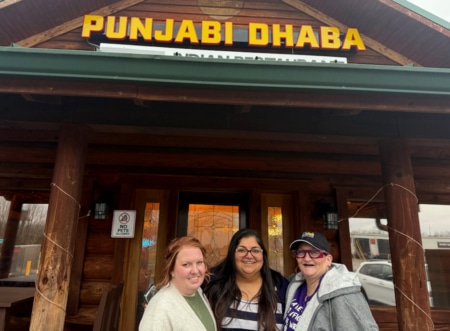
That’s really when the support factor clicked in for me. The first meeting I went to was a social one, at a local restaurant. We met for dinner. There was one gentleman who like me, was also a bladder cancer survivor with a urostomy. Everyone else had fecal diversions of various types. Still, I found more compassion, empathy, and understanding for everything I went through there than I did from any other source I had tried to date. 

Support is like putting together a salad and tossing it well. A salad is horrible with just lettuce – you need lots of other ingredients to make it delicious!

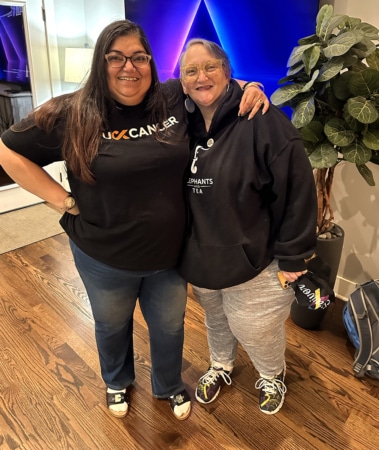
Since that time, I’ve expanded my support circles, finding the right mix of cancer, bladder cancer, young adult cancer, ostomy, and spoonie support. I have made connections via the internet, Zoom, and even in person at events like UOAA’s National Conference. My experiences have helped me through some of the most challenging times of the last 10 years.

When it comes to support, my advice to anyone facing a new diagnosis is always two-fold:

  1. Welcome support into your life. You will need it. 
  2. Try a plethora of different support venues: via social media, Zoom, or in-person. Try everything at least twice before making the decision of whether or not you will fit in with the group. 

No single group or organization will fit all of your resource or support needs. Support is like putting together a salad and tossing it well. A salad is horrible with just lettuce – you need lots of other ingredients to make it delicious!

Throughout the years, I have managed to come together with individuals and organizations like UOAA to build a wonderful support network for myself. Without support, I would not have made it this far. Without support, I would not have come into the various opportunities that I’ve been fortunate enough to experience and collaborate on. 

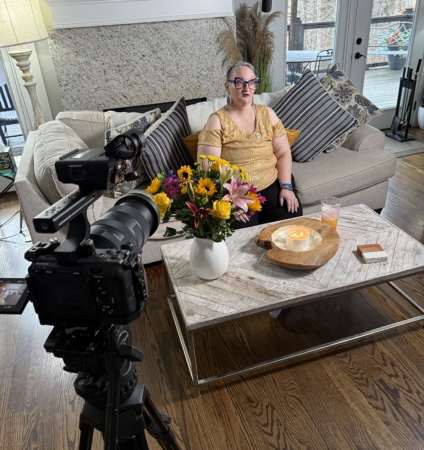
In January 2026, I had the opportunity to come together with the Tigerlily Foundation and fellow survivors, Dee Masters and Brittney Tellekampto to bring bladder cancer to the forefront of conversations in women’s health and bring more awareness to the disease beyond the stereotypical patient: old, white, chain-smoking, male. 

The organization chose to highlight the three of us various backgrounds and experiences. 

The three of us were flown into Nashville, TN, for a weekend retreat to film our personal bladder cancer stories and a panel discussion while getting to converse, support, and bond over being launched into a mutual club that no one ever wants to join: the cancer club. 

Support continues to help make my life complete. It drives me through the hard days and inspires me to pay acts of kindness forward. 

Dee Master is a woman of Indian descent living in the Knoxville, TN area, was diagnosed at 33 with a recurrence 4 years later. She has experienced multiple procedures, including numerous cystoscopies, undergone various treatments, and has managed to retain her bladder. 

Brittney Tellekamp was diagnosed  with Stage IV Metastatic Bladder Cancer at the age of 28 and underwent a radical cystectomy, full hysterectomy, lymphadenectomy, and received an ileal conduit (stoma). She is speaking out with TigerLilly about sexual health issues for young women with bladder cancer. 

One of the most common themes we noticed was the challenges we faced in finding support that fit our needs and how rare it was to find other young adult women in the bladder cancer realm – especially those willing to talk about their journeys. 

Finding support is a critical part of surviving treatment and succeeding in survivorship. Yet it is an area that is often overlooked or ignored by the clinical teams who treat cancer patients. 

On May 1, 2026, the Tigerlily Foundation launched its brand new bladder cancer awareness campaign with a new resource page going live on its website. Throughout May and June, more information will be shared, along with video releases of our stories and panel discussion. The organization also plans on concentrated social media posts in October in support of ostomy awareness as well. 

Support continues to help make my life complete. It drives me through the hard days and inspires me to pay acts of kindness forward. 

_______________________________________

Liz is now 50 years old. A lifelong Cincinnati resident, she works in a school system by day and in her free time, she spends it advocating for various health issues, including bladder cancer, young adult cancer and ostomies.  To connect with Liz, go to her Linktree.

Follow the Tigerlily Foundation on Facebook, Instagram, LinkedIn, TikTok, YouTube, and Bluesky to connect with this campaign as it rolls out. To To connect with Dee, find her on Instagram @mamadragon9.

May 14, 2026
https://www.ostomy.org/wp-content/uploads/2026/05/Copy-of-IMG_8797-scaled.jpg 2560 1920 Contributor https://www.ostomy.org/wp-content/uploads/2017/02/UOAAlogofinal2.png Contributor2026-05-14 08:58:402026-05-14 08:58:40Finding Bladder Cancer Support Everywhere

Our Categories

Advocacy (78) Caregivers (19) Colorectal Cancer (19) Colostomy (138) Continent Diversions (8) Digital Sponsor (77) Disaster Preparation (4) Emotional Health (61) Events (32) Exercise/Sports (48) Fashion/Clothing (11) Healthcare (21) IBD (53) Ileostomy (182) J-Pouch (7) jejunostomy (7) Membership (3) Nutrition (19) Ostomy 5k (20) Ostomy 5k (16) Ostomy Awareness (55) Ostomy Basics (55) Ostomy News (94) Ostomy Nurse (13) ostomy reversals (12) Ostomy Supplies (2) Ostomy Tips (93) Ostomy Videos (4) Patient Stories (97) Pediatric Ostomy (4) Personal (64) Research (3) Sexuality (12) Short Bowel Syndrome (16) Skin Care (9) Social Life (5) Support Group News (12) Support Resources (15) Teens (3) Travel (11) UOAA Conference (17) UOAA History (3) UOAA Volunteers (4) Urostomy (111) Young Adult (7)

Support Us:

Your Donation Funds UOAA Educational Programs:

DONATE TODAY
SUSTAINING GIFT
BECOME A MEMBER
UOAA E-NEWS SIGN UP
Get updates on events, national advocacy and important topics in the ostomy and continent diversion community.

Contact Us


United Ostomy Associations of America
P.O. Box 2293
Biddeford, ME 04005-2293

Virtual Ostomy Clinic

Contact UOAA

Donate Your Supplies

Call us toll-free at: 1-800-826-0826.
Our Information Line hours are Monday-Friday, 9am to 3pm EST. If you have an emergency, please dial 911 or contact your local medical professional.

Please understand that UOAA is a private, nonprofit, advocacy and informational organization. We are not a medical facility and we do not have medical or legal professionals on staff. Therefore, UOAA does not provide Medical, Mental Health, Insurance or Legal Advice. Visit UOAA Virtual Ostomy Clinic provided by The Wound Company for non-emergency, virtual ostomy support.

Privacy Policy

Get Involved

UOAA is the leading organization proactively advocating on behalf of the ostomy community. Recognizing that we are always stronger together, we encourage everyone to get involved by joining our Advocacy Network. We’ve also created several Advocacy Tools and Resources to help you successfully advocate on behalf of the ostomy community to ensure every ostomate receives quality care.

UOAA Run for Resilience Logo

UOAA does not and shall not discriminate on the basis of race, color, religion (creed), gender, gender expression, age, national origin (ancestry), disability, marital status, sexual orientation, or military status, in any of its activities or operations.

Digital Health Award
© 2005-2026, UOAA. All Rights Reserved l Design by Tap House Media
  • Link to Facebook
  • Link to X
  • Link to Pinterest
  • Link to LinkedIn
  • Link to Youtube
  • Link to Mail
  • Link to Instagram
Scroll to top Scroll to top Scroll to top