
UOAA Supports Colorectal Cancer Survivors
By Cheryl Ory, UOAA President
While advances in cancer treatments rise the news on colorectal cancer has been alarming. Colorectal Cancer is the 2nd leading cause of cancer death in the U.S. and the number one cancer killer of people under the age of 50 according to the American Cancer Society.
The deaths this year of the beloved actors James Van Der Beek and Catherine O’Hara have brought more awareness to colorectal cancer. Hopefully the spotlight during this National Colorectal Cancer Awareness Month continues to encourage more people to be screened. UOAA stands alongside partner organizations like Fight Colorectal Cancer to push lawmakers into giving more funding and attention to the what we see as a colorectal cancer crisis.
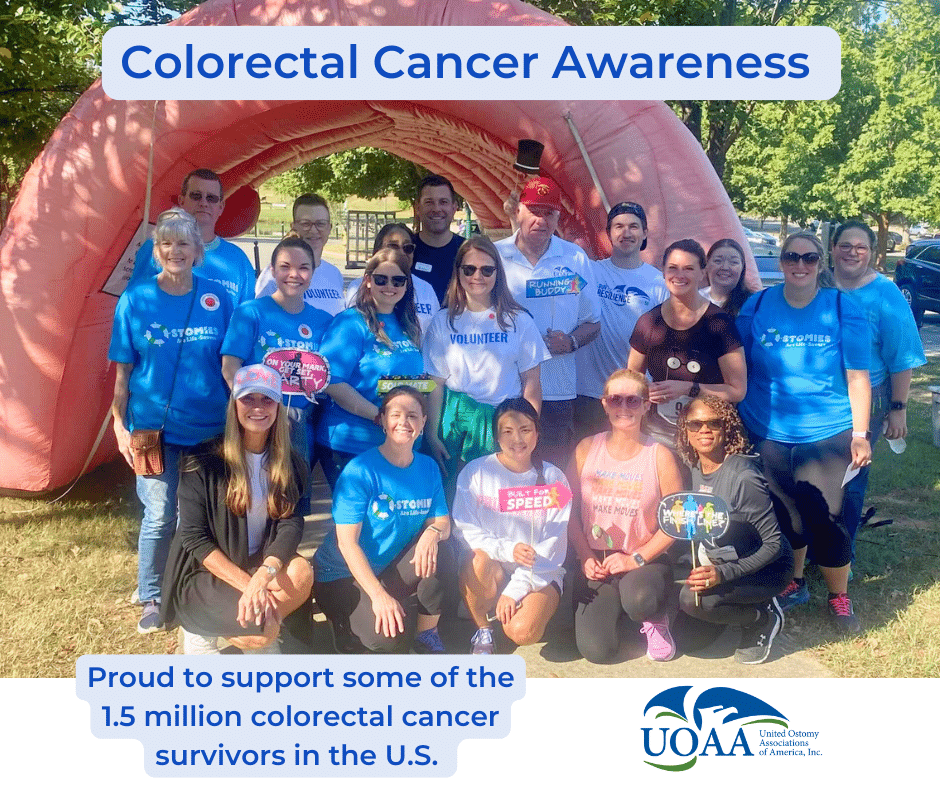
United Ostomy Associations of America (UOAA) has been supporting supporting cancer survivors and others living with an ostomy for over twenty years so that they can have best quality of life possible. If your cancer requires a life-saving ostomy surgery remember-you are not alone. 725,000- 1 million people in the U.S. of all ages and backgrounds live with an ostomy.
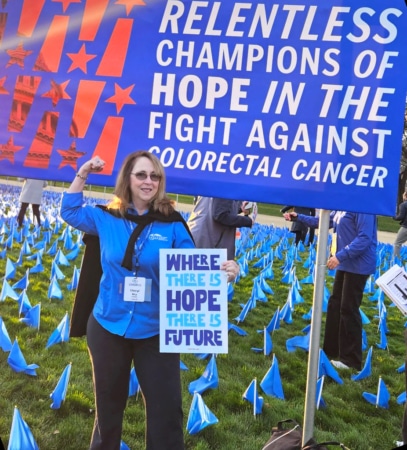
UOAA President Cheryl Ory at the Fight Colorectal Cancer United in Blue Rally in Washington, D.C. in 2024.
In 2008 I was diagnosed with Stage 3b colorectal cancer. I was told the cancer had been developing for at least 10 years or more, most likely when I was in my early 30’s. There was a polyp, if it had been removed at an earlier date the cancer would not have developed. After radiation, chemo, surgery, and more chemo I am now a colorectal cancer survivor with a permanent colostomy, an ostomy that has saved mine and others lives from not only cancer, but other debilitating diseases.
If you are a person still at risk, like those with IBD, let me urge you to get screened. Screening can result in any colorectal cancers being found earlier when they are easier to treat.
Every individual person’s disease treatment is unique but ostomy surgery for colorectal cancer may mean a temporary ostomy, ileostomy (from the small intestine) or colostomy (large intestine). This may be required to give a portion of the bowel a chance to rest and heal. When healing has occurred, the colostomy can often be reversed and normal bowel function restored. It’s important to know that not everyone with an ostomy will be a candidate for a reversal operation. A permanent colostomy may be required when a disease affects the end part of the colon or rectum.
We have new Living with a Colostomy guide and ileostomy guide to help you learn as much as possible before or after you have this life changing surgery.
It’s especially important to connect with one of hundreds of UOAA Affiliated Ostomy Support Groups in the U.S. before, or shortly after, your surgery. Even online peer support and preparation can put you on the path to success in what may be a challenging time both emotionally and physically. Ask if the hospital has a certified ostomy nurse and insist on having your stoma placement marked before surgery. These and other self-advocacy tools are paramount and outlined in our Ostomy Patient Bill of Rights.
You may feel too overwhelmed as you are discharged at the hospital to fully understand ostomy pouching systems and accessories and lifestyle considerations.
 As you recover, if you have a descending or sigmoid colostomy you may want to ask your doctor or ostomy nurse if you are a candidate for colostomy irrigation. I utilize colostomy irrigation, which is similar to an enema, as a way to have control over my output schedule that fits my lifestyle. UOAA seeks to raise more awareness for the practice and encourages medical professionals to discuss this treatment option with patients who may benefit.
If you have a medical question contact your doctor or ostomy nurse. If you need help finding an ostomy nurse use or our outpatient ostomy clinic finder or make plans online with a virtual ostomy clinic. If you have a quality of life question-UOAA resources here at ostomy.org and peers at UOAA Affiliated Support Groups likely have the answers.
It’s important to learn the facts about living with an ostomy. After the healing period outlined by your surgeon you can swim, bathe, be intimate, travel, and embrace a new normal life. After some trial and error, you may also eat most of the foods you have been able to eat in the past. Education is key to battling misinformation.
Unfortunately misinformation and stigmas surrounding both ostomy surgery and colorectal cancer affect the number of people getting screened or getting the medical treatment they need. Let’s work together to educate, advocate and support survivors.
Cheryl Ory is a colorectal cancer survivor who received a permanent colostomy in 2008. Cheryl is a Registered Nurse who has had a passion for volunteering with the ostomy community ever since and first joined UOAA’s Board of Directors in 2015. She now holds the position of President.







Leave a Reply
Want to join the discussion?Feel free to contribute!