Tag Archive for: ostomy bag

By Kevin Smets

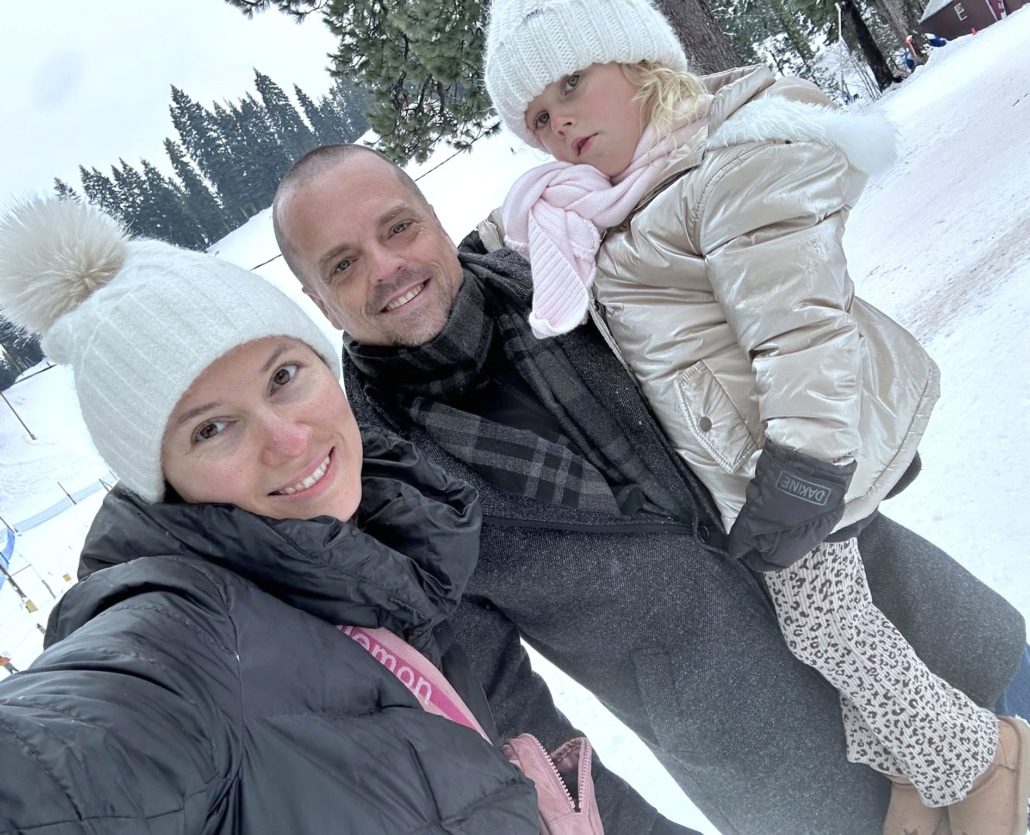
I never imagined that one of the most defining chapters of my life would begin just one month before my daughter was born.

In 2020, I was diagnosed with stage 3 colorectal cancer. A few weeks later, as my family was preparing to welcome my daughter into the world, I was preparing for something entirely different. I started chemotherapy and radiation the very same week she was born. While most new dads are figuring out diapers and sleep schedules, I was learning how to fight for my life at the same time I was learning how to be a father.

Through it all, my wife Dasha was the backbone of our family. She took care of both of us, stepping into a role that no one ever expects to have to play. Watching her carry that weight with strength and love is something I’ll never forget.

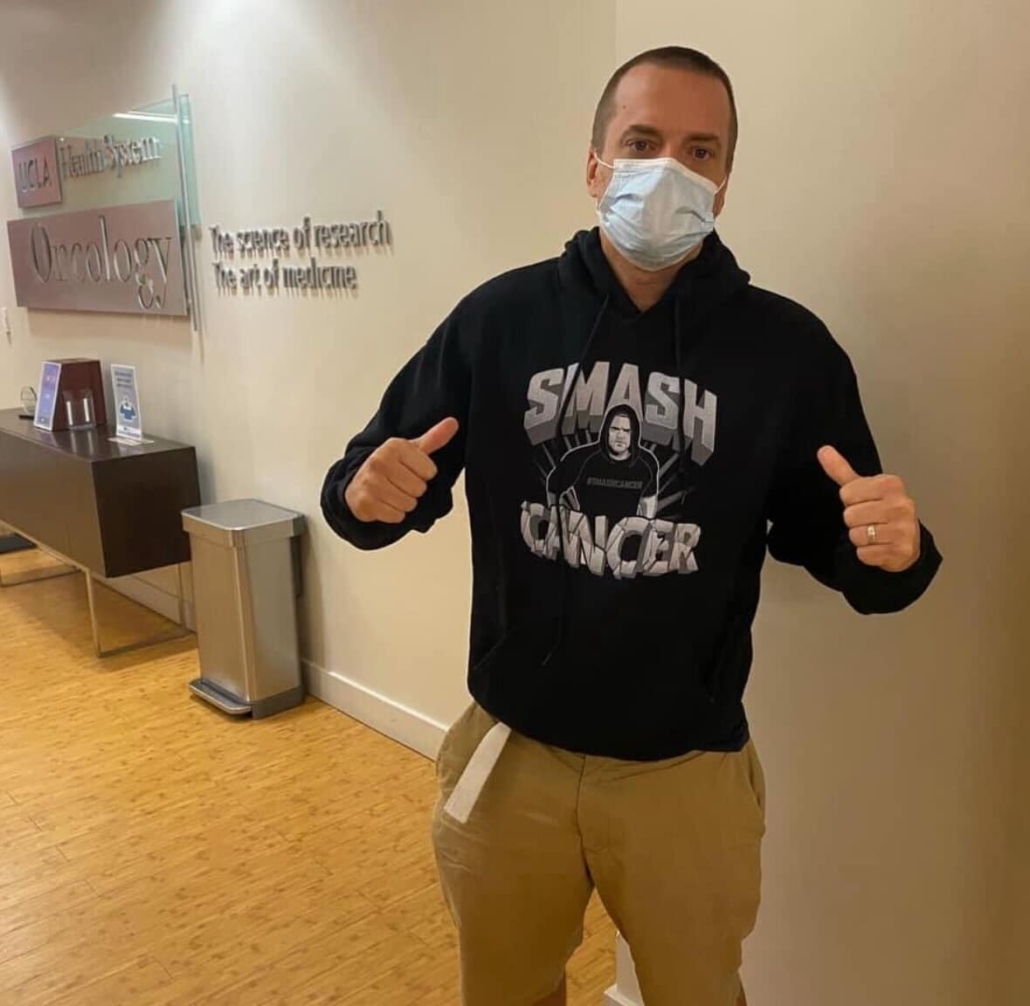
Before everything changed, I was part of something truly special called The Schmoedown – it was like WWE meets movie trivia, where larger-than-life characters and real competition collided. I stepped into that world as “The Smasher,” and what started as a persona quickly became something the fans rallied behind in a very real way. They even started a #SmashCancer movement that really carried me through it all, along the way the fans even held a 24-hour stream fundraiser that literally lifted my family up financially while I couldn’t work for nearly a year.

That preparation didn’t just help me physically, it gave me control in a situation where most things felt out of my hands.

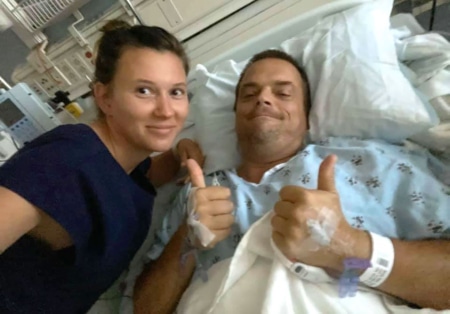
And then after nine months of fighting, under the care of such wonderful oncologists and surgeons at UCLA medical center, I underwent stoma surgery. But here’s something that made a huge difference for me mentally. About five months before the surgery, I already knew there was a strong chance I would end up with a stoma. So instead of avoiding it, I leaned in. I researched everything I could. In my research and quest to be more educated I leaned on sites like Ostomy.org and colonclub to really acquaint myself for the journey ahead, and it was a crucial part of my surgery prep.

By the time ostomy surgery came around, I was so prepared that nurses actually commented that I knew as much as they did. That preparation didn’t just help me physically, it gave me control in a situation where most things felt out of my hands.

Today, I’m proud to say I’m in remission.

But the journey didn’t stop there.

I decided to start sharing my story online, documenting my stoma and ostomy journey. The reason was simple, and honestly, a bit personal. A friend once told me their cousin said they would rather die than have an ostomy. That stuck with me. I couldn’t shake it. And I knew right then that there was a stigma that needed to be broken.

So I made it my mission to smash that stigma.

Since then, I’ve received messages from people still in their hospital beds, sometimes just waking up from emergency surgery, telling me they found my content and it helped them feel less alone. Those messages mean everything to me.

If sharing my experience can help even one person feel stronger, more prepared, or more hopeful, then it’s all worth it.

This journey isn’t just about survival. It’s about mindset. It’s about showing that life doesn’t end with an ostomy, it just changes. And sometimes, that change can lead to a purpose you never saw coming.

———

In addition to Kevin’s Youtube channel you can find him on TikTok and as @Kevsmashcancer on Instagram.

By: Sandra James, ACSW

Instagram.com/@colostomyforever

www.youtube.com/@SandraJames-LivingIt

When I was diagnosed, the first emotions that hit me were disappointment, confusion, and shame. I had spent months believing hemorrhoids were the only source of my problem. There were no other symptoms at first that would alert me outside of hemorrhoids, and when I saw the blood, I attributed it to hemorrhoids and something common and manageable. Cancer never crossed my mind. I never imagined that something as serious as colorectal cancer was there quietly invading my body without my knowing. When the diagnosis came, it felt disorienting. I kept replaying the past in my head, wondering how I missed it, how something so big could have been there while I carried on with my life.

When people asked what kind of cancer I had, I struggled to say the words out loud. Saying it was in my rectum felt heavy, embarrassing, and deeply shameful. I found myself wanting to deflect, minimize, or avoid the conversation altogether. That shame added another layer to the confusion and disappointment I was already carrying—an emotional weight I never expected to come with a diagnosis.

I had no one I could sit across from, look in the eyes, and say, “Do you understand this?”

After my diagnosis, my medical team gave me pamphlets and printed materials explaining my condition and treatment such as colostomy surgery. The information was thorough and medically sound, but it wasn’t what I needed at that moment. I wasn’t looking for a curriculum or clinical language—I needed to understand what was happening to me right then, in real life. What helped me most was hearing from real people.

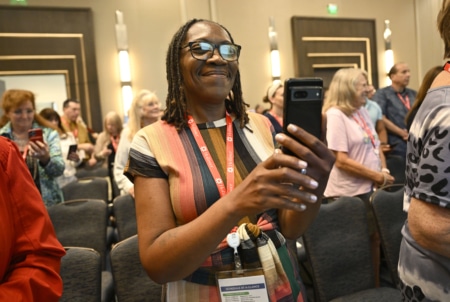
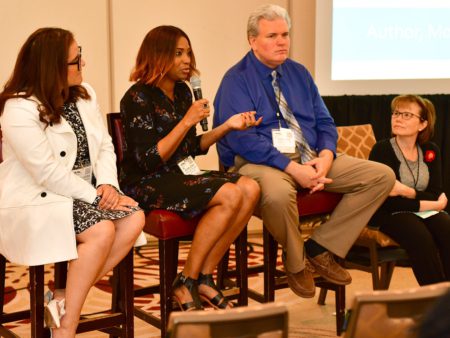
Sandra at UOAA’s 2025 National Conference in Orlando.

I spent long stretches of time watching videos on YouTube where people openly shared their cancer journeys, their fears, their side effects, their recoveries, and their lives beyond diagnosis. Some had their own YouTube channels. Others were featured on platforms like The Patient Story. Watching them helped me process what I was facing in a way pamphlets couldn’t.

While YouTube helped me feel less alone in the early days of my diagnosis and treatment, it didn’t fully replace the need for real, human connection. I didn’t know anyone in my immediate community who had an ostomy. I had no one I could sit across from, look in the eyes, and say, “Do you understand this?”

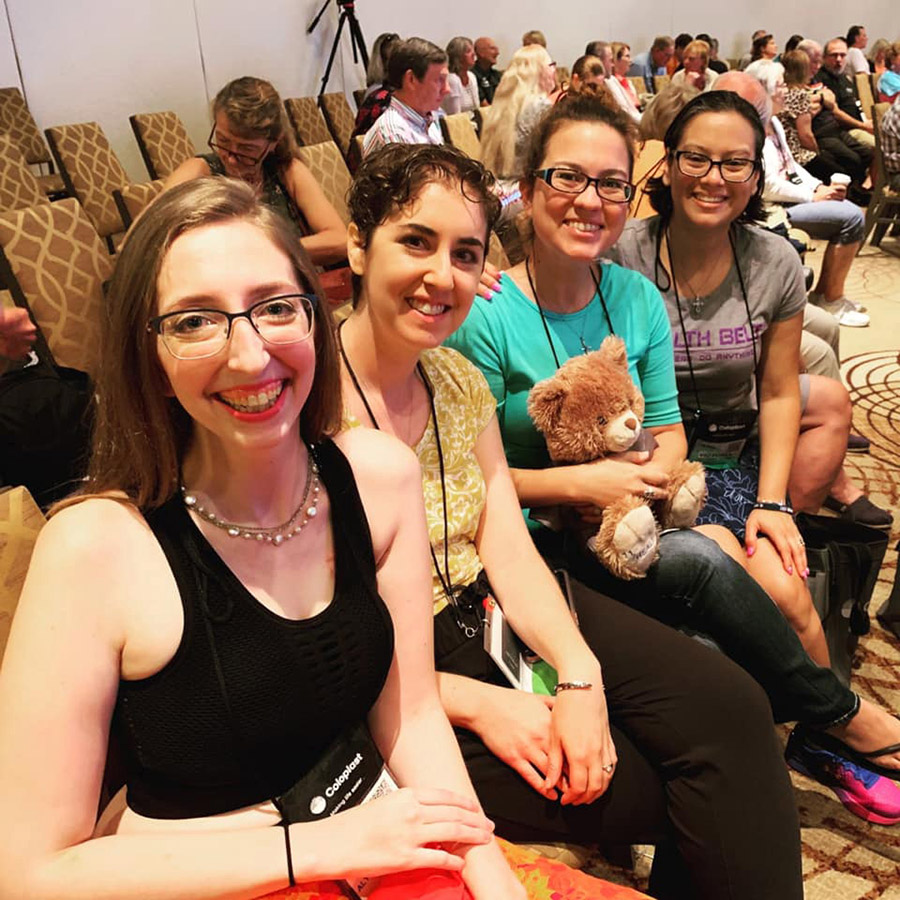
At some point, I came across another ostomate on social media who mentioned the United Ostomy Associations of America (UOAA) National Conference. I remember feeling something shift in me when I heard about it. It felt like an invitation — not just to an event, but to belonging. I registered, booked a flight, and went — not fully knowing what to expect, but knowing I needed to be there. Those three days became one of the most meaningful experiences of my entire cancer journey. From the moment I arrived, I felt an overwhelming sense of familiarity and ease. I was surrounded by people who felt like they had known me my whole life, even though we had just met. There was no shame, no need to explain myself, no awkwardness. Just understanding. UOAA’s conference wasn’t simply educational — it was grounding. It wasn’t just supportive — it was life-sustaining. For the first time since my diagnosis, I felt whole again. Not fixed. Not “back to normal.” But grounded in who I was becoming.

From Watching to Sharing: Why I Started My Own Channel

The realization to start my own channel came while I was writing my book, My Colorectal Cancer Journey. By the time I reached chapter two, I understood that telling my story solely through a book would take time — time that many people facing a new diagnosis surgery simply don’t have. I remembered how desperately I needed immediate connection and reassurance, and I knew I wanted to offer that same immediacy to others.

Starting a YouTube channel felt less structured, more human, and more accessible. It allowed me to speak honestly, show the realities of ostomy life, and create space for conversations that often don’t happen elsewhere — conversations about fear, shame, stigma, resilience, and growth.

My channel wasn’t created to educate in the traditional sense, even though many people now describe it that way. It was created to connect. To say, “You’re not alone,” without conditions or explanations. To show what life can look like after diagnosis, after surgery, after everything changes.

The same connection I once searched for, I now try to offer — one video, one conversation, one shared moment at a time.

View a selection of Sandra’s videos at the links below and look for her unique perspective on UOAA’s YouTube Channel soon!

Caring for My Stoma: What Works for Me

My New Travel Bag: What I Take with Me

My New Reality Bag Change: Living with a Permanent Colostomy Bag

The Truth About Living with an Ostomy Bag (Myths vs. Facts)

How to Measure Your Stoma

By Cheryl Ory, UOAA President

While advances in cancer treatments rise the news on colorectal cancer has been alarming. Colorectal Cancer is the 2nd leading cause of cancer death in the U.S. and the number one cancer killer of people under the age of 50 according to the American Cancer Society.

The deaths this year of the beloved actors James Van Der Beek and Catherine O’Hara have brought more awareness to colorectal cancer. Hopefully the spotlight during this National Colorectal Cancer Awareness Month continues to encourage more people to be screened. UOAA stands alongside partner organizations like Fight Colorectal Cancer to push lawmakers into giving more funding and attention to what is a colorectal cancer crisis.

United Ostomy Associations of America (UOAA) has been supporting cancer survivors and others living with an ostomy for over twenty years so that they can have the best quality of life possible. If your cancer requires life savings ostomy surgery, remember – you are not alone. UOAA estimates that between 725,000 to 1 million people in the U.S. of all ages and backgrounds are living with an ostomy, and over 100,000 ostomy surgeries are performed each year.

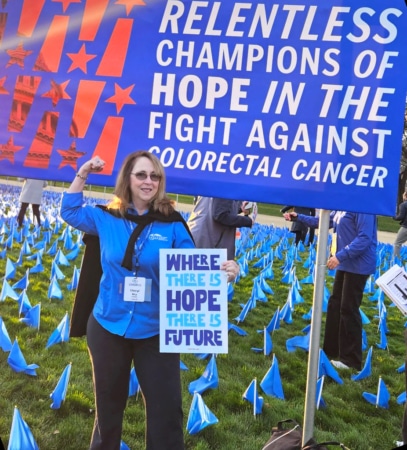
UOAA President Cheryl Ory at the Fight Colorectal Cancer United in Blue Rally in Washington, D.C. in 2024.

In 2008 I was diagnosed with Stage 3b colorectal cancer. I was told the cancer had been developing for at least 10 years or more, most likely when I was in my early 30’s. There was a polyp, if it had been removed at an earlier date the cancer would not have developed. After radiation, chemo, surgery, and more chemo I am now a colorectal cancer survivor with a permanent colostomy, an ostomy that has saved mine and others lives from not only cancer, but other debilitating diseases.

If you are a person still at risk, like those with IBD, let me urge you to get screened. Screening can result in any colorectal cancers being found earlier when they are easier to treat.

Every individual person’s disease treatment is unique but ostomy surgery for colorectal cancer may mean a temporary ostomy, ileostomy (from the small intestine) or colostomy (large intestine). This may be required to give a portion of the bowel a chance to rest and heal. When healing has occurred, the colostomy can often be reversed and normal bowel function restored.  It’s important to know that not everyone with an ostomy will be a candidate for a reversal operation. A permanent colostomy may be required when a disease affects the end part of the colon or rectum.

We have two guides written from a patient’s perspective, Living with a Colostomy and Living with an Ileostomy, to help you learn as much as possible before and after you have this life changing surgery.

It’s especially important to connect with one of hundreds of  UOAA Affiliated Ostomy Support Groups in the U.S. before, or shortly after, your surgery. Even online peer support and preparation can put you on the path to success in what may be a challenging time both emotionally and physically.  Ask if the hospital has a certified ostomy nurse and insist on having your stoma placement marked before surgery. These and other self-advocacy tools are paramount and outlined in our Ostomy Patient Bill of Rights.

You may feel too overwhelmed as you are discharged at the hospital to fully understand ostomy pouching systems and accessories and lifestyle considerations.

As you recover, if you have a descending or sigmoid colostomy you may want to ask your doctor or ostomy nurse if you are a candidate for colostomy irrigation. I utilize colostomy irrigation, which is similar to an enema, as a way to have control over my output schedule that fits my lifestyle. UOAA seeks to raise more awareness for the practice and encourages medical professionals to discuss this treatment option with patients who may benefit.

If you have a  medical question contact your doctor or ostomy nurse. If you need help finding an ostomy nurse use or our outpatient ostomy clinic finder or make plans online with a virtual ostomy clinic. If you have a quality of life question-UOAA resources here at ostomy.org and peers at UOAA Affiliated Support Groups likely have the answers.

It’s important to learn the facts about living with an ostomy. After the healing period outlined by your surgeon you can swim, bathe, be intimatetravel, and embrace a new normal life. After some trial and error, you may also eat most of the foods you have been able to eat in the past. Education is key to battling misinformation.

Unfortunately misinformation and stigmas surrounding both ostomy surgery and colorectal cancer affect the number of people getting screened or getting the medical treatment they need.  Let’s work together to educate, advocate and support survivors.


Cheryl Ory is a colorectal cancer survivor who received a permanent colostomy in 2008. Cheryl is a Registered Nurse who has had a passion for volunteering with the ostomy community ever since and first joined UOAA’s Board of Directors in 2015. She now holds the position of President.


Navigating the world of ostomy products and supplies can feel overwhelming, but finding the right system and products are crucial for comfort and security.

The appropriate pouch is determined by a number of factors says certified ostomy nurse Linda Coulter. “First the pouch must be appropriate for the type of stoma and

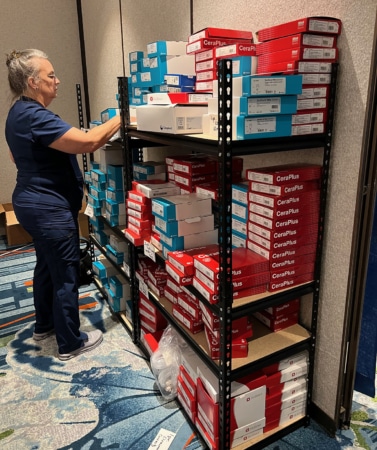
A nurse selects ostomy product samples donated by a wide variety of manufacturers for the stoma clinic at UOAA’s 9th National Conference.

output (e.g. don’t use a urostomy pouch for a colostomy/ileostomy and vice-versa). Stoma characteristics such as size, protrusion, and surrounding contour (e.g. scars, creases, bulges, etc.) also affect pouch choice.”

Other factors, such as an individual’s lifestyle and dexterity play a role.

Here’s some helpful tips whether you are just out of the hospital or you’re having new issues and wondering if you should try something new.

Get Professional Help and Sample Supplies

  • Always consult with an ostomy nurse first for information and recommendations tailored to your body and stoma type. If you’re having trouble with your current system, such as skin irritation or recurrent leaks, ask them to help you find a solution and assist in getting it prescribed. Find an ostomy nurse available in-person or virtually or an Outpatient Ostomy Clinic near you.
  • Remember that every person is different, and you need to find what works best for you. People in online discussions don’t always say their ostomy type ileostomy, colostomy, urostomy and that is key to know what type of supplies to use.
  • Expect some trial and error. It’s common to try several types of products until you find what works best. You can request product samples from manufacturers or a supplier that works with your insurance company. Talk with members of a UOAA Affiliated Support Group, many have a supply closet where members share excess supplies.

Picking an Ostomy Pouching System

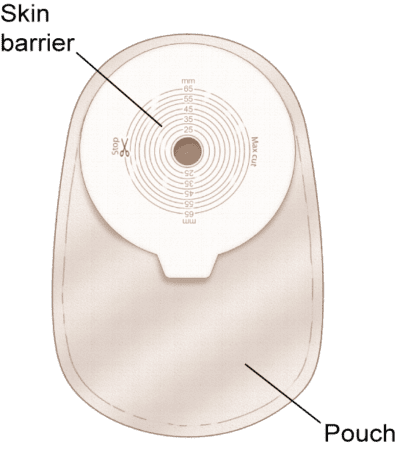
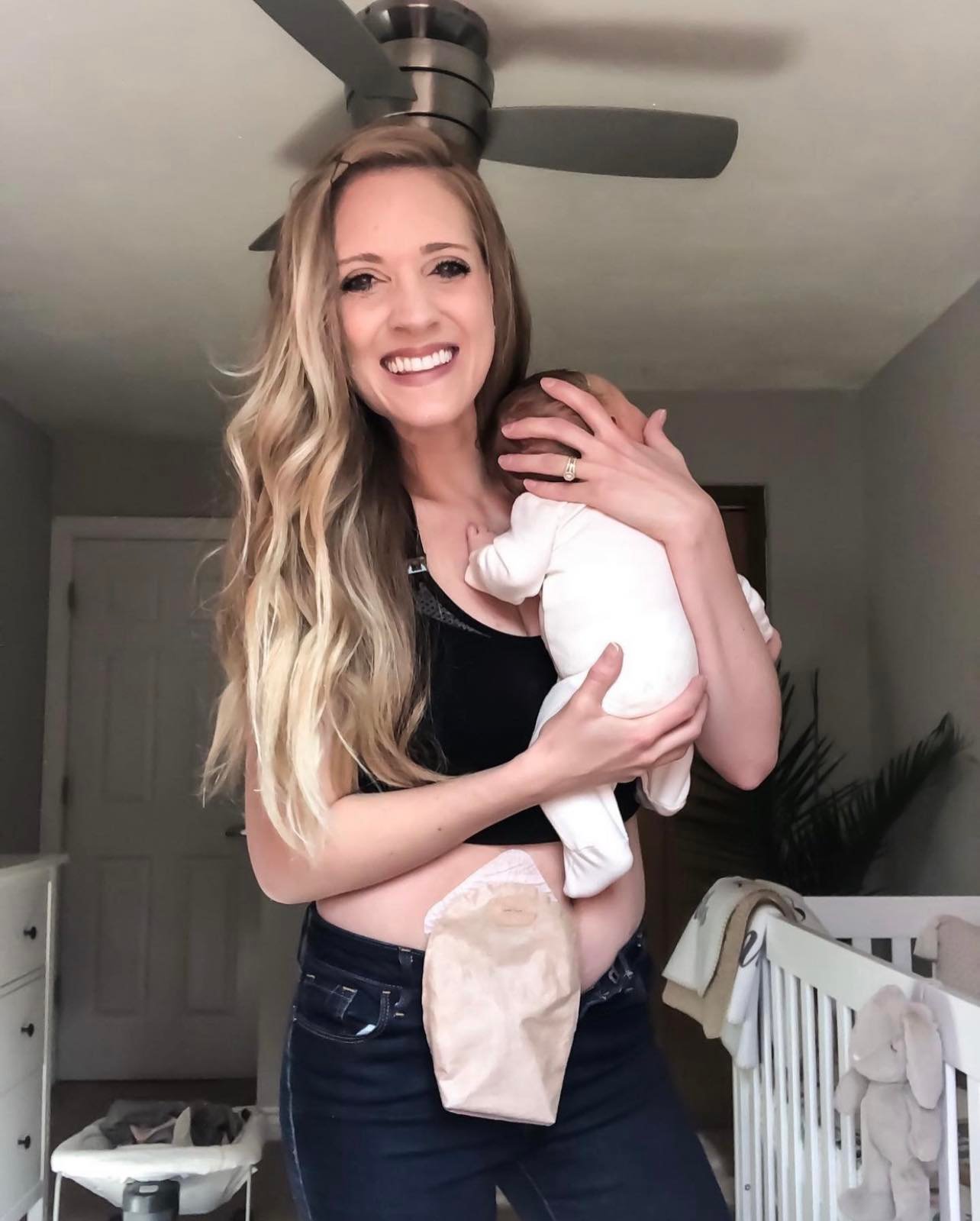
You’ll hear the terms appliance, ostomy pouch system, ostomy pouch, or ostomy bag. They are all just referring to a device consisting of pouch and a skin barrier (wafer, baseplate or faceplate) that sticks to and protects the skin around the stoma.

Understanding the terminology will help you communicate your needs effectively. “When possible, patient preference is taken into account for things like 1-piece vs 2-piece systems, clear vs opaque pouches, and pouch brand,” says Linda Coulter, BSN, RN, CWOCN.

Types of ostomy bags or pouches ileostomy

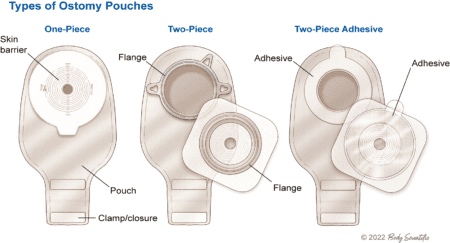
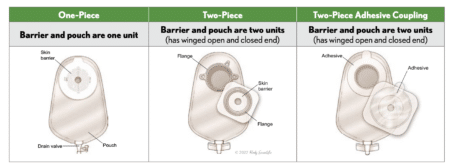
  •  One-piece system: The skin barrier/wafer and pouch are pre-attached. When you change the pouch, you change the whole thing (including the barrier).
    Why people choose it: Simple application and use, low profile under clothing, hernia or bulge near stoma, affordability.
  • Two-piece pouching system: A two-piece system lets you change the pouch while keeping the skin barrier/wafer in place. The pouch attaches to the barrier through a flange/coupling (often a snap-style ring or possibly an adhesive connection).Why people choose it: Versatility. Can easily switch between higher capacity or shorter pouch. Allows pouch to be changed more frequently than the skin barrier. Skin barrier stays in place while pouch is changed, best for higher stoma output, skin sensitivities, fast pouch changing.

Types of Urostomy Pouches

Pouch Closures

  • Drainable (open-ended): You can empty these while they are still attached. Colostomy or ileostomy pouches: use tail closures or separate plastic
    Colostomy Bag One-Piece

    Colostomy Pouch One-Piece Closed End

    clamps/clips. Urostomy pouches (urine): use a valve or “tap closure”. As the name implies, high-output pouches are designed to hold larger volume ileostomy output (rarely colostomy) and have tap closures.
    Why people may choose it: Have output throughout the day requiring pouch to be emptied 3 or more times per day, quick and easy to empty.

  • Closed-end: These are sealed at the bottom and typically discarded after one use. They are most commonly used by colostomates who have regular elimination patterns or can irrigate. Insurance usually covers up to 2-closed pouches per day.
    Why people may choose it: Can remove and throw it away, no draining or clamps.

Other Pouch Choices

Pouch options can include filtered (for automatic gas release and odor) or unfiltered (best with thick stool). Clear pouches are available to monitor output or color and opaque pouches for those who prefer not to see it. A variety of sizes are available depending on output and lifestyle. Urostomates often attach their pouch to an additional drainage bag or container at nighttime.

Skin Barriers

Picking the best skin barrier is critical since it protects the skin around the stoma and enables a secure seal and fit. Your choice depends on your stoma, output, and other factors, such as sensitivity. Frequent changers may ask about gentle adhesion options while those with liquid output may require a stronger adhesion. If your stoma size is changing or oval you may want to get cut-to-fit or moldable skin barriers while, if it is stable and round, pre-sized are a convenient option.

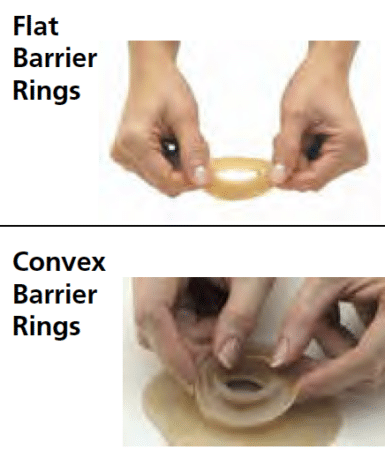
  • Flat: Flat barriers sit level on the skin. Why people may choose it: When the stoma sticks out, pouching with hernia or creases.
  • Convex: Refers to a curved skin barrier (or a system/insert that creates this curve) which helps press inward on the skin next to the stoma. This can help the stoma protrude outward, which helps output go into the pouch instead of leaking under the barrier. There are a variety of depths and flexibilities available.
    Why people may choose it: When the stoma does not stick out enough, or soft tissue, skin folds/creases.

Ostomy Accessories

Depending on the person and stoma type, accessories include products such as cleaning wipes, adhesive removers, stoma powder (pectin-based, non-medicated), stoma paste or barrier ring (provides a seal around the stoma), stoma belt, scissors, wafer extenders, skin protectant wipes, and lubricating deodorant. These products can improve wear time, skin condition, and overall pouching experience.

Ask an ostomy nurse what may be helpful for you.

Keeping Track of it All

Know Your Ostomy Supplies Checklist

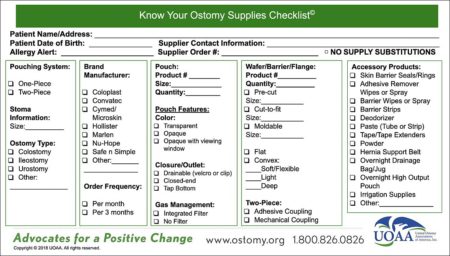
Know your ostomy pouching system and supplies. Once you’ve found the supplies working best for you be sure to keep track of the names, sizes and order numbers. Download the UOAA Know Your Ostomy Supplies Checklist tool to have handy as you work with your ostomy nurse, doctor, supplier or insurance to get the ostomy pouching system and accessories you need.


 Blog by Ed Pfueller, UOAA Director of Strategic Communications with medical review by Linda Coulter, BSN, RN, CWOCN

Stella. Betty Poop. Homer the Stoma.

To some, stoma names may seem silly or childish. A stoma is not a pet, after all. Not a car or childhood stuffed animal. People don’t typically name their liver or spleen—so why, then, would anyone name a stoma?

For many people with ostomies, naming their stoma isn’t just a quirky custom; it’s a meaningful practice. It’s not about trivializing a potentially life-saving surgery or minimizing the complexity of ostomy life. Rather, it’s a tool for healing. Naming may be a way to reclaim agency in moments of powerlessness, to bring levity to something heavy, and to create connection—with yourself and others—amid profound change.

Naming your stoma as a coping strategy

Seeing your stoma for the first time may be a deeply jarring experience. That small section of intestine or urinary tract, visible through your abdominal wall, can trigger a range of emotions: shock, grief, maybe even a sense of bodily betrayal. Your stoma may feel like a glaring marker of surgery, illness, or loss—a visible reminder of all you’ve been through or what makes you feel different.

Adapting to an ostomy is a deeply personal journey, shaped by physical, psychological, and social factors. For many, the experience goes far beyond ordering ostomy supplies or managing pouch changes. It touches self-image, identity, and the core questions we ask in moments of significant change: Who am I now? What does this mean for my life?

While there’s no single path through this process, research shows that how you relate to your stoma matters. How you view it, speak about it, and ultimately integrate it into your life could play a pivotal role in emotional and psychological adaptation.

One surprising but potentially powerful tool in the process? Naming your stoma.

In a 2018 survey by ostomy care nurses Jane Cook and Jackie Hatton, 75% of respondents who named their stoma said it helped them cope with the aftermath of surgery. As one participant explained, naming their stoma helped it “become part of [them]”—less foreign, more personal.

In this way, naming may be an act of reclamation, a powerful gesture when you have a new body part stitched into place, a system rerouted and reimagined. New language—pancaking, flange, peristomal skin—comes with new routines and instructions. When so much is out of your control, naming your stoma might be one thing you get to choose. It’s one way to say: I didn’t choose all this, but I can choose how I meet it.

The role of humor and connection in adapting to ostomy life

Naming a stoma isn’t just about finding agency or control; it may also bring humor, creativity, and connection into an experience that is often heavy.

Many people with ostomies choose names that reflect the “personality” of their stoma. Maybe it’s Sassy Sasha, if it has a flair for dramatic entrances. Great Gassy, if it’s mysterious but persistent. Or Mildred, if it’s all business. With a name, suddenly the stoma isn’t just a surgical site. It’s Oscar, having a bad day and making sure everyone knows it. It’s Lola, the life of the party when you’re trying to focus. It’s Hank, sneaking up at the most inopportune moment. These names may transform the stoma from something clinical into something human, giving you language to talk about it, joke about it, even roll your eyes at it.

As playful as many stoma names are, it’s not just about cracking jokes for the sake of it. Research shows suggests that humor may be a valuable coping strategy for some people with ostomies, helping to promote acceptance and psychological resilience. With a little wit, the stoma may shift from a source of shame or discomfort into a character in the story of healing: sometimes annoying, sometimes funny, but no longer invisible or feared.

This reframe may also help break down the stigma surrounding ostomies by encouraging open communication. In one study, a survey participant shared how their family shouts, “Shut up, Lily!” when their stoma acts up, turning what might otherwise be an isolating experience into shared laughter. What once felt unspeakable becomes something everyone can talk about—a starting point for connection and support.

Respecting personal choice: Not everyone names their stoma

While naming a stoma can be a meaningful part of the healing process for some, it’s not for everyone—and that’s okay. Choosing not to name a stoma can be just as intentional as a name like Rosie or Winnie the “Poo.” In fact, some people with ostomies say that naming can create a sense of separation they don’t want. They don’t see their stoma as something “other,” something that needs to be softened or humanized. The stoma is simply “my stoma.” No need for nicknames or extra narrative—it just is.

Interestingly, for those who do choose to name their stoma, that relationship may change over time. Some ostomates who initially name their stoma eventually stop using the name. For them, what began as a coping mechanism may be less necessary as the stoma becomes just another part of their body. As the name fades, so does the need to frame the stoma as anything other than a part of moving forward.

Living with an ostomy: Your story, your terms

What naming offers isn’t a right or wrong way to “do” life with a stoma. It simply offers space for choice, connection, and self-expression. Some stoma names will stick. Others won’t. Some may only be whispered in private, while others are worn like a badge of resilience or pride.

What matters most isn’t whether you call your stoma Stanley or Scooby-Poo or nothing at all. It’s that you get to choose. That even after illness and surgery—even after everything—you get to choose how your story goes.

References

Cook, J., & Hatton, J. (2018). Giving a stoma a name: A mixed-methods study of naming habits and attitudes among ostomates. Gastrointestinal Nursing, 16(7). https://doi.org/10.12968/gasn.2018.16.7.28

Jayarajah, U., & Samarasekera, D. N. (2017). Psychological Adaptation to Alteration of Body Image among Stoma Patients: A Descriptive Study. Indian journal of psychological medicine39(1), 63–68. https://doi.org/10.4103/0253-7176.198944

Simpson, E., Pourshahidi, K., Davis, J., Slevin, M., Lawther, R., O’Connor, G., Porrett, T., Marley, J., & Gill, C. (2023). Living with and without an intestinal stoma: Factors that promote psychological well-being and self-care: A cross-sectional study. Nursing open10(12), 7811–7825. https://doi.org/10.1002/nop2.2030


Coloplast develops products and services that make life easier for people with intimate healthcare needs. Working closely with the people who use our products, we create solutions that are sensitive to their special needs. Our business includes ostomy care, continence care, advanced wound care, interventional urology, and voice & respiratory care.

Follow Coloplast on InstagramFacebook, and YouTube, or visit us online at https://www.coloplast.us/


Editor’s note: This blog is from a UOAA digital sponsor, Coloplast. Sponsor support along with donations from readers like you help to maintain our website and the free trusted resources of UOAA, a 501(c)(3) nonprofit organization.

 

Why a Medical Alert ID Matters

By Ellyn Mantell with Jeanine Gleba UOAA Advocacy Manager

It’s a fact; ostomies and continent diversions save lives. Most people are very private about having a fecal or urinary diversion and only share information with people to whom they are most close. Living with a diversion is often considered an “invisible disability”. The concern is, what would happen with these individuals if they were in an accident, unconscious or unable to speak for themselves? They would be unable to notify an emergency responder of the unique needs of the diversion. For example, a Kock pouch is an internal pouch/reservoir that has a stoma that needs to be catheterized throughout the day to empty it. If an emergency responder were not aware of this need, it could result in over filling of the reservoir and damage to the reservoir. 

There is a simple non-verbal way of communicating health issues and medical conditions in emergencies that deserves attention and should be considered. According to the Centers for Disease and Control Prevention (CDC), for personal health preparedness “help others help you” by wearing a medical alert ID bracelet or necklace engraved with important information for emergency responders and healthcare providers. By wearing a form of medical identification people living with an ostomy or continent diversion can effectively advocate for their health and safety protection when they are unable to speak up for themselves. It provides peace of mind should the worst-case scenario happen.  

A real life example shared with UOAA may explain the efficacy of saving time in an emergency situation. An ileostomate was crossing the street and hit by a car. He was not terribly injured, but the force of hitting the ground caused his pouch to explode, causing the first responders to assume his abdomen had been perforated. They spent valuable time cutting clothing to find the cause of the seepage, an unnecessary waste of what could have been life-saving time. Had this gentleman been wearing a medical alert bracelet or dog tag necklace, he would have been assessed differently, and certainly more quickly. 

Wearing a medical alert ID is far more effective than carrying a card in one’s wallet or handbag, or counting on another person to provide vital information. If there is an accident or incident, one may be thrown from a car, their wallet lost or removed, or one may be separated from a person who can advocate. Additionally, a family member or friend may also be incapacitated in some way, or in shock, unable to provide this lifesaving information.

It is suggested by paramedics that a medical alert bracelet be worn on the left wrist, since that is where they reach first for a pulse. A medical icon in red is an attention-grabber, but whatever form of ID you choose be sure it includes the universal medical alert symbol.  Include as much information as possible and be specific. If there are medical instructions, spell them out. A sample inscription might say: Continent Urostomy Catheterize every 4-6 hours with a 1 4Fr. Catheter.

If there are other medical conditions, state them for emergency responders. Include such information as diabetes, allergies. This is no time to be vague. Include a cell phone number of a family member if there is room, and DO NOT FORGET TO ADD YOUR NAME TO THE FIRST LINE!

The most notable and recognized medical alert IDs are from the companies Medic Alert Foundation and American Medical ID. These companies can also keep on record more specific details of your medical history and current care with QR codes and ID cards in addition to the wearable ID.

For those who simply don’t like the look and style of the standard medical alert bracelet there are many more fashionable forms of ID. Other medical alert jewelry may be found on websites such as Lauren’s Hope, and Meridian Medical/Ostomy Supply Company sells a specific bracelet for ostomies. Although first responders tend to look for medical alert bracelets, for those who don’t want to wear jewelry, there are other types of IDs available including: Apple Watch slides, dog tags, and cell phone tags. Your ostomy nurse, primary care physician’s office and most pharmacies can also provide guidance.  

Some people may be uncomfortable wearing something that tells others they have an ostomy or continent diversion. Don’t let stigma stop you from being emergency-prepared!  Consider if you would wear medical alert identification if you had life-threatening allergies. When it comes to one’s health, it should never be associated with shame. 

Ostomies and medical alert IDs go hand in hand saving lives.


Disclaimer: UOAA does not endorse particular products, manufacturers, or suppliers.

 10 Years of the Run for Resilience Ostomy 5k

By Ed Pfueller, UOAA Communications and Outreach Manager

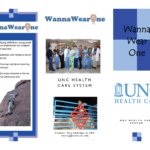
When people without ostomies pay to put on a pouch, fill it with applesauce, and then run a 5k- you know you are onto something. It was 2014 in Durham, North Carolina, and what started a few years prior as the ‘Wanna Wear One’ challenge for medical professionals to learn empathy for ostomy patients had now evolved into a community-wide ostomy awareness event.

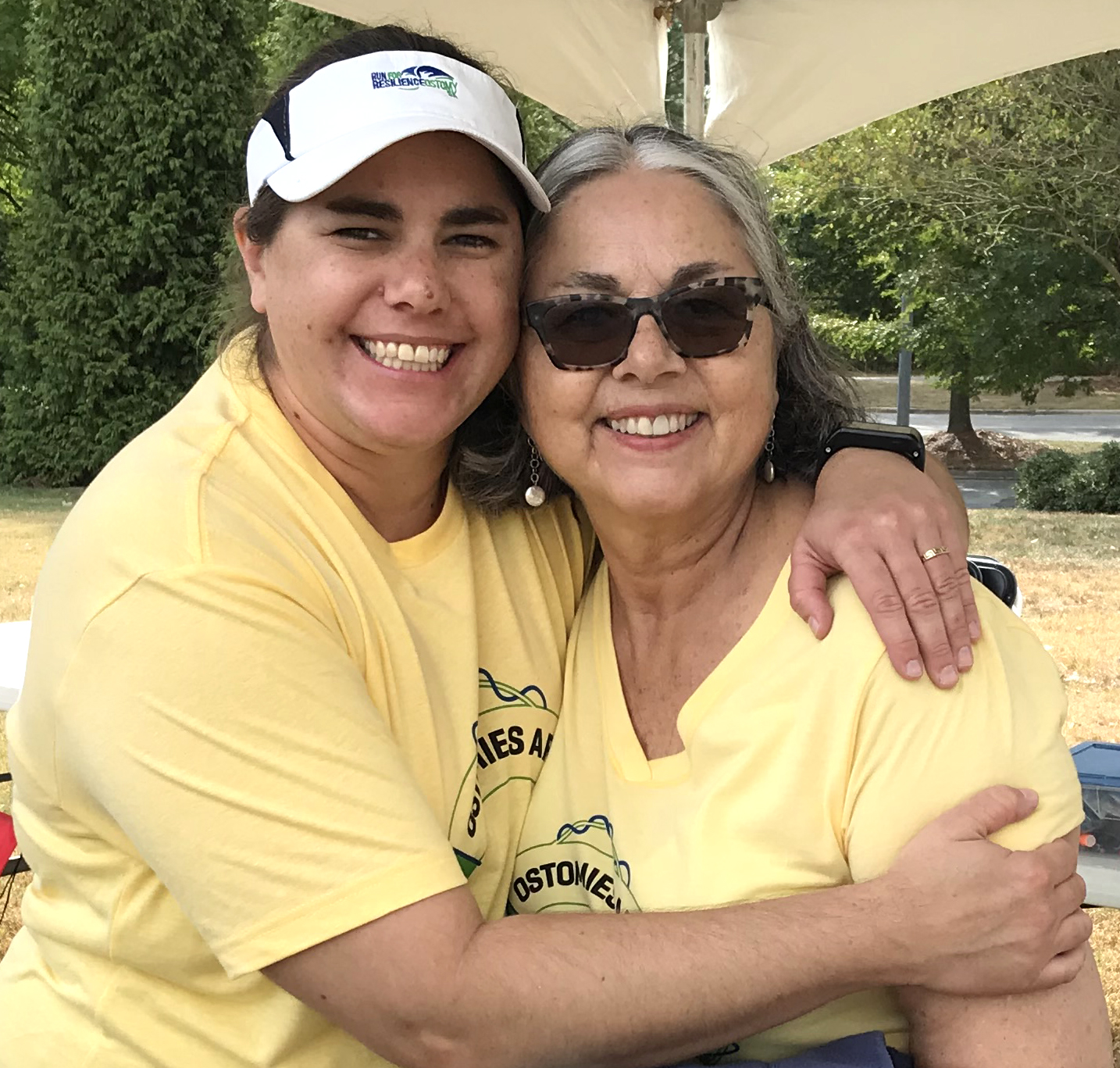
The idea for an Ostomy 5k started after Lara DuPree, a WOC nurse at the University of North Carolina, discovered that there was not a 5k for the patients she was most passionate about. She reached out to friend Angela Richardson, a WOC Nurse at Duke, to help change that.

“I was like, I don’t know anything about that, but okay!” Richardson recalls. ­­Richardson had seen her grandmother and patients initially wish for death over an ostomy and knew more needed to be done to educate against stigmas.

DuPree reached out to United Ostomy Associations of America (UOAA) and found that though they were not experienced in such events they were willing to help build enthusiasm. The event was a perfect celebration of Ostomy Awareness Day recognized nationwide every October.

The event soon had a location on a scenic greenway in Durham, but still needed funding. The duo reached out to their ostomy manufacturer contacts and also hit the streets asking local businesses, like run shops, many of whom did not know what an ostomy was. “Each person we talked to was another opportunity to raise ostomy awareness,” Richardson recalls. They also got in-kind donation items for a silent auction that raised over $1,000.

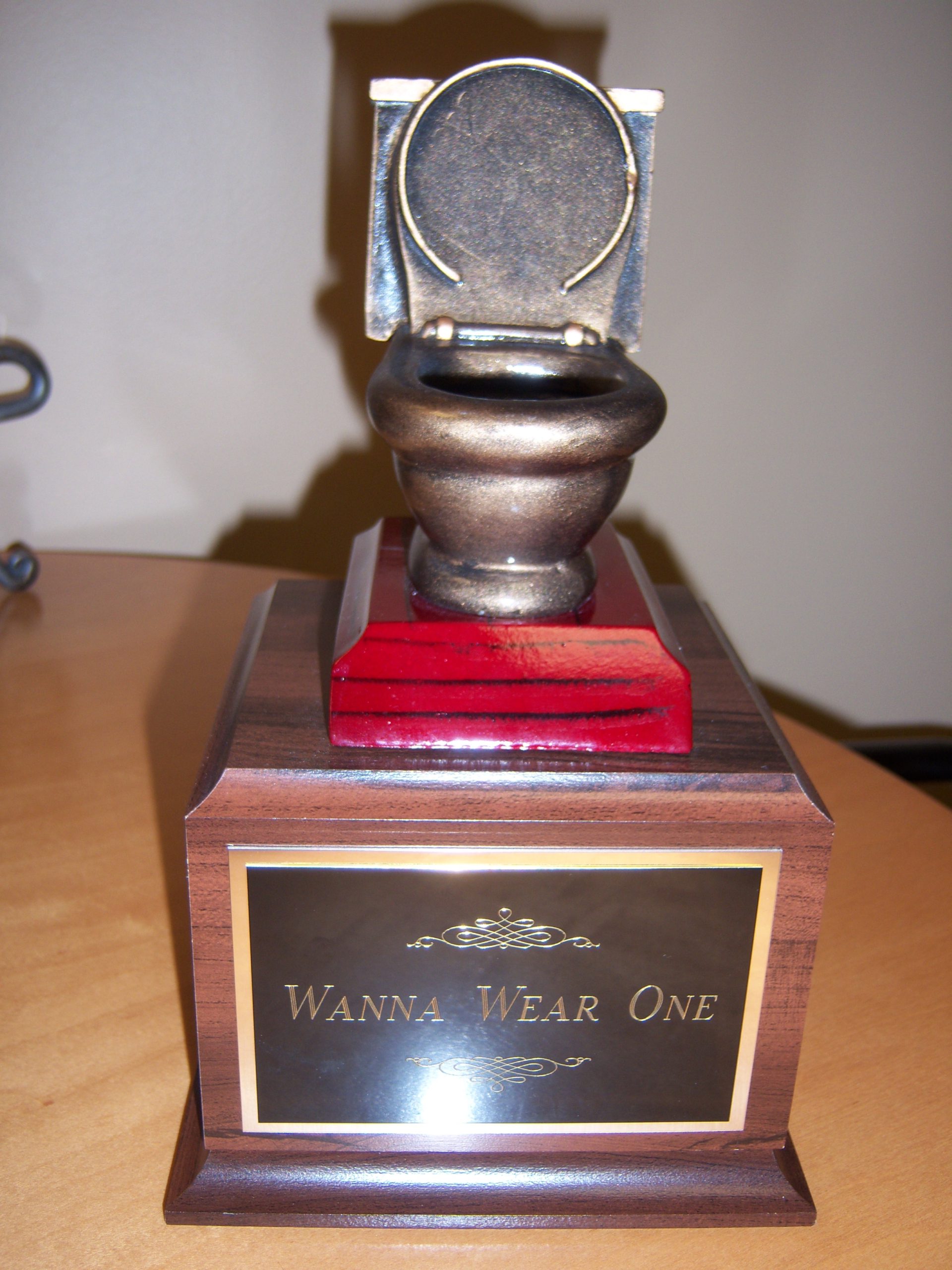
Medical units of their respective hospitals also fundraised and challenged each other for the coveted “golden toilet trophy” engraved like The Stanley Cup! “It was a fun way to get people involved, a good conversation piece for anyone walking by the nursing station,” DuPree says.

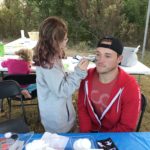
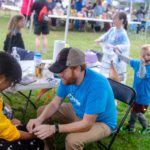
A kids’ fun run and activities like face decorating, also make it a great family-friendly event. The organizer’s children grew up around the event and are now vocal and dedicated ostomy advocvates.

One ostomate runner that first year has since had a lasting legacy with the race, Sandi McBride.

McBride found “a ray of hope” in her fellow ostomates who completed the 5k alongside her. Sadly, McBride passed away four months later from Crohn’s disease complications. “The Ostomy 5k refueled her spirit and determination and she knew her ileostomy didn’t define her,” her daughter Keyla reported.

In her honor, the McBride Scholarship was created with a portion of the money raised each year. This gift enables a local person in need to attend a UOAA National Conference. “She was such a positive and inspiring person and had a big team of family and friends that came to support her that year and returned for several years after she passed,” DuPree says.

Lara DuPree and her mother Dani Osewalt.

After the success of the first year, the pair were excited to get the word out even more and found lots of enthusiasm at UOAA’s 2015 National Conference in St. Louis. “We wore our t-shirts all around and passed out pins to everyone who was interested,” Richardson recalls.

In the weeks leading up to the 2015 Durham race the importance of supporting the ostomy community became even more personal for DuPree, as her mother, Dani Osewalt, had ileostomy surgery after a return of colon cancer. DuPree balanced caring for her mother with organizing the race. Her mom was discharged on the day of the event, Ostomy Awareness Day. “It has to be symbolic of something,” DuPree thinks.

Osewalt is the 5k’s unofficial cheerleader, and the top fundraiser for the cause every year.  “I am beyond proud of the dedication Lara has for the Ostomy community that I am a part of. She inspires me, educates me and supports me as an ostomate and as her mother!” Osewalt says.

A Legacy Across the U.S.

In 2016, UOAA Executive Director Jay Pacitti worked to increase sponsorships and expand the event nationwide. “We had folks from all over the U.S. ask about starting an event. It was great to see people so passionate and willing to do what it takes to spread awareness through a 5k.” Pacitti remembers.

The event was also renamed the Run for Resilience Ostomy 5k. “We felt that the resilience just spoke towards persons living with an ostomy, rising above challenges and continuing to persevere through whatever it takes,” Richardson says.

2024 marks the 8th anniversary of the Birmingham, Alabama and Boise, Idaho Ostomy 5ks. This year events are also taking place in Arkansas, Ohio, Pennsylvania, Illinois, and Tennessee.

Millie Parker and her extended family participate in person or virtually each year.

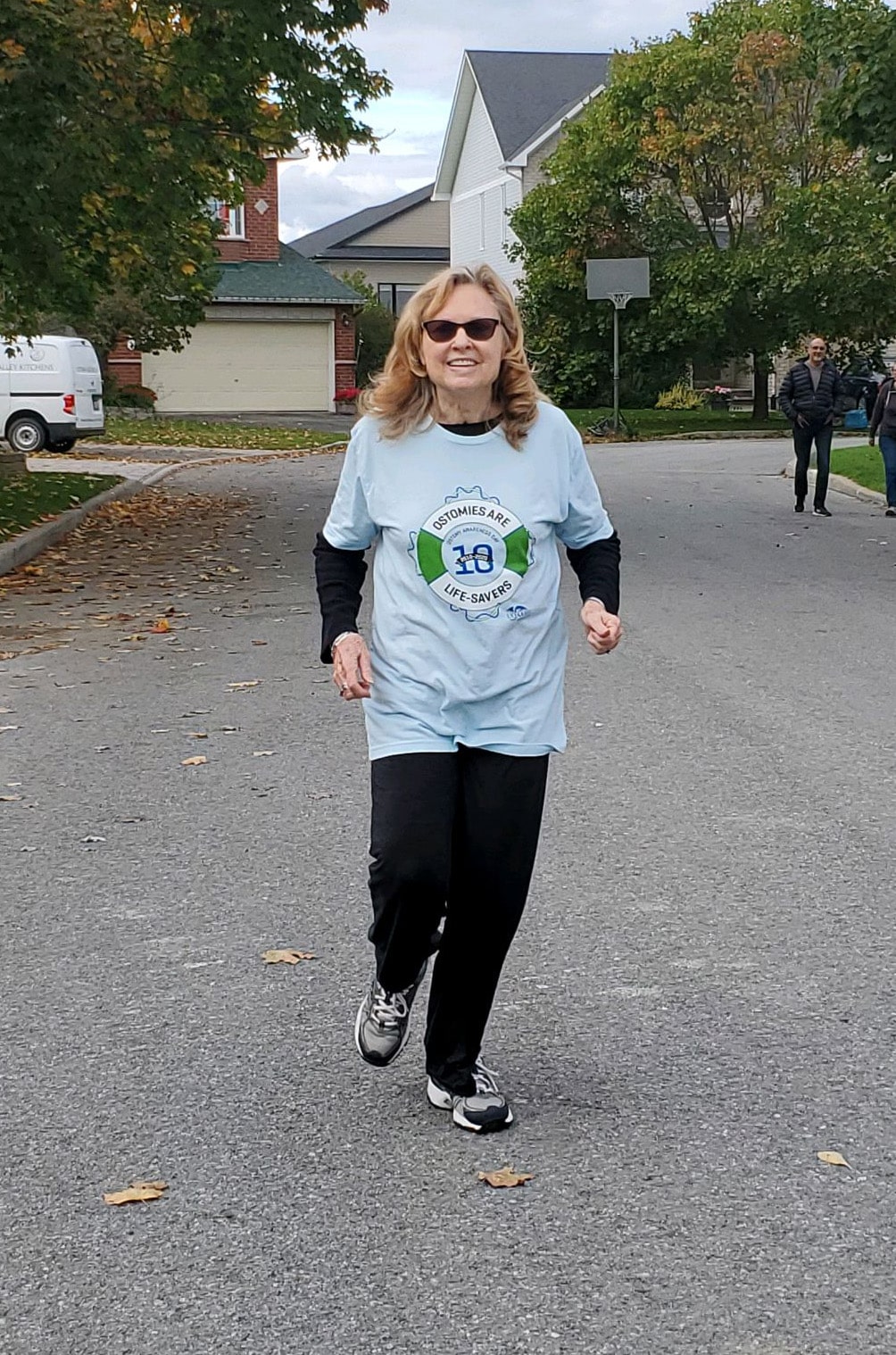
Before the pandemic sidelined live events in 2020, UOAA volunteer Millie Parker usually flew to North Carolina with three generations of family members for the 5k. The Worldwide Virtual Ostomy 5k, now also in its 10th year, has allowed her to continue the tradition. “Now wherever we are, all 19 of us wear our Ostomy Awareness Day shirts each year to run, walk, bike, swim or kayak to celebrate my new lease on life,” Parker says.

Nationwide the Run for Resilience Ostomy 5k is the biggest fundraiser in support of UOAA’s programs and services. Since 2014 about 1,300 people have participated in the North Carolina event alone and it has earned almost $109,500. Nationally almost $494,000 has been raised in support of UOAA’s mission.

“The impact organizers Lara, Angela and now Jessica have made to the ostomy community and to UOAA over the past 10 years is absolutely amazing,” says UOAA executive Director Christine Ryan.

“It has been beautiful to see the ostomy awareness and communities that have blossomed around the Run for Resilience Ostomy 5k events all across the country,” says UOAA President Cheryl Ory.

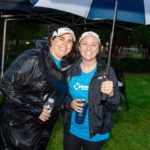
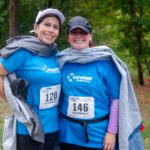
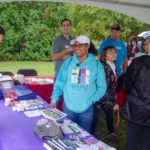
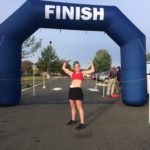
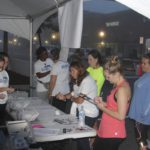
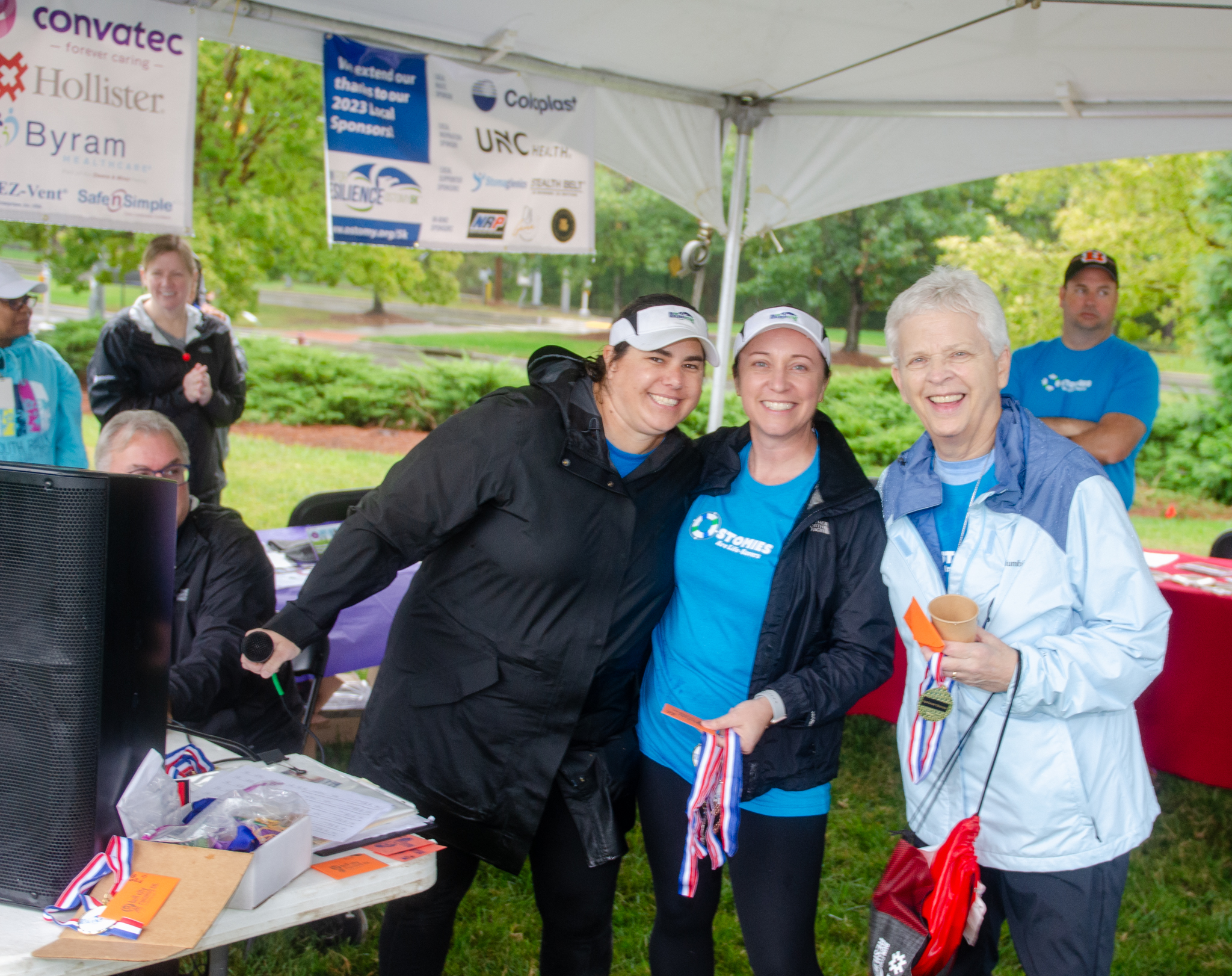
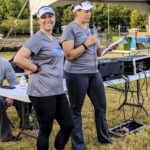
Back in North Carolina, an impending Hurricane canceled the 5k portion of the event in 2022 but the popular silent auction was still a success. In 2023, despite pouring rain, smiles shined on the faces of participants crossing the finish line as a DJ welcomed them each in. Sponsors shared details of their ostomy products at their table displays and the Triangle Ostomy Support Group shared their local support resources.

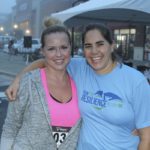
Run for Resilience Ostomy 5k founders Lara DuPree, left, and Angela Richardson, center, had out a medal for the top female ostomate finisher at the 2023 event in Durham, North Carolina.

On Saturday, October 5, 2024 Lara, Angela and newest co-race director, Jessica Blakeslee, and their dedicated friends and volunteers are looking forward to celebrating 10 years of raising ostomy awareness at the Durham, North Carolina Ostomy 5k.

They look forward to encouraging ostomates to meet and celebrate their resilience. One of their favorite memories is when a supporter from Nebraska flew to North Carolina for the event. “She said, I’ve had my ostomy for 10 years, and I’ve never met somebody else with an ostomy, this is the first time. And she just started crying. She felt seen, it was amazing,” DuPree remembers.

They know ostomy awareness and education still has a long way to go and want their community to know that there is nothing a person with an ostomy can’t do.

Fittingly (despite the serious runners the timed race often attracts) the course record is still held  by an ostomate– Collin Jarvis.

UOAA wishes to thank all the volunteers and local and national sponsors that have made the Run for Resilience Ostomy 5k possible! Visit ostomy.org/5k to support the cause!


Words of Advice from UOAA’s Advocacy Committee Co-Chair Sue Mueller and Advocacy Manager Jeanine Gleba

UOAA often hears from the ostomy community about their struggles with getting quantities of ostomy supplies that are over the Medicare allowable limits. UOAA recognizes that the process to obtain supplies beyond the maximum amount is difficult to navigate and is not well understood.  

Medicare’s coverage of ostomy supplies is explained in their Local Coverage Determination (LCD) policy (A52487) and the allowable quantity limits are in LCD policy L33828.  According to their policy:

The quantity of ostomy supplies needed by a beneficiary is determined primarily by the type of ostomy, its location, its construction, and the condition of the skin surface surrounding the stoma. There will be variation according to individual beneficiary need and their needs may vary over time. The actual quantity needed for a particular beneficiary may be more or less than the amount listed depending on the factors that affect the frequency of barrier and pouch change. 

The explanation for use of a greater quantity of supplies than the amounts listed must be clearly documented in the beneficiary’s medical record. If adequate documentation is not provided when requested, the excess quantities will be denied as not reasonable and necessary.”

According to our conversations with the Center for Medicare and Medicaid Services’ (CMS) billing contractors the quantities listed are reasonable and necessary for 80% of the patient population. The key for the small population who require quantities of supplies that exceed the usual maximum amount, is the information documented in the medical record that explains the need for the increased amount.  What are the factors that affect the greater frequency of changes for you? You must determine what documentation is missing from your medical record that medically necessitates having the greater quantity and then work with your medical professional to get the missing information included in your records and have your supplier submit them to Medicare. Please note that a letter from a nurse or doctor is not sufficient nor is just having it listed on your prescription. The justification of your need for additional supplies must be in your medical record. To learn more read UOAA’s blog “Know What’s In Your Medical Record”.

Any claim that goes over the allowable quantity is automatically denied in the Medicare billing system. It must then be appealed and the supplier has to show the documentation that proves medical necessity etc.  Appeal denial is so frequent that most suppliers no longer advance the increased amounts while waiting for an appeal decision and do not automatically file appeals. They only submit claims for the allowable limits and then the consumer has to pay out of pocket for any overages. 

Given the cumbersome frustrating process, before you deal with the hassle, UOAA suggests that you consider being re-evaluated by an ostomy nurse. Together you can evaluate why you need more supplies and determine if you need a different pouching system or can find another work around.  For example someone who uses 3-5 pouches per day may benefit from changing to a drainable pouch. If there isn’t an ostomy nurse in your local area, some facilities have telemedicine options or UOAA has a self-pay virtual ostomy clinic. There are many different types of supplies available to meet varied needs of ostomates and remedy the challenges that occur over the lifetime of an ostomy. A certified Wound Ostomy Continence (WOC) nurse is the ideal person to assess your situation and make recommendations. 

Increasing the number of pouches is not the solution for every problem. For example someone with a high-output stoma producing greater than 2L of liquid stool daily will want to first consider looking at their diet by working with a dietician and reading UOAA’s Eating with an Ostomy information. In some situations the solution may be adding medications or the timing of medication and eating.  This is why it is important to consult with your medical team or obtain a medical team that is responsive to your needs.
After you have consulted with your medical team and determined that you have a justifiable need that can be documented for more pouches, then pursue the Medicare appeal process with your supplier. Be prepared to purchase your additional supplies while you wait for the Medicare decision. Try to get your needed supplies at the lowest cost through discounts and free supplies. UOAA lists lower cost supply resources here.

If your appeal is denied, another resource is your local State Health Insurance Assistance Program (SHIP). They can assist you with correcting billing issues, and filing complaints and appeals. With your permission, SHIP will work with Medicare directly to help solve problems on your behalf. Find your local SHIP here.

The information we just discussed applies to people with traditional Medicare, if you have a Medicare Advantage plan you should follow the appeal procedure of your plan. You may also request a case manager who is an employee of the plan for assistance with the process. The decision-making process is different with Medicare Advantage plans. 
UOAA has been advocating on this issue for many years and we will continue to beat this drum with the Centers for Medicare and Medicaid Services (CMS) and their coverage jurisdiction Medical Directors until improvements are made.


By Robin Bergstein Berman

The latest episode of Larry David’s, Curb Your Enthusiasm was called “The Colostomy Bag” and during an attempt to be humorous, his usually (awkward and despicable character) made disparaging comments relating to ostomates. At least it opened up room for discussion… It’s the first time that I posted on my Facebook page about my one-and-done Ileostomy surgery 48 years ago and I received nothing but words of support. I shared below why I found the episode harmful:

“Being an ostomate does not define me.” Says Robin, 63, and has had her ileostomy for 48 years, finding health and a full life after ulcerative colitis.

This is too important not to address so I’m about to “out” myself for those who do not know. Larry David’s, Curb Your Enthusiasm episode that aired tonight was called “The Colostomy Bag” and it was harmful for a few reasons. I’m able to laugh at myself but this was not funny mostly because it passed along inaccurate information and promoted public stigmas that could cost lives. Those who desperately need a life-saving surgery (for bowel diseases, cancers and more), often put it off far too long due to inaccurate public opinion including that of too many doctors.

There were three primary comments that were said, I want to address about the episode while giving only a glimpse of my journey. First of all, not all who have an ostomy have a colostomy and therefore do not wear ”Colostomy Bags”. Larry kept saying colostomy as if it encompassed all ostomies… it doesn’t.

Secondly, having an ostomy is not the worst thing that anyone could possibly have. He made it sound as if it is. It’s life-saving and has given me personally 48 more years of life to date that I wouldn’t have had without the complete colectomy/Ileostomy I was given in a nine hour surgery in 1975. I would not be here without it since I was bleeding to death and not able to recover after given the maximum doses of steroids for an extended period of time. Polyps, the breeding grounds for cancer cells were present and multiple were seen when my entire colon and rectum were removed at 15 years old. The pain I endured prior to surgery was unfathomable and I won’t here expand on all of what I experienced. I had the most severe chronic ulcerative colitis, spending weeks and months at a time in the hospital from 11 to 15 years old.

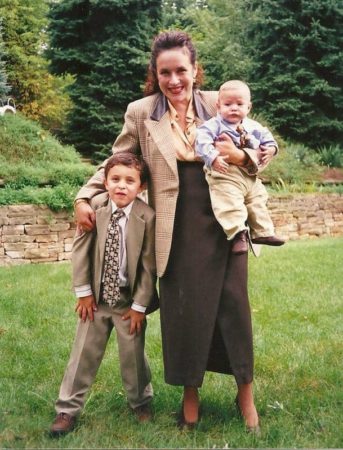
Robin with her two, now adult sons, whom she carried to term and had by emergency c-section after her ileostomy surgery.

Back to the episode; there is no such thing as a “shit in the bag look” for anyone thinking there is, like Larry. It was only slightly humorous in the context, but for someone facing this surgery and not knowing, there is no facial indications that we wear an appliance/pouch/bag. Now when he felt guilty about his comment to the car salesmen and wondered if he could gift a Louie Vitton Illeostomy Bag, that I’d like !!!…lol THIS was funny when Larry brought it up.

While they did say the car smelled like smoking, they alluded to it smelling like the man’s ostomy bag which is also not a “thing”. Popular public thinking is that ostomates smell, are unattractive, unappealing, not sexy or sexual and should be pitied. This too is not true. Within months after my surgery, I was at the beach away with my friend and her family, continued my relationship with my first boyfriend and went onto have others, didn’t miss a beat with school and countless other activities which were extensive and then went onto college away two years after my surgery. I’ve lived a full, active, useful life, carried both of our sons to term, working primarily but not exclusively in fragrance and cosmetics and certainly do not smell bad being told my entire life that I smell good (lol). In fact the first thing that attracted my husband to me was how I smelled at a bar after fragrance modeling all day.

I wear almost everything I want with some exceptions and am fashionable according to most. I’ve heard from too many that someone would rather be dead than to wear an ostomy bag. It’s the most absurd thing I’ve ever heard all caused by antiquated public opinion that is not valid and what this last episode of Larry David continues to promote.

I was going to wait until my 50-year anniversary with my ileostomy to reach out and make myself available but this prompted me to do it sooner.

Without fail when TV, even medical dramas, present ostomy surgery and the wearing of an appliance, they present it unfairly, wrong and impose additional stigmas. Don’t misinterpret me since adjusting to it sucks and there are challenges but it’s totally doable and makes a person no less the person they were in any way other than making them hopefully healthier.

If any one of you are facing this now or in the future, I am more than willing to help you or anyone you care about, to get through and adjust by listening, empathizing and giving you the tips and tricks I learned from a lifetime, 48 years, through all stages and phases of life.

Robin and her husband of 34 years.

It’s so much easier to find info today with social media than when I learned to adjust on my own without an ostomy, now a community is a click of a phone away and with laser surgery lessening the more invasive total cutting my body went through.

I was triggered tonight by the episode knowing how people are discouraged by doctors and the public’s misconceptions, I just had to address it not for me but for others. Ostomates are all ages and sexes and all walks of life including some professional athletes. Please let me know if you have any questions but mostly if you or a loved one are facing this life saving surgery, I’d be glad to help.If anyone would like to share my post, I’ll be glad to make it shareable by allowing public access. Let me know.

I was going to wait until my 50-year anniversary with my ileostomy to reach out and make myself available but this prompted me to do it sooner. I help where I can in the support groups and over 48 years ago tried forming a youth group here in Pittsburgh for ostomates, spoke to auditoriums full of high schoolers at various schools trying to discuss differences and acceptance for all and was always received well.  I went on a local talk show regarding my surgery back in 1975. Being an ostomate does not define me so I spend little time discussing it unless I can be of help or it’s in a relevant conversation, which it is this week!

Editors note: The humor of the Larry character in Curb Your Enthusiasm is often built around his selfish and ignorant views. In past episodes with characters who are disabled or have a disease, those characters are usually used to help magnify his faults. This episode did not include an ostomate character just the perception of what one would be like and what life would be like with one. The opportunity for awareness, such as what Michael J Fox brought to Parkinson’s in his past episodes, was missed. 

Want to get a more positive ostomy awareness message on TV and social media? Share UOAA’s Ostomy Public Service Announcement.


By Jeanine Gleba and Ed Pfueller, UOAA

Do you prefer to work behind the scenes for change? Are you crafty and creative? Do you like to share on social media? No matter how you want to do it, UOAA encourages everyone in the ostomy community to do one little thing to raise awareness and smash stigmas this upcoming National Ostomy Awareness Day on Saturday, October 7, 2023.

One option is to just do something to celebrate having your life back after this lifesaving and life restoring surgery!  You are living proof that ostomies are lifesavers and that’s something to shout from the rooftops. With close to one million people living with an ostomy or continent diversion in America, we could really make some noise!

If you find yourself asking, “Well what can I do?”, check out the clever ideas below that people have shared with us and things that people have already started doing for #OstomyDay2023:

Arty Awareness

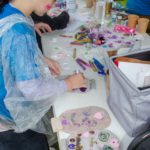
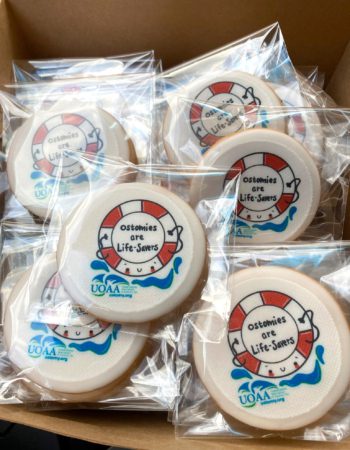
  • Bake it or order it. One nurse gets custom cookies made to share at her local ostomy awareness day event. Yum!

Social Media Awareness

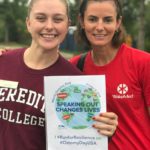
  • Share Your Ostomies Are Life-Savers story. People have started sharing their personal stories about how having an ostomy has saved or changed their life with friends on social media. You can use our Instagram and TikTok video green screen as a background (found here) or simply print out this sign and take a selfie! Be sure to tag UOAA and use hashtag #OstomiesAreLifesavers #IAmLivingProof and #OstomyDay2023.
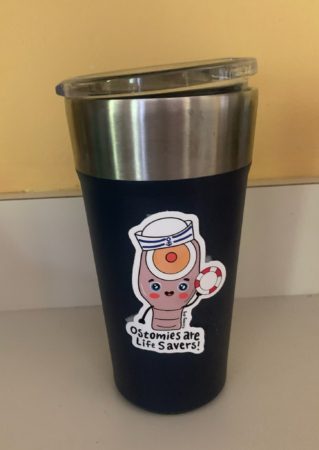
  • Social Stickers. Grab some attention for awareness with our “giphy stickers” or use the latest profile photo frame. Better still get some real stickers made and you can put them on water bottles, laptops, cell phones and more to raise awareness all year long! 

On the Scene or Behind the Scenes For Awareness

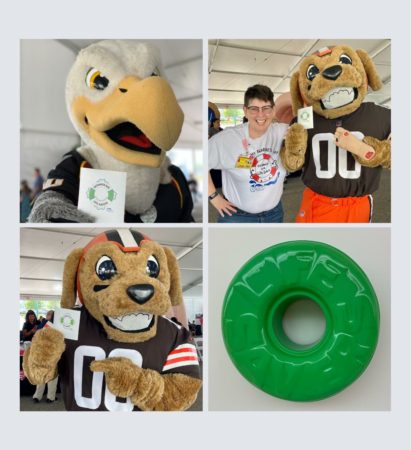
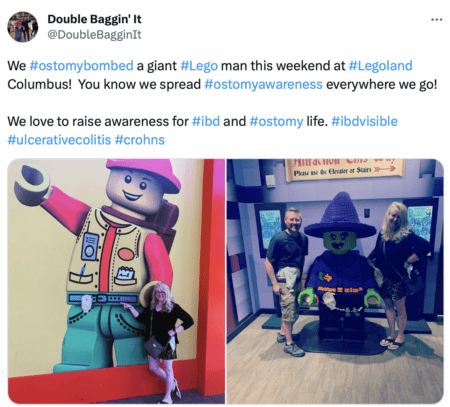
  • Mascots for Awareness. WOC nurse Linda Coulter has taken to getting every mascot she encounters to help spread ostomy awareness at sports venues and beyond. Online she shares all the fun #Mascots4ostomyAwareness photos. Also out and about is our friends @DoubleBagginit that spread ostomy awareness wherever they go with their clever #ostomybombs.

  • Walk or even sleep in for Ostomy Awareness.  Those not near a Run for Resilience event or who more are more inclined to sleep in can still donate to the cause while others often do an informal walk or even ride their horse as part of the Virtual Ostomy 5k.

  • Light up Your State Capitol. An advocate in Pennsylvania has worked with her elected official and the capitol building in Harrisburg, PA will be lit blue and green (UOAA official colors) recognizing Ostomy Awareness Day on October 7th between 6:30PM – Midnight EST! As this advocate wrote “Amazing what can happen when we open the dialogue!” The Capitol Building in Baton Rouge, Louisiana will also be lit to celebrate the day so inquire with your state!
  • Virtual Race Car. Someone else participates in the iRacing community. He painted his virtual racing car to raise ostomy awareness. Check out photos and story here.
  • Public Displays. In past years, nurses and others have done ostomy awareness displays at local hospitals or libraries or have hosted picnics with their support groups.

Give it some thought.  You might come up with your own unique idea!  If you do, we’d love to hear them, so send us an email at advocacy@ostomy.org.

Keep checking our webpage for all of the fun events that will be happening like UOAA’s Virtual Happy Hour on October 7th and other ways that you can raise awareness!