United Ostomy Associations of America
  • HOME
  • OSTOMY INFORMATION
    • Ostomy Information
      • What Is An Ostomy?
      • Living with an Ostomy: FAQs
      • Diet + Nutrition
      • Ostomy Skin Care
      • Sexuality
      • Bill Of Rights
      • New Ostomy Patient Guide
    • My Ostomy
      • Ileostomy
      • Colostomy
      • Urostomy
      • J-Pouch
      • Continent Diversions + Other Ostomy Types
      • Temporary Ostomy
      • Short Bowel Syndrome
      • Español
    • Children to Young Adults with Ostomies
      • Infant/Toddler (0-3 Years)
      • Preschool (3-5 Years)
      • Elementary School (6-9 Years)
      • Pre-Adolescent (10-13 Years)
      • Adolescent (14-18 Years)
      • Young Adult (18-25 Years)
      • Parents & Clinicians Resources
      • Know Your Rights
      • What To Expect After Surgery
      • Odor Control
      • Fast Facts
      • Ostomy Game
    • Crohn’s Disease & Ulcerative Colitis Information
      • Defining, Caring and Treating
      • Preparing for Ostomy Surgery
      • Common Issues, Managing Diet, Mental Health
      • Intimacy, Fertility and Pregnancy
      • Resources
    • General Information
      • UOAA Ostomy Marketplace
      • Product + Supply Information
      • UOAA Resources Library
      • Resources for Nurses/Home Health
      • Travel Tips + TSA
      • Donate Your Ostomy Supplies
      • Emergency Supplies
      • Related Links
      • UOAA Virtual Ostomy Clinic
      • Outpatient Ostomy Services Locator
  • SUPPORT
      • discussion
        Ostomy 101:
        Easily communicate “What is an ostomy?" with our infographic.

        Read More

    • Find Support
      • Support Group Finder
      • Support Group Websites
      • UOAA Virtual Ostomy Clinic
      • Online Peer and Ostomy Support Programs
      • Outpatient Ostomy Services Locator
      • Find a Mental Health Provider
      • Find an Ostomy Nurse
      • Online Discussion Board
      • Apps for Ostomates
      • Emotional Concerns
    • Connect With Us
      • Start/Affiliate Your Group With UOAA
      • Resources For ASGs
      • National Membership
      • Sign Up for Our E-Newsletter
    • Participate
      • Attend An Event
      • Become An Advocate
      • Join Us for a Conference
      • Make A Donation
      • Become a Member of The Phoenix Society
      • Donate Your Ostomy Supplies
      • Take A Survey
  • ADVOCACY
      • portal
        Roadmap to Establishing Outpatient Ostomy Services
        Documents that are available as PDFs to download and print.

        Read More

    • About
      • Advocacy Program
      • Advocacy Priorities
      • 10 Questions to Help You Speak Up and Self-Advocate
    • Get Involved
      • Understanding the Medicare Competitive Bidding Program 2025 Ruling
      • Take Action
      • Join Advocacy Network
      • How to Be An Ostomy Champion
      • Ostomy Awareness Day
      • Roadmap to Establishing Outpatient Ostomy Services
    • Tools and Resources Library
      • Non-Medical Switching Resources
      • Ostomy and Continent Diversion Patient Bill of Rights
      • Restroom Access Self-Advocacy Tools
      • Travel Tips + TSA Communication Card
      • Swimming with an Ostomy
      • Mythbusters Infographic
      • Workplace Resources
      • Aging with an Ostomy or CD
    • Take Control of your Healthcare
      • UOAA Virtual Ostomy Clinic
      • Know Your Ostomy Checklist
      • Know Your Ostomy Supplies Checklist
      • Physician Visit Checklist
      • Know Your Health Care Insurance
      • Know Your Pouching System
      • Know What’s in Your Medical Record
  • WHO WE ARE
      • Have a Question for Us?
        UOAA is a 501(c)(3) nonprofit organization that supports, empowers, and advocates for people who have had or who will have ostomy or continent diversion surgery.

        Contact Us

    • About Us
      • Our Mission + History
      • Our Leaders
      • National Sponsors + Partners
      • National Membership
      • Contact Us
    • How We Help
      • Advocacy
      • Awareness
      • Support
      • National Conference
      • Ostomy Nurse Scholarship
    • Get Involved
      • Volunteer
      • Become A Leader
      • Join A Committee
      • Career Opportunities
      • Sign Up for Our E-Newsletter
  • LATEST
  • EVENTS
    • Ostomy Awareness Day
    • Run For Resilience 5K
    • Ostomy Academy
    • Educational Webinars
    • 2025 National Conference
    • Calendar
  • GIVE NOW
  • SEARCH
  • Menu Menu

Help Others Help You! Ostomy and Continent Diversion Personal Health Preparedness
Advocacy, Colostomy, Continent Diversions, Disaster Preparation, Healthcare, Ileostomy, jejunostomy, Ostomy Tips, Urostomy

Why a Medical Alert ID Matters

By Ellyn Mantell with Jeanine Gleba UOAA Advocacy Manager

It’s a fact; ostomies and continent diversions save lives. Most people are very private about having a fecal or urinary diversion and only share information with people to whom they are most close. Living with a diversion is often considered an “invisible disability”. The concern is, what would happen with these individuals if they were in an accident, unconscious or unable to speak for themselves? They would be unable to notify an emergency responder of the unique needs of the diversion. For example, a Kock pouch is an internal pouch/reservoir that has a stoma that needs to be catheterized throughout the day to empty it. If an emergency responder were not aware of this need, it could result in over filling of the reservoir and damage to the reservoir. 

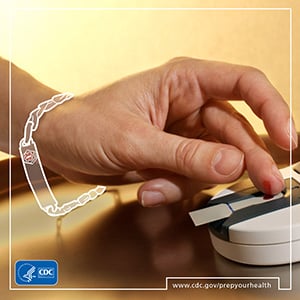
There is a simple non-verbal way of communicating health issues and medical conditions in emergencies that deserves attention and should be considered. According to the Centers for Disease and Control Prevention (CDC), for personal health preparedness “help others help you” by wearing a medical alert ID bracelet or necklace engraved with important information for emergency responders and healthcare providers. By wearing a form of medical identification people living with an ostomy or continent diversion can effectively advocate for their health and safety protection when they are unable to speak up for themselves. It provides peace of mind should the worst-case scenario happen.  

A real life example shared with UOAA may explain the efficacy of saving time in an emergency situation. An ileostomate was crossing the street and hit by a car. He was not terribly injured, but the force of hitting the ground caused his pouch to explode, causing the first responders to assume his abdomen had been perforated. They spent valuable time cutting clothing to find the cause of the seepage, an unnecessary waste of what could have been life-saving time. Had this gentleman been wearing a medical alert bracelet or dog tag necklace, he would have been assessed differently, and certainly more quickly. 

Wearing a medical alert ID is far more effective than carrying a card in one’s wallet or handbag, or counting on another person to provide vital information. If there is an accident or incident, one may be thrown from a car, their wallet lost or removed, or one may be separated from a person who can advocate. Additionally, a family member or friend may also be incapacitated in some way, or in shock, unable to provide this lifesaving information.

It is suggested by paramedics that a medical alert bracelet be worn on the left wrist, since that is where they reach first for a pulse. A medical icon in red is an attention-grabber, but whatever form of ID you choose be sure it includes the universal medical alert symbol.  Include as much information as possible and be specific. If there are medical instructions, spell them out. A sample inscription might say: Continent Urostomy Catheterize every 4-6 hours with a 1 4Fr. Catheter.

If there are other medical conditions, state them for emergency responders. Include such information as diabetes, allergies. This is no time to be vague. Include a cell phone number of a family member if there is room, and DO NOT FORGET TO ADD YOUR NAME TO THE FIRST LINE!

The most notable and recognized medical alert IDs are from the companies Medic Alert Foundation and American Medical ID. These companies can also keep on record more specific details of your medical history and current care with QR codes and ID cards in addition to the wearable ID.

For those who simply don’t like the look and style of the standard medical alert bracelet there are many more fashionable forms of ID. Other medical alert jewelry may be found on websites such as Lauren’s Hope, and Meridian Medical/Ostomy Supply Company sells a specific bracelet for ostomies. Although first responders tend to look for medical alert bracelets, for those who don’t want to wear jewelry, there are other types of IDs available including: Apple Watch slides, dog tags, and cell phone tags. Your ostomy nurse, primary care physician’s office and most pharmacies can also provide guidance.  

Some people may be uncomfortable wearing something that tells others they have an ostomy or continent diversion. Don’t let stigma stop you from being emergency-prepared!  Consider if you would wear medical alert identification if you had life-threatening allergies. When it comes to one’s health, it should never be associated with shame. 

Ostomies and medical alert IDs go hand in hand saving lives.


Disclaimer: UOAA does not endorse particular products, manufacturers, or suppliers.
Related

April 2, 2025
Tags: emergency planning, medical alert bracelet, ostomy bag, ostomy medical alert, ostomy medical history, ostomy pouch
Share this entry
  • Share on Facebook
  • Share on X
  • Share on WhatsApp
  • Share on Pinterest
  • Share on LinkedIn
  • Share on Tumblr
  • Share on Vk
  • Share on Reddit
  • Share by Mail
https://www.ostomy.org/wp-content/uploads/2025/04/cdc_80881_DS1.jpeg 300 300 Contributor https://www.ostomy.org/wp-content/uploads/2017/02/UOAAlogofinal2.png Contributor2025-04-02 16:28:052025-04-02 16:28:05Help Others Help You! Ostomy and Continent Diversion Personal Health Preparedness
You might also like
Calling all Ostomates, You’re Invited to H-Town
6 Ways You (Yes, You) Can Make a Difference on Ostomy Awareness Day
Tips for a Successful Recovery after Ostomy Surgery
Teen Life with an Ostomy
New Ostomates Deserve Our Best
River Rafting Camping Trip with an Ostomy
2 replies
  1. Astrid Zehr
    Astrid Zehr says:
    April 6, 2025 at 1:00 am

    Interesting read! I never thought about how crucial a medical alert ID could be for those with invisible disabilities like ostomies. Just curious, how do you ensure the information remains up-to-date, especially if medical needs change? Thanks for sharing this insight.

  2. Rachel Kapelanski
    Rachel Kapelanski says:
    April 17, 2025 at 12:53 pm

    Where/From Whom can I get one (Ostomy Medical Alert ID)?

Comments are closed.

Our Categories

Advocacy (78) Caregivers (19) Colorectal Cancer (19) Colostomy (138) Continent Diversions (8) Digital Sponsor (77) Disaster Preparation (4) Emotional Health (61) Events (32) Exercise/Sports (47) Fashion/Clothing (11) Healthcare (21) IBD (52) Ileostomy (181) J-Pouch (7) jejunostomy (7) Membership (3) Nutrition (19) Ostomy 5k (19) Ostomy 5k (15) Ostomy Awareness (55) Ostomy Basics (55) Ostomy News (94) Ostomy Nurse (13) ostomy reversals (12) Ostomy Supplies (2) Ostomy Tips (93) Ostomy Videos (4) Patient Stories (96) Pediatric Ostomy (4) Personal (63) Research (3) Sexuality (12) Short Bowel Syndrome (16) Skin Care (9) Social Life (5) Support Group News (12) Support Resources (15) Teens (3) Travel (11) UOAA Conference (17) UOAA History (3) UOAA Volunteers (3) Urostomy (111) Young Adult (7)

Support Us:

Your Donation Funds UOAA Educational Programs:

DONATE TODAY
SUSTAINING GIFT
BECOME A MEMBER
UOAA E-NEWS SIGN UP
Get updates on events, national advocacy and important topics in the ostomy and continent diversion community.

Contact Us


United Ostomy Associations of America
P.O. Box 2293
Biddeford, ME 04005-2293

Virtual Ostomy Clinic

Contact UOAA

Donate Your Supplies

Call us toll-free at: 1-800-826-0826.
Our Information Line hours are Monday-Friday, 9am to 3pm EST. If you have an emergency, please dial 911 or contact your local medical professional.

Please understand that UOAA is a private, nonprofit, advocacy and informational organization. We are not a medical facility and we do not have medical or legal professionals on staff. Therefore, UOAA does not provide Medical, Mental Health, Insurance or Legal Advice. Visit UOAA Virtual Ostomy Clinic provided by The Wound Company for non-emergency, virtual ostomy support.

Privacy Policy

Get Involved

UOAA is the leading organization proactively advocating on behalf of the ostomy community. Recognizing that we are always stronger together, we encourage everyone to get involved by joining our Advocacy Network. We’ve also created several Advocacy Tools and Resources to help you successfully advocate on behalf of the ostomy community to ensure every ostomate receives quality care.

UOAA Run for Resilience Logo

UOAA does not and shall not discriminate on the basis of race, color, religion (creed), gender, gender expression, age, national origin (ancestry), disability, marital status, sexual orientation, or military status, in any of its activities or operations.

Digital Health Award
© 2005-2026, UOAA. All Rights Reserved l Design by Tap House Media
  • Link to Facebook
  • Link to X
  • Link to Pinterest
  • Link to LinkedIn
  • Link to Youtube
  • Link to Mail
  • Link to Instagram
Link to: Maintaining Nutrition and Hydration in the Management of Short Bowel Syndrome Link to: Maintaining Nutrition and Hydration in the Management of Short Bowel Syndrome Maintaining Nutrition and Hydration in the Management of Short Bowel Syndro... Link to: Ostomy Motivates Life after Coma Link to: Ostomy Motivates Life after Coma Ostomy Motivates Life after Coma
Scroll to top Scroll to top Scroll to top