United Ostomy Associations of America
  • HOME
  • OSTOMY INFORMATION
    • Ostomy Information
      • What Is An Ostomy?
      • Living with an Ostomy: FAQs
      • Diet + Nutrition
      • Ostomy Skin Care
      • Sexuality
      • Bill Of Rights
      • New Ostomy Patient Guide
    • My Ostomy
      • Ileostomy
      • Colostomy
      • Urostomy
      • J-Pouch
      • Continent Diversions + Other Ostomy Types
      • Temporary Ostomy
      • Short Bowel Syndrome
      • Español
    • Children to Young Adults with Ostomies
      • Infant/Toddler (0-3 Years)
      • Preschool (3-5 Years)
      • Elementary School (6-9 Years)
      • Pre-Adolescent (10-13 Years)
      • Adolescent (14-18 Years)
      • Young Adult (18-25 Years)
      • Parents & Clinicians Resources
      • Know Your Rights
      • What To Expect After Surgery
      • Odor Control
      • Fast Facts
      • Ostomy Game
    • Crohn’s Disease & Ulcerative Colitis Information
      • Defining, Caring and Treating
      • Preparing for Ostomy Surgery
      • Common Issues, Managing Diet, Mental Health
      • Intimacy, Fertility and Pregnancy
      • Resources
    • General Information
      • UOAA Ostomy Marketplace
      • Product + Supply Information
      • UOAA Resources Library
      • Resources for Nurses/Home Health
      • Travel Tips + TSA
      • Donate Your Ostomy Supplies
      • Emergency Supplies
      • Related Links
      • UOAA Virtual Ostomy Clinic
      • Outpatient Ostomy Services Locator
  • SUPPORT
      • discussion
        Ostomy 101:
        Easily communicate “What is an ostomy?" with our infographic.

        Read More

    • Find Support
      • Support Group Finder
      • Support Group Websites
      • UOAA Virtual Ostomy Clinic
      • Online Peer and Ostomy Support Programs
      • Outpatient Ostomy Services Locator
      • Find a Mental Health Provider
      • Find an Ostomy Nurse
      • Online Discussion Board
      • Apps for Ostomates
      • Emotional Concerns
    • Connect With Us
      • Start/Affiliate Your Group With UOAA
      • Resources For ASGs
      • National Membership
      • Sign Up for Our E-Newsletter
    • Participate
      • Attend An Event
      • Become An Advocate
      • Join Us for a Conference
      • Make A Donation
      • Become a Member of The Phoenix Society
      • Donate Your Ostomy Supplies
      • Take A Survey
  • ADVOCACY
      • portal
        Roadmap to Establishing Outpatient Ostomy Services
        Documents that are available as PDFs to download and print.

        Read More

    • About
      • Advocacy Program
      • Advocacy Priorities
      • 10 Questions to Help You Speak Up and Self-Advocate
    • UOAA Action Center
      • Take Action
      • Competitive Bidding
      • Ostomy and Continent Diversion Patient Bill of Rights Campaign
      • Non-Medical Switching Campaign
      • Join Advocacy Network
      • Find Your Legislator
      • Advocate Tools
    • Other Ways to Get Involved
      • Ostomy Awareness Day
        • Tools
        • Who’s Raising Awareness?
      • Roadmap to Establishing Outpatient Ostomy Services
      • Share Your #MyAccessMatters Story
    • Tools and Resources Library
      • Restroom Access Self-Advocacy Tools
      • Travel Tips + TSA Communication Card
      • Swimming with an Ostomy
      • Workplace Resources
      • Aging with an Ostomy or CD
      • Home Health Tools
      • Webinars
        • Ostomy Supplies and Insurance
        • How to Navigate Insurance and Get Supplies Affordably
    • Take Control of your Healthcare
      • UOAA Virtual Ostomy Clinic
      • Expect More Series & Checklists
      • Additional Advocacy Resources
        • The Americans with Disabilities Act (ADA)
        • Long-Term Care Ombudsman
        • Quality of Care Complaints
        • Medicare Rights Center
  • WHO WE ARE
      • Have a Question for Us?
        UOAA is a 501(c)(3) nonprofit organization that supports, empowers, and advocates for people who have had or who will have ostomy or continent diversion surgery.

        Contact Us

    • About Us
      • Our Mission + History
      • Our Leaders
      • National Sponsors + Partners
      • National Membership
      • Contact Us
    • How We Help
      • Advocacy
      • Awareness
      • Support
      • National Conference
      • Ostomy Nurse Scholarship
    • Get Involved
      • Volunteer
      • Become A Leader
      • Join A Committee
      • Career Opportunities
      • Sign Up for Our E-Newsletter
  • LATEST
  • EVENTS
    • Ostomy Awareness Day
    • Run For Resilience 5K
    • Ostomy Academy
    • Educational Webinars
    • 2027 National Conference
    • Calendar
  • GIVE NOW
  • SEARCH
  • Menu Menu

Tag Archive for: WOC Nurse

I Found My Calling in Life, But It Came at the Price of My Colon

Body Image, IBD, Ileostomy, J-Pouch, Patient Stories, Teens, Young Adult

What started with mozzarella sticks, orange chicken, and a giant chocolate chip cookie from Applebee’s changed the course of my life.

I was 17 years old, touring colleges with my parents and preparing for what I thought would be the next exciting chapter of my life when everything changed.

It started with bloody stools and abdominal cramping. At first, my symptoms were dismissed as hemorrhoids. During that time, after taking antibiotics for cystic hormonal acne, I developed C. difficile. Even after treatment, my symptoms persisted for weeks, and two months later a colonoscopy finally provided the answer: ulcerative colitis.

I was a senior in high school.

Senior Prom (2010): Weeks after my first surgery, I attended prom with my ileostomy.

Instead of worrying about prom, graduation, and college, I found myself navigating doctor’s appointments, medications, hospitalizations, and the uncertainty that comes with living with a chronic invisible illness. Over the next year, ulcerative colitis slowly stole pieces of my life. I was exhausted, constantly sick, and missing out on experiences that most teenagers take for granted. I kept wondering, “How can anyone live a normal life with this disease?” As my illness progressed, so did my fears. I found myself wondering if I would need surgery, whether anyone would notice my ostomy, if anyone would ever love me, and if life would ever feel normal again. At 17 years old, I wasn’t just grieving my health – I was grieving the future I thought I was going to have.

Throughout my illness and recovery, my parents – especially my mom – never stopped believing I would get my life back, even during the moments when I couldn’t believe it myself.

Eventually, after a year-long ulcerative colitis flare, my gastroenterologist referred me to a colorectal surgeon. I expected another consultation, another conversation about treatment options. Instead, after examining me that day, he told me my colon was too diseased to save and that I needed surgery. Just one week later, I was in the operating room. I had spent more than a year fighting to keep my colon, hoping each new medication would be the one that finally worked. Accepting surgery didn’t feel like a choice; it felt like admitting defeat. But my body had reached a point where there were no other options. What I couldn’t see then was that surgery wasn’t the end of my life as I knew it. It was my chance to get it back.

At 18 years old, I underwent the first stage of a planned three-stage J-pouch (IPAA) surgery. I woke up with an ileostomy, suddenly trying to make sense of a body that looked and functioned differently than it had before.  I couldn’t imagine it then, but the surgery I had fought so hard to avoid would become the beginning of my recovery.

Something unexpected happened almost immediately. For the first time in over a year, I wasn’t running to the bathroom. The urgency and frequency were gone. Even though I had just undergone major surgery, I felt better than I had in months. It was only then that I realized how sick I had truly been.

High School Graduation (2010): Graduating with my ileostomy just two months after undergoing major surgery.

I won’t pretend it was easy. Living with an ostomy at 18 brought fears I never imagined I’d face. Like many young people facing ostomy surgery, I was scared. I worried about how I looked, what other people would think, and whether I would ever feel normal again. Going back to high school with an ostomy felt almost as intimidating as the surgery itself. I wasn’t worried about classes – I was worried about using the bathroom, whether my ostomy would make noise, whether anyone would notice my pouch, and whether I would ever feel like a normal teenager again.

One of the most meaningful moments during that time occurred when a nurse arranged for me to meet another young woman living with an ostomy. Until that moment, I thought my future had been taken from me. Watching her laugh, smile, and live her life changed everything. For the first time, I could picture a future for myself. What I didn’t realize then was that this single act would shape the rest of my life.

From that day forward, little by little, I made a decision: I wasn’t going to let my ostomy stop me from living my life.

I returned to high school. I graduated with my class. I went to my senior prom. I started college. I dated. I wore a bikini. I continued lifeguarding and teaching swim lessons, worked at a boutique shoe store, and even posed for a photoshoot.

None of those moments happened because I stopped being afraid. They happened because I refused to let fear make my decisions.

Looking back, I realized my ostomy wasn’t taking my life away – it was giving it back.

During my first hospitalization, something happened that I never expected. The nurses who cared for me inspired me to become a nurse. Their compassion, patience, and encouragement showed me what it meant to care for someone during one of the most vulnerable moments of life. They didn’t just help me recover, they changed the trajectory of my life. While I was still in the hospital, I knew I wanted to become a nurse. I also knew that one day I wanted to care for patients facing the same fears and life-changing surgeries that I was experiencing. That dream guided every step of my career. I earned my Bachelor of Science in Nursing (BSN), became a Registered Nurse (RN), later completed my Master of Science (MSN) in Nursing as an Adult-Gerontology Acute Care Nurse Practitioner (AGACNP-BC), and ultimately achieved board certification as an Advanced Practice Wound, Ostomy, and Continence Nurse (CWOCN-AP) – the very field that had once cared for me.

I know what it feels like to believe that no one else understands. And I know how powerful it is when someone says, “I’ve been where you are.”

I didn’t become a Wound, Ostomy, and Continence Nurse despite my experience as a patient. I became one because of it.

Today, I work in colorectal surgery, caring for patients with colon and rectal cancer and other complex colorectal conditions. Many are preparing for life with a permanent ostomy, and I have the privilege of helping them navigate that journey. There’s something uniquely powerful about caring for patients when you’ve been the patient yourself.
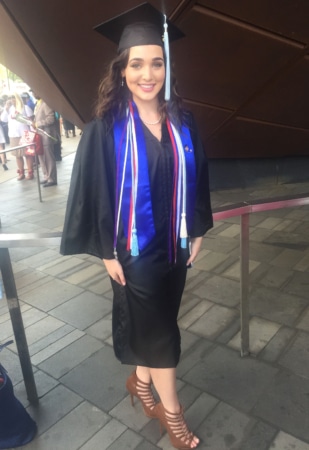
Bachelor of Science in Nursing (BSN) Graduation (2015): Earning my BSN and beginning the journey toward becoming the nurse I once needed.

Every day, I care for patients facing many of the same fears, decisions, and questions that once terrified me.  I sit beside patients preparing for ostomy surgery. I answer the questions they’re often afraid to ask.  Most importantly, I remind them that an ostomy is not the end of their story – it’s the beginning of a new chapter.

Because once upon a time, someone did that for me.

Because I’ve been there.

I know what it feels like to wake up after surgery and wonder what comes next.

I know what it feels like to look in the mirror and see a body that has changed.

I know what it feels like to believe that no one else understands.

And I know how powerful it is when someone says, “I’ve been where you are.”

More than a decade later, those fears didn’t end with me. I still hear the very same questions. With tears in their eyes, patients ask me the same questions I once asked myself:

Will anyone notice?

Will I ever feel normal again?

In that moment, I realize I’m not answering as someone who simply studied ostomy care.

I’m answering as someone who has lived it.

I often tell patients that while I would never have chosen ulcerative colitis, I wouldn’t trade the perspective it has given me. My surgeries didn’t restore the life I had before ulcerative colitis; they gave me a different life – one that still includes challenges, but also purpose, gratitude, and the privilege of helping others navigate the path I once walked.

Looking back, ulcerative colitis changed the trajectory of my life in ways I never could have imagined. If you had told my 18-year-old self that one day I would dedicate my career to caring for ostomy patients, I wouldn’t have believed you.

The disease that once felt like the greatest obstacle in my life ultimately led me to my purpose. It took me years to realize that while ulcerative colitis changed my body forever, it also revealed a calling I never knew I was meant to find. Every time I meet a frightened patient preparing for surgery, I think back to the young woman who met with me all those years ago.

Living Life with a J-pouch: Sixteen years later, traveling the world and proving that life after ulcerative colitis surgery can be full of adventure.

She probably had no idea how much that conversation would shape my life.  For years, I kept my story mostly private, sharing it only when I thought it might help a patient. Sixteen years later, I’m sharing it publicly for the same reason someone once shared theirs with me: because sometimes, all it takes is seeing someone who’s been there to believe you’ll be okay.

I hope that by sharing my story, I can be that person for someone else.

Because sometimes the thing that changes your life isn’t the surgery itself.

It’s meeting someone who’s already walked the path you’re about to begin.

It’s realizing you don’t have to face it alone.

It’s realizing your story isn’t ending.

It’s just beginning. ❤️


Kelly Mendello, MSN, AGACNP-BC, CWOCN-AP, OCN, is a Colorectal surgery Nurse Practitioner, Advanced Practice Wound, Ostomy, and Continence Nurse, former ostomy patient, and ostomy advocate. Drawing from both her personal journey and her experience caring for patients with ostomies, she is passionate about patient education, mentorship, and helping others navigate life with confidence after ostomy surgery.

Instagram: @withkellyxo
Email:
kellymendellonp@gmail.com
July 27, 2026
https://www.ostomy.org/wp-content/uploads/2026/07/Kelly-story-woc-nurse.jpeg 779 1179 Contributor https://www.ostomy.org/wp-content/uploads/2017/02/UOAAlogofinal2.png Contributor2026-07-27 09:14:292026-07-27 10:49:45I Found My Calling in Life, But It Came at the Price of My Colon

PROUD ACCEPTANCE OF THE 2024 UOAA OSTOMY NURSE SCHOLARSHIP

Advocacy, Ostomy News, Ostomy Nurse

UOAA is excited to announce that the 2024 recipient of the Educational Award for Ostomy Nurse Certification is Jessica Biggs from Arkansas!

Below a grateful and proud Jessica shares a little bit about herself and her motivation to become a certified ostomy nurse.

I am thrilled to have been awarded the 2024 UOAA Scholarship, which will support my journey towards becoming a certified ostomy nurse. As a Registered Nurse with four years of specialized experience caring for individuals with ostomies at Washington Regional Medical Center General Surgery Clinic since 2021, this scholarship represents not just an opportunity for me to advance my education, but also a step toward enhancing the quality of care for my patients.

I received my Associate of Science in Nursing at North Arkansas Community College in 2016 and recently graduated with my Bachelor of Science in Nursing (BSN) from Western Governors University in 2024. During my BSN program, I was honored to be awarded the Capstone Certificate of Excellence for my comprehensive healthcare change proposal, which included the development and initiation of an outpatient ostomy clinic at my current place of employment.

The journey from general nursing to specializing in ostomy care has been driven by a profound desire to fill a critical gap in healthcare services in Northwest Arkansas and to provide compassionate, expert care to a community that desperately needs it. Northwest Arkansas, with its dense population, currently lacks sufficient outpatient ostomy care services. This unmet need has driven me to work tirelessly towards the establishment of a dedicated ostomy clinic.

Throughout my career, I have had the privilege of working closely with patients navigating the complexities of life with an ostomy. These individuals face unique challenges, from managing their physical health to dealing with the emotional aspects of their condition. Ostomies, though medically necessary for many, can often lead to feelings of fear and confusion. As a nurse, my role extends beyond just providing medical assistance; I strive to be a source of emotional support and education, empowering my patients to regain their confidence and independence.

By becoming certified through the Wound, Ostomy, and Continence Nursing Certification Board (WOCNCB), I will be equipped with the specialized knowledge and skills necessary to provide expert care and education to my patients. UOAA is enabling me to pursue this further education and specialized training in ostomy nursing. This advanced knowledge is essential for providing patients with evidence-based gold standards of care that addresses both their physical and emotional needs. I’m excited to have been accepted into the WEB WOC ostomy single scope program and start in the 2024 Fall semester.

As I embark on this next chapter of my professional journey, I am deeply committed to making a lasting impact on the lives of individuals with ostomies. Every day, I witness the resilience and strength of my patients, and I am inspired by their stories. They remind me of the importance of compassion and understanding in nursing care. It is not just about treating a condition; it is about treating the whole person and supporting them through their unique challenges. I believe that every patient deserves access to high-quality, compassionate care, and I am dedicated to making this a reality for the ostomy community in Northwest Arkansas.

In conclusion, receiving the 2024 UOAA Educational Award for Ostomy Nurse Certification aligns seamlessly with my passion for enhancing patient care and advancing the field of ostomy nursing. Thank you to UOAA for believing in my vision and for investing in the future of ostomy care!

Congratulations, Jessica!

The next scholarship application will open, pending funding availability, in January 2025 and closes on June 30, 2025. 

If you’d like to help UOAA continue this in 2025, please consider making a donation to the Ostomy Nurse Scholarship Fund online, please complete the Donate Form, and at the bottom under the ”Additional Comments” section, please note “Ostomy Nurse Scholarship Fund”. You can also send a check made payable to UOAA, in the memo line include the Fund name, and mail to PO Box 2293, Biddeford, ME  04005-2293.

September 3, 2024
https://www.ostomy.org/wp-content/uploads/2024/09/Jessica-Biggs_web-e1725384525655.jpg 844 681 Contributor https://www.ostomy.org/wp-content/uploads/2017/02/UOAAlogofinal2.png Contributor2024-09-03 13:30:172024-09-03 13:30:17PROUD ACCEPTANCE OF THE 2024 UOAA OSTOMY NURSE SCHOLARSHIP

UOAA Supporting Ostomy Nurse Certification

Advocacy, Ostomy News, Ostomy Nurse

Thanks to the ongoing generosity of the ostomy community donating to UOAA’s scholarship fund, we were able to provide this award in the amount of $3000 to another nurse. UOAA is excited to announce that the 2023 recipient of the Educational Award for Ostomy Nurse Certification is Ashlee Cranage from California!

Below a grateful and honored Ashlee shares a little bit about herself and her motivation to become a certified ostomy nurse.

My name is Ashlee Cranage and I am so honored to be the recipient of UOAA’s Educational Award for Ostomy Nurse Certification. Becoming a certified ostomy care nurse is no easy task, and I am grateful to be recognized by UOAA as I strive to make a difference in the ostomy community.

I joined Community Memorial Healthcare in Ventura, CA as a new graduate registered nurse six years ago, starting out on the post-surgical unit. In March 2022, I joined the inpatient Wound and Ostomy Care Department working alongside both a certified Wound Ostomy Continence (WOC) nurse and a certified wound specialist (CWS). This job opportunity has opened my eyes to the impact that certified ostomy nurses bring to the healthcare field, and most importantly patient care. I became a Certified Wound Care Nurse (CWCN) in September 2022 and became a Certified Ostomy Care Nurse (COCN) in April 2023. 

One thing that I have learned this past year is that there is such a need for certified ostomy care nurses, and I am excited to be able to contribute to that need and make a difference!

Prior to working in wound and ostomy care, my ostomy knowledge and skillset was very limited. I could proficiently change a simple pouching system, but I did not have the confidence to troubleshoot a leaking pouching system, nonetheless teach patients adequately about their ostomy care post-surgery. Once I began my new role, I started seeing patients with ostomies more frequently and I knew I needed to be more comfortable with their ostomy care. Following our certified WOC nurse periodically and being present for the meaningful conversations and positive impact that she had on her patients, made me want to further pursue my education to do this too. Being present for those hard conversations, watching her connect with her patients and continue to follow up with them post discharge as well, motivated me to be able to also achieve this higher skill level and knowledge to make an impact. 

With my recent certification in ostomy nursing, I now have the knowledge to better my nursing practice and care for the patients with ostomies that our department sees on a day-to-day basis. I have the expertise to be able to be there pre and post-surgery, help patients navigate life with an ostomy and support them throughout their journey. I aspire to continue to work alongside my colleagues with the creation of a free ostomy clinic for our community to better be able to help and support at any time during their ostomy journey, whether they’ve had it for 2 weeks or 20+ years. I also aspire to be a support system for my patients by joining my colleague in holding a monthly ostomy support group where individuals can come together to share their experiences, tips and tricks and seek information or support that they may need. For some, getting an ostomy, whether it is elective or emergent, may be a scary situation in the beginning. However, having a certified ostomy care nurse to help navigate any challenges and provide information and support can turn a scary situation into a learning opportunity full of hope and willingness to learn. 

One thing that I have learned this past year is that there is such a need for certified ostomy care nurses, and I am excited to be able to contribute to that need and make a difference!

Congratulations, Ashlee!

The next scholarship application will open, pending funding availability, in January 2024 and closes on June 30, 2024. 

If you’d like to donate to the Ostomy Nurse Scholarship Fund online, please complete the Donate Form, and at the bottom under the ”Additional Comments” section, please note “Ostomy Nurse Scholarship Fund”. You can also send a check made payable to UOAA, in the memo line include the Fund name, and mail to PO Box 2293, Biddeford, ME  04005-2293.

September 6, 2023
https://www.ostomy.org/wp-content/uploads/2023/09/scholarship-winner-2023-blog.jpg 483 482 Contributor https://www.ostomy.org/wp-content/uploads/2017/02/UOAAlogofinal2.png Contributor2023-09-06 12:10:152023-09-06 12:10:15UOAA Supporting Ostomy Nurse Certification

A Future Certified Ostomy Nurse in the Making

Advocacy, Ostomy Nurse

In an effort to contribute to a solution on narrowing that large gap between the patients who need a certified ostomy nurse and the number of available certified ostomy nurses, United Ostomy Associations of America, Inc. is sponsoring a scholarship award. More nurses specialized in ostomy care will lead to improved ostomy care in the United States.

Thanks to the ongoing generosity of the ostomy community donating to the scholarship fund, UOAA can provide this annual award in the amount of $3000. UOAA is excited to announce that the 2022 recipient of the Educational Award for Ostomy Nurse Certification is Jessica Peters from Maryland!

Below a grateful and honored Jessica shares a little bit about herself and her motivation to become a certified ostomy nurse.

I have worked as a surgical nurse at Johns Hopkins Bayview Medical Center (JHBMC) since graduating with my Associate degree from Community College of Baltimore County, in Maryland in 2008. In 2020 I received my Bachelor of Science in Nursing degree from Chamberlain University. Now an Advancement in Clinical Excellence (ACE) nurse, and a permanent charge nurse, I strive for the best patient outcomes.

In 2021 I received the Johns Hopkins school of nursing’s “Jarvis Star Nurse Award” for outstanding clinical excellence in nursing. In 2022 I humbly accepted the “Nurse of the Year” award from my hospital, JHBMC.

I contribute to both hospital and unit councils and committees, and my passions include mobility, safe patient handling equipment, ostomy, wound education, Comprehensive Unit-based Safety Program (CUSP), and fall prevention.

My motivation and excitement to become a certified ostomy nurse come from the experiences and knowledge I’ve attained working in the surgical unit for 13 years at Johns Hopkins Bayview Medical Center. Working in General surgery, you see many medical diagnoses and care for the patients following various surgical procedures. Colorectal and continent diversion surgeries are common in our unit, and I’ve noticed that patients, particularly receiving ostomy care and education, are unique and have many challenges to overcome. It takes extraordinary compassion to care for a patient having this surgery. I believe an ostomate is on a journey, and I’ve always wanted to be there on their journey, making sure every step is taken with care and consideration.

At the end of 2020, my passion for ostomy care evolved when I started the JHBMC’s first-ever “unit-based” ostomy committee. The committee meets monthly and has an organized agenda for discussion. The diverse group includes the unit staff, case manager, dietitian, surgeons, and Wound Ostomy Continence nurses from inpatient and outpatient healthcare teams. Our streamlined approach relies on communicating about the ostomate throughout the transitions of care. We also share best practices as a group and have created tools to make educating the patient as unambiguous as possible.  With the committee’s support, I created a spreadsheet to audit for proper orders and tasks required during the hospital stay and a step-by-step bedside checklist to ensure all ostomy tasks and teaching are completed before discharge. We have achieved much as a committee but most profoundly, we have the data to show our ostomy best practices, and comprehensive education model resulted in zero hospital readmissions from 2021-2022!

I plan to contribute to the field by sharing the insight and best practices I’ve gained from the committee at my hospital. I have the most incredible Wound Ostomy Continence nurse mentor and plan to receive my certification through the WEB WOC Nursing Education Program.

The past two years have been exciting, and it’s been a privilege to have a career that I love. My ultimate goal is to have the best skills and knowledge in ostomy care and to serve my hospital and community independently as a certified ostomy nurse. I look forward to advancing my career and can’t wait to continue this journey.

Congratulations, Jessica!

The next scholarship application will be available in January 2023 and closes on June 30, 2023. 

If you’d like to donate to the Ostomy Nurse Scholarship Fund online, please complete the Donate Form, and at the bottom under the ”Additional Comments” section, please note “Ostomy Nurse Scholarship Fund”. You can also send a check made payable to UOAA, in the memo line include the Fund name, and mail to PO Box 525, Kennebunk, ME  04043.

August 17, 2022
https://www.ostomy.org/wp-content/uploads/2022/08/Jessica-Peters.png 958 637 Contributor https://www.ostomy.org/wp-content/uploads/2017/02/UOAAlogofinal2.png Contributor2022-08-17 11:52:412022-08-17 11:52:41A Future Certified Ostomy Nurse in the Making

Get Answers and Find Friends at the Virtual Ostomy Symposium

Colostomy, Continent Diversions, Events, Ileostomy, J-Pouch, Ostomy Basics, Ostomy News, Ostomy Tips, UOAA Conference, Urostomy

By Robin Glover

Ostomy surgery is a life-changing event. As ostomates, we go through things other people will never have to experience. Everybody’s story is different, but we have all shared in many similar aspects of our journeys. We are a unique community of strong and courageous people of all ages and backgrounds.

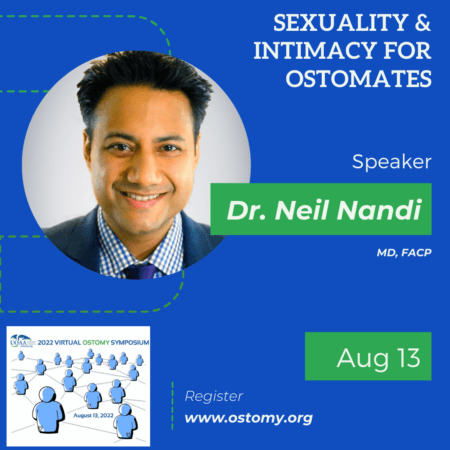
To celebrate that, United Ostomy Associations of America is hosting the UOAA 2022 Virtual Ostomy Symposium on Saturday, August 13, 2022 from 10:30 a.m. to 5:30 p.m. Eastern Time (7:30 a.m. to 2:30 p.m. Pacific) including breaks.

This symposium will feature a mix of ostomates, j-pouchers, and medical professionals delivering a fun, engaging, and informative day of learning, laughing, and community-building.

Questions you were too afraid to ask will be answered. Questions you didn’t even know you had will be answered.

In all, 22 speakers will be bringing their expertise on a variety of ostomy-related subjects. (And don’t worry, each session will be recorded so if you can’t make it live that day or can’t see all of the ones you want, you’ll be able to watch them later.)

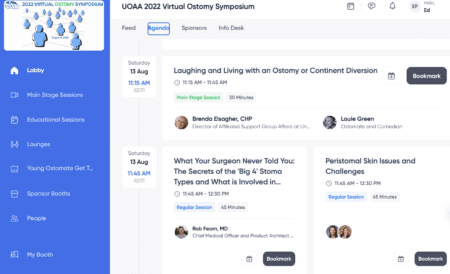
You can find the full list of speakers and the agenda here.

What to Expect

The virtual lobby will be open at 10:30 AM EDT before the speaker sessions begin to chat, troubleshoot any tech issues and explore the agenda. Ticket holders get an email with a unique link to the event. Attendees are encouraged to enter “lounges” organized by ostomy or continent diversion type (and one for caregivers) to chat or meet with others like you. These will be open for the entirety of the event for those who want to pop in and out during breaks.

Sponsor Booths will also be open throughout the event to give ticket holders the opportunity to talk with representatives of ostomy product manufacturers and suppliers ­– and learn about the latest product advancements. Thanks to all our symposium sponsors including Platinum Sponsor Convatec for helping to make this event possible.

The most important participant for this year’s UOAA Virtual Ostomy Symposium is you.

After opening remarks from UOAA leadership, the symposium will kick off on the Main Stage with Louie Green, a standup comic and recent ostomate. He’s going to share his poignant ostomy journey with a bit of welcoming wit.

Next on the Main Stage at 12:40 AM EDT, Joy Hooper’s Ostomy BUZZables presentation will present the newest innovations and ostomy products available on the market. If there’s something new in the ostomy world, you’ll hear about it here.

Educational Sessions 

Throughout the day, Educational Sessions will run concurrently between the Main Stage where you’ll get to hear from wonderful WOC nurses, experienced ostomates, amazing doctors and dedicated advocates.
Presentations will cover everything from sex and intimacy and traveling the world with an ostomy to nutrition and staying hydrated and dealing with hernias. Other session topics will focus on peristomal skin issues, aging in place with an ostomy, affiliated support groups, and secrets of the big four stoma types.

There will also be a special workshop for young adults. Inspiring ostomates Molly Atwater-Pulisic and Collin Jarvis will be co-hosting the conversation about physical activity, relationships, and mental health for ostomates ages 18-35.

Attendees will be able to submit questions for the speakers during the presentations and the speakers presentation materials will be available to access at you leisure.

After these educational sessions be sure not to miss Dr. Janice Beitz back on the Main Stage at 3:55 PM EDT for a presentation titled If You See a Toilet in Your Dreams, do NOT use it! Emotional Support, Quality of Life and Humor. It will look at the power of humor in dealing with emotional challenges while dispelling some myths and misconceptions about ostomies.

The event will come to a close with a special presentation from Magen Cherry, a j-poucher and winner of the 2007 Miss Texas USA competition. She uses her platform to share encouragement and bring hope to fellow ostomates and j-pouchers coming to terms with their new reality. Fun fact: Magen had a colonoscopy three days after being crowned Miss Texas USA!
Connecting with a Caring Community

Of course, there are going to be plenty of great speakers but the most important participant for this year’s UOAA Virtual Symposium is you. By taking part in this event, you’ll be able to connect with a thriving ostomy community (or j-pouchers or any other type of continent diversion) and help us grow even stronger.

As we all know, living with an ostomy or other continent diversion isn’t always easy. It can be isolating. Sometimes even close friends and family don’t want to hear anything about it. There’s fear of the future and worry about existing relationships.

Many new ostomates want to hide it forever and hope no one ever finds out. But, through organizations like UOAA, they’ll find out they’re not alone and that life with an ostomy shouldn’t be something to be ashamed of, but rather that ostomies are life-savers and that you can join others in a celebration of being alive.

This year’s event is going to be awesome. Questions you were too afraid to ask will be answered. Questions you didn’t even know you had will be answered. You’ll get to connect with wonderful people while gaining inspiration and knowledge that could impact the rest of your life – and the lives of others.

As you can see this is not your typical webinar or Zoom call and the $35 ticket (plus $3.88 processing fee) and sponsor support of UOAA (a 501(c)(3) charity) help to offset the costs of hosting this special event.

All of this is leading to UOAA’s in-person National Conference in Houston in August of 2023. The connections you build during this year’s virtual event can open the door to even deeper friendships when we all get to meet each other face-to-face next year in Houston!

The UOAA 2022 Virtual Ostomy Symposium on Saturday, August 13th is going to be a great time and a great experience. And we need you there to make it even better.

To get all the information, learn more about the speakers, or find out how to get tickets, head to the event website.

August 4, 2022
https://www.ostomy.org/wp-content/uploads/2022/08/logo-FB-2022-VIRTUAL-OSTOMY-SYMPOSIUM940-×-650-px--e1659631554457.png 537 640 Contributor https://www.ostomy.org/wp-content/uploads/2017/02/UOAAlogofinal2.png Contributor2022-08-04 12:43:142022-08-04 13:35:13Get Answers and Find Friends at the Virtual Ostomy Symposium

So You’re Getting an Ostomy

Colostomy, Exercise/Sports, IBD, Ileostomy, Ostomy Basics, Ostomy Tips, Urostomy

By Robin Glover

Oh no! An ostomy! You’re going to be pooping or peeing into a bag attached to your stomach?? Your life is over, right? No more dating. No one will ever like you. Children will run from you! It’s so gross!

Don’t worry. We’ve all been there. As great as they can turn out to be, the idea of getting an ostomy is never really welcomed news. Add on to that, you’re probably very sick and haven’t eaten well in weeks and you’re tired and worried and feel alone. You know nothing about ostomies and are wondering what life will be like with one.

Will having an ostomy bag eventually become second nature and you won’t even really think or worry about it? Yes.

First of all, life is going to be great! You’ll feel better. You’ll eat better. You won’t be bleeding out of unspeakable places and constantly panic-stricken about finding the nearest bathroom. Your life will become more consistent and routine and you’ll end up being happy you had a lifesaving, life-improving surgery.

It’s possible that you don’t believe that right now, though. And while it does turn out to be a good thing for most, there is an adjustment period and a lot of unknowns and myths. For instance, how do I change my ostomy bag? Will I stink? What if I have an accident in public? Can I ever play sports again? Or exercise? Or go swimming?

In short– is it easy? No. Will it be fine? Yes, yes and yes. But for a little expanded information and peace of mind, we can go into a little more detail.

How Do I Change My Ostomy Bag?

You gently peel it off, wipe things off a bit, and put another one on. It really does become as simple as that. But, at first, you’ll hopefully have a specialized ostomy nurse that will teach you how to do it. After your surgery, you likely won’t have to change it yourself the first several times. But, you should practice doing it and will be better off if you make the effort to know how before you leave the hospital. It also helps to know what the standards of care should be for ostomy patients and speak out before you are discharged and sent on your way.

If you did not have access to a certified ostomy nurse in your hospital be sure to seek one out. You can also find a Wound, Ostomy and Continence (WOC) Nurse or an Ostomy Management Specialist (OMS) through product manufacturers and telehealth services.

Will My Ostomy Bag Leak?

At first, Yes. It likely will. You might even get really frustrated in the beginning because you can’t seem to put it on as well as the nurse in the hospital. Even if you put it on “perfectly” and follow all the steps your ostomy pouch can still leak. You’ll get the hang of it, though. Every ostomy and everybody is different. You’ll learn what supplies you need, where to get them, and how to use them to make sure the fit is just right.

While you might be hesitant to leave the house for a while, you’ll soon feel totally confident going anywhere you want, any time you want. And better yet? You won’t be constantly worried about being near a bathroom! There’s always the risk of a leak, though. But it won’t be a big deal. You’ll be able to detect it quickly and take care of it.

Will I Smell?

No. If the appliance is attached correctly, you should never stink. No one will be able to smell you. You can be as close as you want to other people. You can go out and be in a crowded bar and nobody will know you have an ostomy bag. There are also plenty of clothing and garment options to fit well with your pouch and conceal it from anyone ever knowing – if that’s how you choose to approach it.

If you do ever smell, that means you need to check your pouch for any leaks or openings allowing odor to escape. And if you happen to be in public, you can carry tape or any of a variety of things to sneak off into the bathroom and do a quick fix. Will it be uncomfortable or scary the first time it happens? Yes. Will having an ostomy bag eventually become second nature and you won’t even really think or worry about it? Yes.

(Quick note: The answer to a lot of questions about having an ostomy is that “you’ll figure it out” or “you’ll become comfortable” because everything will be new when you first have an ostomy bag. There’s no step-by-step guide. There will be frustrations. Maybe some tears. It’s an adjustment. Nobody just has ostomy surgery, learns to put on a pouch, and then goes about their business. You will have issues. You may have some stained clothes and probably need to change your bedsheets one or two times. But, you will figure it out.)

Can I Do Whatever I Want?

Generally speaking, yes. Of course, this depends on every unique situation, and only you and your doctor can accurately answer this question. But, in general, you’ll be able to do whatever you want. Simply having an ostomy won’t restrict you from doing anything. You might even be able to do a whole lot more than you could before.

You’ll be able to go swimming, play rugby, do mixed martial arts, teach yoga, travel the world, go on dates, and do anything you were physically capable of before having surgery. All without worrying about being in constant pain or eating the wrong thing or needing to run to the bathroom every five minutes. However, make sure to wait 6-8 weeks or until your doctor approves you for any strenuous physical activity before winning the local 5k again. (Perhaps you’ll even want to take part in UOAA’s own Ostomy 5k.)

Getting An Ostomy Is Totally Worth It

All the details about how to change your ostomy pouch where to get supplies, and when you can go back to doing the things you love will get worked out. But the important thing to remember is that having ostomy surgery is going to be totally worth it. Even if your head is spinning now about what life will be like, it will calm down.

And also remember that you’re not alone. One of the best ways to prepare is to call or visit an ostomy support and information group before you have surgery. Many others have been through the same process and are more than eager to offer a listening ear and emotional support. UOAA also offers a new ostomy patient guide and has tons of online resources to get you started on the right path.

You’ll get the hang of everything, then look back and be so grateful that you are a warrior. Countless other ostomates will tell you the same thing. That is, when they’re not busy living an incredible life they wouldn’t have otherwise.

You got this!


Robin Glover is a writer based in the Houston area. He has a permanent ostomy after being diagnosed with Crohn’s Disease in 2017.

June 6, 2022
https://www.ostomy.org/wp-content/uploads/2022/06/Mom-ostomy-web-3.png 790 1200 Contributor https://www.ostomy.org/wp-content/uploads/2017/02/UOAAlogofinal2.png Contributor2022-06-06 11:23:582022-06-09 15:03:45So You’re Getting an Ostomy

Celebrate World Ostomy Day at ConvaTec’s Virtual Patient Summit, Friday, October 1, 2021

Advocacy, Colostomy, Digital Sponsor, Events, Ileostomy, Ostomy Awareness, Ostomy Nurse, Ostomy Tips, Urostomy

This event has passed but you can view it below. “This is My Life Now: A Patient Guide to Advocacy” By ConvaTec featuring UOAA Advocates.

Join ConvaTec for a live discussion with ostomates, nurses and other healthcare professionals at their two-session, one-day virtual summit on Friday, October 1, 2021.

“Ostomates’ Rights Are Human Rights – anytime and anywhere” is this year’s World Ostomy Day theme, which is why ConvaTec is bringing together ostomates, nurses and caregivers to lead open discussions that will be patient rights-focused fostering awareness, education, and advocacy.  Together we will have conversations that matter!

The Patient Summit will be broken into two sessions:

Session 1, 1pm EST: This Is My Life Now: A Patient’s Guide to Advocacy:

Joanna Burgess, BSN, RN, CWOCN. Is a WOC Nurse at Convatec and is Co-Chair of UOAA’s Advocacy Committee

Jeanine Gleba, MEd., UOAA Advocacy Manager

Ellyn Mantell is a UOAA Advocate, Author and Ostomy Support Group Leader.

Did you know that by knowing your patient rights and feeling empowered and exercising those rights – you can take those situations where you felt down and make it positive. Think, “This is MY life now. I have the right to be me.”

Learn about your local and international ostomy support resources, understand your patient rights, and feel empowered to exercise those rights in this session.

Scheduled panelists:

• Ellyn Mantell (United States), UOAA Advocate, Ostomy Support Group Leader

• Jeanine Gleba (United States), United Ostomy Associations of America, Advocacy Manager

• Joanna Burgess (United States), WOCN, ConvaTec me+™ Nurse, UOAA Advocacy Committee Co-Chair


Session 2, 3pm EST: Creating a Healthy Bond: Healthcare Support for Your Patients:

Allison Rosen is UOAA’s World Ostomy Day Champion, a colorectal cancer advocate and Ostomy Support Team Member at MD Anderson.

Healthy bonds in life are all around us. But there may be times it feels difficult to bond. Do you know, or do your patients know, about the resources available for support? Whether that is support with a nutritionist so they can learn about fiber intake, or with an exercise therapist to get guidance on hernia prevention. It could even be the support a therapist can provide navigating new emotions in your personal relationships. There are healthy bonds that can be built between an ostomate and their healthcare professionals.

Create a strong bond with your patients and healthcare providers. Get to know the different types of pre and post-operative support available.

Scheduled panelists:

• Lorena Eltz (Brazil), Patient Advocate

• Lorraine Grover (United Kingdom), Psychosexual Nurse Specialist

• Allison Rosen (United States), United Ostomy Associations of America- World Ostomy Day Champion


Editor’s note: This blog is from ConvaTec, Platinum Sponsor of the 2021 Run for Resilience Ostomy 5k. This event raises ostomy awareness and helps fund the services and programs of UOAA, a 501(c)(3) nonprofit organization.


September 22, 2021
https://www.ostomy.org/wp-content/uploads/2017/02/UOAAlogofinal2.png 0 0 Contributor https://www.ostomy.org/wp-content/uploads/2017/02/UOAAlogofinal2.png Contributor2021-09-22 11:30:062022-04-04 21:26:58Celebrate World Ostomy Day at ConvaTec’s Virtual Patient Summit, Friday, October 1, 2021

Support is Crucial

Colostomy, Digital Sponsor, Emotional Health, Ileostomy, Personal, Support Group News, Support Resources, Urostomy

Written by: Brenda Elsagher, Director of Affiliated Support Group (ASG) Affairs, United Ostomy Association of America

Support. I’m not talking about my bra, although it could win an Oscar for a supporting role! I’m talking about the kind of encouragement you get from knowing another person with an ostomy.

I freaked out when I was 39 and had to have a colostomy. I wanted a point of reference and needed to talk to someone who had a stoma. I wanted to know what to expect; I wanted to prepare my body and mind for the changes coming my way. There was no internet and no social media. I didn’t even know there was any other kind of ostomy besides a colostomy.

My Wound, Ostomy, and Continence Nurse (WOCN) was a great source of comfort. She calmly explained, without horror, that excrement (OK, I think she actually said “stool” – and I wouldn’t have used either of those words) would be coming out of my abdomen and into a bag that would somehow adhere to my body.

She made it sound like it would become so natural, as if I was adding a quart of milk to my shopping list. No big deal. You’ll get this in no time at all. And she said all of this with a confident smile – a genuine one, not a fake one like when people are trying to help you through something awful. I felt she meant it! So, I let myself believe her.

During one of my subsequent visits to her office, I saw a newsletter that listed a meeting time for people living with ostomies. I went to the meeting, and realized that this was my tribe. For many attendees, these gatherings were the only ostomy support they had, other than their loved ones who tried to understand but could never quite get it. Besides, here were people I could eat a meal with while talking about changing ostomy pouches. You can’t do that with every crowd! I met life-long friends at those meetings, and that was an unexpected perk.

Then I heard of a conference, the United Ostomy Associations of America (UOAA) national conference, where people came from all over the USA, and some from Canada and other countries too. It featured classes, social events, great speakers, and time to get to know more people with ostomies. A young man I talked to recently told me that he met someone at the 2009 conference who changed his life and made all the difference. If we only knew the power of a quiet conversation and how its impact can be phenomenal. We can be a resource for one another. That’s why I suggest regular telephone check-ins or video calls with UOAA Affiliated Support Groups (ASGs), because both can play a crucial role in helping someone feel connected.

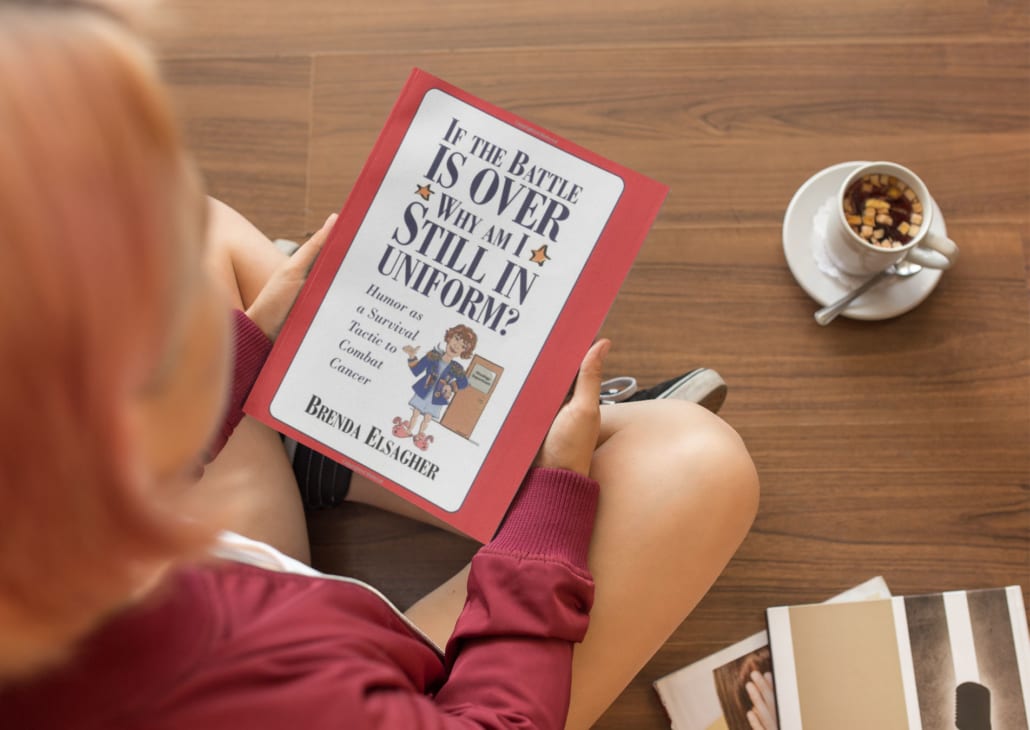
I also found information galore and updates on the latest innovative technology for people with ostomies in The Phoenix magazine (the official publication of the UOAA), which still exists today. Not long after, I got America Online (AOL) and felt like I was on the forefront of technology. I had a computer, and now the internet. Imagine horns blasting – my world opened up and the exchange of information worldwide was awesome. Even more ways to communicate! A woman in Colorado who read my book, “If the Battle is Over, Why am I Still In Uniform,” emailed me, decided to get a colonoscopy, and was spared from cancer. That is a satisfying feeling, to know you gave up a year of your life to write a book and it saved another.
I began to speak across the USA. Who would have thought that 25 years later I am still talking about bowels and butts, or dare I say the lack of them in some cases? The people I have met, the conversations I have had, the opportunities that have come my way – all because I chose to meet with a small group of people. That experience led to an abundance of support, not only for me but for others I know with ostomies or continent diversions, because of all that we shared. Some shared their misery, some shared their success, and some listened, learned, and began to feel that they could deal with their situations. Finding the group was life enhancing, and even life-saving in many cases. I kept coming to help others, but have been helped in return many times over. A phrase that I often heard at the meetings was, “Someone reached out to me in the hospital, and I want to do the same.”

In my new role as the UOAA Director of ASG Affairs, I have come full circle as a volunteer. I meet so many people across the USA that are actively reaching out to others, and helping them on their paths to recovery of mind, body, and spirit. I am their cheerleader. Sometimes I can offer a suggestion or teach them how to use Zoom to stay connected. I have always known that the UOAA had our backs but I have now found so many more resources on their website that I never knew existed. There are over 300 ostomy support groups in the USA for people with ostomies and continent diversions. And for people who don’t like to go to group meetings, there is an individual membership too that gives them full access to an abundance of resources.

There is no right way or wrong way to have an ostomy. You don’t have to shout it out to the world, but there also is no reason to be ashamed about it. I honor your privacy, and thank you for honoring my desire to be public. Both are good. We are alive and grateful!


This article originated in the Hollister Secure Start services eNewsletter. For more ostomy resources at your fingertips, subscribe here.

Brenda Elsagher is an author, international speaker, and comedian, and also volunteers with the UOAA. She has been living well with an ostomy for 25 years. Find out more about Brenda at www.livingandlaughing.com, and follow her on Facebook @BrendaElsagher. 

Financial Disclosure: Brenda Elsagher received compensation from Hollister Incorporated for her contribution to this article.


Editor’s note: This article is from one of our digital sponsors, Hollister Incorporated. Sponsor support along with donations from readers like you help to maintain our website and the free trusted resources of UOAA, a 501(c)(3) nonprofit organization.

July 9, 2021
https://www.ostomy.org/wp-content/uploads/2021/07/Hollister-lead-photo.jpg 630 1500 Contributor https://www.ostomy.org/wp-content/uploads/2017/02/UOAAlogofinal2.png Contributor2021-07-09 12:21:312021-07-09 12:21:31Support is Crucial

Katie Lee’s Story

Colorectal Cancer, Colostomy, Patient Stories

My name is Katie Lee, and I was diagnosed with stage 1 rectal cancer at age 33, only eight months after the birth of my second child. My tumor was […]

Read more
May 12, 2021
https://www.ostomy.org/wp-content/uploads/2021/05/colon-club-2016.jpeg 480 480 Contributor https://www.ostomy.org/wp-content/uploads/2017/02/UOAAlogofinal2.png Contributor2021-05-12 11:01:322021-05-12 11:20:57Katie Lee’s Story

Shining a Light on WOC Nurses

Caregivers, Healthcare, Ostomy Nurse

In celebration of Wound, Ostomy, and Continence (WOC) Nurse Week 2021, help us to shine a bright light on these special nurses. They give us the hope, support, and specialized care needed to thrive in life with an ostomy.

WOC nurse volunteers spend countless hours advocating, leading support groups, educating, fundraising, and supporting UOAA programs and services. UOAA recognizes that not all ostomy patients have access to a WOC nurse and we’ll continue to advocate for access to a specialized ostomy nurse from preoperatively when your stoma site is marked through an ongoing lifetime continuum of care as outlined in our Ostomy and Continent Diversion Patient Bill of Rights.

We asked UOAA’s social media community to share how a WOC nurse has made a difference in your life, health, or support group. We hope more nurses will consider this rewarding specialty. Thank you WOC nurses, you are our guiding lights.

I would like to thank my WOC nurses who have and continue to support me as an ostomate. My nurses inspired me so much I went to nursing school and graduate this month with a BSN and plan on continuing on. To become a WOC nurse myself! Thank you WOC nurses! -Katie Lee

“My WOC was a lady named Gayle. She helped my Mom so much with me. I remember many visits to the ER ward and having her there. She was funny, nice and on it. I used to love seeing her. She stayed by my side from 3-6yr old into my adulthood. She fought hard to find a bag that was the perfect fit for me. She got a new product in and it changed my life significantly, she fought tooth and nail to keep me in that bag, even when Canada decided to stop offering it openly. I still wear that brand to this day. I always heard rumors she was also an Ostomate and I can’t say how long. That made me love her more. I will never forget those who had a hand in my welfare and saw me through their entire career. I miss her and the others immensely. Jody is my new WOC and although I rarely need her, she’s there to help, even if it’s a panic situation that couldn’t wait for an appointment.” –Camille C.

“Joanna Burgess Happy WOC Nurse week. You have been a true Angel of Mercy for me over the years!” –Col Justin Blum

“My son’s WOC nurses at CHLA were awesome!!” – Teri C.

I am a WOCN and worked with MANY ostomy patients in the past. The thanks go both ways — I have never (in a long nursing career) felt as appreciated for my clinical skills and assistance as I do when working with people with an ostomy. They are the reason I have stayed in nursing. -Cris R.

This is Karen with my husband at his 55th birthday party in 2019 -Pam Allen Williamson

We have 3 great WOC nurses in our community that come to our ostomy support meetings Karen Eubank, Michael Byars and Jason Pratt. Michael went above and beyond by creating a weekly outpatient ostomy clinic after I told him I learned some cities had those while attending a UOAA conference. Karen who has been coming to our meetings for over a decade, hosts many of our support group parties at her house, works at the ostomy clinic on a regular basis, pays to store donated supplies and often helps people after hours. Both of them visit my husband when he is hospitalized, came to the house to visit him when he was home on hospice and came to his funeral. We are extra grateful to Karen because before he left the hospital on hospice she applied a special high output bag connected to bed drainage bag to minimize the family’s need to interact with the ostomy. Karen who is a neighbor told me that she would come change the bag twice a week. The hospice nurse was fascinated and stayed late to watch Karen change it out. He was going to stay in the hospital as long as they would let him to avoid family having to deal with his bag because he had always been so independent with it until nearly the end. Karen’s solution allowed him to come home and be surrounded by family caregivers that loved him and have wonderful conversations remembering fun times and having important conversations instead of the visitor limitations hospitals right now. We are so grateful to her for this and hope it will benefit other families of bed-bound patients. BTW we still fondly remember my husband’s first WOCN Nurse Licklighter who was a nurse at Keesler AFB in 1993. She marked him before surgery and taught him how to handle his bag and he kept her handwritten instructions forever and sometimes copied them for others. -Pam A.W.

I can’t thank the nurses at Ohio Health Riverside Hospital they helped me so much and made an otherwise difficult transition quite non traumatic! –Carol B.

Thank you to Erin and Vanessa at New York Presbyterian! –Jameson Cycz

The ConvaTec nurse Lorelei. She has been a stoma saver. She helped me troubleshoot my leaking problem, got me into a new pouching system, that is awesome and when I ran out of samples and am in limbo with my supply company in getting the new pouches and other supplies, she set me up with a holdover supply, so that my stoma won’t be continuously injured by my current pouches.- Susan Gentner

I’m thankful for all of the WOCNs I have been to. Some I’ve known for many years. They are very knowledgeable and helpful with various products.I also want to give a shoutout to our great WOCNs at 11 Health & Technologies for being amazing for our team and patients. ? –Megan Alloway
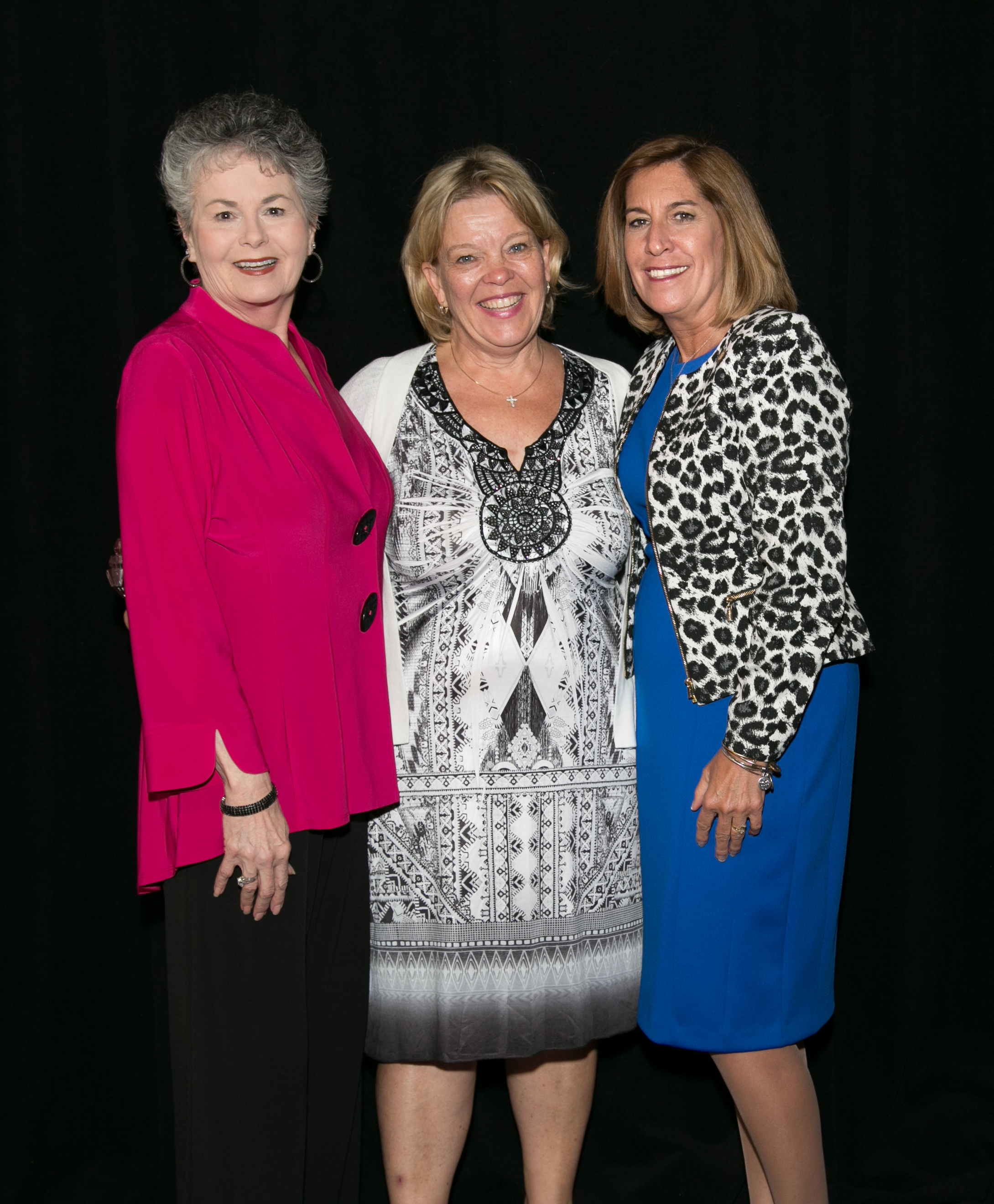
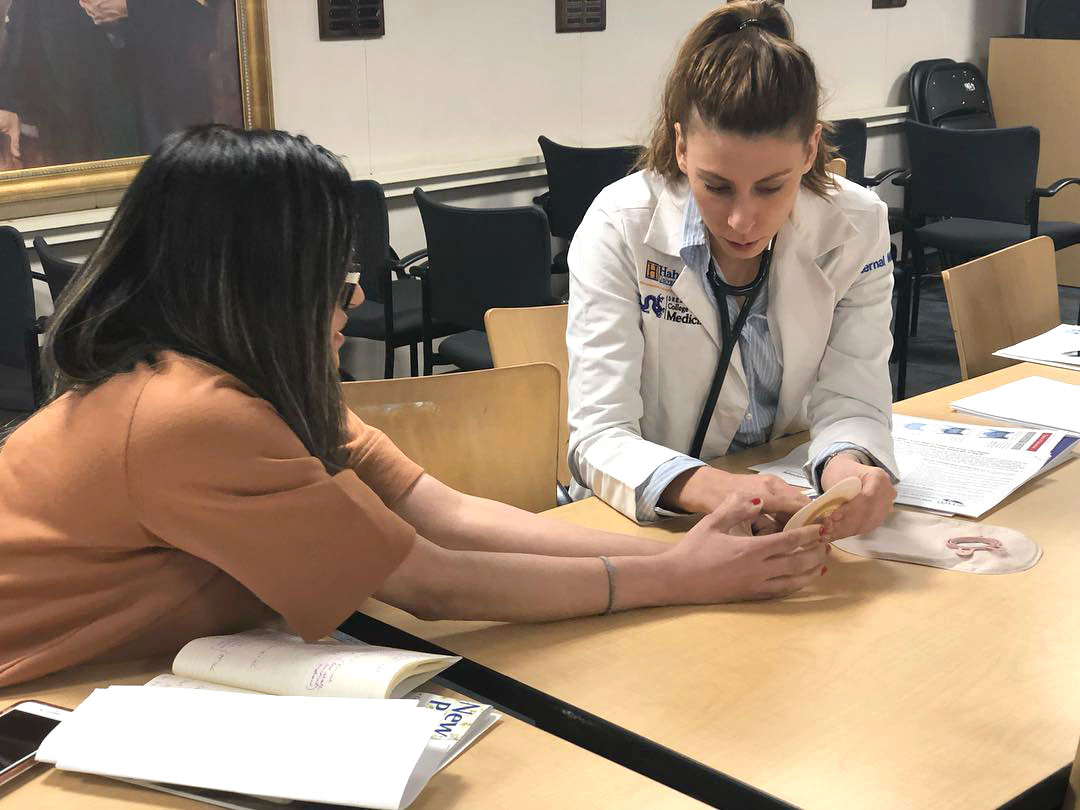
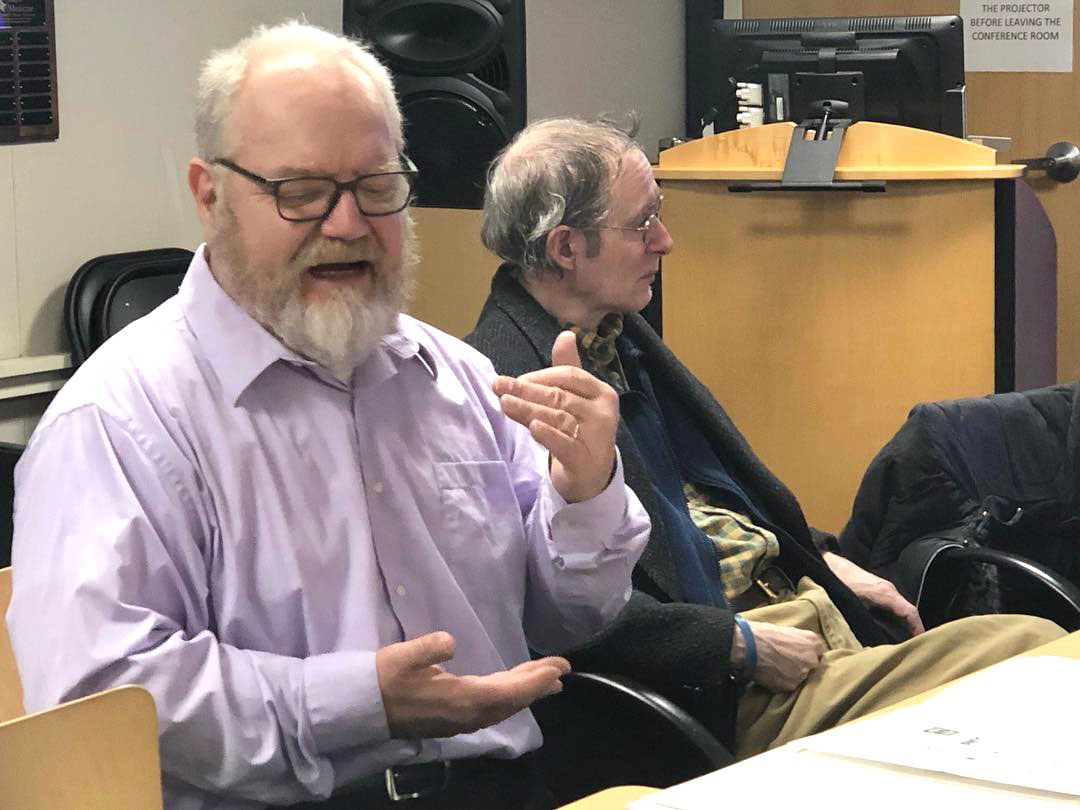
Amazing Aimee Frisch. The best WOCN in know. Love you. -John Pederson

Happy ‪#WOCNurseWeek2021! What you do for ‪ostomy patients and the impact you make is immeasurable!  Plus we are grateful for all that you do to support UOAA and our ‪advocacy program! You are advocates for patients and can influence change. Shine on! @UOAA_Advocate -Jeanine Gleba

April 15, 2021
https://www.ostomy.org/wp-content/uploads/2021/04/NurseWeek-CertificateFeatured.jpg 463 800 Contributor https://www.ostomy.org/wp-content/uploads/2017/02/UOAAlogofinal2.png Contributor2021-04-15 15:07:062021-04-15 15:21:11Shining a Light on WOC Nurses

New Ostomates Deserve Our Best

Colostomy, Emotional Health, Ileostomy, Ostomy Basics, Support Resources, Urostomy

By Ellyn Mantell

Welcome to my fantasy.

We all have our fantasies, so come along with me as I describe one of mine…new ostomates (those with ileostomy, colostomy or urostomy, all having had stoma surgery) would begin their adjustment to their new life with all of their questions answered, they would have knowledge and be welcomed into an Ostomy Support Group, they would have a connection with a Wound, Ostomy, and Continence Nurse (WOCN) and they would recognize what a gift, what a lifesaver an ostomy is.

My concern is that this is not the usual for ostomates, either new or even those who have them for many years. In New Jersey, particularly where I live, there are many resources available, and yet, even in our sophisticated arena, many ostomates leave the hospital uninformed and underserved. Prior to Covid-19, I visited patients in the hospital or in rehab facilities to answer their questions. I brought journals and pens so they could write their emotions, concerns, and observations, and refer back to their notes as they made progress. I am so anxious to return to that important undertaking as soon as it is safe to do so.

When I had my surgery in March of 2014, my surgeon told me I would be in the hospital for 5-7 days. However, I felt so well, so quickly, that I was able to leave 4 days later. That was pushing the envelope, but I was so used to recovering from abdominal surgeries, having had 22 before that, my ability to go into recovery mode was well-entrenched. The majority of patients need so much more time, and now, even 4 days is more than they are offered.

Back to my fantasy, and my pipe dream of a great transition for new ostomates:

How can questions be answered, and knowledge gained as needed? 

The majority of ostomies, even those performed in an emergent situation, require marking the abdomen for placement of the stoma (opening.) That is typically done by the Wound, Ostomy, and Continence Nurse (WOCN) and that is the person who comes to the patient’s room post-op to begin to prepare the ostomate for life at home. In an ideal world, the WOC nurse has written information to share, which once home, will make more sense, and provides contact information for any questions. Additionally, the ostomate is put in touch with the United Ostomy Associations of America to become part of a bigger group of kindred people.

How do we find Ostomy Support Groups in our area?

I am involved in three Support Groups, becoming president of one already formed when I had my ileostomy, and then worked with WOC nurses at two other hospitals in the area to form new ones. Until Covid hit, these were growing so nicely. But we are meeting virtually now, and staying as close as possible, knowing that the day will come when we are back together. It is wonderful to see “my people” who share my concerns, experiences and fears and accomplishments. We help each other in countless ways. People reach out to me through the WOC nurses in the area, United Ostomy Associations of America, The Phoenix Magazine, the American Cancer Society, three hospitals, and through word of mouth. Because I am so open and revealing about my ileostomy and Lily, my stoma, I believe my name pops into the minds of people when they know someone in need.

Ostomies are Lifesavers! “Read all about it!”

An ostomy provides the gift of health for many, many medical situations, including cancer, ulcerative colitis, Crohn’s disease, diverticulitis, motility issues and devastating organ injury. We live in good times for our supplies and the ability to try new and innovative appliances and accessories. The Phoenix Magazine is a great resource for all, and assists in wading through the confusion many feel. Motivational stories and practical guidance round out the offerings.

A final word about those we call our Angels…the Wound and Ostomy Nurses.

Establish a relationship with one, and if there is an Ostomy Clinic or Ostomy Center in your area, use it! These nurses are your connection to properly-fitting appliances, the correct supplies and accessories, questions and personal support, as well as the ability to refer to a Support Group. More and more are entering the private sector and providing services such as home visits, particularly to those who cannot travel to a clinic or office, and your surgeon may even have one in the office to help navigate the transition to life as an ostomate. We call our WOC nurses our Angels, and that is exactly what they are, ladies and gentlemen with big wings to support us!


Ellyn Mantell is a UOAA advocate and Affiliated Support Group leader from New Jersey. You can follow her personal blog at morethanmyostomy

January 20, 2021
https://www.ostomy.org/wp-content/uploads/2021/01/stoma-clinic.jpg 1273 2200 Contributor https://www.ostomy.org/wp-content/uploads/2017/02/UOAAlogofinal2.png Contributor2021-01-20 15:25:412021-03-31 10:37:40New Ostomates Deserve Our Best

Achieve Quality Ostomy Care While in Your Home

Advocacy, Healthcare

Barbara Dale, RN, CWOCN, CHHN, COS-C
Director of WOC Services at Quality Home Health
Jeanine Gleba UOAA Advocacy Manager

I am a Wound, Ostomy, Continence (WOC) nurse in a rural home health agency. I have worked in the home health field since 2001. Many times when I visit patients in their homes, they complain about the lack of knowledgeable ostomy nurses in the facility (e.g., hospital) they came from or even from my own agency.  I try to explain to them that ostomy care is specialized and in general nurses don’t get much (if any) training in nursing school for this type of medical condition. I compare this with my own lack of IV education and skills since I rarely do labs or port flushes and have lost many of my previous skills. We can’t all know everything about all aspects of medical care and not every agency has access to an ostomy trained or ostomy certified medical provider. Nonetheless, it is the home health agency’s responsibility when they accept you as a patient to provide you the care you need and deserve. You have a right to quality care.

Are you aware of the patient bill of rights (PBOR) for persons with an ostomy or continent diversion? United Ostomy Associations of America (UOAA) developed the PBOR in 1977 and revised it in 2017. The PBOR is designed so that you can know what to expect and what is reasonable for you to ask for when you receive care. If you haven’t already looked over the PBOR, please take time to familiarize yourself. In addition, if you use ostomy or urological supplies, here is what you should understand and expect when receiving medical care in your home.

Be Prepared

Be prepared in advance to take appropriate steps to ensure you receive quality ostomy care.  As you prepare for discharge to home after your ostomy surgery, ask your case manager to make sure your home health agency has a certified ostomy nurse. This will also be important if you are a person already living with an ostomy with a new medical condition (such as hip surgery or a stroke).  Your home health nurse should re-evaluate your ostomy care. For example, someone with arthritis may have lost dexterity and now needs to switch to a different type of pouching application system or you may have gained or lost some weight over the hospitalization (which can change your abdominal contours and your stoma) and now your current system doesn’t give you 2-5 days wear time anymore.

Change Agencies if Needed

If you are already home and your home health agency does not have a certified ostomy nurse, then request that they consult with one to ensure that you receive the proper optimal care. I often get phone calls or emails from colleagues who work for other agencies asking me ostomy questions or asking if I can come to see their patient. We are all in this together and we all want what is best for the patient, which is YOU! Don’t be afraid to ask for an ostomy nurse!

You may even have to change agencies. It isn’t difficult even though your current agency will likely not want you to change.  You have a right to explain that you must receive your care from a certified ostomy nurse and your current agency, unfortunately, does not provide this type of care. All you have to do is call the agency YOU choose and tell them you want to transfer your care to their agency. Typically the new agency will contact your doctor or ask you to let your doctor know you want to change agencies. The new agency will then inform your current home health agency that they are taking over your care.  

What to do if an Ostomy Nurse is Still Not Available?

If all else fails and for whatever reason you have a home health agency without access to a certified ostomy nurse, you still have resources.  You can:

  • Go to www.wocn.org and look up a patient referral for an ostomy nurse in your area. This content also usually includes contact information for the WOC Nurse in your area.
  • Visit www.ostomy.org for educational resources such as the New Ostomy Patient Guide and UOAA has a dedicated webpage specifically for Ostomy Health Care Resources.
  • Use social media to find others that may be in the same situation as you. There are a multitude of Facebook pages/groups for ostomates with WOC nurses who follow these groups and offer comments or suggestions when specifically asked.

In Conclusion

We cannot say this enough: YOU have a right to quality care and deserve quality care. Know your rights. You deserve to be able to live your life to the fullest with your new or established ostomy.

Patients and medical professionals can work together to improve patient outcomes. If you want to help UOAA drive change and achieve ostomy quality of care improvements for patients while under home care, please print and share these resources with your home health agency: Achieve 5 Star Ostomy Home Health Care and Important Reminders for Home Health Providers Treating People with an Ostomy.

May 9, 2019
https://www.ostomy.org/wp-content/uploads/2019/05/Homehealth_web2.jpg 1031 1900 Contributor https://www.ostomy.org/wp-content/uploads/2017/02/UOAAlogofinal2.png Contributor2019-05-09 12:43:122019-05-10 16:23:08Achieve Quality Ostomy Care While in Your Home

Meet These Super Ostomy Nurses

Healthcare, Ostomy News

They are all superheroes in our book. They come in on their day off for us, they heal us, they teach us, they empower us, they advocate for us, they volunteer for us, they learn for us, they run our support groups, they make us laugh and help dry our tears.

They are also a central part of UOAA’s 7th National Conference and our advocacy program. Every year we ask our UOAA Affiliated Support Groups to nominate an exemplary nurse for UOAA’s WOC Nurse of the Year Award.

Charlotte Popovich, center, was awarded last year’s WOC Nurse of The Year.

April 14-20, 2019 marks WOC Nurse Appreciation Week hosted by the Wound, Ostomy and Continence Nurses Society™ (WOCN®). This year WOCN® Society is celebrating and empowering WOC nurses to discover the superhero that lives within them.

This celebration is a fitting time for us to begin our challenge of selecting a winner in a group that are all heroes. We know many still hide in the shadows and their good deeds remain unrecognized.

Prepare to be inspired by these testimonials from our Affiliated Support Groups who nominated this year’s amazing group of nurses.

Shirley Abraham
Ostomy Support Group at Baylor University Medical Center in Texas

Shirley has been passionately involved in the Baylor University Medical Center (BUMC) Ostomy Support Group since its inception. As a member of the founding committee, she was instrumental in inaugurating the new and much needed support group in October 2018. BUMC is a large hospital with a substantial number of colorectal and urological surgery patients, and the need for such a support group was very evident. She works closely with the surgeons to provide a smooth discharge and post-operative recovery transition. She also works in Baylor’s out-patient ostomy clinic, serving patients with peristomal problems or pouching issues.

“She is well respected as an expert in her field, dedicated to her field and passionate about the quality of care that she delivers. She is a true example of a highly dedicated RN and skilled WOC nurse”

Janice Beitz
Philadelphia Ostomy Association

For close to 20 years Janice has been asking the Philadelphia Ostomy Association to periodically come speak to her WOC nursing class. We have never appeared at her class where the students haven’t thanked us for our time and loved the opportunity to speak to people with ostomies. The trickledown effect of being invited by Janice to speak at her WOC nursing class is that her students graduate and the ones that stay local to this area call us to visit their patients.

“Her strongest attribute would have to be her commitment to her student’s, UOAA as a support system that provides Information to patients and a Patient Visiting Service where ostomates visit patients pre and post op to assist in the rehabilitation of new ostomates in getting on with their lives by showing them they can still work, dress in stylish clothes, and basically live a relatively normal life after surgery.”

Erin Donohoe
Ileostomy Association of New York, Inc.

Erin distributes monthly meeting flyers to clients and family members who may benefit from our meetings, and posts meeting notices in a prominent location on the hospital floor. She participates in Board of Directors meetings and is on Ileostomy Association of New York’s (IANY’s) medical advisory board. Erin is available for contact by e-mail or phone if urgent situation/question arises. She has been willing to provide her services to home-bound ostomates and has been flexible regarding her fees for home visits. She has often provided these services gratis for patients in need.

“Erin has exhibited a high degree of professionalism and commitment befitting a representative of the WOC nurse profession. She is a strong advocate for IANY and believes in the positive impact that mutual support groups can confer. Since our BOD and general meetings are held on Sunday afternoons, she willingly sacrifices precious personal time to be present. She consistently shows compassion, understanding to persons with ostomies and their significant others who approach her for help and assistance.“

Diana Gallagher
North West Arkansas Ostomy Support Group

Diana started the group over ten years ago. It started out in a small room with about eight patients. It is because of her compassion, ability to educate and availability to both patients and doctors that our group has grown to a base of about 140 patients. We have patients that still come after ten years knowing they can always learn something new. Diana has extended our group hours for patients in need of education and information. Diana has a very prominent presence, and doctors and surgeons across the area rely on her expertise.

“Diana has a patients wellbeing in mind both physically and mentally. She is a constant in our ostomy community that is willing to help any ostomy patient. She is an advocate for patients!” 

Joy Hooper
Ostomy 2-1-1 inc. and South Georgia Ostomy Association

As the only support group in South Georgia, Joy will make home visits to help patients in rural areas as well as bigger cities. She will teach patients everything about caring for their ostomy. She opened an office where patients can get one-on-one care. She helps others find solutions to their problems. Joy will call and talk to any doctor or nurse interested in ostomy care. She travels around the country to teach ostomy care to other nurses.

“Joy Hooper is the most dedicted ostomy nurse. She invented an anatomical apron for helping patients understand their ostomy. She has so much knowledge about ostomy and will teach anyone who wants to know. Joy is a wonderful ostomy nurse and someone I can call on anytime day or night.”  

“Her LIFE is focused around not just our single ASG, but the entire Ostomy community. I would have to say that every attribute and commitment that Joy provides are CRUCIAL for not only our group, but to every other group in the ostomy WORLD.”

Charles Sloan
Boulder County Ostomy Support Group of Colorado

We have meetings in two different hospitals and Charles attends meetings in both facilities, even those that take place in the evening after he is off work. He makes time at the ostomy clinic for support group patients even when they have a full schedule. Charles developed a program for high school students and an in-house education program for the staff at his hospital to educate them in best practices at the bedside of ostomy patients. Charles is passionate about ostomies and designed WOC pins for those who complete his in-house ostomies 101 class. He also designed fun trading cards used for training programs.

“Our group takes a great deal of comfort knowing that Charles is always there for us. If there is an emergency we all know how to contact him and he will provide support.”

Angela Natale-Ryan, Stephanie D’Andrea, Ronnie Funke, Pam Hughes
Union County Ostomy Support Group of New Jersey

This group of four dedicated nurses interface with new members of the support group, and educates medical professionals on the importance of our visiting program. They have established our first Ostomy Center and attend meetings. From the moment I was marked my WOC nurse has been beside me and encouraged me to attend my first support group. In four years we have grown to a UOAA chapter with many members.

Our four WOC nurses are such a cohesive and dependable group of women who concur, coordinate and ensure that all ostomates are treated completely, they are determined to offer the best to all of us. They are problem solvers who never give up until all patients are comfortable. Ostomates are in the best hands possible with the four of them, who act as one!

United Ostomy Associations of America’s (UOAA) 2019 WOC Nurse of the Year Award will be presented during its 7th National Conference in Philadelphia this August.

April 16, 2019
https://www.ostomy.org/wp-content/uploads/2019/04/2019-nurseweek-banner-1080x1.jpg 1080 1080 Contributor https://www.ostomy.org/wp-content/uploads/2017/02/UOAAlogofinal2.png Contributor2019-04-16 16:18:012019-04-19 16:59:13Meet These Super Ostomy Nurses

When to Contact Your Stoma Care Nurse

Colostomy, Digital Sponsor, Healthcare, Ileostomy, Ostomy Basics, Ostomy Tips, Support Resources, Urostomy

Your stoma care nurse has the specialized training to help you care for your ostomy and address any issues that arise. These professionals are also known as “WOC” (wound, ostomy, and continence) nurses. Stoma care nurses are there to help you make a smooth transition after surgery, and can give you the training you need to care for your ostomy at home. You should consider them your “go-to” resource for ostomy care education, consultation, and troubleshooting.

In honor of WOC Nurse Week, celebrated every year in mid-April, it is important to recognize the ongoing role that stoma care nurses can play in your ostomy care.

When to Contact Your Stoma Care Nurse

Not every ostomy care challenge warrants contacting your stoma care nurse, but certain issues are causes for concern and should be assessed by a trained professional. Connect with your stoma care nurse if you notice any of the following problems.

If you have a colostomy or ileostomy, call your ostomy care nurse if you notice:

  • Skin irritation
  • Recurrent leaks under your pouching system or skin barrier
  • Excessive bleeding of your stoma
  • Blood in your stool
  • A bulge in the skin around your stoma
  • Persistent diarrhea
  • Diarrhea with pain and/or vomiting
  • A stoma that appears to be getting longer

If you have a urostomy, call your ostomy care nurse if you notice:

  • Any sign of urinary tract infection
  • Skin irritation
  • Urine crystals on or around your stoma
  • Recurrent leaks under your pouching system or skin barrier
  • Warty, discolored skin around your stoma
  • Excessive bleeding of your stoma
  • Blood in your urine
  • A bulge in the skin around your stoma
  • A stoma that appears to be getting longer

Finding a Stoma Care Nurse and Showing Your Support

If you do not have a stoma care nurse, you can search to Find a Nurse using your state or zip code on the WOCN Society website. This feature is also accessible by clicking the “Resources” icon in the Peristomal Skin Assessment Guide for Consumers, a free, easy-to-use, digital tool designed to help teens and adults living with an ostomy identify common skin problems, provide next steps for care or management, and prompt when it is appropriate to seek support from a WOC nurse.

How Hollister Secure Start Services Can Help

Hollister Secure Start services offer free customized ostomy support for as long as you need it, regardless of the brand of products you use, including help using the Peristomal Skin Assessment Guide for Consumers. Call us at 1.888.808.7456.


Incredible WOC nurses make a daily impact in the lives of people living with an ostomy. Show your support for all they do during WOC Nurse Week (April 14-20, 2019) by sharing a story or photo on social media using the hashtag #WOClove.


The Peristomal Skin Assessment Guide for Consumers was funded through an educational grant from Hollister Incorporated.

The information provided herein is not medical advice and is not intended to substitute for the advice of your personal physician or other healthcare provider. This information should not be used to seek help in a medical emergency. If you experience a medical emergency, seek medical treatment in person immediately.

Editor’s note: This educational article is from one of our digital sponsors, Hollister Incorporated. Sponsor support along with donations from readers like you help to maintain our website and the free trusted resources of UOAA, a 501(c)(3) nonprofit organization.

April 4, 2019
https://www.ostomy.org/wp-content/uploads/2019/03/SkinHealth_Hollister_web.jpg 1200 1800 Contributor https://www.ostomy.org/wp-content/uploads/2017/02/UOAAlogofinal2.png Contributor2019-04-04 14:36:482019-04-04 14:36:48When to Contact Your Stoma Care Nurse

Ostomy Patients Enlighten Medical Staff

Ostomy News, Support Group News

By Ed Pfueller, UOAA

Amazing things can happen when ostomy patient advocates and clinicians come together.

Dr. Neilanjan Nandi, MD an IBD specialist at Hahnemann University Hospital in Philadelphia, trained in cities across the country and has long observed that “physicians were not comfortable with stoma care and troubleshooting as we should be.” “I learned early on the importance of knowing as much as possible by working with my patients.”

He decided to organize the hospital’s first “Hands On Ostomy Workshop” to empower his medical students, residents, and gastroenterology fellows with formal education.

To help bridge this gap with patients Hahnemann Outpatient WOC nurse Josephine Catanarzo suggested connecting the program with leaders of the Philadelphia’s UOAA Affiliated Support Group.

Stanley Cooper and the Philadelphia Ostomy Association, that is celebrating 70 years of service, and have a long history of talking to nursing students. They viewed this as another opportunity to bridge the gap between patients and those who serve them.

“The surgical staff and fellows got to hear directly from our engaging and dynamic patient panel about their experiences medically and personally with a stoma. This was the MOST profound aspect of the entire workshop. You can learn the medical and surgical nuances in textbooks. BUT you cannot understand the psychosocial impact unless you hear it directly and eloquently from our patients. Thank you to United Ostomy Associations of America patient advocates Sheldon, Stanley and the wonderful Stacey for taking he time to enlighten us!” Dr. Nandi says.

“We absolutely loved attending this,” Stanley says.  “For the Philadelphia Ostomy Association and UOAA it made Hahnemann aware that locally we have been in the Philadelphia area since 1949.  That we have a visiting service and that all our visitors are trained at a visitor’s training class that was developed by UOAA.  We had a lot of discussion on how today’s short hospital stays affect visits and a lot of times we can meet patients at their homes or at a restaurant for visits and that all helps in the patient’s rehabilitation.”

“Stanley was absolutely and overwhelmingly supportive of this initiative and brought in valuable educational resources courtesy of the UOAA for our surgical house staff. He was also able to provide us educational brochures to distribute to our patients as well,” Dr. Nandi says.

If you, your support group, or hospital is interested in some of UOAA’s educational guides you can view them here on ostomy.org or request printed materials, such as our New Ostomy Patient Guide. Our various Ostomy Patient Bill of Rights including practices for nurses to support their patients also help to educate and bridge the divides between patients and caregivers.

In addition to WOC nurses Josephine Catanarzo and Judi DiPerri  Hahnemann’s Colorectal surgeon David Stein was also invited to be a part of the workshop. Dr. Stein discussed what is involved in stoma site mapping and planning. The nurses shared clinical pearls on troubleshooting and application of ostomies.

“This was  truly was an amazing program!” Dr. Nandi says. “We learned about their individual stories and experiences with an ostomy and how they have continued to be true patient advocates within our greater community.”

One of Dr. Nandi’s patients Stacey Cavanaugh also provided her unique patient experience to the group.

“At our next event we are taking a suggestion from Anastasia, or Stacey, as she is affectionately known, and planning to have our docs wear an ostomy appliance for a day filled with fluid and to write about their experience and share it with the group. I think it will be more than novel and truly insightful for our young, and old! learners to gather. I also hope to invite other fellowship programs to attend our next ostomy workshop too.”

It’s inspiring what a few committed medical professionals and ostomy patients can do when they come together. Consider reaching out and bridging the gap where you live or work.


You can hear Dr. Nandi speak at this summer’s UOAA National Conference or connect with him on social media @fitwitmd  

To get involved with your local support group click here or follow our advocacy initiatives for other ways to make an impact.

March 20, 2019
https://www.ostomy.org/wp-content/uploads/2019/03/Philly-meeting_web.jpg 594 1000 Contributor https://www.ostomy.org/wp-content/uploads/2017/02/UOAAlogofinal2.png Contributor2019-03-20 10:41:512019-03-26 13:07:57Ostomy Patients Enlighten Medical Staff

Understanding the Emotional Impact of Ostomy Surgery

Advocacy, Emotional Health

Expect More – Take Control of Your Health Care 

Part 6 in Series


By Joanna Burgess-Stocks and Keagan Lynggard-Hysell


There are many different emotions you may experience as a new ostomate, and it is important to understand that physical and emotional healing after surgery may follow different timelines. We understand that everyone copes with emotions differently. Some people struggle for a long time. Whether you would like to seek individual support from a social worker, therapist, or other medical professional or prefer support from a peer mentor or by attending a local support group; understanding the emotional impact of ostomy surgery and receiving the appropriate support is an important part of taking control of your health care.


Witnessing the Emotional Impact- a WOC Nurse’s Perspective

“Hello, my name is Joanna.  I am here today because I am your ostomy nurse”.  

I have repeated that sentence hundreds of times over the last 12 years. I am in the unique situation in that I am meeting you at a pivotal moment in your life, heading in a direction you might never have imagined–facing ostomy surgery. During that initial encounter I am sometimes met with a blank stare, a stunned look of fear and dread, or with complete relief.  Whatever the reaction, I am the person that is there to help you navigate the world of living with an ostomy. I take great care during that initial visit to meet you where you are emotionally, knowing that this is a sensitive topic for you, someone who most likely is not used to talking about the way you go to the bathroom. Soon, however, I will share with you that I too am an ostomate (person living with an ostomy) and have been one for 53 years since the age of three!  As I leave you that first day, I finally see a glimmer in your eyes–hope! A sign that maybe this journey is possible and that you are not alone.

As an ostomy nurse, I have had the opportunity to meet patients in a variety of settings and have worked with hundreds of patients facing ostomy surgery whether it be from cancer, bowel or bladder diseases or from emergent situations.  No matter the reason, the anticipation of ostomy surgery is a step into the unknown and can compound the anger, sadness, and fear about the medical condition that caused you to need an ostomy. As you face these multitudes of feelings and adjust to life with an ostomy, know that you can take control of what may feel like an uncontrollable situation.


Facing the Emotional Impact- a Patient’s Perspective

“Good morning Keagan, today a special nurse is going to come and teach you how to care for your ostomy and help with your first bag change.”

A special nurse?–I thought to myself. Why do I need a special nurse to show me how to take care of my pouch? I had so many questions, a multitude of emotions, and I was feeling overwhelmed. So many things were out of my control, my recent diagnosis of Crohn’s disease, my hospitalization, my surgery, and now the responsibility of caring for my ostomy. I felt helpless and was eager for some independence in managing my body.

My WOC nurse entered the room and introduced herself with a smile. As she sat beside my bed listening to my fears and frustrations she explained how we were going to change my pouch. In an attempt to gain some independence, I told her that I wanted to take the pouch off myself and as I lifted the edge of the barrier just enough to see the edge of my stoma and the few black stitches poking through my skin– I lost it. I didn’t want to do it anymore, any of it. I didn’t want my insides on the outside, I was scared of my own body. My WOC nurse stepped right in with encouragement and support and a perspective I will never forget. She said she understood that what I was going through felt unmanageable but that caring for my stoma was something that would allow me to be self-sufficient, and that changing my pouch would give me independence in caring for my health. Since my very first pouch change, I have been encouraged to shift my perspective and to be proactive in the areas of my care where I can take control.


Seeking Individual Support

It is important for you to seek the resources needed to understand and work through the emotional impact related to ostomy surgery. It can be very helpful to have someone affirm your emotional concerns as you adapt to life with an ostomy. Most will find their path to acceptance as they physically begin to feel better and become comfortable with the care of their ostomy. If you are struggling with depression, how to tell others about your ostomy, or any part of the adaptation process (including the lack of will to learn self-care), seeking support through counseling can help you address these struggles. A licensed professional has the skills to help you create the life “tools” you need for navigating the unknown, including fears of introducing your ostomy into a new or existing relationship, addressing body image challenges, or understanding the grieving process. You can speak with your physician for a referral if needed.


Finding Support in Others

The fear of the unknown can often be soothed by learning from those who have gone through a similar experience. UOAA has approximately 300 Affiliated Support Groups throughout the United States, providing the opportunity for you to connect with others within your community who have also undergone ostomy surgery. To find a local support group near you, visit UOAA Support Group Finder. If you would like to connect with others but prefer to do so through an online format or from the comfort of your own home you can join a Virtual Support Group. Another way to gain support is through an ostomy mentor. Ostomate Lois Fink describes in her book Courage Takes Guts; Lessons Learned From A Lost Colon, meeting her mentor for the first time at a restaurant. The mentor was wearing a very slim dress and Lois felt perplexed, trying to figure out where she was hiding her ostomy pouch!  Lois learned that she could be the same fashionista that she always was while wearing an ostomy pouch and it helped her face her ostomy surgery with more strength and confidence.

To learn how to connect with an ostomy mentor, many UOAA Affiliated Support Groups have certified visitor programs or you can contact UOAA for a list of current ASG visitor programs at 1-800-826-0826.  


Our Hope for New and Struggling Ostomates

It is the hope of all of us at UOAA that one day you will be able to look at your stoma and see it as something that was life-altering and maybe even life-changing, but it was also life-giving. Be patient with yourself as you journey through both the physical and emotional healing process and be sure to utilize the available resources to support you every step of the way.


Crucial Role of Emotional Support – Infographic

Emotional Support Infographic


Additional Information & Support

UOAA has developed several tools to help you navigate through various informational topics at your own pace. To help better understand what ideally should happen before and after ostomy surgery we have developed the Ostomy and Continent Diversion Patient Bill of Rights. To learn some of the common “ostomy lingo” you can refer to our blog Know Your Ostomy and Know Your Ostomy Pouching System and Supplies. Complete the accompanying checklists and keep them handy for your ongoing ostomy care.

As a new ostomy patient, you may have concerns or face many unknowns. UOAA provides resources to answer these frequent concerns and questions to best equip you in living with an ostomy. Here are a few of the ostomy educational resources available at ostomy.org:

  • Do you have questions or feel unsure where to begin? Check out UOAA’s Frequently Asked Questions and New Ostomy Patient Guide
  • Curious about travel?  Air Travel Tips from UOAA and the TSA
  • Interested in swimming? UOAA Swimming Toolkit
  • Questions about diet? Ostomy Nutrition Guide
  • Worried about intimacy? Ostomy and Sexuality
  • How to Find a Mental Health Provider After Ostomy Surgery


December 4, 2018
https://www.ostomy.org/wp-content/uploads/2018/12/support-stock_web.jpg 944 1600 Contributor https://www.ostomy.org/wp-content/uploads/2017/02/UOAAlogofinal2.png Contributor2018-12-04 10:01:042021-12-27 13:38:13Understanding the Emotional Impact of Ostomy Surgery
Page 1 of 212

Tag Archive for: WOC Nurse

Nothing Found

Sorry, no posts matched your criteria

Our Categories

Advocacy (79) Body Image (3) Caregivers (21) Colorectal Cancer (19) Colostomy (141) Continent Diversions (8) Digital Sponsor (79) Disaster Preparation (4) Emotional Health (63) Events (32) Exercise/Sports (49) Fashion/Clothing (11) Healthcare (23) IBD (57) Ileostomy (189) J-Pouch (8) jejunostomy (7) Membership (3) Nutrition (19) Ostomy 5k (20) Ostomy 5k (16) Ostomy Awareness (55) Ostomy Basics (56) Ostomy News (96) Ostomy Nurse (14) ostomy reversals (13) Ostomy Supplies (3) Ostomy Tips (95) Ostomy Videos (4) Patient Stories (103) Pediatric Ostomy (5) Personal (68) Sexuality (12) Short Bowel Syndrome (17) Skin Care (10) Social Life (5) Support Group News (13) Support Resources (16) Teens (4) Travel (12) UOAA Conference (18) UOAA History (3) UOAA Volunteers (5) Urostomy (113) Young Adult (9)

Support Us:

Your Donation Funds UOAA Educational Programs:

DONATE TODAY
SUSTAINING GIFT
BECOME A MEMBER
UOAA E-NEWS SIGN UP
Get updates on events, national advocacy and important topics in the ostomy and continent diversion community.

Contact Us


United Ostomy Associations of America
P.O. Box 2293
Biddeford, ME 04005-2293

Virtual Ostomy Clinic

Contact UOAA

Donate Your Supplies

Call us toll-free at: 1-800-826-0826.
Our Information Line hours are Monday-Friday, 9am to 3pm EST. If you have an emergency, please dial 911 or contact your local medical professional.

Please understand that UOAA is a private, nonprofit, advocacy and informational organization. We are not a medical facility and we do not have medical or legal professionals on staff. Therefore, UOAA does not provide Medical, Mental Health, Insurance or Legal Advice. Visit UOAA Virtual Ostomy Clinic provided by The Wound Company for non-emergency, virtual ostomy support.

Privacy Policy

Get Involved

UOAA is the leading organization proactively advocating on behalf of the ostomy community. Recognizing that we are always stronger together, we encourage everyone to get involved by joining our Advocacy Network. We’ve also created several Advocacy Tools and Resources to help you successfully advocate on behalf of the ostomy community to ensure every ostomate receives quality care.

UOAA Run for Resilience Logo

UOAA does not and shall not discriminate on the basis of race, color, religion (creed), gender, gender expression, age, national origin (ancestry), disability, marital status, sexual orientation, or military status, in any of its activities or operations.

Digital Health Award
© 2005-2026, UOAA. All Rights Reserved l Design by Tap House Media
  • Link to Facebook
  • Link to X
  • Link to Pinterest
  • Link to LinkedIn
  • Link to Youtube
  • Link to Mail
  • Link to Instagram
Scroll to top Scroll to top Scroll to top