
SUPPORTED BY FAMILY AND FAITH: MISA’S SHORT BOWEL SYNDROME STORY
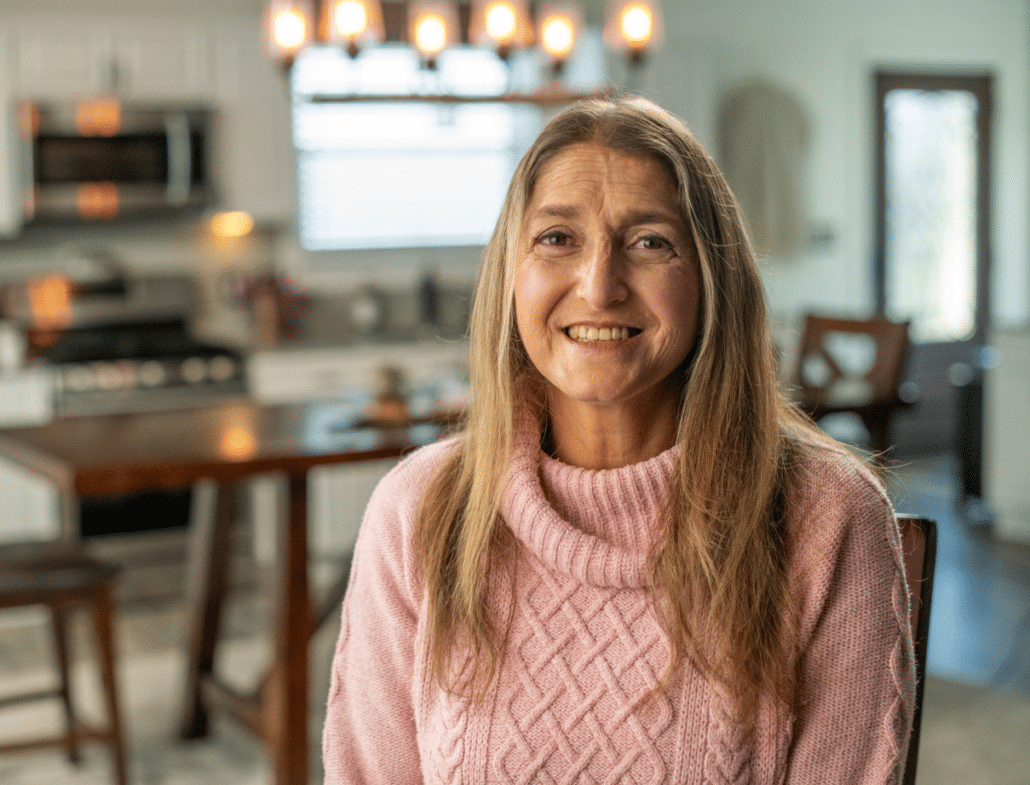
My name is Misa and I’m a busy woman who has never had time to be sick. Not when I was young and not today. I credit my strength, my core energy, and my resilience to my family! My mother and father, who immigrated to the United States from Libya, are both strong-minded and strong-willed individuals who always told us to keep trying and never give up. Little did I know how important this lesson was going to be when I was facing my numerous health challenges.
| If you are living with Short Bowel Syndrome and rely on parenteral support, there’s an SBS Mentor available to connect with you. Click here to learn more. |
A Mother’s Strength: Searching for Answers
When I was about 13 years old, I got extremely sick with what seemed like non-stop diarrhea. I spent hours on the couch, hunched over and I was in constant pain. Doctors told my mother that my illness was psychological, but she believed me that this was serious. Eventually, she found a gastroenterologist who took the time to find out that there was something physically wrong with me. That’s when my doctor diagnosed me with Crohn’s disease and colitis. From that day of diagnosis, nothing in my life followed a usual pattern.
From ages 14 to 18, my illness and symptoms were treated with multiple drugs and treatments, but none seemed to work for me. I would experience side effects, so my doctor would adjust my dosage, but the symptoms of my Crohn’s and colitis just came back. I was one of those cases that the doctors said didn’t respond to typical treatments. As a teenager, I went through depression and stages of asking, “Why is this happening to me?” “Why is God punishing me?” “What did I do?”
At age 18, my Crohn’s and colitis had gotten so bad that I weighed just 95 pounds and was sick all the time. I hated my life and all the pain I experienced every day. I just wanted the pain to stop. My mother never gave up looking for answers. She sought the advice of relatives outside of the United States about options, and ended up flying with me to London, where a wonderful doctor performed a surgery to alleviate bowel narrowing in my colon and small intestines. This was the first of more than a dozen Crohn’s-related surgeries that I would endure. We spent three weeks in London, then traveled home. I was sore but healing.
Even after that first surgery, we still couldn’t manage my Crohn’s disease and colitis. Two years later, we were referred to a wonderful doctor, who would later perform the surgery that gave me my permanent ileostomy. To me, my ileostomy felt like “freedom”. I was looking forward to living without pain, even if it would only last for a short time. And, as it turned out, that’s all it lasted for.
A New Diagnosis: Short Bowel Syndrome
The next several years could best be characterized by a sense of change. Every two years or so, my Crohn’s disease would flare up, not respond to any treatment, and leave me back in surgery, needing another bowel resection. That didn’t stop my drive to live and succeed. I wanted to travel, so I did! I enjoyed being on the move and seeing the change in scenery. It wasn’t just my health; it was my personal life as well. With my medical history, I never thought to get married or have kids. I felt I couldn’t burden anyone with all my baggage.
After I had my ileostomy surgery in 1995, I was volunteering on a friend’s horse farm, and I met my husband. We dated for five years before marrying when I was 31 years old. Due to the surgeries I had already endured, a child was not in my thought process. At the age of 32, I had my daughter. At age 40, I gave birth to my son. Both of my children were gifts! Even with my multiple surgeries and extremely shortened intestines, my body was functioning and surviving, and I was living life.
It wasn’t until I was 43 that a surgery left me in intensive care with a fistula in my abdominal wall. My doctors officially diagnosed me with short bowel syndrome (SBS), because I was unable to absorb enough nutrients from the food I ate and needed to be put on parenteral support (PS), also known as parenteral nutrition. I remained on PS every day for nearly two years.
All my surgeries left me with no large intestine, no rectum, and less than 90 centimeters of small bowel. When my surgeon told me all of this after the surgery, I knew I would have to rely on the strength that I’ve inherited from my mother and father to keep going.
At this point, my body was dumping everything into my ostomy bag, and I was malnourished. My freedom and my energy were gone. I couldn’t take care of my animals or my family. This was a very dark time for me.
I was hospitalized multiple times over the next several months. I only weighed 88 pounds. My body didn’t have the ability to absorb any nutrients. Not knowing what to do, I turned to my faith and I prayed. And then I started to fight even harder. I had to be tough like my mom had been when she fought to get me properly diagnosed.
Learning About An SBS Treatment
When my surgeon told me about a prescription medication, GATTEX® (teduglutide) for subcutaneous injection, that is approved for people aged one and older with SBS who need additional nutrition or fluids from intravenous (IV) feeding (parenteral support), I was intrigued, but leery. It is not known if GATTEX is safe and effective in children under one year of age.
My doctor and I discussed how GATTEX might help and she also told me about the possible serious side effects, including making abnormal cells grow faster, polyps in the intestines, blockage of the bowel (intestines), swelling (inflammation) or blockage of the gallbladder or pancreas, and fluid overload. After doing some reading about the medication, I decided I wasn’t ready to try it.
Please continue reading for additional Important Safety Information.

Soon after, my doctor heard there was an informational program about GATTEX, and she encouraged me to attend. While at the program, I looked around the room and saw people who were a lot like me. As we talked, and we shared our stories, I was in disbelief and awe at the same time. We all brought our own experiences, but we found that we had many of the same thoughts, fears, and worries. We connected in a way that I had never connected with anyone before.
After learning more about GATTEX and speaking with my doctor, I decided that it was right for me to start treatment.
Prior to starting GATTEX, I was receiving two to three liters of IV fluids with magnesium and potassium, seven days per week. Over time, my doctors have worked with me to get the amount of IV fluids, potassium, and magnesium I infuse just right. I think we’ve found a good balance now. Currently, I am able to take and absorb two potassium tablets orally daily. I infuse a half liter of sodium chloride three times a week and a half a liter of sodium chloride with magnesium two times a week. But my healthcare team and I are always monitoring my condition, and each person’s experience and treatment may be different than mine. It has taken a few years to get to where I am now with my infusions, but my doctors and I are very pleased with my results while taking GATTEX. Even still, I have experienced injection site reactions, such as redness around the injection site, bowel blockages, and on occasion, nausea. I worked with my doctor to manage these reactions. This is just my experience; everyone reacts differently to medicine.
Sharing My Story to Encourage Perseverance
My doctors are wonderful. I have a great rapport with each of them. I think the strength of that solid relationship is that we communicate really well. They don’t dictate to me what is going to happen. We talk openly, and they consider my opinion. We work together to figure out what works for me. It’s very one-to-one communication. I feel like I’m an active participant in my healthcare. I’ve lived with this illness for a very long time, so I know a thing or two about it. And my doctors respect that.
While many people could see these life experiences and dwell on the negatives, I choose to live each day experiencing new things, seeing new places, and meeting new people. I travel, work in my garden, and raise my dogs. I believe it is a privilege to share my personal experiences with illness, surgeries, and treatments with the hope that they will give others the strength to keep pushing for their own answers.
IMPORTANT SAFETY INFORMATION
What is the most important information I should know about GATTEX? GATTEX may cause serious side effects, including:
Making abnormal cells grow faster
GATTEX can make abnormal cells that are already in your body grow faster. There is an increased risk that abnormal cells could become cancer. If you get cancer of the bowel (intestines), liver, gallbladder or pancreas while using GATTEX, your healthcare provider should stop GATTEX. If you get other types of cancers, you and your healthcare provider should discuss the risks and benefits of using GATTEX.
Polyps in the intestines
Polyps are growths on the inside of the intestines. For adult patients, your healthcare provider will have your colon and upper intestines checked for polyps within 6 months before starting GATTEX, and have any polyps removed. To keep using GATTEX, your healthcare provider should have your colon and upper intestines checked for polyps at the end of 1 year of using GATTEX.
For pediatric patients, your healthcare provider will check for blood in the stool within 6 months before starting GATTEX. If there is blood in the stool, your healthcare provider will check your colon and upper intestines for polyps, and have any polyps removed. To keep using GATTEX, your healthcare provider will check for blood in the stool every year during treatment of GATTEX. If there is blood in the stool, your healthcare provider will check your colon and upper intestines for polyps. The colon will be checked for polyps at the end of 1 year of using GATTEX.
For adult and pediatric patients, if no polyp is found at the end of 1 year, your healthcare provider should check you for polyps as needed and at least every 5 years. If any new polyps are found, your healthcare provider will have them removed and may recommend additional monitoring. If cancer is found in a polyp, your healthcare provider should stop GATTEX.
Blockage of the bowel (intestines)
A bowel blockage keeps food, fluids, and gas from moving through the bowels in the normal way. Tell your healthcare provider right away if you have any of these symptoms of a bowel or stomal blockage:
- trouble having a bowel movement or passing gas
- stomach area (abdomen) pain or swelling
- nausea
- vomiting
- swelling and blockage of your stoma opening, if you have a stoma
If a blockage is found, your healthcare provider may temporarily stop GATTEX.
Swelling (inflammation) or blockage of your gallbladder or pancreas
Your healthcare provider will do tests to check your gallbladder and pancreas within 6 months before starting GATTEX and at least every 6 months while you are using GATTEX. Tell your healthcare provider right away if you get:
- stomach area (abdomen) pain and tenderness
- chills
- fever
- a change in your stools
- nausea
- vomiting
- dark urine
- yellowing of your skin or the whites of your eyes
Fluid overload
Your healthcare provider will check you for too much fluid in your body. Too much fluid in your body may lead to heart failure, especially if you have heart problems. Tell your healthcare provider if you get swelling in your feet and ankles, you gain weight very quickly (water weight), or you have trouble breathing.
The most common side effects of GATTEX include:
- stomach area (abdomen) pain or swelling
- nausea
- cold or flu symptoms
- skin reaction where the injection was given
- vomiting
- swelling of the hands or feet
- allergic reactions
The side effects of GATTEX in children and adolescents are similar to those seen in adults. Tell your healthcare provider if you have any side effect that bothers you or that does not go away.
What should I tell my healthcare provider before using GATTEX?
Tell your healthcare provider about all your medical conditions, including if you or your child:
- have cancer or a history of cancer
- have or had polyps anywhere in your bowel (intestines) or rectum
- have heart problems
- have high blood pressure
- have problems with your gallbladder, pancreas, kidneys
- are pregnant or planning to become It is not known if GATTEX will harm your unborn baby. Tell your healthcare provider right away if you become pregnant while using GATTEX.
- are breastfeeding or plan to breastfeed. It is not known if GATTEX passes into your breast milk. You should not breastfeed during treatment with GATTEX. Talk to your healthcare provider about the best way to feed your baby while using GATTEX.
Tell your healthcare providers about all the medicines you take, including prescription or over-the counter medicines, vitamins, and herbal supplements. Using GATTEX with certain other medicines may affect each other causing side effects. Your other healthcare providers may need to change the dose of any oral medicines (medicines taken by mouth) you take while using GATTEX. Tell the healthcare provider who gives you GATTEX if you will be taking a new oral medicine.
Call your doctor for medical advice about side effects. You are encouraged to report negative side effects of prescription drugs to the FDA. Visit www.fda.gov/medwatch or call 1-800-FDA-1088.
What is GATTEX?
GATTEX® (teduglutide) for subcutaneous injection is a prescription medicine used in adults and children 1 year of age and older with Short Bowel Syndrome (SBS) who need additional nutrition or fluids from intravenous (IV) feeding (parenteral support). It is not known if GATTEX is safe and effective in children under 1 year of age.
For additional safety information, click here for full Prescribing Information and Medication Guide, and discuss any questions with your doctor.
| To learn more about Short Bowel Syndrome and a prescription treatment visit https://www.gattex.com/short-bowel-syndrome/ |
Editor’s Note: This educational article is from one of our digital sponsors, Takeda. Sponsor support along with donations from our readers like you help to maintain our website and the free trusted resources of UOAA, a 501(c)(3) nonprofit organization.
©2026 Takeda Pharmaceuticals U.S.A., Inc. 1-877-TAKEDA-7 (1-877-825-3327). All rights reserved. TAKEDA and the TAKEDA logo are trademarks or registered trademarks of Takeda Pharmaceutical Company Limited. GATTEX and the GATTEX logo are registered trademarks of Takeda Pharmaceuticals U.S.A., Inc. US-TED-1743v1.0 06/26











Leave a Reply
Want to join the discussion?Feel free to contribute!