
My Appendix Cancer and Ostomy Story
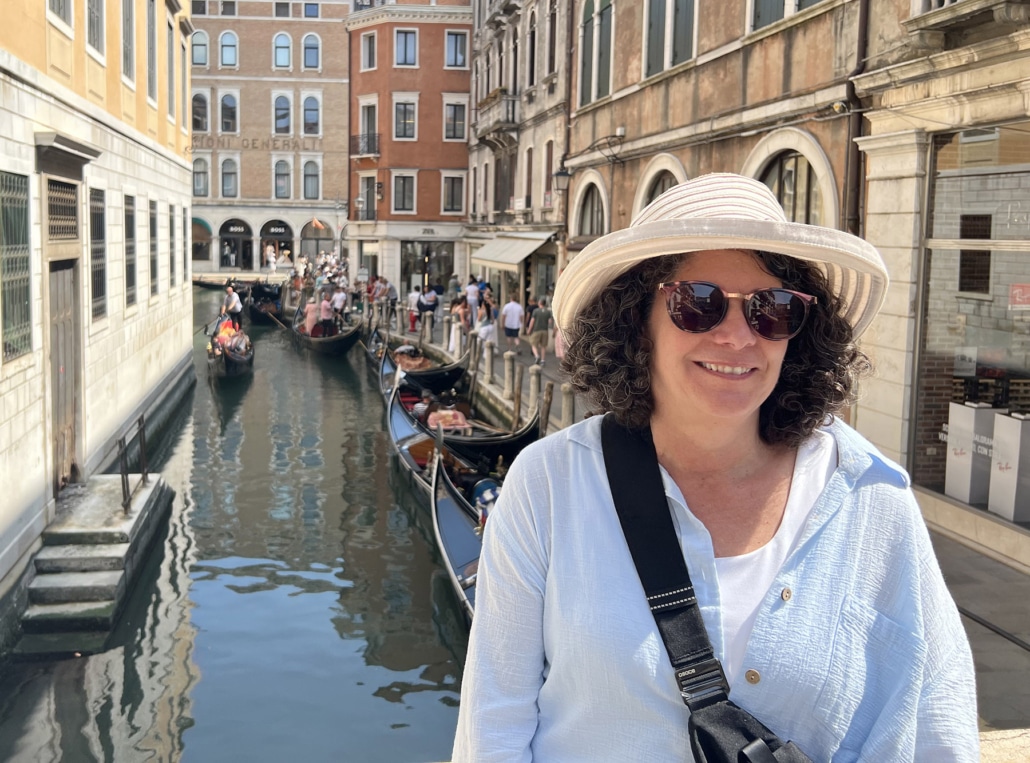
Chances of survival from a rare cancer did not look good but that changed thanks to a complex surgery and ostomy, recovery came next.
By Donna Sklener
“Mother of All Surgeries” is the nickname given to the treatment for certain types appendix cancer. Never heard of it? I hadn’t either until it became the biggest challenge of my life. I was diagnosed with Low-Grade Appendiceal Mucinous Neoplasm (LAMN), a cancerous tumor in my appendix. As a further complication, it had escaped my appendix. When this happens, the mucinous cells that usually line the inside of the appendix begin relentlessly reproducing, attaching to the surfaces and organs in the abdomen and filling any open spaces in the abdominal cavity. This version of the disease is called Pseudomyxoma Peritonei, or PMP. The mass of mucinous tumors squeezes the organs, causes intestinal blockages and organ problems, and swells the abdomen. The low-grade version acts slowly and often goes undetected for years, or is found only incidentally when patients are being treated for other abdominal issues. Misdiagnosis is common, and most doctors, even oncologists, have never dealt with appendiceal cancer of any kind.
I first went to my primary care physician complaining of bloating and unexplained weight gain. Looking back, I think this disease was probably active for at least five years before I was bothered enough to approach my provider. My symptoms were relatively minor and I explained them away in my head as being due to reaching my 50’s, being diagnosed with an underactive thyroid, entering perimenopause, and having a desk job. But after I retired at 55 and began walking five miles a day with my husband and still gaining weight (I weighed and looked like I did when eight months pregnant), I decided to look deeper.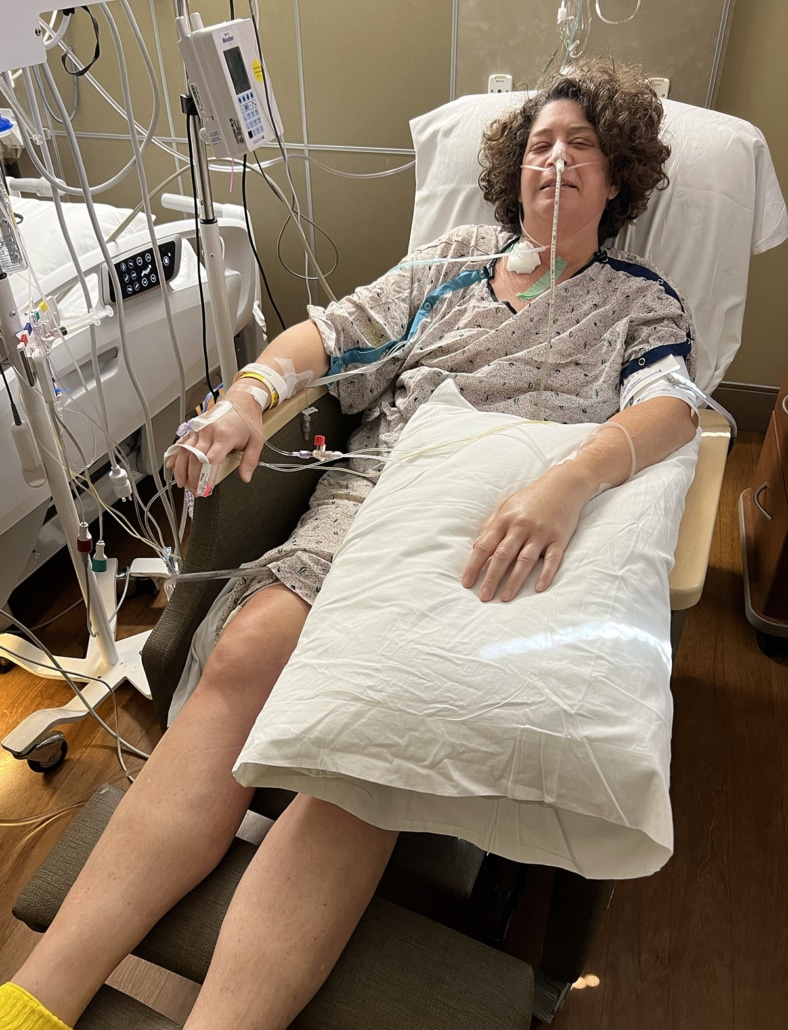
After bloodwork, an endoscopy, colonoscopy, CAT scan, and an aborted appendectomy, I was given a very scary diagnosis of a rare cancer I had never heard of. My first surgeon estimated I had the maximum abdominal tumor load according to the rating system used. He didn’t give me much hope of living past one year, and said three years was not likely. Fortunately, I did research and found that for my type of appendix cancer, it is critical to have an expert surgeon experienced in the massive surgery needed to treat the disease. I needed to travel to a hospital almost four hours from my home, but I am here to share my story three years later because of the expertise, surgical skill, and dedication of my surgeon, Dr. Patrick Wagner of Allegheny Health Network in Pittsburgh, Pennsylvania.
In May of 2023 I underwent a 12-hour surgery – officially referred to as Cytoreductive Surgery with Hyperthermic Intraperitoneal Chemotherapy, or CRS/HIPEC. The surgeon removed my appendix and the right side of my colon. And because the disease had escaped into my abdomen, he also had to scrape or burn off the mucinous cells from my organs. Any that were too affected and I could live without were removed, including my gall bladder, spleen, all reproductive organs, part of my bladder, part of my rectum, peritoneum, and omentum. For most people these would be separate surgeries and few would need all of them. I had them all at once! You can see how the nickname for this extensive and complex surgery came to be. After the cytoreductive part of the surgery, heated chemotherapy chemicals were poured into my open abdomen and circulated for 90 minutes. This HIPEC part of the surgery is done in hopes of killing any remaining mucinous cells that the surgeon could not see to remove.
I woke up with all kinds of new “attachments.” Two nerve blocks in my back, a nasogastric tube going up my nose and down my throat, an ART line in my neck, several IVs, two abdominal drains, a Foley catheter, and an ostomy pouch – because I now had an ileostomy. I was told my ileostomy was temporary, to allow the surgical sites in my colon and rectum to heal.
I was in the hospital for 11 days and lost 30 pounds, most of that during the surgery. The internal healing after CRS/HIPEC takes months. I had lost significant portions of my digestive system, and those remaining had been manipulated, stretched, cleaned, and put back in to a relatively empty abdomen. Everything had to recover, settle, and learn to do its job again, and that took time. I could eat only ice chips while in the ICU, then clear liquids, then soft food on the last couple days in the hospital. Due to the ileostomy, I was told to stick with a low residue, low fiber diet. One day, I’m sure by accident, I was given a ham and cheese sandwich for lunch. I knew enough not to eat that, but thought the mac & cheese that accompanied it was delicious. Until a few minutes later when it came back up. Turns out dairy was something my system was not yet ready for. Recovery involved a lot of trial and error, trying foods and seeing how my body responded. The debilitating cramps and pain (in addition to the expected pain of having an incision from my sternum to my pubic bone with 20+ staples) were scary. I often thought the cramps meant I would split open my anastomoses and have to be opened up again for repair. I also worried because I seemed to have high output into my ostomy bag. I had a large bag after surgery, and the nursing team at the hospital were great about taking care of that. Along with my catheter and drains, they had a lot to empty, measure, and dispose of. Those nurses are truly angels to recovering patients!
After three years of good health and still being “No Evidence of Disease,” I am able to see that my ileostomy was a remarkable aid to my healing and recovery.
A WOC nurse visited twice during my stay to teach me and my husband how to take care of the bag and make changes. It all seemed confusing and complicated, and I didn’t have the attention span (thanks to the pain and related pain management medications) to pay good attention. My husband was a saint and my rock. He took notes, practiced measuring and cutting the wafer, and never showed if he was grossed out. I was grossed out enough for both of us, and it was my body!
Discharge day came and I got set up with a home nursing visit a few days later to help change out the pouch. That nurse had to cut the wafer twice to get it to fit, applied the barrier ring to the wrong side of the wafer and had to start over, and then just a few hours after she left, I had a leak and we had to replace the bag again. My skin was already very sensitive, and the leak and additional change made it even worse. Over the next two months my husband got very good at doing bag changes. I don’t think I could have done them myself. I struggled with emptying the bag for a while because I still had to measure my output for my medical team (high volume worries), so I had to develop a routine of sitting on the edge of our tub to get the right angle to empty into the measuring pitcher, then dispose into the toilet, then clean up and put myself back together. One thing I learned to appreciate was the valve on my high-volume bags. That was much easier and cleaner to deal with than the bags with the open bottom that are rolled up or folded. I tried a few samples of those and just kept thinking, “Why can’t all bags for liquid output have a valve on them?”
I encourage anyone reading this to shed the fear and embarrassment you might be feeling, reach out for support, take advantage of resources that are available to help you
The biggest problem I had was that my stoma was placed right in the crease where I naturally bend at my waist. This led to so many barrier leaks and blow outs. Which then made me very reluctant to leave my house or have visitors. But my family and friends were so understanding and pretended not to hear all the gurgling and gas noises, or the smell that they assured me only I could detect. I am so grateful for their understanding and support.
Walking is really important to recovery from this surgery, so my husband and I started with very short distances – from the bed to the door of my hospital room at first – and worked up to three miles a day before my reversal surgery. I preferred using the high-volume bag, which could get heavy and pull when walking, so I was careful to empty it before we headed out. I tried a few belt options, but nothing ever worked well enough that I could say, “Oh, I forgot I had a bag” when walking around. Walks were uncomfortable and exhausting, but necessary.
Finally, after two months, reversal surgery was scheduled. We again traveled to the out-of-town hospital and as luck would have it, I had a pouch leak while sleeping the night before at a hotel. As we sleepily cleaned up and did a bag change, we laughed (ok, I cried a little too) and were thankful this would be the last one. I showed up at 5:30 am at the hospital with a shiny new pouch to take into surgery. After reversal, it was a much shorter stay at the hospital (four days – enough time to make sure my intestines woke up and were all ok) and the only attachment I had this time was another drain. This one came home with me, but was much easier to deal with than a bag and got removed two weeks later. After the reversal, I had to adjust my diet once again and could transition to more solid food and more fiber, while still experimenting to see what my recovering system could handle. It took several months to get back to eating as I was able to before my diagnosis.
Looking back, I did not approach having an ostomy with the right attitude. I resented that I had one, and felt pretty sorry for myself. I already felt very dependent on my husband as my caregiver during a very difficult surgical recovery, and the ostomy part of that made me feel even worse and magnified my concern that I was a burden to him (a feeling he vehemently denied, and which I am truly able to believe, now that it is in the rear-view window). I did very little research on ostomies, did not seek out helpful resources, and because it was temporary, resigned myself (and my husband) to just suffering through the experience until my reversal. This is not a good way to deal with an ostomy.
After three years of good health and still being “No Evidence of Disease,” I am able to see that my ileostomy was a remarkable aid to my healing and recovery. It gave my system time to heal and helped me get back to the things I enjoy doing, like walking every day, spending time with friends and family, gardening, and traveling the world.
With my disease, if only one mucinous cell remains, there is always a chance that I will have a recurrence and need another surgery – and perhaps another ileostomy or colostomy. I have since learned of many resources such as those from UOAA for ostomates. Next time I will insist on better home nursing support. I will call the help lines at the various supplier companies to explore pouch and attachment options to help with the leaks caused by my specific anatomy. I’ll use the wonderful resources at ostomy.org now that I know they exist. I can’t imagine how much better my whole experience would have been with a fellow ostomate to talk to and the support of this fantastic organization!
So, I encourage anyone reading this to shed the fear and embarrassment you might be feeling, reach out for support, take advantage of resources that are available to help you, and realize that although few people love their ostomy, we can appreciate what it does for us, and find the best way of living a full life with it. I wish everyone the very best experience possible.









Leave a Reply
Want to join the discussion?Feel free to contribute!