United Ostomy Associations of America
  • HOME
  • OSTOMY INFORMATION
    • Ostomy Information
      • What Is An Ostomy?
      • Living with an Ostomy: FAQs
      • Diet + Nutrition
      • Ostomy Skin Care
      • Sexuality
      • Bill Of Rights
      • New Ostomy Patient Guide
    • My Ostomy
      • Ileostomy
      • Colostomy
      • Urostomy
      • J-Pouch
      • Continent Diversions + Other Ostomy Types
      • Temporary Ostomy
      • Short Bowel Syndrome
      • Español
    • Children to Young Adults with Ostomies
      • Infant/Toddler (0-3 Years)
      • Preschool (3-5 Years)
      • Elementary School (6-9 Years)
      • Pre-Adolescent (10-13 Years)
      • Adolescent (14-18 Years)
      • Young Adult (18-25 Years)
      • Parents & Clinicians Resources
      • Know Your Rights
      • What To Expect After Surgery
      • Odor Control
      • Fast Facts
      • Ostomy Game
    • Crohn’s Disease & Ulcerative Colitis Information
      • Defining, Caring and Treating
      • Preparing for Ostomy Surgery
      • Common Issues, Managing Diet, Mental Health
      • Intimacy, Fertility and Pregnancy
      • Resources
    • General Information
      • UOAA Ostomy Marketplace
      • Product + Supply Information
      • UOAA Resources Library
      • Resources for Nurses/Home Health
      • Travel Tips + TSA
      • Donate Your Ostomy Supplies
      • Emergency Supplies
      • Related Links
      • UOAA Virtual Ostomy Clinic
      • Outpatient Ostomy Services Locator
  • SUPPORT
      • discussion
        Ostomy 101:
        Easily communicate “What is an ostomy?" with our infographic.

        Read More

    • Find Support
      • Support Group Finder
      • Support Group Websites
      • UOAA Virtual Ostomy Clinic
      • Online Peer and Ostomy Support Programs
      • Outpatient Ostomy Services Locator
      • Find a Mental Health Provider
      • Find an Ostomy Nurse
      • Online Discussion Board
      • Apps for Ostomates
      • Emotional Concerns
    • Connect With Us
      • Start/Affiliate Your Group With UOAA
      • Resources For ASGs
      • National Membership
      • Sign Up for Our E-Newsletter
    • Participate
      • Attend An Event
      • Become An Advocate
      • Join Us for a Conference
      • Make A Donation
      • Become a Member of The Phoenix Society
      • Donate Your Ostomy Supplies
      • Take A Survey
  • ADVOCACY
      • portal
        Roadmap to Establishing Outpatient Ostomy Services
        Documents that are available as PDFs to download and print.

        Read More

    • About
      • Advocacy Program
      • Advocacy Priorities
      • 10 Questions to Help You Speak Up and Self-Advocate
    • UOAA Action Center
      • Take Action
      • Competitive Bidding
      • Ostomy and Continent Diversion Patient Bill of Rights Campaign
      • Non-Medical Switching Campaign
      • Join Advocacy Network
      • Find Your Legislator
      • Advocate Tools
    • Other Ways to Get Involved
      • Ostomy Awareness Day
        • Tools
        • Who’s Raising Awareness?
      • Roadmap to Establishing Outpatient Ostomy Services
      • Share Your #MyAccessMatters Story
    • Tools and Resources Library
      • Restroom Access Self-Advocacy Tools
      • Travel Tips + TSA Communication Card
      • Swimming with an Ostomy
      • Workplace Resources
      • Aging with an Ostomy or CD
      • Home Health Tools
      • Webinars
        • Ostomy Supplies and Insurance
        • How to Navigate Insurance and Get Supplies Affordably
    • Take Control of your Healthcare
      • UOAA Virtual Ostomy Clinic
      • Expect More Series & Checklists
      • Additional Advocacy Resources
        • The Americans with Disabilities Act (ADA)
        • Long-Term Care Ombudsman
        • Quality of Care Complaints
        • Medicare Rights Center
  • WHO WE ARE
      • Have a Question for Us?
        UOAA is a 501(c)(3) nonprofit organization that supports, empowers, and advocates for people who have had or who will have ostomy or continent diversion surgery.

        Contact Us

    • About Us
      • Our Mission + History
      • Our Leaders
      • National Sponsors + Partners
      • National Membership
      • Contact Us
    • How We Help
      • Advocacy
      • Awareness
      • Support
      • National Conference
      • Ostomy Nurse Scholarship
    • Get Involved
      • Volunteer
      • Become A Leader
      • Join A Committee
      • Career Opportunities
      • Sign Up for Our E-Newsletter
  • LATEST
  • EVENTS
    • Ostomy Awareness Day
    • Run For Resilience 5K
    • Ostomy Academy
    • Educational Webinars
    • 2025 National Conference
    • Calendar
  • GIVE NOW
  • SEARCH
  • Menu Menu

Tag Archive for: college with an ostomy

I Found My Calling in Life, But It Came at the Price of My Colon

Body Image, IBD, Ileostomy, J-Pouch, Patient Stories, Teens, Young Adult

What started with mozzarella sticks, orange chicken, and a giant chocolate chip cookie from Applebee’s changed the course of my life.

I was 17 years old, touring colleges with my parents and preparing for what I thought would be the next exciting chapter of my life when everything changed.

It started with bloody stools and abdominal cramping. At first, my symptoms were dismissed as hemorrhoids. During that time, after taking antibiotics for cystic hormonal acne, I developed C. difficile. Even after treatment, my symptoms persisted for weeks, and two months later a colonoscopy finally provided the answer: ulcerative colitis.

I was a senior in high school.

Senior Prom (2010): Weeks after my first surgery, I attended prom with my ileostomy.

Instead of worrying about prom, graduation, and college, I found myself navigating doctor’s appointments, medications, hospitalizations, and the uncertainty that comes with living with a chronic invisible illness. Over the next year, ulcerative colitis slowly stole pieces of my life. I was exhausted, constantly sick, and missing out on experiences that most teenagers take for granted. I kept wondering, “How can anyone live a normal life with this disease?” As my illness progressed, so did my fears. I found myself wondering if I would need surgery, whether anyone would notice my ostomy, if anyone would ever love me, and if life would ever feel normal again. At 17 years old, I wasn’t just grieving my health – I was grieving the future I thought I was going to have.

Throughout my illness and recovery, my parents – especially my mom – never stopped believing I would get my life back, even during the moments when I couldn’t believe it myself.

Eventually, after a year-long ulcerative colitis flare, my gastroenterologist referred me to a colorectal surgeon. I expected another consultation, another conversation about treatment options. Instead, after examining me that day, he told me my colon was too diseased to save and that I needed surgery. Just one week later, I was in the operating room. I had spent more than a year fighting to keep my colon, hoping each new medication would be the one that finally worked. Accepting surgery didn’t feel like a choice; it felt like admitting defeat. But my body had reached a point where there were no other options. What I couldn’t see then was that surgery wasn’t the end of my life as I knew it. It was my chance to get it back.

At 18 years old, I underwent the first stage of a planned three-stage J-pouch (IPAA) surgery. I woke up with an ileostomy, suddenly trying to make sense of a body that looked and functioned differently than it had before.  I couldn’t imagine it then, but the surgery I had fought so hard to avoid would become the beginning of my recovery.

Something unexpected happened almost immediately. For the first time in over a year, I wasn’t running to the bathroom. The urgency and frequency were gone. Even though I had just undergone major surgery, I felt better than I had in months. It was only then that I realized how sick I had truly been.

High School Graduation (2010): Graduating with my ileostomy just two months after undergoing major surgery.

I won’t pretend it was easy. Living with an ostomy at 18 brought fears I never imagined I’d face. Like many young people facing ostomy surgery, I was scared. I worried about how I looked, what other people would think, and whether I would ever feel normal again. Going back to high school with an ostomy felt almost as intimidating as the surgery itself. I wasn’t worried about classes – I was worried about using the bathroom, whether my ostomy would make noise, whether anyone would notice my pouch, and whether I would ever feel like a normal teenager again.

One of the most meaningful moments during that time occurred when a nurse arranged for me to meet another young woman living with an ostomy. Until that moment, I thought my future had been taken from me. Watching her laugh, smile, and live her life changed everything. For the first time, I could picture a future for myself. What I didn’t realize then was that this single act would shape the rest of my life.

From that day forward, little by little, I made a decision: I wasn’t going to let my ostomy stop me from living my life.

I returned to high school. I graduated with my class. I went to my senior prom. I started college. I dated. I wore a bikini. I continued lifeguarding and teaching swim lessons, worked at a boutique shoe store, and even posed for a photoshoot.

None of those moments happened because I stopped being afraid. They happened because I refused to let fear make my decisions.

Looking back, I realized my ostomy wasn’t taking my life away – it was giving it back.

During my first hospitalization, something happened that I never expected. The nurses who cared for me inspired me to become a nurse. Their compassion, patience, and encouragement showed me what it meant to care for someone during one of the most vulnerable moments of life. They didn’t just help me recover, they changed the trajectory of my life. While I was still in the hospital, I knew I wanted to become a nurse. I also knew that one day I wanted to care for patients facing the same fears and life-changing surgeries that I was experiencing. That dream guided every step of my career. I earned my Bachelor of Science in Nursing (BSN), became a Registered Nurse (RN), later completed my Master of Science (MSN) in Nursing as an Adult-Gerontology Acute Care Nurse Practitioner (AGACNP-BC), and ultimately achieved board certification as an Advanced Practice Wound, Ostomy, and Continence Nurse (CWOCN-AP) – the very field that had once cared for me.

I know what it feels like to believe that no one else understands. And I know how powerful it is when someone says, “I’ve been where you are.”

I didn’t become a Wound, Ostomy, and Continence Nurse despite my experience as a patient. I became one because of it.

Today, I work in colorectal surgery, caring for patients with colon and rectal cancer and other complex colorectal conditions. Many are preparing for life with a permanent ostomy, and I have the privilege of helping them navigate that journey. There’s something uniquely powerful about caring for patients when you’ve been the patient yourself.
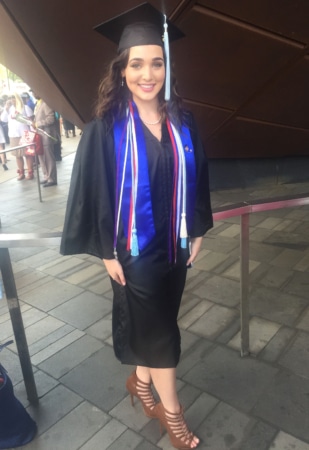
Bachelor of Science in Nursing (BSN) Graduation (2015): Earning my BSN and beginning the journey toward becoming the nurse I once needed.

Every day, I care for patients facing many of the same fears, decisions, and questions that once terrified me.  I sit beside patients preparing for ostomy surgery. I answer the questions they’re often afraid to ask.  Most importantly, I remind them that an ostomy is not the end of their story – it’s the beginning of a new chapter.

Because once upon a time, someone did that for me.

Because I’ve been there.

I know what it feels like to wake up after surgery and wonder what comes next.

I know what it feels like to look in the mirror and see a body that has changed.

I know what it feels like to believe that no one else understands.

And I know how powerful it is when someone says, “I’ve been where you are.”

More than a decade later, those fears didn’t end with me. I still hear the very same questions. With tears in their eyes, patients ask me the same questions I once asked myself:

Will anyone notice?

Will I ever feel normal again?

In that moment, I realize I’m not answering as someone who simply studied ostomy care.

I’m answering as someone who has lived it.

I often tell patients that while I would never have chosen ulcerative colitis, I wouldn’t trade the perspective it has given me. My surgeries didn’t restore the life I had before ulcerative colitis; they gave me a different life – one that still includes challenges, but also purpose, gratitude, and the privilege of helping others navigate the path I once walked.

Looking back, ulcerative colitis changed the trajectory of my life in ways I never could have imagined. If you had told my 18-year-old self that one day I would dedicate my career to caring for ostomy patients, I wouldn’t have believed you.

The disease that once felt like the greatest obstacle in my life ultimately led me to my purpose. It took me years to realize that while ulcerative colitis changed my body forever, it also revealed a calling I never knew I was meant to find. Every time I meet a frightened patient preparing for surgery, I think back to the young woman who met with me all those years ago.
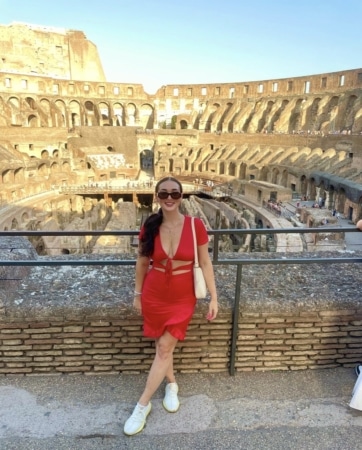
Living Life with a J-pouch: Sixteen years later, traveling the world and proving that life after ulcerative colitis surgery can be full of adventure.

She probably had no idea how much that conversation would shape my life.  For years, I kept my story mostly private, sharing it only when I thought it might help a patient. Sixteen years later, I’m sharing it publicly for the same reason someone once shared theirs with me: because sometimes, all it takes is seeing someone who’s been there to believe you’ll be okay.

I hope that by sharing my story, I can be that person for someone else.

Because sometimes the thing that changes your life isn’t the surgery itself.

It’s meeting someone who’s already walked the path you’re about to begin.

It’s realizing you don’t have to face it alone.

It’s realizing your story isn’t ending.

It’s just beginning. ❤️


Kelly Mendello, MSN, AGACNP-BC, CWOCN-AP, OCN, is a Colorectal surgery Nurse Practitioner, Advanced Practice Wound, Ostomy, and Continence Nurse, former ostomy patient, and ostomy advocate. Drawing from both her personal journey and her experience caring for patients with ostomies, she is passionate about patient education, mentorship, and helping others navigate life with confidence after ostomy surgery.

Instagram: @withkellyxo
Email:
kellymendellonp@gmail.com

July 27, 2026
https://www.ostomy.org/wp-content/uploads/2026/07/Kelly-story-woc-nurse.jpeg 779 1179 Contributor https://www.ostomy.org/wp-content/uploads/2017/02/UOAAlogofinal2.png Contributor2026-07-27 09:14:292026-07-27 10:49:45I Found My Calling in Life, But It Came at the Price of My Colon

Lacee Harper’s Story

IBD, Ileostomy, Patient Stories

Imagine being your 15-year-old self again. What did that feel like? Young, carefree, happy…healthy?
For me, I felt all of those things every day. I played the clarinet, got good grades, was athletic from running track, active in school/church clubs and had amazing family/friends. What more could I want as a teenager?

I didn’t want for anything until one day I no longer felt like my healthy self anymore and all I wanted was to be healthy again. This is when my life changed forever…

It was November of 2012, at the time I had just moved to Los Angeles, California with my mother from Maryland. I was very excited to move and support my mom with her new job opportunity. She is like my best friend and nurturer at the same time. It was always just her and I growing up, no siblings. California’s scenery was colorful and vibrant. All I could picture were the great things my future would bring living there.

That picture flipped upside down within weeks. I could feel my stomach expressing to me that it didn’t like the chicken nuggets or the pepperoni pizza, I was feeding it. Sharp pains that felt like knives were sticking me each time I would eat, pushed me to never want to pick up another piece of food again. No over-the-counter medicine could relieve the amount of pain I would feel. Sick little me sat helplessly with my mother by my side in Ronald Regan UCLA Medical Center’s emergency room waiting to be admitted and seen by a doctor. I thought to myself, “What was happening to me? I don’t understand.”

I couldn’t understand. I was just fine a month ago. My mom was just as confused as I was. The doctors weren’t transparent enough with my diagnosis and had trouble figuring out what was the actual problem. After a few tests, I was diagnosed with ulcerative colitis/Crohn’s disease. This diagnosis soon changed once the gastrointestinal team at UCLA Medical Center (UCLAMC) realized it was strictly my colon that was being affected which changed my diagnosis to ulcerative colitis.

I had no idea what ulcerative colitis was nor had I ever heard of it before. My current gastroenterologist, Dr. Ziring, asked who in my family had the disease but I wasn’t familiar with anyone. My father, mother, and grandparents didn’t have any trace of ulcerative colitis. It was concluded that the change in climate and stress could have taken a toll on my body to make me flare-up. I couldn’t eat certain foods anymore. I was prescribed all types of medication that I had never seen and forced to take pills that were pretty huge to swallow.

Lacee Harper with her mother.

Nearly one month spent in the hospital, my routine had changed. I would wake up take my meds first, eat (liquid-solid foods), watch TV, read a book, walk around to gain my strength and repeat at least three times a day. Once I was released, I remember being so happy to be a normal person again. That feeling went away when my mom took me to buy nutritional drinks to restore my protein, vitamins, and minerals. I couldn’t fit into any of my clothes from the amount of weight I lost and my toned body went away. Dr. Ziring told me that I would live with this forever because there is no cure, which I didn’t want to believe. All I could do was try to understand and educate why my body reacted the way it did to certain foods, activities and mental stability.

Fast forward to 2013 where I moved back to Maryland with my mother, I was enrolled back in my previous high school and actively seeing, pediatric gastroenterologist, Dr. Oliva-Hemker at John Hopkin’s hospital. I couldn’t do any of the previous extracurricular activities I participated in and could only workout at a minimal intensity due to my low blood counts. Throughout the school year, I experienced many flare-ups and trial/error with different medications. Some hospitalizations were longer than others and overtime I became stricter with my diet to prevent excessive flare-ups. My high school graduation wasn’t the best time for me because I was experiencing a severe flare-up that interfered with my ability to keep food down. I missed my senior week summer trip to recover in the hospital and get back to feeling better again.

After graduating from high school, I switched gastroenterologists since I was considered an adult. Dr. Rosen had been my mom’s gastroenterologist for years so the transition was smooth. I was stabilized on Humira and Prednisone throughout my community college career. By then, my mother and I had moved to Atlanta where the weather was nicer. I think the weather, being around family/friends and less stress I experienced helped my flare-ups calm down living in Atlanta. I truly enjoyed my time there and experiencing college at Georgia State University, as well as working part-time.

Lacee recently graduated with a master’s degree from the S.I. Newhouse School of Communications at Syracuse University.

Once I completed my first two years of college and received my associate’s degree, I transferred to Syracuse University (SU) to achieve my bachelor’s degree. This was one of the hardest transitions of my life moving from the South to the cold North. My third year of college and first-year being away at a university led to my body experiencing an extreme transition which resulted in three severe flare-ups. My mother left Atlanta and moved back to Maryland to be closer to me because she was terrified of how sick I was getting. Each time I flared up, I flew home to get the treatment from Dr. Rosen. Suddenly, Humira no longer worked for my body anymore and Prednisone wasn’t healthy for me to keep using to reduce inflammation due to its side effects.

During senior year, my 3-week hospitalization interfered with my academics and involvement in extracurricular activities. At this time, I was advised to try Entyvio and I was tired of trying new medications. The only way I could have some quality of life was to remove my colon. My mom was concerned for me, but I couldn’t let her concerns steer my thinking I knew I had to do this for me if I wanted to make it to graduation.

In November of 2017, I set an appointment with Dr. Colvin in Northern Virginia to discuss my surgery. I had the surgery during my college winter break, spent Christmas in the hospital, recovered and returned back to school. At the time, I didn’t know how I was going to apply to graduate school at the S.I. Newhouse School of Communications at SU but I did that during my recovery period. It took a lot of exercise, mental motivation, empathy and support from family, my best friends, mentors and peers at school. With amazing grace and good spirits, I got accepted into the public relations program at the S.I. Newhouse School of Communications.

From this specific point on, learning how to function in everyday life with my ostomy took a lot of patience, time, emotional breakdowns, motivation and positive mental strength. I don’t regret any of it at all. I do not have to worry about missing out or not fully enjoying any more important events of my life. Now as of 2020, I have been medication-free for two full years, graduated school with all of my degrees, feel healthier than ever, working full-time in public relations and am actively pursuing my dreams in the entertainment (modeling/tv/film) industry.

It wasn’t until a couple of months ago, I discovered United Ostomy Association of America (UOAA) and chose to reach out to Advocacy Manager Jeanine Gleba about getting more involved. Since reaching out, I have gained the opportunity to advocate for patient’s access to treatment during the Digestive Disease National Coalition Day on the Hill and spoke on the behalf of UOAA. I am elated to have met UOAA’s team and to represent others like myself who have experienced challenging obstacles.

I couldn’t be more grateful for my ostomy and must say that it changed my life for the good. Life is full of obstacles but how you choose to overcome them will make your life. I chose to take full control of my life in order to have a better quality of life. It doesn’t matter who you are, you can truly do whatever you put your mind to. Believing in yourself and staying grounded in positivity, motivation and dedication is key. Follow your dreams, find what makes you happy and don’t let the negatives take control of your life.

April 2, 2020
https://www.ostomy.org/wp-content/uploads/2020/04/Lacee-Graduation_webedit-scaled.jpg 1430 2560 Contributor https://www.ostomy.org/wp-content/uploads/2017/02/UOAAlogofinal2.png Contributor2020-04-02 14:09:582020-04-02 15:34:20Lacee Harper’s Story

Our Categories

Advocacy (79) Body Image (3) Caregivers (21) Colorectal Cancer (19) Colostomy (140) Continent Diversions (8) Digital Sponsor (78) Disaster Preparation (4) Emotional Health (63) Events (32) Exercise/Sports (48) Fashion/Clothing (11) Healthcare (23) IBD (56) Ileostomy (188) J-Pouch (8) jejunostomy (7) Membership (3) Nutrition (19) Ostomy 5k (20) Ostomy 5k (16) Ostomy Awareness (55) Ostomy Basics (56) Ostomy News (95) Ostomy Nurse (14) ostomy reversals (13) Ostomy Supplies (3) Ostomy Tips (94) Ostomy Videos (4) Patient Stories (101) Pediatric Ostomy (5) Personal (67) Sexuality (12) Short Bowel Syndrome (17) Skin Care (10) Social Life (5) Support Group News (13) Support Resources (16) Teens (4) Travel (11) UOAA Conference (18) UOAA History (3) UOAA Volunteers (5) Urostomy (113) Young Adult (8)

Support Us:

Your Donation Funds UOAA Educational Programs:

DONATE TODAY
SUSTAINING GIFT
BECOME A MEMBER
UOAA E-NEWS SIGN UP
Get updates on events, national advocacy and important topics in the ostomy and continent diversion community.

Contact Us


United Ostomy Associations of America
P.O. Box 2293
Biddeford, ME 04005-2293

Virtual Ostomy Clinic

Contact UOAA

Donate Your Supplies

Call us toll-free at: 1-800-826-0826.
Our Information Line hours are Monday-Friday, 9am to 3pm EST. If you have an emergency, please dial 911 or contact your local medical professional.

Please understand that UOAA is a private, nonprofit, advocacy and informational organization. We are not a medical facility and we do not have medical or legal professionals on staff. Therefore, UOAA does not provide Medical, Mental Health, Insurance or Legal Advice. Visit UOAA Virtual Ostomy Clinic provided by The Wound Company for non-emergency, virtual ostomy support.

Privacy Policy

Get Involved

UOAA is the leading organization proactively advocating on behalf of the ostomy community. Recognizing that we are always stronger together, we encourage everyone to get involved by joining our Advocacy Network. We’ve also created several Advocacy Tools and Resources to help you successfully advocate on behalf of the ostomy community to ensure every ostomate receives quality care.

UOAA Run for Resilience Logo

UOAA does not and shall not discriminate on the basis of race, color, religion (creed), gender, gender expression, age, national origin (ancestry), disability, marital status, sexual orientation, or military status, in any of its activities or operations.

Digital Health Award
© 2005-2026, UOAA. All Rights Reserved l Design by Tap House Media
  • Link to Facebook
  • Link to X
  • Link to Pinterest
  • Link to LinkedIn
  • Link to Youtube
  • Link to Mail
  • Link to Instagram
Scroll to top Scroll to top Scroll to top