United Ostomy Associations of America
  • HOME
  • OSTOMY INFORMATION
    • Ostomy Information
      • What Is An Ostomy?
      • Living with an Ostomy: FAQs
      • Diet + Nutrition
      • Ostomy Skin Care
      • Sexuality
      • Bill Of Rights
      • New Ostomy Patient Guide
    • My Ostomy
      • Ileostomy
      • Colostomy
      • Urostomy
      • J-Pouch
      • Continent Diversions + Other Ostomy Types
      • Temporary Ostomy
      • Short Bowel Syndrome
      • Español
    • Children to Young Adults with Ostomies
      • Infant/Toddler (0-3 Years)
      • Preschool (3-5 Years)
      • Elementary School (6-9 Years)
      • Pre-Adolescent (10-13 Years)
      • Adolescent (14-18 Years)
      • Young Adult (18-25 Years)
      • Parents & Clinicians Resources
      • Know Your Rights
      • What To Expect After Surgery
      • Odor Control
      • Fast Facts
      • Ostomy Game
    • Crohn’s Disease & Ulcerative Colitis Information
      • Defining, Caring and Treating
      • Preparing for Ostomy Surgery
      • Common Issues, Managing Diet, Mental Health
      • Intimacy, Fertility and Pregnancy
      • Resources
    • General Information
      • UOAA Ostomy Marketplace
      • Product + Supply Information
      • UOAA Resources Library
      • Resources for Nurses/Home Health
      • Travel Tips + TSA
      • Donate Your Ostomy Supplies
      • Emergency Supplies
      • Related Links
      • UOAA Virtual Ostomy Clinic
      • Outpatient Ostomy Services Locator
  • SUPPORT
      • discussion
        Ostomy 101:
        Easily communicate “What is an ostomy?" with our infographic.

        Read More

    • Find Support
      • Support Group Finder
      • Support Group Websites
      • UOAA Virtual Ostomy Clinic
      • Online Peer and Ostomy Support Programs
      • Outpatient Ostomy Services Locator
      • Find a Mental Health Provider
      • Find an Ostomy Nurse
      • Online Discussion Board
      • Apps for Ostomates
      • Emotional Concerns
    • Connect With Us
      • Start/Affiliate Your Group With UOAA
      • Resources For ASGs
      • National Membership
      • Sign Up for Our E-Newsletter
    • Participate
      • Attend An Event
      • Become An Advocate
      • Join Us for a Conference
      • Make A Donation
      • Become a Member of The Phoenix Society
      • Donate Your Ostomy Supplies
      • Take A Survey
  • ADVOCACY
      • portal
        Roadmap to Establishing Outpatient Ostomy Services
        Documents that are available as PDFs to download and print.

        Read More

    • About
      • Advocacy Program
      • Advocacy Priorities
      • 10 Questions to Help You Speak Up and Self-Advocate
    • Get Involved
      • Understanding the Medicare Competitive Bidding Program 2025 Ruling
      • Take Action
      • Join Advocacy Network
      • How to Be An Ostomy Champion
      • Ostomy Awareness Day
      • Roadmap to Establishing Outpatient Ostomy Services
    • Tools and Resources Library
      • Non-Medical Switching Resources
      • Ostomy and Continent Diversion Patient Bill of Rights
      • Restroom Access Self-Advocacy Tools
      • Travel Tips + TSA Communication Card
      • Swimming with an Ostomy
      • Mythbusters Infographic
      • Workplace Resources
      • Aging with an Ostomy or CD
    • Take Control of your Healthcare
      • UOAA Virtual Ostomy Clinic
      • Know Your Ostomy Checklist
      • Know Your Ostomy Supplies Checklist
      • Physician Visit Checklist
      • Know Your Health Care Insurance
      • Know Your Pouching System
      • Know What’s in Your Medical Record
  • WHO WE ARE
      • Have a Question for Us?
        UOAA is a 501(c)(3) nonprofit organization that supports, empowers, and advocates for people who have had or who will have ostomy or continent diversion surgery.

        Contact Us

    • About Us
      • Our Mission + History
      • Our Leaders
      • National Sponsors + Partners
      • National Membership
      • Contact Us
    • How We Help
      • Advocacy
      • Awareness
      • Support
      • National Conference
      • Ostomy Nurse Scholarship
    • Get Involved
      • Volunteer
      • Become A Leader
      • Join A Committee
      • Career Opportunities
      • Sign Up for Our E-Newsletter
  • LATEST
  • EVENTS
    • Ostomy Awareness Day
    • Run For Resilience 5K
    • Ostomy Academy
    • Educational Webinars
    • 2025 National Conference
    • Calendar
  • GIVE NOW
  • SEARCH
  • Menu Menu

No Stress Air Travel with an Ostomy

Advocacy, Ostomy News, Ostomy Tips, Travel

Traveling through airports can make anybody nervous as security lines get longer and wait times increase. For some people living with an ostomy, air travel can cause further anxiety.

Universal pat-downs performed by Transportation Security Administration (TSA) agents and uncertainty surrounding procedures at the screening checkpoint can add to an already stressful experience.

Luckily, United Ostomy Associations of America (UOAA) is working on your behalf to help make your next airport security screening run as smoothly as possible. But you need to be prepared beyond just packing the right supplies and emptying your pouch before a flight. With our tips and latest guidance from the TSA, you’ll be empowered with the knowledge to help make your next travel experience a positive one.

“We have been working with the TSA for over three years now and have established an excellent working relationship,” says George Salamy UOAA’s TSA Liaison and representative on the Coalition. In fact, at a past TSA Disability and Multicultural Conference, OAA was the recipient of a Community Participation Award.  “Recognition by the TSA with this award illustrates how we are helping our constituents, the ostomates, who want to travel with little inconvenience,” George says.

One way we do this is by participating in conference calls where we provide input from the UOAA traveler perspective. The system is a work-in-progress and complaints about invasive searches outside of protocol, though rare, still occur.

Communication is critical in navigating the security process. Inform the TSA officer that you have an ostomy pouch before the screening process begins. For discretion, you may provide the officer with the TSA notification card or a medical document describing an ostomy. Expect to be screened without having to empty or expose the ostomy through the advanced imaging technology, metal detector, or a pat-down. If your ostomy pouch is subject to the additional screening you’ll be asked to conduct a self pat-down of the ostomy pouch outside of your clothing, followed by a test of your hands for any trace of explosives.

You may also undergo a standard pat-down of areas that will not include the ostomy pouch. Remember it is normal protocol for agents to request a pat-down of any travelers. Be aware however that at any point during the process you can ask for a Supervisory TSA Officer, and a private area for the screening as well as be accompanied by your travel companion.

As an ostomy traveler, if an incident occurs that differentiates from the protocol (such as being asked to undress the area around your ostomy) know that this is not allowed. It is important to report this to the TSA and follow-up with UOAA to ensure appropriate and immediate action is taken. Upon review of security footage corrective action may be taken in the form of additional training and/or discussions with appropriate personnel at the airport to help prevent similar incidents from happening again.

Before your next trip view our tips for ostomy travelers. We will continue to educate and communicate with the TSA with the goal of making travel easier for all those traveling with an ostomy. No people living with an ostomy should ever be discouraged from travel whether for work, to see family and friends, a vacation or a journey around the world.

May 7, 2018
https://www.ostomy.org/wp-content/uploads/2018/02/TSA-photo.jpg 819 1200 Contributor https://www.ostomy.org/wp-content/uploads/2017/02/UOAAlogofinal2.png Contributor2018-05-07 13:58:272023-01-11 11:19:00No Stress Air Travel with an Ostomy

What’s in a Name?

Advocacy, Personal

Ostomate or Person Living with an Ostomy?

“Labels are for soup cans.” ~ Grist Mill Road by Christopher Yates

by Jeanine Gleba, UOAA Advocacy Manager with Keagan Lynggard, UOAA Advocacy Committee Member

The UOAA Advocacy Committee produces many educational resources and self-advocacy tools for the benefit of you; you being a person living with an ostomy or continent diversion. Our dilemma has been what to call you or how to refer to you within the context of advocating, educating, and supporting, as you are the subject of what we write about. Sometimes we call you “a person living with an ostomy or continent diversion”. That takes nine words to describe one aspect of your life and this becomes very difficult and cumbersome to write over and over again in a single advocacy or educational document. There is however, a definite trend on social media and with online bloggers to use the word “ostomate” when referring to you, and the community of people who live with an ostomy.

As a national organization that supports all people living with an ostomy it’s crucial that we are sensitive and choose our words wisely so that they are acceptable to our community. Ostomy surgery is already a delicate topic that is often associated with “bathroom talk”, a topic that already has enough of its own societal taboos. Recently our Committee set out to gather survey data to hear from YOU, the people that our work impacts to identify the more acceptable or best term to use in our advocacy written materials and presentations concerning ostomy awareness and education.

Is this a label?

Our surveys certainly sparked an interesting debate. Many responders assumed that we wanted to “label” our community in a derogatory way versus our intention which was to simply look for a word to identify our medical demographic and represent the people we impact. As I read the comments from our responders and thought about what we were looking for, it made me wonder if this is how “labels” are born? Do they arise when people search for a simple and easy to use term to describe something? What happens when a label sticks and there is a negative stigma or insensitivity to those with a particular condition? As I pondered these questions and continued to review further comments, I realized that many people do prefer a simple word (or label) to identify their medical condition. It helps some people feel a sense of belonging and unity within a unique group. So I’m not sure what we would even call the word: a “term” or a “name” or a “label”? It’s also important to stress that although we were looking for a simpler non-offensive term it wasn’t meant to completely and irrevocably replace a “person living with an ostomy”. In fact, the definition of the word “ostomate” is simply a person who has undergone an ostomy.

And the preferred term is…

Here are the results of our surveys:

Total Votes: 331
34% (113 votes) Person with an ostomy
61% (201 votes) Ostomate
5% (17 votes) Other

191 Votes via Facebook
37% (71 votes) Person with an Ostomy
63% (120 votes) Ostomate

23 Votes via Twitter
48% (11 votes) Person with an ostomy
52% (12) Ostomate

117 Responses via Survey Monkey
27% (31 votes) Person with an Ostomy
59% (69 votes) Ostomate
14% (17 votes) Other

Does age affect preference?

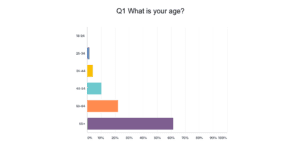
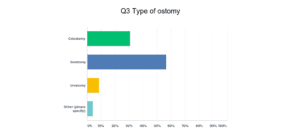
In the Survey Monkey survey we asked a few more questions to gain a better understanding of the responders, such as gender, age, or whether their ostomy was temporary or permanent. 98% of the responders had a permanent ostomy with over 80% being older than 55 years of age. Of this older population 62% were female and 38% were male. Of interest the males were 50-50 in their selection of preferred term. Whereas, only 17% of females preferred “person with living with an ostomy”. If this had been a science experiment, and I had to develop an initial hypothesis, given the social trends on the internet, I would have predicted that the term “ostomate” was going to be more favorable for the younger generation. Our results proved this wrong!
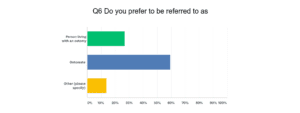
 

We also provided an opportunity for people to list a specific “other” term that they would prefer and only three had a specific response like “Packin’ a Pouch”. For the majority of those who selected “other” they did not list another term but rather said it was actually ok to use “ostomate” or they didn’t care, which in turn would increase the # of who prefer “ostomate”. Nineteen percent (3/16 responses) did not want any term.

For the question “For those who do not like the term ostomate, why?” these were some of the reasons why:

· Because I am more than my ostomy or my ostomy doesn’t define me
· Labels what/who you are
· People won’t know what ostomate means or it always needs more explanation

Until you walk in someone else’s shoes…

Here’s what people were saying:

“I don’t want to be defined by my ostomy. Giving me a title/name defines me. I am a mother, a wife, a nurse, and a friend. Those things define me. Not my ostomy. While my ostomy is a part of my life, it does not define my life. PLEASE get away from the term “ostomate.”

“I prefer to focus on the positive – I am LIVING with an ostomy. Ostomate sounds harsh.”

“I also like “Person living with an ostomy”, but Ostomate is easier. What I really don’t like is use of the word “bag” which many, many people, ostomates, nurses and doctors continue to use. It’s very upsetting!” (Check out the Vegan Ostomy blog on this topic.)

“This term is commonly thought to be someone with a bowel ostomy. Mine is an urostomy. I’d like to see a term implies all ostomies.”

“Living with an ostomy sounds better to me and denotes the fact the ostomy gives a person additional life.”

“It labels people (similar to how one would not want to be referred to as the amputee, the diabetic, the bipolar, etc.)”

“I am not a “joiner” and do not plan on meeting others with similar conditions.”

Of notable interest 16/55 people answered this question with a response that they actually like the term ostomate.

In general our overall analysis found that although we did receive a few “neither” or “either” comments followed with the pattern of commentary along the lines of “my ostomy does not define me”, the vast majority preferred the term “ostomate”. We also received comments that support the idea that those who prefer the term ostomate are those familiar with the literal definition of ostomate, those who are involved/active within the ostomy community, or those who have really embraced this aspect of their life. This sense of community was evident in the survey question showing over 70% of responders belong to some sort of support community either online or an ostomy support group.

There is no right answer.

In conclusion, the Advocacy Committee has decided that in most cases we will continue to use the terminology “person living with an ostomy”, which is less “defining”, in our materials; however, given the results of the survey we will also now more freely and confidently include the term “ostomate” in order to simplify a document or when the term is more suitable for our advocacy purposes. I believe in our society of political correctness, we will never be able to please everyone, but we should always aspire to do our best, be respectful of all and try not to stir the pot by adding salt to wounds that are in the process of healing.

Thank you again to all those who participated in the survey and contributed to helping us gather this valuable information.


April 24, 2018
https://www.ostomy.org/wp-content/uploads/2018/04/ostomate-final.png 635 1200 Contributor https://www.ostomy.org/wp-content/uploads/2017/02/UOAAlogofinal2.png Contributor2018-04-24 16:48:482018-04-24 16:48:48What’s in a Name?

Quality of Care Resource at the Centers for Medicare and Medicaid Services (CMS)

Advocacy

By Jeanine Gleba, UOAA Advocacy Manager

The overall goal of the UOAA Patient Bill of Rights (PBOR) initiative is to ensure high quality of care for people who had or will have ostomy or continent diversion surgery. To accomplish this it’s important that patients and families actively participate in patient health care.

According to CMS an integral part of the U.S. Department of Health and Human Services’ (HHS) National Quality Strategy is the CMS Quality Improvement Organization (QIO) Program. It is one of the largest federal programs dedicated to improving health quality at the community level.

Under the QIO program there are two Beneficiary and Family Centered Care-QIOs (BFCC-QIOs) who help Medicare beneficiaries and their families exercise their right to high-quality healthcare. The two BFCC-QIOs are KEPRO and Livanta and they serve all fifty states. BFCC-QIO services are free-of-charge to Medicare beneficiaries.

Depending on where you live (Locate your BFCC-QIO) they are available to help Medicare beneficiaries and their families or caregivers with questions or concerns such as:

• Am I ready to be discharged from the hospital?
• Should I be receiving needed skilled services such as physical therapy, occupational therapy, from a home health agency, skilled nursing facility, or comprehensive outpatient rehabilitation facility? (Care from a certified ostomy nurse is a skilled service.)
• I’m concerned about the quality of care I received from my hospital, doctor, nurse or others.
Examples of quality of care concerns that pertain to our PBOR include but are not limited to:
• Experiencing a change in condition that was not treated (such as skin infection around stoma)
• Receiving inadequate discharge instructions (such as inadequate individual instruction in ostomy care, including the demonstration of emptying and changing pouch or no instruction on how to order ostomy supplies when you leave the hospital)

*Why should Medicare Beneficiaries contact their BFCC-QIO with concerns?

First, BFCC-QIOs can help when you have a concern about the quality of the medical care you are receiving from a healthcare facility (e.g. hospital, nursing home, or home health agency) or professional. You can also file a formal Medicare complaint through your BFCC-QIO.

Furthermore, according to CMS, when Medicare beneficiaries share their concerns with their BFCC-QIO, they help identify how the health care system can better meet the needs of other patients. Beneficiary experiences, both good and bad, give the QIO Program the perspective to identify opportunities for improvement, develop solutions that address the real needs of patients, and inspire action by health professionals. This is what we are working towards achieving with our PBOR initiative. This is a resource to help the UOAA community make this happen.

Last, Medicare beneficiaries have the right to file an appeal through their BFCC-QIO, if they disagree with a health care provider’s decision to discharge them from the hospital or discontinue services, or when they have a concern about the quality of the medical care they received from a health care professional or facility.

*When and who should Medicare Beneficiaries contact?

A Medicare beneficiary can call 1-800-MEDICARE or your Local State Health Insurance Assistance Program (SHIP) if he or she:

• Has general questions about Medicare coverage;
• Needs clarification on how to enroll in Medicare;
• Wishes to discuss billing issues.

A beneficiary can contact their BFCC-QIO if he or she:

• Needs to discuss the quality of care received;
• Wants to file a formal quality of care complaint; or
• Needs help to understand his or her Medicare rights.

While BFCC-QIOs are the primary point of contact for Medicare beneficiaries and their families, when necessary, quality of care complaints can also still be made by calling 1-800-MEDICARE.

For those interested in learning more about what to do if you have a concern about the care you received while on Medicare, please refer to this FAQs page produced by CMS.

Be involved in your healthcare and if you are a Medicare beneficiary, take advantage of this resource to self-advocate and ensure a better outcome for yourself.

*Source qioprogram.org

March 20, 2018
https://www.ostomy.org/wp-content/uploads/2018/03/Nurse-and-tabletweb.jpg 1067 1600 Contributor https://www.ostomy.org/wp-content/uploads/2017/02/UOAAlogofinal2.png Contributor2018-03-20 15:03:252018-03-21 09:39:40Quality of Care Resource at the Centers for Medicare and Medicaid Services (CMS)

The Snowball Effect of Ostomy Advocacy

Advocacy, Ostomy News

Taking a stand for better ostomy healthcare

By Jeanine Gleba, UOAA Advocacy Manager

United Ostomy Associations of America (UOAA) is an organization that empowers people to get the care they deserve to live life to the fullest. The poor quality of ostomy care received by some in our community limits those lifestyle choices. For people living in the United States with an ostomy or continent diversion healthcare delivery is unequal. A person with an ostomy should be treated as seriously as someone living with diabetes. At hospital discharge, it would not be safe or acceptable for an insulin-dependent diabetic to be incapable of giving themselves an injection, self-managing their diet and blood sugars, and obtaining their supplies. It is not safe or acceptable for anyone living with an ostomy to be discharged without knowing how to prevent dehydration and not have access to care and supplies to live a healthy active life. We can’t let the words “quality healthcare” become meaningless buzzwords for those facing this life-saving/ life-changing surgery. The time has come to take a stand.

To get the ball rolling UOAA recently revised the Ostomy and Continent Diversion Patient Bill of Rights (PBOR), which has become the foundation to stand on, to SPEAK UP. The PBOR states the details of the care people with an ostomy should expect to receive initially and during their lifetime. It calls for healthcare professionals who provide care to people with ostomies, to be educated in the specialty, and to observe the standards of care. It is a guide for patients and families to be active partners in their care, to know what is reasonable to expect so they can collaborate in their care and get the outcomes they deserve.

UOAA has taken the lead to generate this change by promoting the new PBOR and its use. We are excited by the response and support we are receiving and know we can continue to make big strides.

So the little PBOR “snowball” rolling down the hill is gaining momentum and is poised to impact the barriers for people who live with ostomies and continent diversions in America. Be a part of the change, download the PBOR and the Top Ten Ways to use it. Step up and spread the word.


March 13, 2018
https://www.ostomy.org/wp-content/uploads/2018/03/snowball.jpg 334 500 Jeanine https://www.ostomy.org/wp-content/uploads/2017/02/UOAAlogofinal2.png Jeanine2018-03-13 16:37:362018-04-15 13:33:27The Snowball Effect of Ostomy Advocacy

Tips for a Successful Recovery after Ostomy Surgery

Advocacy, Colostomy, Ileostomy, Ostomy Basics, Ostomy News, Ostomy Tips, Support Resources, Urostomy

By Diana Gallagher, MS, RN, CWOCN, CFCN – Facilitator for the NWA Ostomy Support Group

updated 11/3/2022

For many, ostomy surgery is lifesaving but their initial feelings on living life with an ostomy are negative. For individuals with years of unresolved incontinence or inflammatory bowel disease, however, life after surgery is frequently viewed as a positive improvement. For them, an ostomy is the promise of a return to a normal life.

As you prepare for surgery, or recover from emergency surgery, the following are important tips to help you transition into your new life and embrace living with an ostomy.

Select a surgeon with valuable experience in the type of surgery that you are facing. General surgeons as well as specialty surgeons can perform ostomy surgery. Specialty surgeons are those who have completed additional education, training, and fellowships within the specialty. These surgeons will be identified as Colorectal or Urology Surgeons. You can find a local physician through the website for the American Society of Colorectal Surgeons or by contacting the American Urological Association.

See an Ostomy Nurse. BEFORE surgery, your surgeon may refer you to a specialty nurse, like a Certified Wound Ostomy and Continence Nurse (CWOCN). If not, you will need to find a specialty nurse. This nurse will help ease your transition into living with an ostomy. Although education may be provided during your hospital stay it can be difficult to focus and remember because of anesthesia, surgical pain and stress. Your ostomy specialist will provide comprehensive education including practice pouch changes before surgery. In addition, he/she will identify and mark the best location for your ostomy. This is important because during surgery it is difficult for your surgeon to know where the waistband of your pants sits, where creases or irregularities exist and other special considerations to consider when selecting that optimal site.

Attend a United Ostomy Associations of America (UOAA) affiliated support group (ASG) meeting in your community if possible. You may think that you do not need a support group or feel that you are the type of person who does not feel comfortable in a group setting. Put those feelings aside; listening in the beginning is a good start. Join your local group, even if you don’t initially find someone your age with a similar story, there is a lot to learn. UOAA affiliated support groups are truly one of the BEST places to obtain the necessary education, helpful hints, support, and resources and many groups offer online meetings. Don’t feel that you are alone.

For more details search this website for trusted ostomy information including a New Ostomy Patient Guide, specifics on the major ostomy types, ileostomy, colostomy, urostomy and resources on topics such as diet and nutrition, sexuality emotional concerns, IBD and ostomy and much more.

FAQs


Determine which supplies will work best for you. Learn about the different ostomy pouching systems. In the beginning, you will most likely receive sample products from a number of companies. It is helpful to keep the 2 piece products from each manufacturer separated; wafers from one company will not necessarily snap onto a pouch from another company. The sampling program will help you try a variety of products to learn which ones work best for you.

Order your regular supplies. Once you know what you like best, an order can be placed through a distributor. There are countless distributors to choose from and depending on insurance, your supplies can be delivered monthly or every three months. The first time that you order, it is logical to order a month’s worth of supplies. As your expertise develops, you may fine-tune your list. Insurance normally pays 80% of supplies that are medically appropriate. If you have a secondary plan, the remaining 20% may be covered. Check for a list of the established limits for each product. Reorder supplies so that you are never without the supplies that you need.

Select a place to keep your ostomy supplies organized. Many people keep their basic supplies in a bathroom drawer, others buy a plastic organizer with several drawers that can be moved about. Excess supplies can be stored in a closet but regardless of where you choose to keep supplies, it is best to avoid temperature extremes and high levels of humidity.

Be prepared. In addition to the extra supplies that you keep on hand at home, always keep a small pouch with all the supplies necessary for a complete change with you. Like your other supplies, these should be kept away from temperature extremes and humidity. Hopefully, you will rarely need to make an unplanned change, but being prepared, makes most ostomates feel secure and confident. If you anticipate an occasional return to the hospital, keep a bag packed with your preferred supplies. The hospital may not have the brands that work best for you.

Promptly consult your ostomy specialist for any problems. This might be a decrease in normal wear time, a change in your stoma, or a problem with your peristomal skin. A good practice for all is to hydrate properly to avoid complications.

Recover from surgery and LIVE life to the fullest. Having an ostomy does not change who you are or what you are able to do. After recovery, work to strengthen your abdominal muscles to help prevent hernia risk and enjoy all your old activities including swimming. Every October UOAA holds the Run for Resilience Ostomy 5k where people of all ages prove living with an ostomy does not need to be limiting.

Advocate for yourself. You will find that not everyone is knowledgeable about ostomies. Educate others when possible but always be willing to advocate for yourself and others. You can also help to advocate on the national level by supporting UOAA’s advocacy program and taking part in events like Ostomy Awareness Day held on the first Saturday in October. UOAA works toward a society where people with ostomies and intestinal or urinary diversions are universally accepted and supported socially, economically, medically, and psychologically.

Share your experience and tell your story. Your story has the power to help others as they begin their journey. Connect with others in person or online and offer to help the next person who has this life-saving surgery.


For updates on the latest ostomy resources,blogs, events and advocacy sign-up for UOAA’s monthly E-Newsletter or become a part of the official UOAA community with a national membership. For more information contact United Ostomy Associations of America at  info@ostomy.org or 1-800-826-0826.

March 3, 2018
https://www.ostomy.org/wp-content/uploads/2017/05/tips-for-a-successful-ostomy-surgery-recovery.jpg 569 1000 Contributor https://www.ostomy.org/wp-content/uploads/2017/02/UOAAlogofinal2.png Contributor2018-03-03 13:58:012022-11-03 15:25:39Tips for a Successful Recovery after Ostomy Surgery

Social Security Disability Benefits for Colon Cancer

Advocacy, Ostomy News

If you have been diagnosed with colon cancer and your condition makes it impossible for you to work, you might be eligible to receive Social Security disability benefits.The Social Security Administration (SSA) oversees disability programs that provide benefits to those who are unable to work, but who meet specific criteria.

Social Security Disability Insurance (SSDI) is available to those who meet the medical criteria that have been established to qualify as disabled and also have meet the past work requirements. To qualify for SSDI, you must have worked enough to earn sufficient credits and pay enough taxes. Usually, that is the equivalent of five years full-time work out of the last 10 years.

The claims process is very complicated. In addition to applying for benefits, you must make sure the SSA gets your medical records, documentation of your symptoms, any physician notes, details of your treatments and how they impacted your condition, and proof that your condition is severe enough to impact your daily living and ability to work.

While advances have been made in cancer treatment and you might have a good prognosis, you might be unable to work while undergoing treatments such as chemotherapy or radiation because they can significantly impact your ability to function leaving you nauseated and fatigued.

Before completing an application for Social Security disability, talk with your oncologist. Your oncologist should be familiar with the process and will be able to tell you whether or not he or she believes you would qualify for benefits. Your oncologist can even complete some additional paperwork in support of your claim.

When your oncologist is supportive of your disability application and provides additional documentation, and makes a written statement on your behalf and completes a residual functioning capacity (RFC) form, it can have a significant impact on your disability claim and help you get approved for monthly benefits.

Medical Qualifications and the Blue Book
There are strict guidelines involving the medical qualifications that must be met for an individual to be approved for disability benefits. The SSA uses a medical guide that is called the Blue Book. The Blue Book has different bodily systems listed with different conditions listed for each system. In order to meet the medical criteria, an individual must meet the condition requirements that apply to that condition.

If you are unable to meet those specific criteria, your condition’s symptoms might meet the criteria for specific symptoms or for another condition that is caused by the dominant health problem. Some conditions are approved for benefits solely on diagnosis of a condition but others are more challenging to prove per the SSA guidelines.

Colon cancer applications for disability fall under Section 13.18 of the Blue Book, which is for cancer of the large intestines. To be approved based on the listing, your colon cancer must:

Be a form of Adenocarcinoma AND
returned following treatment
OR
Cannot be removed by surgery
OR
Be squamous cell carcinoma cancer AND affect the anus
AND
returned following surgical removal of tumors or cancer cells
OR
Be a small-cell or oat cell carcinoma cancer
OR
Is any colon cancer that spread past the lymph nodes in the area of the cancer’s original development.

Qualifying for Disability Using an RFC
If your colon cancer doesn’t meet the medical criteria of the Blue Book, you might qualify by using the RFC. This form clearly defines your limitations and how your daily life is impacted. Your physician completes the form to show what you can and cannot do at this point. It clearly states limitations with lifting, reaching, carrying, fingering, stand, sitting, and walking. This completed form will give the disability review team or administrative law judge a clear picture of how your life has been impacted and how you are no able longer to perform work duties.

Applying for Benefits
If you are ready to apply for disability benefits, you can go online to www.SSA.gov and complete the application or call 1-800-772-1213 to schedule an appointment at your nearest SSA office to start the process in person. All forms must be completed in detail and you must have as many of your medical records as possible to support your claim. You can enlist the help of a disability attorney or advocate to help you with your claim and to improve its chances of being successful.

This article was written by the Outreach Team at Disability Benefits Help. They provide information about disability benefits and the application process. To learn more, please visit their website at http://www.disability-benefits-help.org/or by contacting them at help@ssd-help.org.

March 1, 2018
https://www.ostomy.org/wp-content/uploads/2017/05/benefits-for-colon-cancer-uoaa.jpg 557 1000 Contributor https://www.ostomy.org/wp-content/uploads/2017/02/UOAAlogofinal2.png Contributor2018-03-01 13:48:132020-02-11 22:52:12Social Security Disability Benefits for Colon Cancer

My ostomy helped my husband and I dance even closer

Advocacy, Patient Stories

Bruce and I were so young when we met at a dance, and for the first two decades of our married lives we never thought about life-altering health issues. And then in 1993, I had my first major bowel obstruction caused by an adhesion from a hysterectomy three months before. Suddenly we heard words like peritonitis, bowel resection and small bowel blockages. That vocabulary grew as the ramifications of 22 abdominal surgeries caused more and more scar tissue and concomitant problems. Finally, three years ago, after agonizing episodes and continuous visits to the emergency room, my surgeon and I agreed that it was time to see if an ileostomy would provide some relief.


I virtually bounced into the room with my ostomy nurse as she prepared to mark me right before my surgery, so hopeful that the tide would finally turn. She then walked us to the operating room prep area, preparing me for what was to come. But nothing prepared me for the way I saw myself the first time in my own full-length mirror. My body had betrayed me and I was now “marked” in a very different way. I looked to my lifelong dance partner with tears in my eyes.

Bruce took me in his arms and told me that not only did he love me, but that he had such respect and admiration for me, and I suppose “Lily,” as I refer to my stoma. My mother was Lillian and she gave me my first life, while Lily gave me my new life, and with that a sense that I can do anything. And the best news is that instead of spending time in the emergency and operating rooms, we have time to dance…even closer than ever before!

By the way, I am very proud to say that I am the president of my Ostomy Support Group in New Jersey, and I never miss an opportunity to welcome new or prospective members…how wonderful to be associated with this new life I so desperately needed, and so very much appreciate!

March 1, 2018
https://www.ostomy.org/wp-content/uploads/2015/05/ellynpatientstory.jpg 300 300 Contributor https://www.ostomy.org/wp-content/uploads/2017/02/UOAAlogofinal2.png Contributor2018-03-01 12:57:472020-02-11 22:53:03My ostomy helped my husband and I dance even closer

Herrett Family Story

Caregivers, Ostomy News, Patient Stories, Personal

By Megan Herrett

Adequately summarizing what our family has gone through over the past almost ten years requires going back to the very beginning.  Our daughter, Maggie was three months old when we realized that she looked a little jaundiced.  Our pediatrician agreed and ran what would be the first of hundreds of tests to determine what was wrong with our baby and why her liver function tests were so elevated.  After being seen by multiple specialists here in Boise for a few months, we were referred to a doctor at Primary Children’s Medical Center in Salt Lake City in November of 2008.

Photo by: Natalie Koziuk Photography (www.nkoziukphotography.com)

When Maggie was about six or seven months old, we noticed that she was starting to scratch quite a bit.  Her arms, feet, and ears were covered in scabs and scratch marks.  This itching was a side-effect of her liver not processing bile correctly – when not processed by the liver, the bile backs up into the bloodstream and circulates back through the body, resulting in an increase number of bile salts in the body.  It is these bile salts in the bloodstream that make an individual with a liver disease very itchy.

At first, we were able to control her itching through several medications but by the time she was 12 months-old, her itching had become unbearable.  At that time, her liver was deteriorating quickly and she was exhibiting some developmental delays as a result of the incessant itching.  In a matter of weeks, she had pulled out all of her hair and she was maxed out on her medication dosages.

We were presented with the option of an ostomy-placing surgery when Maggie was just over one-year-old as an alternative to a liver transplant.  The purpose of her ostomy would be to (1) drain bile from her body to combat the itching, and (2) slow the progression of her disease by giving her liver a much-needed reprieve.

To be honest, I was devastated when I first heard the words, “ostomy bag.”  I imagined a life where Maggie would never wear a bikini or be a cheerleader or be captain of her swim team – all very big concepts when you are talking about a one-year old child.  I imagined her being bullied because she was different.  But, we needed a solution…and we needed to act quickly.

Photo by: Natalie Koziuk Photography (www.nkoziukphotography.com)

Maggie underwent ostomy surgery on October 30, 2009, and we haven’t looked back.  She is now eight-years-old and is thriving health-wise as well as academically.  Additionally, she is also excelling on a competitive gymnastics team.  And although Maggie absolutely beams on the outside, she struggles with confidence because of her ostomy pouch.  She is fiercely private and does not want any of her peers to know.  My husband and I have worked tirelessly to emphasize to her that her pouch is nothing to be ashamed of – after all, it saved her life and she would not be the person she is today without it.

In 2010, we were blessed by the birth of our son, Winston.  We soon discovered that he was plagued with the same disease and would then undergo the same surgery when he was just over one-year-old.  Although this news was devastating at the time, we have come to realize that it was a blessing in disguise.  Both of them have the same liver disease and both wear ostomy pouches – commonalities that they can rely on when the going gets tough.

I can still recall my “aha moment” though – that moment when I realized that we would not be a family that sat idly by and let her pouch be a source of shame or embarrassment for her.  Maggie was probably two years old at the time and we were in the throes of potty-training, where our previous line of attack of onesies and bib overalls to prevent her from yanking her pouch off, were no longer an option.  She was finally in a shirt and a pair of pants…and her ostomy bag was peeking out from the hemline of her shirt as we left a restaurant.  A man entering the restaurant noticed her ostomy pouch and said, “Ewwwww!  What IS that?”  Although my initial reaction was one of anger and dismay, it was then that I realized that working with her would be only one piece of the puzzle – we also needed to work with the community to help educate, support and raise awareness for those like Maggie so that the shame, fear and embarrassment would fade away to empowerment and pride.

It was this “aha moment” that led me to contact the United Ostomy Associations of America in January of 2016 about bringing their Run for Resilience Ostomy 5k to Boise.  My inquiry was met with a resounding “YES!”  We held our inaugural race on Saturday, October 8th and had over 160 people registered for the 5K and Kids’ Mile events.  We even had participants, including ostomates and ostomy nurses, drive in for the race from Spokane, Washington and Lewiston! And Hollister even donated ostomy pouches to include in our race registration bags.  If nothing else, I am hopeful that this year we laid the foundation for many successful years to come and got some ostomy-related dialogue started.  Instead of “ewww,” maybe people will say, “Oh, I know what that is and that saved their life!”

The Boise Ostomy 5k is now in its 4th year! For more information on our Run for Resilience events around the country visit www.ostomy5k.org
February 15, 2018
https://www.ostomy.org/wp-content/uploads/2018/02/web_Herrett-Family0002.jpg 2554 2636 Contributor https://www.ostomy.org/wp-content/uploads/2017/02/UOAAlogofinal2.png Contributor2018-02-15 16:05:162019-03-26 09:31:47Herrett Family Story

How Stephanie Urzi is Raising Awareness

Advocacy, Ostomy News

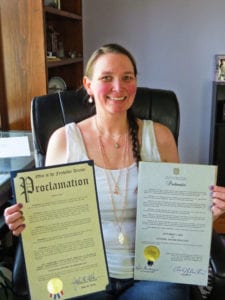
Stephanie shown here with the proclamations she had declared for Ostomy Awareness Day in 2016. (Left side proclamation is from Governor Chris Christie for the State of New Jersey; Right proclamation is from the NJ Ocean County Board of Chosen Freeholders)

Stephanie shown here with the proclamations she had declared for Ostomy Awareness Day in 2016. (Left side proclamation is from Governor Chris Christie for the State of New Jersey; Right proclamation is from the NJ Ocean County Board of Chosen Freeholders)[/caption]

In 2003, at the age of 29, I was diagnosed with Crohn’s Disease. I remember telling my family that if I ever had to “poop in a bag” to just kill me. But in 2009, at the age of 35, what 29 year old me would have thought to be a worst nightmare ended up being the thing that saved my life.

In November of 2009, a complication of Crohn’s Disease, Toxic MegaColon, almost took my life. Without surgery, there was a 100% chance I would die. With surgery there was still only a 20% chance I’d survive, but at least there was a chance, so a subtotal colectomy with ileostomy was performed, and 4 days later, I was brought out of a coma.

So grateful to be alive, it was then that I realized that “pooping in a bag” was not what I once thought it was. In fact, having an ostomy was life saving! But the thoughts I had regarding ostomies are not mine alone. For too long, there has been a stigma and much misinformation surrounding ostomies and ostomy surgery.

Because of this, some have chosen suffering and death instead of an ostomy and life. Therefore, raising ostomy awareness is important to me because LIFE is important to me. I want people to know that having an ostomy is just another way to live life to the fullest.

My favorite saying regarding an Ostomy/Stoma is this: You can make it your friend or you can make it your enemy. If you make it your enemy you will have a hard time surviving. But if you make it your friend, not only can you survive, you can thrive.

Love your Ostomy and embrace life!

July 19, 2017
https://www.ostomy.org/wp-content/uploads/2017/04/Proclamation-Photo.jpg 4000 3000 Contributor https://www.ostomy.org/wp-content/uploads/2017/02/UOAAlogofinal2.png Contributor2017-07-19 12:57:262020-02-11 22:55:53How Stephanie Urzi is Raising Awareness

Annie Gammell’s Story

Patient Stories

My colostomy story began when, at age 56, I discovered that I had late-stage colorectal cancer.  A large tumor was discovered during my first colonoscopy, and it was cancerous.  Thus began a long journey that eventually led to colostomy surgery on my 64th birthday.  After the initial surgery to remove the tumor and part of my colon and rectum, I had radiation and two rounds of chemotherapy.  The radiation permanently damaged my intestines and caused a bowel blockage that required more surgery, followed by years of chronic diarrhea and abdominal pain.  I finally found a surgeon in my home state who cut out some of the intestinal damage and gave me the surgery that infinitely improved my quality of life.

Before the colostomy, I was on a very restricted diet, but I can now eat many raw foods, including what I had missed the most for six years—salads!  It has taken me a while to adapt to changing and wearing the pouch, and I have had some “accidents” along the way.  These are usually caused by my skin allergy to adhesives, which causes the skin barrier to fail when I have had a significant amount of stoma output.  Still, I usually have enough time to get to the bathroom before the leak causes a major problem.  I have, however, received some valuable tips on handling and preventing problems online, because there are no ostomy nurses or support groups near where I live.  I have also shared information on how to reduce skin allergy problems and passed on what has worked and not worked for me.

My background:  I am originally from Baton Rouge, LA, and have a Master of Journalism degree from Louisiana State University.  I am a retired Army officer, having spent 20 years on active duty, mostly as a Public Affairs Officer.  I served two overseas tours in Germany and met my husband when we were both Army majors stationed at the Presidio of San Francisco.  My cancer was diagnosed in 2007, while I was working as a civilian for the US Army Cadet Command at Fort Monroe, VA.  My colostomy surgery was performed by Dr. David Beck at Ochsner Medical Center in New Orleans.  He is also retired from the Air Force.

July 19, 2017
https://www.ostomy.org/wp-content/uploads/2017/07/20140524_182921-e1500482138969.jpg 788 1400 Contributor https://www.ostomy.org/wp-content/uploads/2017/02/UOAAlogofinal2.png Contributor2017-07-19 12:36:132020-02-11 22:56:34Annie Gammell’s Story

Tricia Hottenstein’s Story

IBD, Patient Stories

Saying that my ostomy gave me my life back is not an understatement. I don’t think I have ever felt better in my entire life. I was diagnosed with Crohn’s when I was 15 and in the 12 years I suffered before having surgery, I never once achieved full remission. I missed more school than I attended, had to take a medical withdrawal from college, and struggled to find and keep a job. I was in so much pain and having so many symptoms that I couldn’t leave the house for entire days at a time.
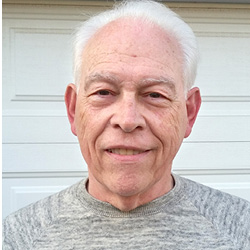
After having my son I finally agreed to undergo ileostomy surgery after I had refused it for years. I was concerned about having a bag on my belly and the effect it’d have on my life. When I had a bunch of questions I referenced UOAA’s resources including the website and Facebook page especially when finding a bag that wouldn’t leak or cause skin issues. It has been incredibly helpful to see what products others are using. There’s always a great tip or trick within the community.

The truth is since my surgery I never felt more alive. I’m not afraid of road trips or adventures and I finally have the health and strength to do whatever I want to do. My entire outlook on life changed for the better and instead of being embarrassed about my symptoms, I am now confident and happy and proud to tell the world I’m an ostomate! I go to ostomy support groups and will always share my story and be available for questions. Sometimes it’s good just to know there is someone else like you.

July 19, 2017
https://www.ostomy.org/wp-content/uploads/2017/07/Screenshot_20170808-222732.jpg 1300 1067 Contributor https://www.ostomy.org/wp-content/uploads/2017/02/UOAAlogofinal2.png Contributor2017-07-19 12:30:252020-05-19 10:56:03Tricia Hottenstein’s Story

Ray Elvey’s Story

Patient Stories

I had ulcerative colitis that was unresponsive to any treatments including remicade infusions. In January of 2006 I had ostomy surgery. My first comment was “It is so quiet down there.”
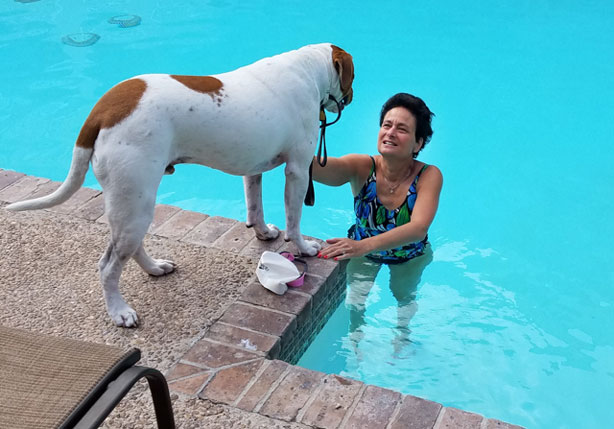
After three horrible years my life was given back to me. I am now disease free and colon cancer is no longer a worry. My ostomy surgery has allowed me to have a more rewarding relationship with my wife and family. Having an ostomy has not stopped me from enjoying activities such as cycling that I participated in prior to surgery.  I still ride whenever I can.

As soon as I was physically able one of the first things I did was join a local UOAA affiliated support group. The support group was a lifesaver for me. When I first joined I was having terrible skin problems and there seemed no solution. The support group facilitator made one suggestion and my skin problem was completely resolved!  

As a result of my ostomy I have discovered a new passion in my life that I probably never would have done otherwise. I am now a freelance writer on ostomy topics that are of interest and concern to ostomates and their families and friends.  My articles appear in our support group newsletter and the Phoenix magazine. I want people who are facing this surgery to know that their quality of life can be restored through ostomy or continent diversion surgery. It truly is lemons into lemonade.

July 19, 2017
https://www.ostomy.org/wp-content/uploads/2017/07/RayElvey1.jpg 2034 1782 Contributor https://www.ostomy.org/wp-content/uploads/2017/02/UOAAlogofinal2.png Contributor2017-07-19 12:26:192020-02-11 22:58:25Ray Elvey’s Story

Swim Confidently with an Ostomy

Advocacy, Ostomy News, Personal

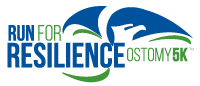
After healing from ostomy surgery, people of all ages and types enjoy swimming, surfing scuba diving or just relaxing in a hot tub. We understand the anxiety from worrying about leaks can keep some people out of the pool. There are no ostomy specific restrictions to swimming in public places. “Swimming has made me stronger both physically and emotionally. It is a great outlet and has made me even healthier. I feel and look more beautiful” says Lynn Wolfson of Florida. Lynn has two ostomies and swims in triathlons. Here are some solutions to common concerns.


I’m afraid that my pouch will leak or my wafer will loosen while I’m in the water.

Remember, your pouching system is resistant to water and with a proper fit, it is designed not to leak. If you have output concerns, eat a few hours before swimming. A good habit is to empty your pouch before taking a dip. If you are hesitant about how your wafer will hold, take a practice soak in your bathtub. It is best to avoid applying a new skin barrier/wafer or pouch right before swimming. The WOCN Society recommends allowing 12 hours for proper adhesion. Using waterproof tape or water-specific barrier strips are not necessary for most, but can provide peace of mind. There are a wide variety of ostomy supplies on the market for swimming and you should be able to find a solution that works best for you. If your pouch has a vent, use the provided sticker over the air hole so that the filter remains effective.

What can I wear or do to help conceal my pouch and keep it secure?

Wearing a patterned or darker color is less transparent than a light-colored swim garment. Options for women include patterned and boyleg one-piece suits. For a two-piece suit, consider a mix and match of tankini tops, high-waisted bottoms or boy shorts. You can also look for a suit with a concealing ruffle or skirt. Men often favor a higher cut waist for trunks, or suits with longer legs. Stretch fabric undergarments and swim or surf shirts also provide support. Ostomy bands and wraps are also commonly used. On the beach or poolside don’t be surprised to know that some ostomates are comfortable with simply wearing the swimsuit of their choice- with swim fabric pouch covers or just an opaque pouch. There is also swimwear and accessories specifically made for ostomates by a variety of manufacturers.

What do I do if I am approached by pool personnel concerned that my ostomy is an open wound or believe ostomy pouches are not allowed in pools?

The best approach here is to stay calm and try to educate. However, unless you or another person tell pool personnel, no one should know you have an ostomy. Contact UOAA Advocacy Manager, Jeanine Gleba if this is a recurring issue at your swim location. The Americans with Disabilities Act ensures your right to pool access and most disagreements can be solved through education before exploring any legal recourse. Some scuba diving operations also incorrectly list having an ostomy as an exclusion on pre-dive paperwork. Contacting PADI (800) 729-7234 can help educate them that there is no reason to avoid diving if you have an ostomy pouch.

Meet with a WOC nurse for questions about what supplies may work best for you and stop by your local UOAA Affiliated Support Group or visit our discussion board at ostomy.org to ask what your peers do to feel confident and secure while swimming.

Get yourself a bathing suit and start swimming!

May 31, 2017
https://www.ostomy.org/wp-content/uploads/2017/04/uoaaswimmingpooltips.jpg 449 672 Contributor https://www.ostomy.org/wp-content/uploads/2017/02/UOAAlogofinal2.png Contributor2017-05-31 13:24:122020-02-11 22:59:13Swim Confidently with an Ostomy

The 5th Annual Durham, NC Ostomy 5k

Advocacy, Events

The 5th Annual Run For Resilience Ostomy 5k will be held on Saturday, October 6, 2018.  All proceeds benefit the United Ostomy Associations of America, Inc (UOAA) charity, a 501(c)(3) organization. Donations are tax deductible.

Registration Coming Soon!

RACE DAY SCHEDULE (tentative)

7:00 a.m. Registration
8:00 a.m. 5K Run/Walk
9:00 a.m. Kids Fun Run
9:15 a.m. Awards Ceremony

Kids Activities and bidding at the silent auction throughout the morning

RACE COURSE

The race will be held near the Southpoint Mall area of Durham. The race will take participants on the scenic American Tobacco Trail (ATT) over the new I-40 bridge extension.  The out-and-back course will start and finish at the parking lot on the grassy knoll next to the ATT located off of Renaissance Parkway in Durham, NC.  The turn-around will be on the ATT, just before where the trail crosses Dunhill Drive. This 5K course is flat except for one uphill section on the ATT just south of the I-40 bridge.  This course is a timed race.

PARKING

Ample parking is located at the Renaissance Village shops off of Renaissance Parkway at 8160 Renaissance Pkwy, Durham, NC 27713

PACKET PICKUP

Pre-race Packet Pick up:  To be Announced…

PRIZES

Prizes will be awarded to the top 3 male and top 3 female overall finishers, age group winners, Stroller winner, and the top 3 ostomates.

AGE CATEGORIES
<15
15-19
20-29
30-39
40-49
50-59
60+

T-SHIRTS

Tech T-shirts will be included with registration if registered before the deadline. Race shirts will be either unisex or female v-neck cut. You are guaranteed a race shirt if you register by September 20th. You may purchase additional race shirts for $10 each.

OPTIONAL OSTOMY POUCH

Race registration bags will have typical race/sponsor promotional items, ostomy education materials, and most importantly an ostomy pouch. We encourage non-ostomate participants to put on the pouch for the race to improve awareness and empathy for the challenges faced by people living with ostomies.

FAMILY ACTIVITIES

The Run for Resilience Ostomy 5k will be a family-friendly event including kids’ activities during the event.  Specific kids’ activities include:

– 50-meter dash

– Face Painting

-Cornhole

-Coloring

FUNDRAISING

Set up your own personal or team fundraising site and get your friends and family to reach your fundraising goals.  If you raise over $250, you will receive a unique and limited fundraising tech shirt.  Stay tuned for the new fundraising site.

SPONSORSHIP

If you are interested in sponsoring the race, please contact us at 5kregistration@ostomy.org!

DONATIONS

We will be having an incentivized fundraising challenge for those individuals who raise over $250. Those who raise $250+ will receive a custom t-shirt.  Please visit www.ostomy5k.org for more information!


March 1, 2017
https://www.ostomy.org/wp-content/uploads/2017/06/durhamostomy5k.jpg 1727 4000 Contributor https://www.ostomy.org/wp-content/uploads/2017/02/UOAAlogofinal2.png Contributor2017-03-01 11:35:532020-02-11 23:05:51The 5th Annual Durham, NC Ostomy 5k
Page 11 of 11«‹91011

Our Categories

Advocacy (78) Caregivers (18) Colorectal Cancer (19) Colostomy (138) Continent Diversions (8) Digital Sponsor (77) Disaster Preparation (4) Emotional Health (60) Events (32) Exercise/Sports (47) Fashion/Clothing (11) Healthcare (21) IBD (52) Ileostomy (181) J-Pouch (7) jejunostomy (7) Membership (3) Nutrition (19) Ostomy 5k (19) Ostomy 5k (15) Ostomy Awareness (55) Ostomy Basics (55) Ostomy News (94) Ostomy Nurse (13) ostomy reversals (12) Ostomy Supplies (2) Ostomy Tips (93) Ostomy Videos (4) Patient Stories (96) Pediatric Ostomy (4) Personal (63) Research (3) Sexuality (12) Short Bowel Syndrome (16) Skin Care (9) Social Life (4) Support Group News (12) Support Resources (14) Teens (3) Travel (11) UOAA Conference (17) UOAA History (3) UOAA Volunteers (3) Urostomy (110) Young Adult (7)

Support Us:

Your Donation Funds UOAA Educational Programs:

DONATE TODAY
SUSTAINING GIFT
BECOME A MEMBER
UOAA E-NEWS SIGN UP
Get updates on events, national advocacy and important topics in the ostomy and continent diversion community.

Contact Us


United Ostomy Associations of America
P.O. Box 2293
Biddeford, ME 04005-2293

Virtual Ostomy Clinic

Contact UOAA

Donate Your Supplies

Call us toll-free at: 1-800-826-0826.
Our Information Line hours are Monday-Friday, 9am to 3pm EST. If you have an emergency, please dial 911 or contact your local medical professional.

Please understand that UOAA is a private, nonprofit, advocacy and informational organization. We are not a medical facility and we do not have medical or legal professionals on staff. Therefore, UOAA does not provide Medical, Mental Health, Insurance or Legal Advice. Visit UOAA Virtual Ostomy Clinic provided by The Wound Company for non-emergency, virtual ostomy support.

Privacy Policy

Get Involved

UOAA is the leading organization proactively advocating on behalf of the ostomy community. Recognizing that we are always stronger together, we encourage everyone to get involved by joining our Advocacy Network. We’ve also created several Advocacy Tools and Resources to help you successfully advocate on behalf of the ostomy community to ensure every ostomate receives quality care.

UOAA Run for Resilience Logo

UOAA does not and shall not discriminate on the basis of race, color, religion (creed), gender, gender expression, age, national origin (ancestry), disability, marital status, sexual orientation, or military status, in any of its activities or operations.

Digital Health Award
© 2005-2026, UOAA. All Rights Reserved l Design by Tap House Media
  • Link to Facebook
  • Link to X
  • Link to Pinterest
  • Link to LinkedIn
  • Link to Youtube
  • Link to Mail
  • Link to Instagram
Scroll to top Scroll to top Scroll to top