United Ostomy Associations of America
  • HOME
  • OSTOMY INFORMATION
    • Ostomy Information
      • What Is An Ostomy?
      • Living with an Ostomy: FAQs
      • Diet + Nutrition
      • Ostomy Skin Care
      • Sexuality
      • Bill Of Rights
      • New Ostomy Patient Guide
    • My Ostomy
      • Ileostomy
      • Colostomy
      • Urostomy
      • J-Pouch
      • Continent Diversions + Other Ostomy Types
      • Temporary Ostomy
      • Short Bowel Syndrome
      • Español
    • Children to Young Adults with Ostomies
      • Infant/Toddler (0-3 Years)
      • Preschool (3-5 Years)
      • Elementary School (6-9 Years)
      • Pre-Adolescent (10-13 Years)
      • Adolescent (14-18 Years)
      • Young Adult (18-25 Years)
      • Parents & Clinicians Resources
      • Know Your Rights
      • What To Expect After Surgery
      • Odor Control
      • Fast Facts
      • Ostomy Game
    • Crohn’s Disease & Ulcerative Colitis Information
      • Defining, Caring and Treating
      • Preparing for Ostomy Surgery
      • Common Issues, Managing Diet, Mental Health
      • Intimacy, Fertility and Pregnancy
      • Resources
    • General Information
      • UOAA Ostomy Marketplace
      • Product + Supply Information
      • UOAA Resources Library
      • Resources for Nurses/Home Health
      • Travel Tips + TSA
      • Donate Your Ostomy Supplies
      • Emergency Supplies
      • Related Links
      • UOAA Virtual Ostomy Clinic
      • Outpatient Ostomy Services Locator
  • SUPPORT
      • discussion
        Ostomy 101:
        Easily communicate “What is an ostomy?" with our infographic.

        Read More

    • Find Support
      • Support Group Finder
      • Support Group Websites
      • UOAA Virtual Ostomy Clinic
      • Online Peer and Ostomy Support Programs
      • Outpatient Ostomy Services Locator
      • Find a Mental Health Provider
      • Find an Ostomy Nurse
      • Online Discussion Board
      • Apps for Ostomates
      • Emotional Concerns
    • Connect With Us
      • Start/Affiliate Your Group With UOAA
      • Resources For ASGs
      • National Membership
      • Sign Up for Our E-Newsletter
    • Participate
      • Attend An Event
      • Become An Advocate
      • Join Us for a Conference
      • Make A Donation
      • Become a Member of The Phoenix Society
      • Donate Your Ostomy Supplies
      • Take A Survey
  • ADVOCACY
      • portal
        Roadmap to Establishing Outpatient Ostomy Services
        Documents that are available as PDFs to download and print.

        Read More

    • About
      • Advocacy Program
      • Advocacy Priorities
      • 10 Questions to Help You Speak Up and Self-Advocate
    • UOAA Action Center
      • Take Action
      • Competitive Bidding
      • Ostomy and Continent Diversion Patient Bill of Rights Campaign
      • Non-Medical Switching Campaign
      • Join Advocacy Network
      • Find Your Legislator
      • Advocate Tools
    • Other Ways to Get Involved
      • Ostomy Awareness Day
        • Tools
        • Who’s Raising Awareness?
      • Roadmap to Establishing Outpatient Ostomy Services
      • Share Your #MyAccessMatters Story
    • Tools and Resources Library
      • Restroom Access Self-Advocacy Tools
      • Travel Tips + TSA Communication Card
      • Swimming with an Ostomy
      • Workplace Resources
      • Aging with an Ostomy or CD
      • Home Health Tools
      • Webinars
        • Ostomy Supplies and Insurance
        • How to Navigate Insurance and Get Supplies Affordably
    • Take Control of your Healthcare
      • UOAA Virtual Ostomy Clinic
      • Expect More Series & Checklists
      • Additional Advocacy Resources
        • The Americans with Disabilities Act (ADA)
        • Long-Term Care Ombudsman
        • Quality of Care Complaints
        • Medicare Rights Center
  • WHO WE ARE
      • Have a Question for Us?
        UOAA is a 501(c)(3) nonprofit organization that supports, empowers, and advocates for people who have had or who will have ostomy or continent diversion surgery.

        Contact Us

    • About Us
      • Our Mission + History
      • Our Leaders
      • National Sponsors + Partners
      • National Membership
      • Contact Us
    • How We Help
      • Advocacy
      • Awareness
      • Support
      • National Conference
      • Ostomy Nurse Scholarship
    • Get Involved
      • Volunteer
      • Become A Leader
      • Join A Committee
      • Career Opportunities
      • Sign Up for Our E-Newsletter
  • LATEST
  • EVENTS
    • Ostomy Awareness Day
    • Run For Resilience 5K
    • Ostomy Academy
    • Educational Webinars
    • 2027 National Conference
    • Calendar
  • GIVE NOW
  • SEARCH
  • Menu Menu

Jessica’s Ostomy Story: Making an Invisible Illness Visible

Colostomy, Emotional Health, Ileostomy, Patient Stories, Personal

Words and Photos by Jessica Miles

Living with a permanent ostomy can bring on significant changes in one’s personal, social and professional life. My biggest fear around having my ostomy surgery was leakage, particularly in public, skin breakdown and altered body image. There was a lot of trial and error in the beginning, but I have found what works for me as well as the confidence to share about it. I have always been an empath and very compassionate, however, I have now found a new passion for helping others (through my surgeon and on social media) learn how to manage their ostomy as well as how to cope with their new life. If you are willing and able to adapt, you can do anything!

In 2016, after years of unexplained symptoms, countless procedures, hospitalizations, tests, and a couple of misdiagnoses, it was confirmed that I had a genetic connective tissue disorder caused by a defect in the protein collagen. I was diagnosed with Classical type Ehlers-Danlos Syndrome. More than 90% of people with Classical EDS have mutations in the COL5A1 or COL5A2 gene. I have a mutation of the COL5A2 gene. The condition is inherited in an autosomal dominant manner. Treatment and management is focused on preventing serious complications and relieving symptoms.
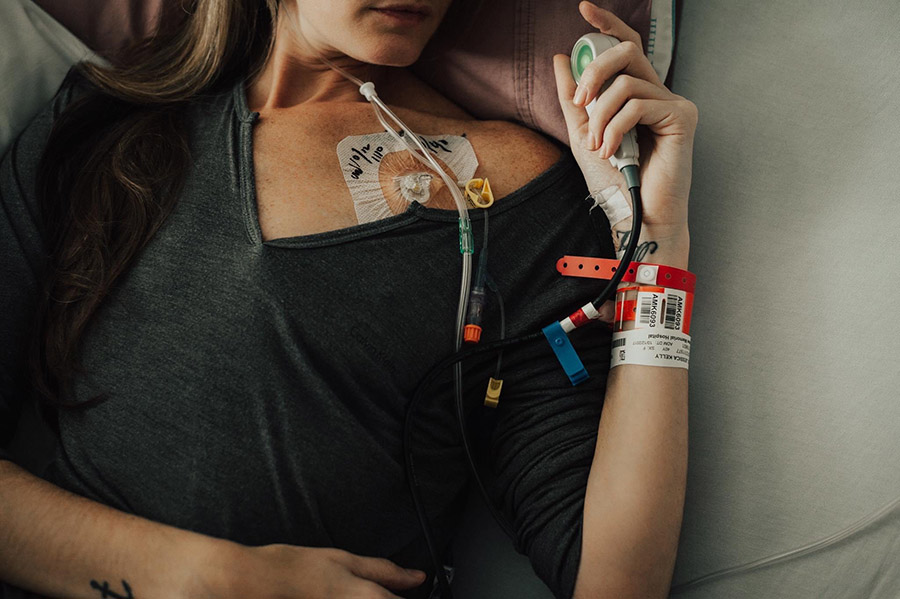
Classical EDS is associated with skin hyperextensibility, joint laxity, fragile blood vessels, joint hypermobility, migraines, joint and muscle pain. Some individuals with this subtype have a deformity of heart valves and may experience a dilatation of the aorta. In cEDS there is also an increased risk for aortic dissection. cEDS patients are prone to hernias and organ prolapse, as well as comorbidities such as autonomic dysfunction…which regulates heart rate, blood pressure, temperature, pupillary response and digestion.

I ended up having multiple surgeries over the past four and a half years due to intestinal dysmotility, prolapses and hernias, resulting in a port and a permanent ostomy. I now, have an ascending end colostomy. While I prepared for years for the possibility of having one, I realized nothing truly prepares you for the actuality of living with a bag on your belly for the rest of your life. Though little by little, the stigma took a back seat to the reality that life with an ostomy can be just as good, if not better for some, than life without one. I suffered constantly from abdominal pain, nausea, vomiting, bloating, constipation, bowel obstructions and malabsorption. While I still struggle with many debilitating symptoms of my disorder, I am now able to eat, gain weight and go to the bathroom regularly. Something I always took for granted until I was no longer able to do so.

My symptoms aren’t usually visible to the untrained eye, but they are life-altering for me.

Though I have a constant physical reminder of my condition in the ostomy, to the rest of the world, mine is a largely invisible illness.

It’s hard to describe how I feel to someone who has no idea what daily life with a chronic illness is like. I feel awful on the inside but look perfectly fine on the outside. Putting on a brave face for all to see has become a habit. My symptoms aren’t usually visible to the untrained eye, but they are life-altering for me.

I’ve learned to take everything step by step and day by day. My goal is to break down the stigma of ostomies, and while it’s not always easy, to show that one can still thrive and live a happy life with chronic illness. Due to pain and fatigue, I’ve learned to budget my energy, and while I may function normally one day, I usually need to rest the next. It’s all about finding balance. I am blessed to have an amazing support system in my husband and two boys, the rest of my family and friends.

For me, photography has been a powerful way to document my health journey and what I experience every day. It helps me see my progress, as well as setbacks in a cathartic way.

I am a registered nurse nationally certified in inpatient obstetrics. Unfortunately due to my illness, continuous surgeries and hospitalizations, I made the most difficult decision of my life and gave up the profession I worked so hard for and one that was a huge part of my identity. I am also an award-winning, internationally published photographer, focusing primarily on birth photography and self-portraiture. I found a new purpose, capturing laboring women and their deliveries combined both of my passions: childbirth and photography.
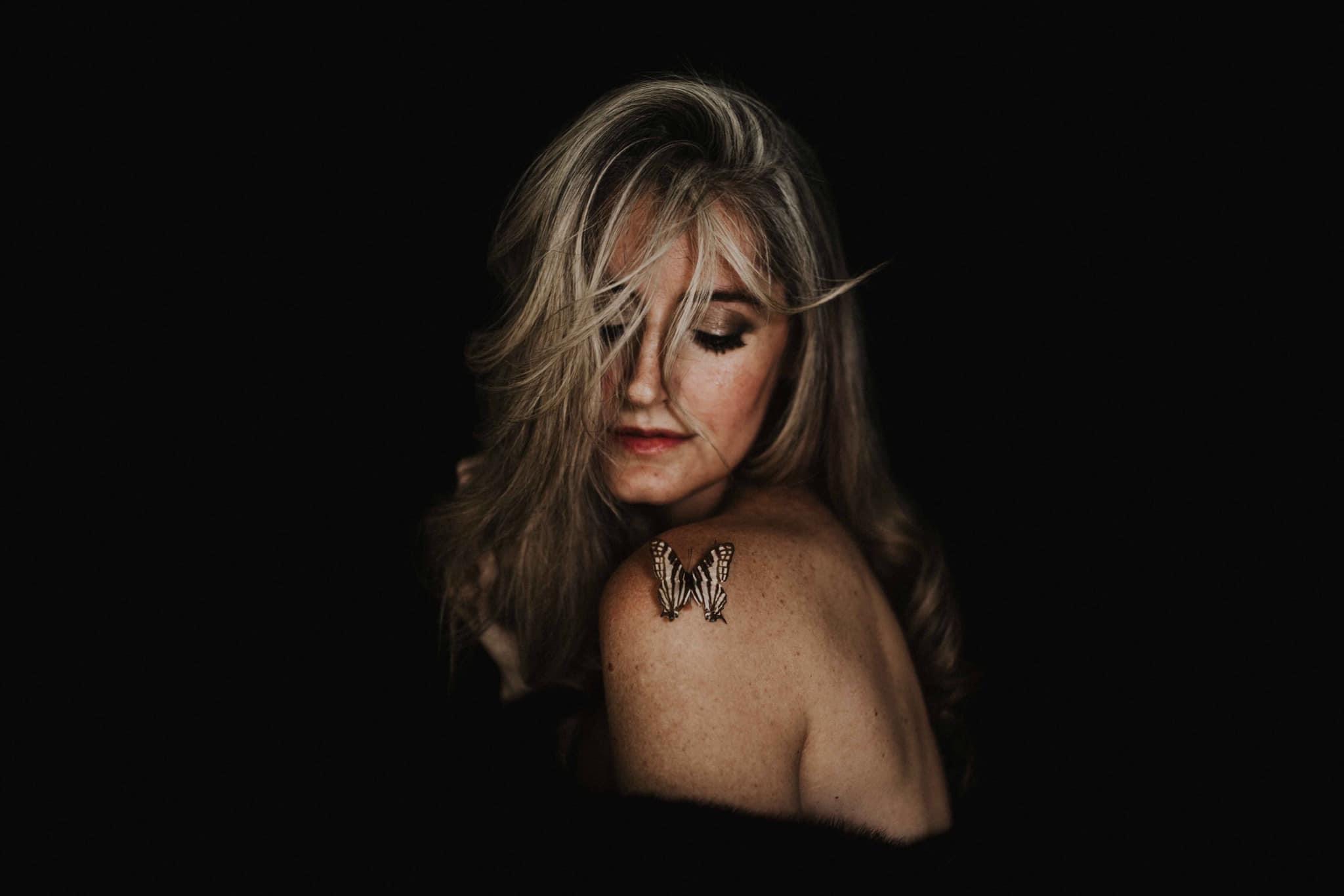
As a photographer, I believe that art enhances the well-being of individuals, society, and our environment and that artists have the power to heal, inspire, provoke, challenge, and offer hope. For me, photography has been a powerful way to document my health journey and what I experience every day. It helps me see my progress, as well as setbacks in a cathartic way. Photography allows people to see different perspectives and can be used as a tool for personal healing and positive change for many while nurturing creativity and self-expression.

My favorite quote is by the artist, Frida Kahlo. “At the end of the day, we can endure much more than we think we can.” I have definitely found this to be true and learned I am much more resilient than I ever thought I was. My illness has caused me to know myself better, which keeps my work honest and true. In the process, you truly meet yourself, which makes for better, more authentic work.

Related

September 7, 2022
Tags: abdominal pain, Classical EDS, colostomy, Ehlers-Danlos Syndrome, intestinal dysmotility, invisible disability, invisible illness, photography, prolapses and hernias, rare disease
Share this entry
  • Share on Facebook
  • Share on X
  • Share on WhatsApp
  • Share on Pinterest
  • Share on LinkedIn
  • Share on Tumblr
  • Share on Vk
  • Share on Reddit
  • Share by Mail
https://www.ostomy.org/wp-content/uploads/2022/09/IMG_1818.jpg 1362 2048 Contributor https://www.ostomy.org/wp-content/uploads/2017/02/UOAAlogofinal2.png Contributor2022-09-07 11:59:352022-09-07 11:59:35Jessica’s Ostomy Story: Making an Invisible Illness Visible
You might also like
Maintaining Nutrition and Hydration in the Management of Short Bowel Syndrome
ostomy travel On the Go Travel Tips
Robin Brown’s Story
Support the Ostomy Community this Giving Season
ostomy skin health, peristomal skin health, itching, skin barrier, wafer, Top 8 Signs Your Peristomal Skin is Irritated or Damaged
Resilience Story: Denise Miller
2 replies
  1. Jessica Miles
    Jessica Miles says:
    September 12, 2022 at 12:07 pm

    Thank you so much for the opportunity to share my story! ❤️

Comments are closed.

Our Categories

Advocacy (79) Body Image (3) Caregivers (21) Colorectal Cancer (19) Colostomy (141) Continent Diversions (8) Digital Sponsor (79) Disaster Preparation (4) Emotional Health (63) Events (32) Exercise/Sports (49) Fashion/Clothing (11) Healthcare (23) IBD (57) Ileostomy (189) J-Pouch (8) jejunostomy (7) Membership (3) Nutrition (19) Ostomy 5k (20) Ostomy 5k (16) Ostomy Awareness (55) Ostomy Basics (56) Ostomy News (96) Ostomy Nurse (14) ostomy reversals (13) Ostomy Supplies (3) Ostomy Tips (95) Ostomy Videos (4) Patient Stories (102) Pediatric Ostomy (5) Personal (67) Sexuality (12) Short Bowel Syndrome (17) Skin Care (10) Social Life (5) Support Group News (13) Support Resources (16) Teens (4) Travel (12) UOAA Conference (18) UOAA History (3) UOAA Volunteers (5) Urostomy (113) Young Adult (9)

Support Us:

Your Donation Funds UOAA Educational Programs:

DONATE TODAY
SUSTAINING GIFT
BECOME A MEMBER
UOAA E-NEWS SIGN UP
Get updates on events, national advocacy and important topics in the ostomy and continent diversion community.

Contact Us


United Ostomy Associations of America
P.O. Box 2293
Biddeford, ME 04005-2293

Virtual Ostomy Clinic

Contact UOAA

Donate Your Supplies

Call us toll-free at: 1-800-826-0826.
Our Information Line hours are Monday-Friday, 9am to 3pm EST. If you have an emergency, please dial 911 or contact your local medical professional.

Please understand that UOAA is a private, nonprofit, advocacy and informational organization. We are not a medical facility and we do not have medical or legal professionals on staff. Therefore, UOAA does not provide Medical, Mental Health, Insurance or Legal Advice. Visit UOAA Virtual Ostomy Clinic provided by The Wound Company for non-emergency, virtual ostomy support.

Privacy Policy

Get Involved

UOAA is the leading organization proactively advocating on behalf of the ostomy community. Recognizing that we are always stronger together, we encourage everyone to get involved by joining our Advocacy Network. We’ve also created several Advocacy Tools and Resources to help you successfully advocate on behalf of the ostomy community to ensure every ostomate receives quality care.

UOAA Run for Resilience Logo

UOAA does not and shall not discriminate on the basis of race, color, religion (creed), gender, gender expression, age, national origin (ancestry), disability, marital status, sexual orientation, or military status, in any of its activities or operations.

Digital Health Award
© 2005-2026, UOAA. All Rights Reserved l Design by Tap House Media
  • Link to Facebook
  • Link to X
  • Link to Pinterest
  • Link to LinkedIn
  • Link to Youtube
  • Link to Mail
  • Link to Instagram
Link to: Celebrate and Support Ostomy Resilience Link to: Celebrate and Support Ostomy Resilience Celebrate and Support Ostomy Resilience Link to: Double Baggin’ It: A Tale of Two Best Friends Without Buttholes Link to: Double Baggin’ It: A Tale of Two Best Friends Without Buttholes Double Baggin’ It: A Tale of Two Best Friends Without Buttholes
Scroll to top Scroll to top Scroll to top