
RETA’S HOLIDAY REFLECTIONS ON LIVING WITH SHORT BOWEL SYNDROME
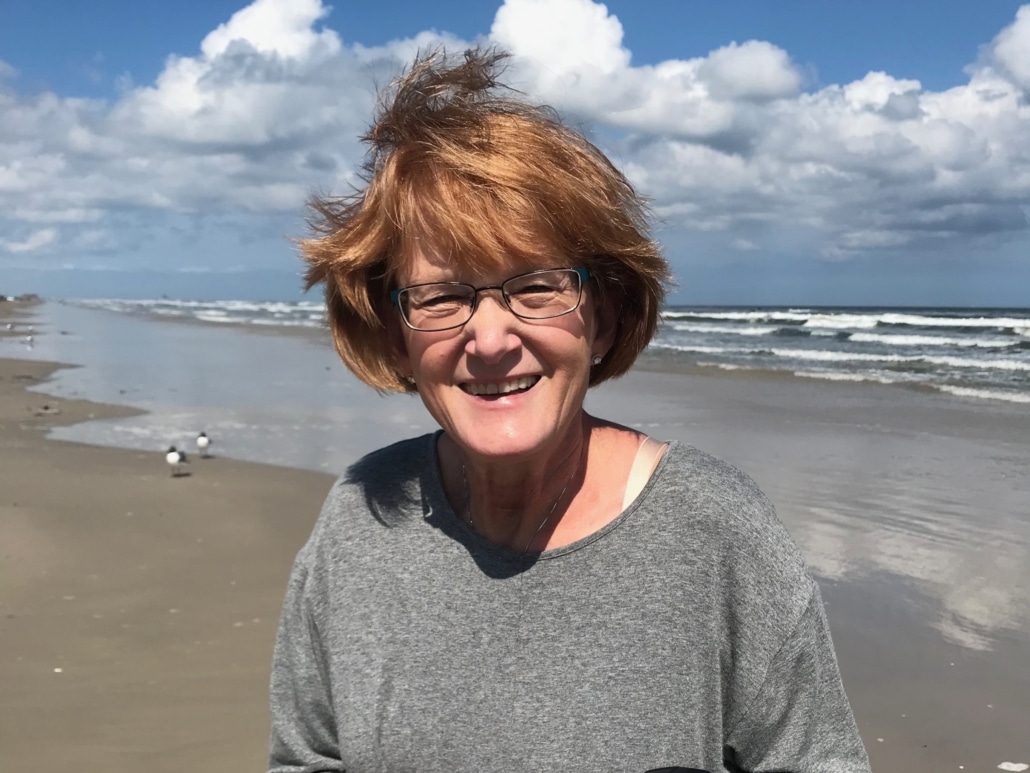
For me, the holiday season is an annual reminder of how far I’ve come in my short bowel syndrome (SBS) journey. In my experience, life with SBS has been challenging, but I’ve found that it can be workable. That’s not to say it’s easy; it’s never easy. There are many days when I spend more time in the bathroom than out, but my goal is to have more good days than bad. Through it all, I have worked hard to keep my life as “normal” as possible. I’m fortunate to have a husband who has fully supported me through this journey and has been a source of strength for me. Together, we refuse to let SBS be the dominating factor in our life. My name is Reta and this is my story.
| If you are living with Short Bowel Syndrome and rely on parenteral support, there’s an SBS Mentor available to connect with you. Click here to learn more. |
A Holiday Health Crisis
On Christmas Day 2012, I was given 10 hours to live. What started as a bad case of diarrhea around Thanksgiving had progressed over the next month to severe diarrhea with vomiting. I was in and out of the hospital while doctors ran tests and tried to manage my symptoms, but my condition quickly deteriorated until I’d gone into renal failure, septic shock, and respiratory failure. My bowels were dead and poisoning my body; doctors weren’t sure they could save any of my bowels, let alone my life.
Doctors gave me a five percent chance of survival with surgery, and no chance without. With those odds laid out before him, my husband said a prayer and told the doctors to go ahead and do the surgery. Thankfully, I do not remember any of this. December 22, 2012 was the last day I really remember before waking up several days later—after the surgery.
A New Reality: Navigating Life After My SBS Diagnosis
Surgery went much better than anyone expected, but when I finally woke up, I learned that my life had changed. I was diagnosed with short bowel syndrome (SBS), a rare, serious and chronic malabsorption disorder that occurs when parts of the intestine are removed, and the remaining intestine may not be able to absorb enough nutrients from food and drink. I had a high output jejunostomy and was put on parenteral support (PS), also referred to as parenteral nutrition, because my body couldn’t absorb nutrients on its own anymore. At that time, I was told I’d probably be on PS for the rest of my life.
The doctors talked about how good my stoma looked and how they were going to try to get my PS down to 15 hours a day. But they wouldn’t even talk about when I could go home. Days dragged into weeks and weeks into a month, and then two months.
Finally, I was allowed to go home—and that’s when reality hit me hard. The day I was supposed to go home, we had major logistics to figure out: Who was going to teach me how to infuse PS? Who was going to supply it? Where was I going to get ostomy supplies? Did I need home health? Who was going to provide that? We were fortunate that the team at the hospital helped my husband and me to figure out these details, and I was finally able to go home.
At 10pm that night, back at home, my infusion nurse was showing us how to hook up my PS. Twelve hours every night. At the time, I was told that there wasn’t any hope of me ever getting off of it. Even bedtime proved to be a challenge. For years, my husband had slept on the left side of the bed; but as I looked at our bed that first night at home, I realized the bathroom was on the left side. So, we held the great bedroom debate and finally decided to switch sides, to allow me to be closer to the bathroom. Something as simple as that made me realize how much SBS would impact almost everything I do.
But life went on. My doctors worked hard to get me down to a more manageable PS level. It was still very restrictive, but I promised myself that I wasn’t going to let the ostomy and PS rule our lives. I went back to work, even though no one thought I would. I carried all my supplies through airports and I can’t tell you how many airplanes. I was trying to live as normal a life as I possibly could—even when my next SBS challenge came.
I remember one time when my pump malfunctioned. I woke up on Sunday morning, and my PS bag was still full; it was supposed to be empty. My pump had probably stopped working right after I went to bed, and I didn’t get any nutrition that entire night. When I went to unhook the bag and saw that it was still full, I had a major temper tantrum: My first official meltdown since my SBS diagnosis. I stomped my feet; I cried; I screamed; I threw things. It wasn’t fair that I had to carry that bag all day and all night. My husband recognized this for what it was—another reality check. He held me and told me it was going to be alright until I stopped kicking and screaming. Meltdown #1 averted.
Learning About An SBS Treatment
Then one day at an appointment, my gastroenterologist handed me a sticky note. The note had GATTEX® (teduglutide) for subcutaneous injection written on it. He said it was a prescription medicine used in adults with short bowel syndrome who need additional nutrition or fluids from intravenous (IV) feeding (parenteral support). After discussing the treatment option with me, we felt I fit the criteria. GATTEX is also approved for children 1 year of age and older. It is not known if GATTEX is safe and effective in children under 1 year of age.
He told me GATTEX may cause serious side effects including making abnormal cells grow faster, polyps in the intestines, blockage of the bowel (intestines), swelling (inflammation) or blockage of the gallbladder or pancreas, and fluid overload. He told me these are not all the possible side effects of GATTEX. I remember my doctor asking me a very important question: “Wouldn’t it be great if over time we could reduce the amount of volume and number of days you’re on PS? I think this drug might help us do that.”
Please continue reading for additional Important Safety Information.

Wow! Finally, a sliver of hope. I weighed the risks and benefits, and together my doctor and I decided that I should start GATTEX. But it proved not to be an easy journey. Many obstacles were thrown in our path. It took six months, letters to insurance companies, and an appeal process to make it happen. In fact, my efforts motivated the insurance company to write a policy that they previously did not have, and establish a timeframe to be eligible for GATTEX.
I remember the first day the GATTEX box arrived at my house, not too long after the new year. My PS-infusion nurse talked me through the process of how to prepare and measure my dose and give myself the subcutaneous injection the right way. I told her I could do it; and I could—until I sat down in my kitchen with the needle and realized what a huge commitment it was. I thought about this and everything I had already been through for a few minutes and decided to take my first step on this new journey.
My doctors and I were happy with the results we saw, and over time my healthcare team began slowly lowering my PS volume. This was just my experience though, and others may have a different experience. My doctor continued to monitor me for any side effects, like injection site reactions. Adults starting GATTEX should have their colon and upper intestines monitored for new polyps at the end of the first year on GATTEX and then as needed and at least every 5 years. I still had a long road ahead of me, and my doctors were still looking at other treatment options. Eventually, one of the options they offered was reconnecting my colon. I weighed that option and decided to proceed.
Another Decision: Weaning Off Parenteral Support Under Medical Supervision
After I’d recovered from surgery to reconnect my colon, we started discussing weaning me off the PS. I’ll admit I was scared. It had been keeping me alive for two years. The thought of not having that “nutrition lifeline” scared me a great deal. I started asking myself questions: What if it doesn’t work? What if I lose too much weight? What if, what if?
With the encouragement and supervision of my team of doctors, over time we started slowly reducing the amount of PS volume and cutting my days on PS until I didn’t need it anymore. I honestly didn’t know how I was supposed to feel. For the first time in a long time, I didn’t hook up to a bag of nutrition every night. Today I am still off PS, and I still take GATTEX as directed by my doctor. My doctor also continues to monitor me for side effects like stomach-area pain or swelling and injection site reactions. And keep in mind, not all patients who take GATTEX will wean off their PS. These have been my results, but everyone responds to treatment differently.

Even though I still have SBS and bathroom challenges every day, freedom from PS has been liberating. I can go out to dinner or a concert at night without having to plan my schedule around hooking up to PS. It feels great not to be tied to that schedule anymore.
I choose to focus on the good in my life and not let SBS drag me down. Some days are harder than others, but I live for those good days. My husband and I have pledged to make the most of every day. I retired from my job, and we have embarked on the next phase of our lives, checking off items on our bucket list. And, for me, not being on PS makes it a little easier to check off those bucket list items. I am a very fortunate woman. I have a husband who has supported me from the moment this SBS journey began. He has made it infinitely more manageable.
If you’re just starting down this road, you may think your best days are behind you. In my experience, that’s not always the case. SBS is a very challenging condition. If you are living with it, I would encourage you not to give up. Read everything you can about SBS. Ask questions and then insist on answers. Work with your healthcare team to figure out what makes your symptoms worse. Learn as much as you can to take control of your “new normal.”
IMPORTANT SAFETY INFORMATION
What is the most important information I should know about GATTEX? GATTEX may cause serious side effects, including:
Making abnormal cells grow faster
GATTEX can make abnormal cells that are already in your body grow faster. There is an increased risk that abnormal cells could become cancer. If you get cancer of the bowel (intestines), liver, gallbladder or pancreas while using GATTEX, your healthcare provider should stop GATTEX. If you get other types of cancers, you and your healthcare provider should discuss the risks and benefits of using GATTEX.
Polyps in the intestines
Polyps are growths on the inside of the intestines. For adult patients, your healthcare provider will have your colon and upper intestines checked for polyps within 6 months before starting GATTEX, and have any polyps removed. To keep using GATTEX, your healthcare provider should have your colon and upper intestines checked for polyps at the end of 1 year of using GATTEX.
For pediatric patients, your healthcare provider will check for blood in the stool within 6 months before starting GATTEX. If there is blood in the stool, your healthcare provider will check your colon and upper intestines for polyps, and have any polyps removed. To keep using GATTEX, your healthcare provider will check for blood in the stool every year during treatment of GATTEX. If there is blood in the stool, your healthcare provider will check your colon and upper intestines for polyps. The colon will be checked for polyps at the end of 1 year of using GATTEX.
For adult and pediatric patients, if no polyp is found at the end of 1 year, your healthcare provider should check you for polyps as needed and at least every 5 years. If any new polyps are found, your healthcare provider will have them removed and may recommend additional monitoring. If cancer is found in a polyp, your healthcare provider should stop GATTEX.
Blockage of the bowel (intestines)
A bowel blockage keeps food, fluids, and gas from moving through the bowels in the normal way. Tell your healthcare provider right away if you have any of these symptoms of a bowel or stomal blockage:
- trouble having a bowel movement or passing gas
- stomach area (abdomen) pain or swelling
- nausea
- vomiting
- swelling and blockage of your stoma opening, if you have a stoma
If a blockage is found, your healthcare provider may temporarily stop GATTEX.
Swelling (inflammation) or blockage of your gallbladder or pancreas
Your healthcare provider will do tests to check your gallbladder and pancreas within 6 months before starting GATTEX and at least every 6 months while you are using GATTEX. Tell your healthcare provider right away if you get:
- stomach area (abdomen) pain and tenderness
- chills
- fever
- a change in your stools
- nausea
- vomiting
- dark urine
- yellowing of your skin or the whites of your eyes
Fluid overload
Your healthcare provider will check you for too much fluid in your body. Too much fluid in your body may lead to heart failure, especially if you have heart problems. Tell your healthcare provider if you get swelling in your feet and ankles, you gain weight very quickly (water weight), or you have trouble breathing.
The most common side effects of GATTEX include:
- stomach area (abdomen) pain or swelling
- nausea
- cold or flu symptoms
- skin reaction where the injection was given
- vomiting
- swelling of the hands or feet
- allergic reactions
The side effects of GATTEX in children and adolescents are similar to those seen in adults. Tell your healthcare provider if you have any side effect that bothers you or that does not go away.
What should I tell my healthcare provider before using GATTEX?
Tell your healthcare provider about all your medical conditions, including if you or your child:
- have cancer or a history of cancer
- have or had polyps anywhere in your bowel (intestines) or rectum
- have heart problems
- have high blood pressure
- have problems with your gallbladder, pancreas, kidneys
- are pregnant or planning to become It is not known if GATTEX will harm your unborn baby. Tell your healthcare provider right away if you become pregnant while using GATTEX.
- are breastfeeding or plan to It is not known if GATTEX passes into your breast milk. You should not breastfeed during treatment with GATTEX. Talk to your healthcare provider about the best way to feed your baby while using GATTEX.
Tell your healthcare providers about all the medicines you take, including prescription or over-the counter medicines, vitamins, and herbal supplements. Using GATTEX with certain other medicines may affect each other causing side effects. Your other healthcare providers may need to change the dose of any oral medicines (medicines taken by mouth) you take while using GATTEX. Tell the healthcare provider who gives you GATTEX if you will be taking a new oral medicine.
all your doctor for medical advice about side effects. You are encouraged to report negative side effects of prescription drugs to the FDA. Visit www.fda.gov/medwatch or call 1-800-FDA-1088.
What is GATTEX?
GATTEX® (teduglutide) for subcutaneous injection is a prescription medicine used in adults and children 1 year of age and older with Short Bowel Syndrome (SBS) who need additional nutrition or fluids from intravenous (IV) feeding (parenteral support). It is not known if GATTEX is safe and effective in children under 1 year of age.
For additional safety information, click here for full Prescribing Information and Medication Guide, and discuss any questions with your doctor.
| To learn more about Short Bowel Syndrome and a prescription treatment visit https://www.gattex.com/short-bowel-syndrome/ |
Editor’s Note: This educational article is from one of our digital sponsors, Takeda. Sponsor support along with donations from our readers like you help to maintain our website and the free trusted resources of UOAA, a 501(c)(3) nonprofit organization.
©2025 Takeda Pharmaceuticals U.S.A., Inc. 1-877-TAKEDA-7 (1-877-825-3327). All rights reserved. Takeda and the Takeda logo are trademarks or registered trademarks of Takeda Pharmaceutical Company Limited. GATTEX and the GATTEX logo are registered trademarks of Takeda Pharmaceuticals U.S.A., Inc. US-TED-1649v1.0 11/25










Leave a Reply
Want to join the discussion?Feel free to contribute!