
Finding Community, Purpose, and Voice After Colorectal Cancer and Permanent Colostomy
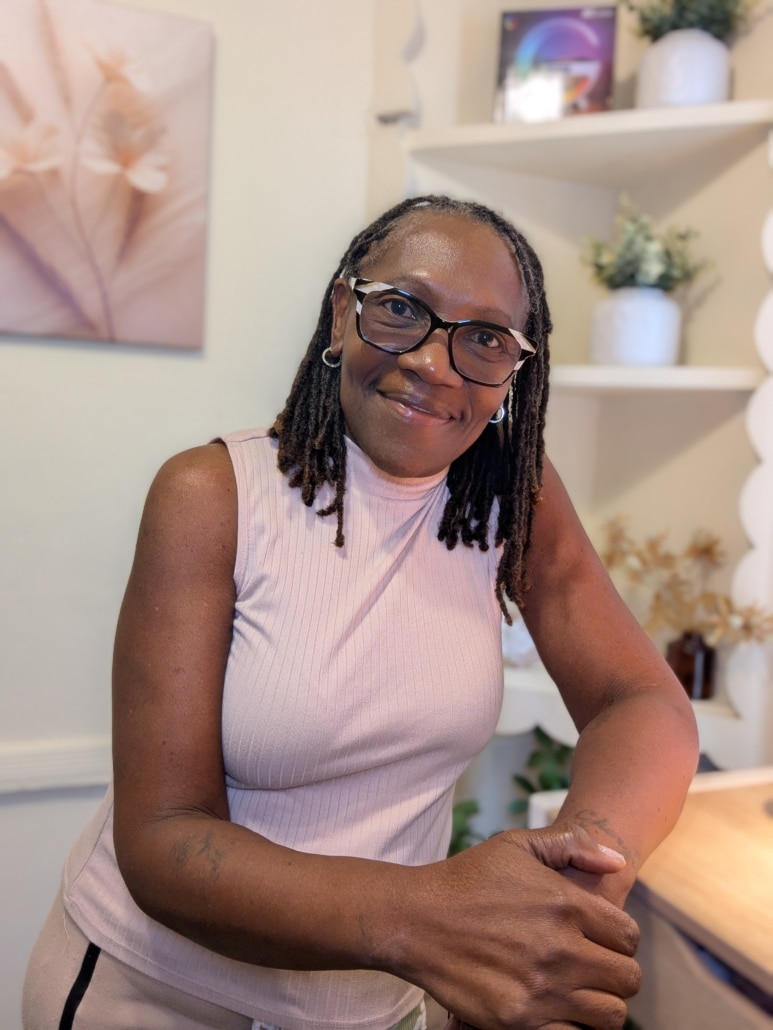
By: Sandra James, ACSW
Instagram.com/@colostomyforever
www.youtube.com/@SandraJames-LivingIt
When I was diagnosed, the first emotions that hit me were disappointment, confusion, and shame. I had spent months believing hemorrhoids were the only source of my problem. There were no other symptoms at first that would alert me outside of hemorrhoids, and when I saw the blood, I attributed it to hemorrhoids and something common and manageable. Cancer never crossed my mind. I never imagined that something as serious as colorectal cancer was there quietly invading my body without my knowing. When the diagnosis came, it felt disorienting. I kept replaying the past in my head, wondering how I missed it, how something so big could have been there while I carried on with my life.
When people asked what kind of cancer I had, I struggled to say the words out loud. Saying it was in my rectum felt heavy, embarrassing, and deeply shameful. I found myself wanting to deflect, minimize, or avoid the conversation altogether. That shame added another layer to the confusion and disappointment I was already carrying—an emotional weight I never expected to come with a diagnosis.
I had no one I could sit across from, look in the eyes, and say, “Do you understand this?”
After my diagnosis, my medical team gave me pamphlets and printed materials explaining my condition and treatment such as colostomy surgery. The information was thorough and medically sound, but it wasn’t what I needed at that moment. I wasn’t looking for a curriculum or clinical language—I needed to understand what was happening to me right then, in real life. What helped me most was hearing from real people.
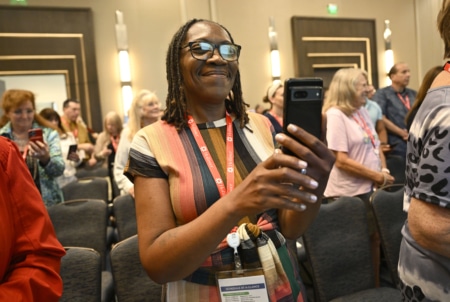
Sandra at UOAA’s 2025 National Conference in Orlando.
I spent long stretches of time watching videos on YouTube where people openly shared their cancer journeys, their fears, their side effects, their recoveries, and their lives beyond diagnosis. Some had their own YouTube channels. Others were featured on platforms like The Patient Story. Watching them helped me process what I was facing in a way pamphlets couldn’t.
While YouTube helped me feel less alone in the early days of my diagnosis and treatment, it didn’t fully replace the need for real, human connection. I didn’t know anyone in my immediate community who had an ostomy. I had no one I could sit across from, look in the eyes, and say, “Do you understand this?”
At some point, I came across another ostomate on social media who mentioned the United Ostomy Associations of America (UOAA) National Conference. I remember feeling something shift in me when I heard about it. It felt like an invitation — not just to an event, but to belonging. I registered, booked a flight, and went — not fully knowing what to expect, but knowing I needed to be there. Those three days became one of the most meaningful experiences of my entire cancer journey. From the moment I arrived, I felt an overwhelming sense of familiarity and ease. I was surrounded by people who felt like they had known me my whole life, even though we had just met. There was no shame, no need to explain myself, no awkwardness. Just understanding. UOAA’s conference wasn’t simply educational — it was grounding. It wasn’t just supportive — it was life-sustaining. For the first time since my diagnosis, I felt whole again. Not fixed. Not “back to normal.” But grounded in who I was becoming.
From Watching to Sharing: Why I Started My Own Channel
The realization to start my own channel came while I was writing my book, My Colorectal Cancer Journey. By the time I reached chapter two, I understood that telling my story solely through a book would take time — time that many people facing a new diagnosis surgery simply don’t have. I remembered how desperately I needed immediate connection and reassurance, and I knew I wanted to offer that same immediacy to others.
Starting a YouTube channel felt less structured, more human, and more accessible. It allowed me to speak honestly, show the realities of ostomy life, and create space for conversations that often don’t happen elsewhere — conversations about fear, shame, stigma, resilience, and growth.
My channel wasn’t created to educate in the traditional sense, even though many people now describe it that way. It was created to connect. To say, “You’re not alone,” without conditions or explanations. To show what life can look like after diagnosis, after surgery, after everything changes.
The same connection I once searched for, I now try to offer — one video, one conversation, one shared moment at a time.
View a selection of Sandra’s videos at the links below and look for her unique perspective on UOAA’s YouTube Channel soon!
Caring for My Stoma: What Works for Me
My New Travel Bag: What I Take with Me
My New Reality Bag Change: Living with a Permanent Colostomy Bag




Leave a Reply
Want to join the discussion?Feel free to contribute!