Tag Archive for: ostomy products

When you get an ostomy, most of the advice you’ll hear is practical. It comes in boxes and routines: bags and baseplates, barrier strips and rings. There’s talk of wear time and skin prep, of what to eat and when to empty. These logistics matter, of course; they’re a necessary first step after a major surgery. But beneath this adjustment is often another layer of healing, one that goes beyond the physical.

An ostomy doesn’t just change how your body works. It can also change how you feel inside. It can shift how you see your body, yourself, and your worth, affecting everything from what you wear, to where you go, to how close you let others get. Amid all this change, you might even start to wonder: How could I ever accept myself like this?

For many, life with an ostomy involves the ongoing work of making peace with your body—to meet it not with shame, but with patience, gentleness, and ultimately acceptance. It’s about rebuilding trust with a body that may suddenly feel unfamiliar and allowing that body to once again feel like home.

Body image after ostomy surgery

More than just how you look, body image is about comfort, confidence, and feeling like yourself. Ostomy surgery can profoundly disrupt that sense of self-connection.

A 2018 research review found that poor body image is one of the most common emotional challenges after ostomy surgery. Even when recovery is technically going well—when a WOCN nurse smiles and says, “You’re doing great”—you might hear a voice inside that replies, “Yeah, right,” as waves of self-consciousness or grief roll in.

For many, social stigma only adds weight. Harmful myths that say ostomies are dirty or shameful can take root internally. One study found that nearly half of people with permanent colostomies experience this kind of stigma, which can erode emotional well-being and self-worth.

Even when surrounded by love, you might find yourself hiding. The shirt once worn with pride might get folded away, replaced by oversized clothes chosen more for camouflage than comfort. You might avoid mirrors, not out of vanity, but out of grief for a body that once felt like yours. Intimacy may feel distant, shadowed by the fear of being seen, touched, or rejected.

In all of this, you’re not alone.

What factors shape body image after ostomy surgery?

Body image isn’t fixed; it’s shaped by your history, current circumstances, and how you emotionally process change. Several key factors can influence how someone adjusts:

1. Age and stage of life: Research shows that younger adults often experience greater body image distress after ostomy surgery. This is a time when identity, sexuality, and self-expression are still being shaped—when you’re still learning who you are and how you want to be seen.

In this context, everyday moments can take on new complexity. You may find yourself doing quiet check-ins throughout the day: Is the bag visible? Is it full? Is it leaking? These small, repeated considerations can influence how you move through the world, especially in a culture where bodies with ostomies are rarely represented.

2. Reason for surgery. The reason behind an ostomy may also impact how you adjust to life with it. Even with the same procedure, the emotional meaning is shaped by the life story it enters—and that story can be the lens through which the body is seen.

Research suggests that people who undergo ostomy surgery due to cancer, for instance, may report lower levels of body image distress. While an ostomy can be life-saving in many contexts, cancer survivors may be more likely to see it that way: as a visible mark of survival and strength.

For others, the emotional meaning may feel more complex. When surgery follows years of chronic illness, misdiagnosis, or medical trauma, for example, the experience can carry different associations. Perhaps it’s not triumph, but relief, fatigue, or even resignation. One study found that some participants with inflammatory bowel disease (IBD) viewed their stoma as an embarrassing complication of their condition—something tied more to shame than strength.

But meaning isn’t fixed. With time, support, and self-compassion, your relationship with your ostomy can evolve, no matter the reason behind it.

3. Temporary vs. permanent ostomy. Research also shows that temporary stomas can lead to greater body image distress. When your ostomy isn’t permanent, it can feel like you’re living in a body that doesn’t quite belong to you—just a version you’re passing through. This in-between state can create a kind of psychological limbo: it’s hard to fully grieve what’s been lost and hard to fully accept what is.

While permanent ostomies can bring their own grief, they may also bring a sense of clarity that limbo does not. When you know this is your body now, you may be better equipped to make peace with it.

What can help: Tips for navigating body image after ostomy surgery

1. Find the right ostomy products for you. It’s hard to feel at ease in your body when the products meant to support it don’t feel reliable. Worrying about leaks, irritation, or a poor fit can quietly wear on your confidence. But when your pouching system truly works for you, it can create space for deeper healing and acceptance.

If the medical look or rustling sound of your ostomy pouch makes you feel more self-conscious, know this: not all pouches are the same. Some are designed to move with your body, to bend and stretch as you do. Some fold into a smaller shape that tucks easily under clothes. Some come in colors like black or gray, offering an alternative to a medical beige. Pair these ostomy bags with supporting products like barrier strips and moldable rings, as needed, and you can find a system that fits both your ostomy and your life.

2. Remember what your body is for. After ostomy surgery—after the shock, the healing, and the slow return to everyday life—it’s easy to forget what your body is still doing for you.

It breathes without asking. It heals, even when you’re not watching. It adapts in ways you never expected, creating space for you to live the life you want. Your body allows you to laugh, cry, rest, move, connect, and wake up to a new day. Again and again, that is something worth honoring.

3. Focus on what lights you up. On tough body image days, it can help to shift your focus away from your body. Try asking:

  • What reminds me that I’m still me, despite all I’ve been through?
  • Who or what helps me feel seen beyond how I look?
  • What brings me joy, even for a moment?

Maybe it’s the warmth of your morning tea. A dog’s thumping tail when you pass through the door. A text that says, I get it.

These small lights matter. They can remind you that your life is bigger than managing a stoma, and that you’re here to live in ways that have nothing to do with appearance.

4. Let go of the timeline. Healing isn’t linear. There is no “right” time to feel okay in your body again. No checklist or countdown—just you, moving through it all in your own way, in your own time.

Some days might feel lighter, like body acceptance is just within reach. Other days may stir up discomfort or grief in places you thought had healed. That doesn’t mean you’re failing; it means you’re human. Release the pressure to arrive somewhere quickly and trust that just showing up for yourself is its own kind of progress.

Your body is still worthy after ostomy surgery

After ostomy surgery, your body is not broken. It is changed. It is not less worthy, just newly shaped.

You don’t have to love every part of it. You don’t have to feel grateful all the time. But your body, with its stoma and its pouch, is still here.

It’s still breathing. Still yours. And still deserving of care and peace.

References

Ayaz-Alkaya S. (2019). Overview of psychosocial problems in individuals with stoma: A review of literature. International wound journal16(1), 243–249. https://doi.org/10.1111/iwj.13018

Guo, L., Rohde, J., & Farraye, F. A. (2020). Stigma and disclosure in patients with inflammatory bowel disease. Inflammatory Bowel Diseases, 26(7), 1010–1016. https://doi.org/10.1093/ibd/izz260

Jayarajah, U., & Samarasekera, D. N. (2017). Psychological adaptation to alteration of body image among stoma patients: A descriptive study. Indian Journal of Psychological Medicine, 39(1), 63–68. https://doi.org/10.4103/0253-7176.198944

Mahjoubi, B., Mirzaei, R., Azizi, R., Jafarinia, M., & Zahedi-Shoolami, L. (2012). A cross-sectional survey of quality of life in colostomates: A report from Iran. Health and Quality of Life Outcomes, 10, 136. https://doi.org/10.1186/1477-7525-10-136

Simmons, K. L., Smith, J. A., Bobb, K. A., & Liles, L. L. (2007). Adjustment to colostomy: Stoma acceptance, stoma care self-efficacy and interpersonal relationships. Journal of Advanced Nursing, 60(6), 627–635. https://doi.org/10.1111/j.1365-2648.2007.04446.x

Yuan, J. M., Zhang, J. E., Zheng, M. C., & Bu, X. Q. (2018). Stigma and its influencing factors among Chinese patients with stoma. Psycho-Oncology, 27(6), 1565–1571. https://doi.org/10.1002/pon.4695

Coloplast develops products and services that make life easier for people with intimate healthcare needs. Working closely with the people who use our products, we create solutions that are sensitive to their special needs. Our business includes ostomy care, continence care, advanced wound care, interventional urology, and voice & respiratory care.

Follow Coloplast on InstagramFacebook, and YouTube, or visit us online at https://www.coloplast.us/

Editor’s note: This blog is from a UOAA digital sponsor, Coloplast. Sponsor support along with donations from readers like you help to maintain our website and the free trusted resources of UOAA, a 501(c)(3) nonprofit organization.

By Convatec

We want to help everyone in our ostomy community have a wonderful holiday.

So, we’ve put together this guide to share our top tips. In our 12 ways of Christmas, you’ll find advice about everything from stocking up on supplies to eating and drinking in moderation. If you have a child with an ostomy, you’ll find tips on how to prepare for Christmas day. You’ll also find our Accessories Wish List, featuring our most popular accessories.

12 Ways of Christmas

The countdown to the big day has begun. To help you prepare, we’ve put together our 12 ways of Christmas. Share your tips on our social media channels using the hashtag #OstomyHoliday

1. Stocking up

Now’s the time to order more ostomy products if you haven’t already done so.

2. Get wrapping and packing

If you plan to travel, make a checklist of everything you need to pack or better still, pack an overnight bag now.

3. Eat, drink and be moderate

Avoid the risk of bloating or even a blockage by enjoying your favorite foods in moderation.

4. It’s all about the bubbles

Remember champagne, sodas and other carbonated beverages can cause ballooning and indigestion.

Check out our top ostomy nutrition tips here

5. Add Accessories to your wish list

The holiday break is a great time to give ostomy accessories a try. If you’ve got an ileostomy, give Diamonds™ Gelling Sachets a try – just pop one in your pouch to thicken your output and reduce gas.

6. Beware of what’s hidden in the dessert

If you’re one of the few who enjoy fruitcake, be aware of the ingredients and which might cause irritation.

7. Marshmallows aren’t just for S’mores

Many people with an ileostomy find that marshmallows are a great way to quickly thicken output.

8. Enjoy it

Sometimes the holidays can be stressful, even without an ostomy! Being knowledgeable and prepared can ensure you have a great time.

9. Dreaming of holiday food?

From a vegetable overload to rich, spicy foods, the holiday menu is packed full of potentially gas-inducing foods. Many people find they can enjoy these foods in moderation. And remember, if you’re at someone else’s house, it’s not rude to refuse.

10. Don’t expect the Santa Express…

If you’re traveling by land, air or sea, there’s likely to be a limited service. So, it’s a good idea to keep a supply of pouches and supplies within easy reach, just in case.

Check out our top travel tips for ostomates here

11. Stay hydrated

It’s tempting to hope that all that soda and eggnog is keeping you hydrated, but in reality, the opposite is more likely to be true. Alcohol is a diuretic, so if you decide to indulge a little, make sure to also drink plenty of water.

12. Take it easy the day after

Whatever day you celebrate on, it can be hugely fun, but also tiring. So be sure to plan to rest the day after.

Let’s make it all about stockings, not pouches: holiday tips for children with an ostomy

We all want our kids to wake up on Christmas morning (not too early!) thinking about their stockings, not their ostomy pouches. Best of all, there are things we can do as parents to help.

Plan ahead

You’ve already got so many things to think about, so it’s a good idea to make a checklist. Have you got enough supplies? If you’re going away, have you packed a bag?

Eat ahead

It can be a good idea to give your child bland food a day or so before a big holiday feast, to compensate for any overload the day of.

Sleep easy on Christmas Eve

You’re likely to already have an established bedtime routine. If so, try making it a bit earlier so you and your child are not rushed. Remember, to minimize the risk of leakages, avoid eating too close to bedtime and make sure the pouch is completely empty.

Wrap the mattress in a plastic sheet

If you’re not already doing so, get wrapping! A plastic sheet is easy to clean, avoiding any unnecessary upset.

Editor’s note: This blog is from one of our digital sponsors, Convatec. Sponsor support along with donations from readers like you help to maintain our website and the free trusted resources of UOAA, a 501(c)(3) nonprofit organization.

By Robin Glover

The Run for Resilience Ostomy 5k is set to return for its eighth year beginning on Ostomy Awareness Day, October 1, 2022. This year’s event will feature both in-person races around the U.S. and the worldwide Virtual Ostomy 5k. Individuals and teams will be running, rolling, or walking to raise money and show their support for the critical programs and services of United Ostomy Associations of America (UOAA).

Ostomies Are Life-Savers

No matter their story, there are two things all ostomates have in common: incredible resilience and a life saved or much improved by ostomy or continent diversion surgery. The Run for Resilience 5k is a celebration of that. And while every participant can get a run t-shirt with “Ostomies are Life-Savers” emblazoned on the front, each of them have their own stories and reasons why.

For Sydney, a 23-year-old living with an ileostomy, she’s participating and fundraising for the Virtual Ostomy 5k to share the story of how ostomy surgery saved her life. She also wants to serve as an inspiration to other young people facing similar challenges and let them know they can “live the life they want because of the ostomy bag” and not in spite of it. Sydney exemplifies the resilience of the ostomy community.
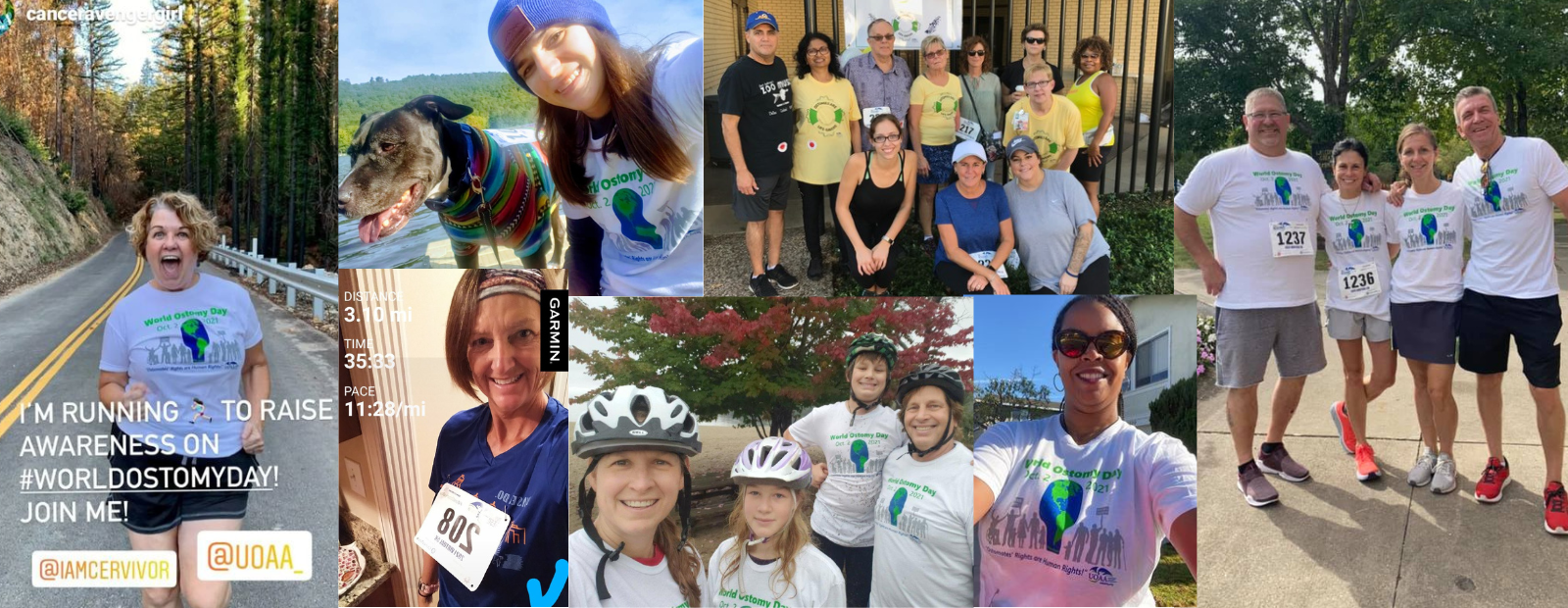


Liz exemplifies that resilience, too. A month and a half after being diagnosed with bladder cancer, she underwent a radical cystectomy (bladder removal) with a total hysterectomy and stoma placement. Liz is now an advocate who wants everyone to know that her urostomy saved her life. She and a fellow UOAA Support Group leader are hosting a Virtual 5k walk in Cincinnati  because “we are living proof that ostomies are lifesavers and that you can have a fulfilling life with an ostomy.”

The need for an ostomy or other continent diversion isn’t always directly due to a medical condition. Stefphanie was hit by a drunk driver and underwent eleven surgeries in the two weeks following the crash and required both an ileostomy and a mucous fistula. Though hesitant to talk about it at first, she’s now thriving and wants to share her story to inspire others.

If you don’t want to run or walk yourself, consider shining a light on this resilience by supporting the fundraisers of people like these.

In Person Events Are Back This Year!

In addition to the Virtual Ostomy 5k which can be held anywhere by anyone, in-person Run for Resilience 5k events are back this year!

These events are family-friendly gatherings and a chance to share ostomy awareness in communities all around the country. Most events take place on beautiful parkland or waterfront trails. They also all feature an opportunity to visit with ostomy product representatives in person and visit other event sponsor tables. Race participants will also receive a goodie bag with promotional items and educational materials.

Don’t worry if you are not in running shape ­– do what you can. Walkers outnumber runners at many of these in-person fun runs. More serious runners looking for an event to attend however may want to travel to the Durham, North Carolina Run for Resilience Ostomy 5k as it takes place on a timed and certified 5k course.

Past participant Lianne Weller shared what makes these events special, “The 5k race allows other ostomates to build confidence and breakdown barriers to getting back into physical shape; going one step closer to their goal. I feel more confident and less self-conscious because I’m surrounded by individuals who have all gone through similar obstacles.”

As envisioned by the 5k founders, all locations will get an optional ostomy pouch provided by Exclusive Diamond Sponsor Hollister. Non-ostomates are encouraged to wear their ostomy pouches during the race. (Don’t worry. They’re easy to put on.)

The Arizona Run for Resilience Arizona 5k will have a great new location in Scottsdale on October 1st, 2022, with a 5k run/walk and a fun run for the kids.

The newest in-person event is the Miami, Florida Ostomy 5k taking place at the University of Miami Campus in Coral Gables on Saturday, October 1st, 2022, from 9:00 am to 3:00 pm. Organizer Ana Restrepo says the event will include food, drinks, games, giveaways, and more.

Other in-person Run for Resilience 5k events being held across the country in celebration of Ostomy Awareness Day on Saturday, October 1, 2022 are:

Vancouver, WA

Nashville, TN

Boise, ID

Birmingham, AL (October 8th)

(Please follow each individual link to get more information about times and types of races.)

 “I Intend to Be Victorious”

For every person living with an ostomy or other continent diversion, there’s a story of resilience to go along with it. A virtual participant who goes by Poo and Friends, is working to take their life back one step at a time and they “intend to be victorious.

You can learn more about other participants of each race location or the worldwide virtual by clicking on the circle above their name and reading their story.

Don’t forget to click “Load More Fundraisers” to see them all, including Tanya who’s one of the many wonderful Certified Wound Ostomy Nurses (CWON) and Wound Ostomy Care Nurses (WOCN) taking part in the 2022 Run for Resilience Ostomy 5k.

Share Your Story Too

Are you someone who wants to help break the stigma around ostomies and be an inspiration to others? You’re encouraged to sign up, create your own fundraiser, and share your story. After all, the story of your journey can be what helps someone else make it through theirs.

To participate in the Virtual Ostomy 5k and get this year’s awesome Ostomies Are Lifesavers T-shirt in time for Ostomy Awareness Day you have to register by September 9th.

  • Run, walk, roll or pedal a 5k (3.1 miles) route of your choice. You can even use a treadmill!
  • Take pictures of yourself during your race and email them to info@ostomy.org or message or tag UOAA on Facebook, Instagram, Twitter, LinkedIn or TikTok
  • Hashtag your photos with #OstomiesAreLifesavers and #RunforResilience

Friends, family, members of the medical community, and anyone else who wants to support ostomates and celebrate their resilience are also encouraged to donate or create their own fundraiser. Fundraisers will receive special promotional items depending on how much they raise.

Help Support UOAA

Funds raised during the 2022 Run for Resilience Ostomy 5k will support United Ostomy Associations of America (UOAA), a 501(c)(3) nonprofit organization that provides national advocacy, support and resources for the 725,000 to 1 million Americans who have had or will have ostomy or continent diversion surgery. These surgeries are lifesaving and have allowed many people to return to living a healthy life.

To find out more about the Run for Resilience Ostomy 5k please visit www.ostomy.org/5k.


Robin Glover is a writer based in the Houston area. He has a permanent ostomy after being diagnosed with Crohn’s Disease in 2017.

Tag Archive for: ostomy products

Nothing Found

Sorry, no posts matched your criteria