Ostomate Karl Doss shares his journey and personal method for approaching difficult situations before, during, and after they occur.
Why does Rocky win? Is it his skill? His training? His size? No.
As Rocky Balboa famously said, “It ain’t about how hard you hit. It’s about how hard you can get hit and keep moving forward.” I have always loved that quote, and I agree with it completely.
Many people expect life to be fair. They expect that if they work hard, avoid mistakes, or possess enough talent, they will escape hardship. They also believe they can only perform at their best when they are healthy, comfortable, and undamaged.
Those expectations are often unrealistic.
Life will hurt you. It will disappoint you. It will knock you down repeatedly. The most important skill you can develop is not intelligence, athletic ability, creativity, wealth, or charm—it is resilience.
Resilience is one of the strongest predictors of long-term success.
Don’t believe it?
How many brilliant, gifted, creative people do you know who are living below their potential? Think about the naturally talented athletes, the beautiful people, or the classmates everyone assumed were destined for greatness. How many of them sabotaged their own lives?
What about children who grew up wealthy? They enjoyed every advantage imaginable—vacations, expensive cars, designer clothes, and financial security. Yet many still ended up addicted, incarcerated, or deeply unhappy.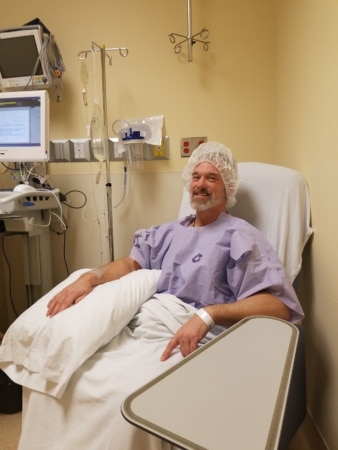
Talent is not immunity,
Money is not immunity.
Beauty is not immunity.
Every human being experiences failure, rejection, loss, trauma, illness, and disappointment. There is no exemption from life’s punches.
The difference between success and failure, survival and surrender, often comes down to one quality: resilience.
Both the American Psychological Association and the field of physics describe resilience as the ability to “bounce back.” I appreciate that definition because it captures the essence of the human spirit.
My own childhood demanded resilience.
My father was the most abusive person I have ever known. He emotionally, verbally, and physically abused both my mother and me. My childhood was filled with fear, instability, and pain.
Adulthood did not become much easier.
Shortly after graduating from high school, my first wife became pregnant. We married, divorced within a year, and I began paying child support while driving six hours each way twice a month just to see my infant daughter.
Professionally, I experienced both success and devastating setbacks. I went from building a home oxygen program at our local hospital to doing any honest work I could find—drilling wells, peeling logs, building ponds, selling firewood—anything to provide for my family.
Eventually, I attended the Divers Institute of Technology in Seattle, where I trained in commercial diving, underwater welding, salvage operations, and demolition. I worked throughout the United States and even in South America. Although the work was rewarding, it never became the career I had envisioned.
Later, I worked for Union Pacific Railroad as a brakeman and freight conductor. After years on the railroad, alcoholism cost me my job.
Six months later, I admitted I had a drinking problem and sought help through Alcoholics Anonymous.
Recovery gave me another opportunity to rebuild.
My wife and I reconciled after our divorce, and for a brief time life seemed to stabilize.
Then everything changed.
I was diagnosed with diverticulitis after enduring numerous painful infections. I elected to undergo surgery, but complications followed. My colon reconnected improperly, I became septic, and I required emergency surgeries. Twenty-two liters of fluid were used to wash out the infection, and I spent time in intensive care.
When I woke up, I was in excruciating pain and wearing a colostomy bag.
I had lost seventy pounds. I could not walk without assistance.I was completely dependent on others.
After leaving the hospital, I went nearly a month with almost no sleep because of the pain.
My wife became my hero. She cared for me when I could not care for myself. She insisted I get out of bed, taught me how to manage my colostomy, encouraged me to eat when I had no appetite, and refused to let me surrender.
When I eventually returned to construction work, I developed a peristomal hernia. At first, it felt like another devastating setback.
Instead, it became a blessing because it motivated me to pursue corrective surgery. While recovering, I began helping a friend who struggled with alcoholism. Something unexpected happened.
My own suffering gave him hope.
The pain I had endured allowed me to understand his pain. It was during this period that I realized something profound. None of these experiences happened to me.They happened for me.
Every hardship forced me to grow. Every setback developed skills I otherwise never would have acquired. Every failure prepared me to help someone else.
I survived.
Then I began to thrive.
Physical and emotional wounds can heal. New coping strategies can be learned. Neuroscience has demonstrated that the brain possesses remarkable neuroplasticity—the ability to adapt, reorganize, and grow throughout life. Just as we can learn to ride a bicycle or develop self-discipline, we can deliberately strengthen resilience. Resilience is not an inborn gift. It is a trainable skill.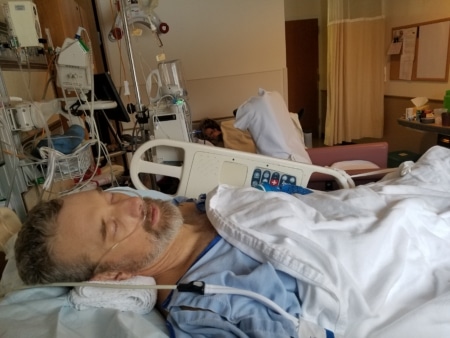
Avoiding pain is part of our biological programming. We are wired for survival.
The challenge is recognizing that pain is inevitable.
Suffering is universal.
What determines the quality of our lives is not whether we experience adversity, but how we respond to it.
History is filled with examples.
Muhammad Ali, then known as Cassius Clay, lost to Amos Johnson during the 1959 Pan American Trials. Later that same year, he rebounded to win the Pan American Games championship.
Stephen Hawking was diagnosed with a progressive motor neuron disease at the age of twenty-one. Despite the prognosis, he went on to become the Lucasian Professor of Mathematics at the University of Cambridge—the same prestigious position once held by Isaac Newton.
In 2006, Sheryl Crow was diagnosed with breast cancer. Following surgery and radiation treatment, she recovered, started a family, continued her successful music career, and became a passionate advocate for early detection and routine mammograms.
Steve Jobs was fired from Apple in 1985. Rather than giving up, he returned years later to transform the company into one of the most influential businesses in history.
Their stories are different.
Their resilience is the same.
After years of personal struggle, trauma, recovery, and growth, I developed what I call the IFEC Method for resilience. Most discussions of resilience focus only on recovering after trauma.
Recovery matters.
But resilience also begins before adversity strikes.
Preparation matters just as much.
My version of the IFEC Method provides a practical framework for approaching difficult situations before, during, and after they occur.
I — Intentionality
Know your desired outcome.
Ask yourself, “What am I trying to accomplish?”
Do you want to remain calm? Solve a problem? Protect a relationship? Perform under pressure?
Be intentional while remaining flexible. Life is dynamic, and circumstances change.
F — Focus
Your focus determines your experience.
Are you focused on your pain or your progress?
On fear or possibility?
Your internal dialogue matters. In stressful situations, negative self-talk becomes another obstacle.
Focus on what you can control—your attitude, your actions, your breathing, your posture, and your decisions.
Let go of what you cannot control.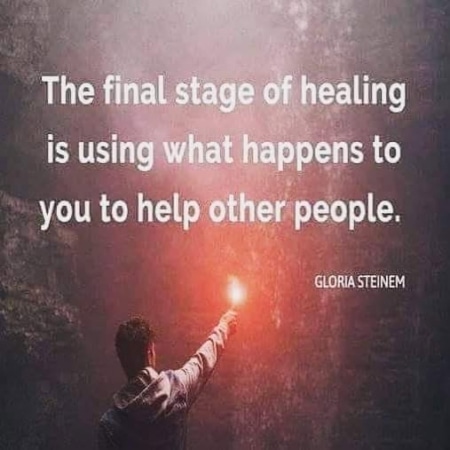
E —- Evaluation
Growth comes from asking better questions.
Instead of asking:
“Why is this happening to me?” Ask:
“What can I learn from this?”
“How can this help me grow?”
“What strengths does this challenge require?” “What opportunity exists that I cannot yet see?”
Better questions produce better answers.
C — Communication
Share your experience.
Teach what you have learned.
Your story may become someone else’s survival guide.
Speak honestly about your failures, your victories, your fears, and your healing. We overcome adversity more effectively when we help others navigate theirs.
Life is imperfect.
Life is painful.
Life is uncertain.
Adversity is not optional.
Resilience is.
We have all heard the saying, “Failing to plan is planning to fail.” The same principle applies to resilience. Facing life’s inevitable challenges without a strategy is little more than gambling.
Life can be tough.
Buy a helmet.
Develop resilience before you need it.
You’re welcome to use my IFEC Method as your roadmap. It provides a practical approach built on intentionality, focus, evaluation, and communication. While no method can guarantee success, resilience dramatically improves your ability to endure hardship, adapt to change, continue growing, and ultimately help others do the same.
Success is not reserved for those who never fall,
It belongs to those who refuse to stay down.