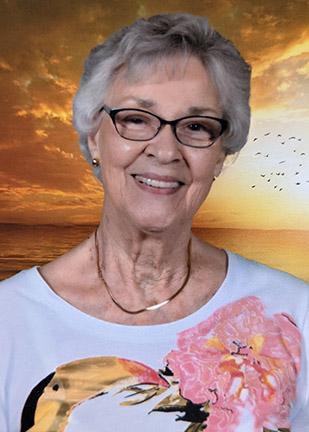
Remembering Ruth Fawley
By Ed Pfueller, UOAA Communications and Outreach Manager
In 1950, Ruth Fawley celebrated her 21st birthday, but the following decade was spent mainly in hospitals. Her ulcerative colitis led to an ostomy in 1951 and multiple unsuccessful intestinal surgeries. At one point, she was in a life-threatening coma for a week. Considering her health struggles, few people at the time might have predicted she would live an active life and reach the age of ninety-four before her passing in 2024.
A turning point in Fawley’s life came with her introduction to Dr. Harry Ellicott Bacon, Professor and Chairman of the Department of Proctology at Temple University Hospital in Philadelphia, Pennsylvania. He performed ileostomy revisions and subsequent surgeries that ultimately allowed her to lead a more normal life.
Dr. Bacon was an internationally renowned and innovative surgeon who prioritized the emotional well-being of his patients. He invited Ruth to a peer support group for women with ostomies and related surgeries.
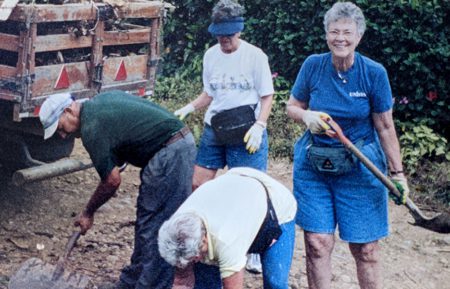
Ruth worked as an executive secretary and while working at the travel magazine Holiday met many well-known authors, likely sparking her lifelong passion for travel.
She married her longtime husband, J. Russell Fawley, Jr., in 1959. When it came to starting a family, doctors at that time were not sure if a woman with an ileostomy could get pregnant and give birth. “She would later joke that out of the nineteen surgeries she endured, the only time she left the hospital with more than she went in with was when she had her two Cesareans,” remembers her daughter Nancy Fawley.
She thinks her mother would want fellow ostomates reading this article, “To be inspired and know you can have a family, travel and have a long normal life with an ostomy.”
Nancy says her mother was a wonderful cook and loved to garden. Ruth loved the water, whether swimming at the Jersey Shore or doing near-daily water aerobics later in life. Ruth also had a keen artistic eye, loved to sew and was well-known for the dynamic use of colors in her quilts.
Like many of her generation, Ruth carried on quietly in life with an ostomy but had to manage the challenges of short bowel from her many surgeries. She was a longtime supporter and member of UOA and UOAA and an avid reader of The Phoenix Magazine.
A June 2011 article on Army Pilot Bob Cuyler’s story of flying in a combat zone with an ostomy inspired her to write a letter to him. He responded in kind by sending her a Presentation Flag his unit took into active duty, which she cherished for years after. In her return letter, she thanks Cuyler for his service and fortitude and shares that even finding ostomy appliances was difficult in those early days. “An ileostomy was not spoken of and I know the humiliation, embarrassment and stigma attached to it,” she shared. But her sense of humor shines through as she ends her letter joking that the old Ostomy Quarterly magazines used to arrive in plain brown paper wrappers, leading her neighbor to think she was getting Playboy Magazine!
“If I get to the gates of heaven and still have this ostomy pouch I’m turning around!”
Nancy says that her mother shared many Phoenix articles with her over the years so she would have a better understanding of her condition. “I relied on this information when I worked with doctors, health care professionals and hospice caregivers who had little to no experience with patients with an ileostomy,” Nancy says.
In honor of her mother’s memory, Nancy has donated to UOAA at The Phoenix Society Diamond level in part because of UOAA’s continued commitment to ostomy education for both patients and medical professionals.
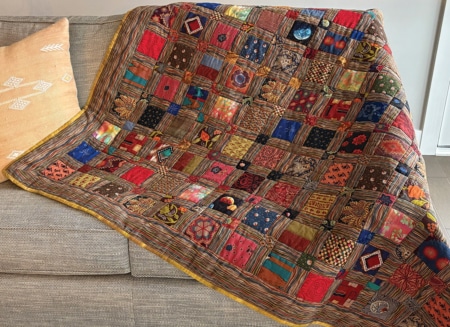
In her later years, Ruth herself became a caretaker for her husband as he battled with Parkinson’s disease and dementia before his death in 2014. During this time, she created a striking quilt with dynamic colors she entitled “meltdown.” Ruth’s colors live on in the many quilts she gifted to family and friends.
In her final months, Nancy got to hear more stories of her mother’s travels in England and France and a doctor’s direction that a bit of scotch can help in digestion. She thinks her mother would want fellow ostomates reading this article, “To be inspired and know you can have a family, travel and have a long normal life with an ostomy.”
At the end of her 94-years she had just about enough of dealing with it though, “If I get to the gates of heaven and still have this ostomy pouch I’m turning around!” she told her daughter. The amazing mix of humor and resilience required after 73 years with an ostomy still shining through.
The Phoenix Society recognizes those individuals who are able to sustain and/or increase their total annual donation of $500 or more during each calendar year. Become a member of The Phoenix Society or donate at any level to help UOAA fulfill its mission to promote the quality of life for people with ostomies and continent diversions through information, support, advocacy, and collaboration. UOAA is thankful for those who give, including Nancy Fawley and the other Diamond and Ruby Level members listed below.