United Ostomy Associations of America
  • HOME
  • OSTOMY INFORMATION
    • Ostomy Information
      • What Is An Ostomy?
      • Living with an Ostomy: FAQs
      • Diet + Nutrition
      • Ostomy Skin Care
      • Sexuality
      • Bill Of Rights
      • New Ostomy Patient Guide
    • My Ostomy
      • Ileostomy
      • Colostomy
      • Urostomy
      • J-Pouch
      • Continent Diversions + Other Ostomy Types
      • Temporary Ostomy
      • Short Bowel Syndrome
      • Español
    • Children to Young Adults with Ostomies
      • Infant/Toddler (0-3 Years)
      • Preschool (3-5 Years)
      • Elementary School (6-9 Years)
      • Pre-Adolescent (10-13 Years)
      • Adolescent (14-18 Years)
      • Young Adult (18-25 Years)
      • Parents & Clinicians Resources
      • Know Your Rights
      • What To Expect After Surgery
      • Odor Control
      • Fast Facts
      • Ostomy Game
    • Crohn’s Disease & Ulcerative Colitis Information
      • Defining, Caring and Treating
      • Preparing for Ostomy Surgery
      • Common Issues, Managing Diet, Mental Health
      • Intimacy, Fertility and Pregnancy
      • Resources
    • General Information
      • UOAA Ostomy Marketplace
      • Product + Supply Information
      • UOAA Resources Library
      • Resources for Nurses/Home Health
      • Travel Tips + TSA
      • Donate Your Ostomy Supplies
      • Emergency Supplies
      • Related Links
      • UOAA Virtual Ostomy Clinic
      • Outpatient Ostomy Services Locator
  • SUPPORT
      • discussion
        Ostomy 101:
        Easily communicate “What is an ostomy?" with our infographic.

        Read More

    • Find Support
      • Support Group Finder
      • Support Group Websites
      • UOAA Virtual Ostomy Clinic
      • Online Peer and Ostomy Support Programs
      • Outpatient Ostomy Services Locator
      • Find a Mental Health Provider
      • Find an Ostomy Nurse
      • Apps for Ostomates
      • Emotional Concerns
    • Connect With Us
      • Start/Affiliate Your Group With UOAA
      • Resources For ASGs
      • National Membership
      • Sign Up for Our E-Newsletter
    • Participate
      • Attend An Event
      • Become An Advocate
      • Join Us for a Conference
      • Make A Donation
      • Become a Member of The Phoenix Society
      • Donate Your Ostomy Supplies
      • Take A Survey
  • ADVOCACY
      • portal
        Roadmap to Establishing Outpatient Ostomy Services
        Documents that are available as PDFs to download and print.

        Read More

    • About
      • Advocacy Program
      • Advocacy Priorities
      • 10 Questions to Help You Speak Up and Self-Advocate
    • UOAA Action Center
      • Take Action
      • Competitive Bidding
      • Ostomy and Continent Diversion Patient Bill of Rights Campaign
      • Non-Medical Switching Campaign
      • Join Advocacy Network
      • Find Your Legislator
      • Advocate Tools
    • Other Ways to Get Involved
      • Ostomy Awareness Day
        • Tools
        • Who’s Raising Awareness?
      • Roadmap to Establishing Outpatient Ostomy Services
      • Share Your #MyAccessMatters Story
    • Tools and Resources Library
      • Restroom Access Self-Advocacy Tools
      • Travel Tips + TSA Communication Card
      • Swimming with an Ostomy
      • Workplace Resources
      • Aging with an Ostomy or CD
      • Home Health Tools
      • Webinars
        • Ostomy Supplies and Insurance
        • How to Navigate Insurance and Get Supplies Affordably
    • Take Control of your Healthcare
      • UOAA Virtual Ostomy Clinic
      • Expect More Series & Checklists
      • Additional Advocacy Resources
        • The Americans with Disabilities Act (ADA)
        • Long-Term Care Ombudsman
        • Quality of Care Complaints
        • Medicare Rights Center
  • WHO WE ARE
      • Have a Question for Us?
        UOAA is a 501(c)(3) nonprofit organization that supports, empowers, and advocates for people who have had or who will have ostomy or continent diversion surgery.

        Contact Us

    • About Us
      • Our Mission + History
      • Our Leaders
      • National Sponsors + Partners
      • National Membership
      • Contact Us
    • How We Help
      • Advocacy
      • Awareness
      • Support
      • National Conference
      • Ostomy Nurse Scholarship
    • Get Involved
      • Volunteer
      • Become A Leader
      • Join A Committee
      • Career Opportunities
      • Sign Up for Our E-Newsletter
  • LATEST
  • EVENTS
    • Ostomy Awareness Day
    • Run For Resilience 5K
    • Ostomy Academy
    • Educational Webinars
    • 2027 National Conference
    • Calendar
  • GIVE NOW
  • SEARCH
  • Menu Menu

Tag Archive for: addiction

Recovery and Resilience

Emotional Health, Personal

Ostomate Karl Doss shares his journey and personal method for approaching difficult situations before, during, and after they occur.

Why does Rocky win? Is it his skill? His training? His size? No.

As Rocky Balboa famously said, “It ain’t about how hard you hit. It’s about how hard you can get hit and keep moving forward.” I have always loved that quote, and I agree with it completely.

Many people expect life to be fair. They expect that if they work hard, avoid mistakes, or possess enough talent, they will escape hardship. They also believe they can only perform at their best when they are healthy, comfortable, and undamaged.

Those expectations are often unrealistic.

Life will hurt you. It will disappoint you. It will knock you down repeatedly. The most important skill you can develop is not intelligence, athletic ability, creativity, wealth, or charm—it is resilience.

Resilience is one of the strongest predictors of long-term success.

Don’t believe it?

How many brilliant, gifted, creative people do you know who are living below their potential? Think about the naturally talented athletes, the beautiful people, or the classmates everyone assumed were destined for greatness. How many of them sabotaged their own lives?

What about children who grew up wealthy? They enjoyed every advantage imaginable—vacations, expensive cars, designer clothes, and financial security. Yet many still ended up addicted, incarcerated, or deeply unhappy.
Talent is not immunity,

Money is not immunity.

Beauty is not immunity.

Every human being experiences failure, rejection, loss, trauma, illness, and disappointment. There is no exemption from life’s punches.

The difference between success and failure, survival and surrender, often comes down to one quality: resilience.

Both the American Psychological Association and the field of physics describe resilience as the ability to “bounce back.” I appreciate that definition because it captures the essence of the human spirit.

My own childhood demanded resilience.

My father was the most abusive person I have ever known. He emotionally, verbally, and physically abused both my mother and me. My childhood was filled with fear, instability, and pain.

Adulthood did not become much easier.

Shortly after graduating from high school, my first wife became pregnant. We married, divorced within a year, and I began paying child support while driving six hours each way twice a month just to see my infant daughter.

Professionally, I experienced both success and devastating setbacks. I went from building a home oxygen program at our local hospital to doing any honest work I could find—drilling wells, peeling logs, building ponds, selling firewood—anything to provide for my family.

Eventually, I attended the Divers Institute of Technology in Seattle, where I trained in commercial diving, underwater welding, salvage operations, and demolition. I worked throughout the United States and even in South America. Although the work was rewarding, it never became the career I had envisioned.

Later, I worked for Union Pacific Railroad as a brakeman and freight conductor. After years on the railroad, alcoholism cost me my job.

Six months later, I admitted I had a drinking problem and sought help through Alcoholics Anonymous.

Recovery gave me another opportunity to rebuild.

My wife and I reconciled after our divorce, and for a brief time life seemed to stabilize.

Then everything changed.

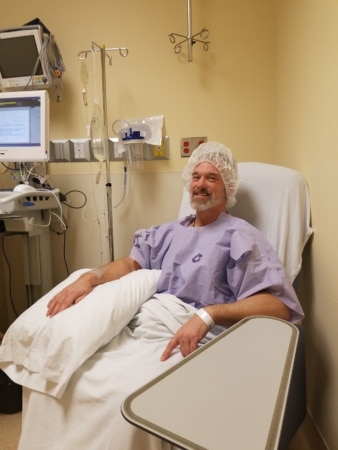
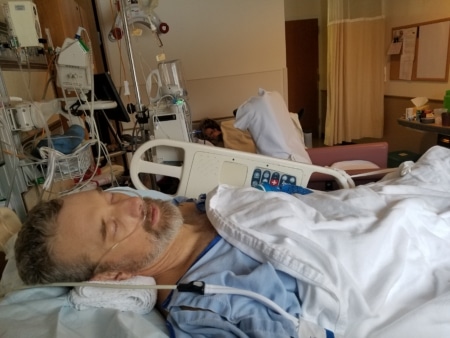
I was diagnosed with diverticulitis after enduring numerous painful infections. I elected to undergo surgery, but complications followed. My colon reconnected improperly, I became septic, and I required emergency surgeries. Twenty-two liters of fluid were used to wash out the infection, and I spent time in intensive care.

When I woke up, I was in excruciating pain and wearing a colostomy bag.

I had lost seventy pounds. I could not walk without assistance.I was completely dependent on others.

After leaving the hospital, I went nearly a month with almost no sleep because of the pain.

My wife became my hero. She cared for me when I could not care for myself. She insisted I get out of bed, taught me how to manage my colostomy, encouraged me to eat when I had no appetite, and refused to let me surrender.

When I eventually returned to construction work, I developed a peristomal hernia. At first, it felt like another devastating setback.

Instead, it became a blessing because it motivated me to pursue corrective surgery. While recovering, I began helping a friend who struggled with alcoholism. Something unexpected happened.

My own suffering gave him hope.

The pain I had endured allowed me to understand his pain. It was during this period that I realized something profound. None of these experiences happened to me.They happened for me.

Every hardship forced me to grow. Every setback developed skills I otherwise never would have acquired. Every failure prepared me to help someone else.

I survived.

Then I began to thrive.

Physical and emotional wounds can heal. New coping strategies can be learned. Neuroscience has demonstrated that the brain possesses remarkable neuroplasticity—the ability to adapt, reorganize, and grow throughout life. Just as we can learn to ride a bicycle or develop self-discipline, we can deliberately strengthen resilience. Resilience is not an inborn gift. It is a trainable skill.
Avoiding pain is part of our biological programming. We are wired for survival.

The challenge is recognizing that pain is inevitable.

Suffering is universal.

What determines the quality of our lives is not whether we experience adversity, but how we respond to it.

History is filled with examples.

Muhammad Ali, then known as Cassius Clay, lost to Amos Johnson during the 1959 Pan American Trials. Later that same year, he rebounded to win the Pan American Games championship.

Stephen Hawking was diagnosed with a progressive motor neuron disease at the age of twenty-one. Despite the prognosis, he went on to become the Lucasian Professor of Mathematics at the University of Cambridge—the same prestigious position once held by Isaac Newton.

In 2006, Sheryl Crow was diagnosed with breast cancer. Following surgery and radiation treatment, she recovered, started a family, continued her successful music career, and became a passionate advocate for early detection and routine mammograms.

Steve Jobs was fired from Apple in 1985. Rather than giving up, he returned years later to transform the company into one of the most influential businesses in history.

Their stories are different.

Their resilience is the same.

After years of personal struggle, trauma, recovery, and growth, I developed what I call the IFEC Method for resilience. Most discussions of resilience focus only on recovering after trauma.

Recovery matters.

But resilience also begins before adversity strikes.

Preparation matters just as much.

My version of the IFEC Method provides a practical framework for approaching difficult situations before, during, and after they occur.

I — Intentionality

Know your desired outcome.

Ask yourself, “What am I trying to accomplish?”

Do you want to remain calm? Solve a problem? Protect a relationship? Perform under pressure?

Be intentional while remaining flexible. Life is dynamic, and circumstances change.

F — Focus

Your focus determines your experience.

Are you focused on your pain or your progress?

On fear or possibility?

Your internal dialogue matters. In stressful situations, negative self-talk becomes another obstacle.

Focus on what you can control—your attitude, your actions, your breathing, your posture, and your decisions.

Let go of what you cannot control.
E —- Evaluation

Growth comes from asking better questions.

Instead of asking:

“Why is this happening to me?” Ask:

“What can I learn from this?”

“How can this help me grow?”

“What strengths does this challenge require?” “What opportunity exists that I cannot yet see?”

Better questions produce better answers.

C — Communication

Share your experience.

Teach what you have learned.

Your story may become someone else’s survival guide.

Speak honestly about your failures, your victories, your fears, and your healing. We overcome adversity more effectively when we help others navigate theirs.

Life is imperfect.

Life is painful.

Life is uncertain.

Adversity is not optional.

Resilience is.

We have all heard the saying, “Failing to plan is planning to fail.” The same principle applies to resilience. Facing life’s inevitable challenges without a strategy is little more than gambling.

Life can be tough.

Buy a helmet.

Develop resilience before you need it.

You’re welcome to use my IFEC Method as your roadmap. It provides a practical approach built on intentionality, focus, evaluation, and communication. While no method can guarantee success, resilience dramatically improves your ability to endure hardship, adapt to change, continue growing, and ultimately help others do the same.

Success is not reserved for those who never fall,

It belongs to those who refuse to stay down.
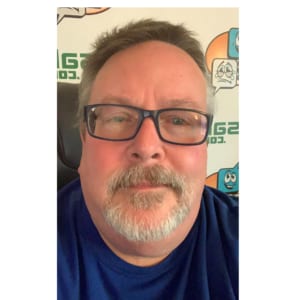
November 10, 2026
https://www.ostomy.org/wp-content/uploads/2026/11/20170828_185149-scaled.jpg 2560 1920 Contributor https://www.ostomy.org/wp-content/uploads/2017/02/UOAAlogofinal2.png Contributor2026-11-10 15:44:482026-11-10 15:44:48Recovery and Resilience

Scott Steehn’s Story

Colostomy, Ileostomy, Patient Stories

Finding Hope in the Stories of Others

By Scott Steehn

All stories have a beginning, and mine is no different. It started on a cold, slate-colored February day in Erie, Pennsylvania in 1992. I was a successful standup comic who had headlined clubs and theaters in all 50 states and seven foreign countries. I was recently engaged to my soulmate, and we were making plans for a big October wedding. I was just finishing up a great week at a terrific comedy club in Erie and, as I prepared for my two shows on Saturday night, I felt like everything couldn’t have been going any better. But, in just 12 hours, none of those things would matter.

It started when I was onstage during the first show. I began having abdominal pain on my left, lower side. It wasn’t a huge pain and mainly felt like a had a fairly intense need to move my bowels. I finished up my show and made a beeline to the restroom. And…nothing happened. Nothing at all. The NEED was still there, and, in fact, it was getting worse. I, of course, had been constipated before, but this felt somehow…different.

I did my second show, but the pain was now almost unbearable. I headed back to my hotel, stopping only at a drugstore to pick up a laxative. I had convinced myself it was just constipation and had even assigned the blame to the shrimp dinner I’d had the night before. “Fresh Shrimp” in February…in Erie?! What did I expect to happen?

I took the laxative. And I waited. And tried. And waited some more. And then the pain got bad. Real bad. I could barely walk and couldn’t move without intense pain shooting out from my left side. Now I had a new theory. Burst appendix. This was before the days of Web MD, and I was limited to only what my imagination could conjure to freak myself out. So, not wanting to die a ridiculous death in the Erie Hilton, I called a taxi and headed to the hospital.

They got me into an exam room in short order. The doctor examined me and, taking advantage of his fancy medical degree, immediately eliminated appendicitis. So much for that. He then told me he had an idea what it was but wanted an MRI to confirm the results. A quick trip through the “donut of doom” confirmed his initial diagnosis. It was something called diverticulitis. He explained how we all have small abscesses in the colon and how they usually don’t cause any problems. Sometimes, however, those abscesses become infected. It causes horrible pain and constipation, and once it gets this bad, it has to be treated with antibiotics and mass quantities of fluids. I spent a painful week in the hospital and was discharged with very specific instructions on how to adjust my diet and lifestyle to prevent a recurrence. I thanked all the staff for the great job they did, signed some papers, checked out…and promptly ignored his instructions for the next 20 years.

Christmas Eve, 2012. My wife has had enough. The final straw came when I was unable to make it upstairs for the family gift exchange. As soon as it was over, she came down and told me we were going to head to the emergency room. I didn’t have the energy to argue. Plus, I knew she was right. I’d been feeling terrible for almost three years. Something was definitely not right. It seemed like it emanated from the “diverticulitis spot” that I had become intimately familiar with due to the flare-ups I suffered through two or three times a year. The only confusing part was I had undergone a colonoscopy six months prior and had received a clean bill of health. Only much later did I learn that I had received a negligent result. My doctors all agreed- there was no way my problem could have been missed.

I should have known I was in trouble when, after the emergency room doc saw me initially, he asked me if I’d like anything for pain. I jokingly said, “Sure, how about some morphine?” He immediately replied, “Okay, we’ll get that going for you.” Uh oh. A little later he told me I had a blockage that had been caused by a buildup of scar tissue from the repeated flare-ups of diverticulitis. They needed to get rid of the infection and then remove the two damaged sections of bowel. Surgery was scheduled for New Year’s Eve. Merry Christmas and Happy freaking New Year!

I spent the next week in a morphine haze. I met my surgeon, a brilliant young lady who looked impossibly young for someone with that much schooling. She explained that they were hoping to remove the damaged sections laparoscopically. It was a relatively simple procedure that would require a couple of days of recovery in the hospital, a week or two at home, and then back to my normal life. The alternative would be invasive surgery, much longer recovery time, and, while the healing took place, I would need to have a colostomy. Due in part to my opiate fog and also due to my refusal to accept reality, I was 100% convinced everything would be done laparoscopically. No worries.

The first thing I noticed when I came to was something in my throat. Something huge and foreign. As my world blinked into focus, the nurse was there to explain to me that the damage was much worse than they had anticipated. Full surgery had been performed and I was going to be in the hospital for a while. The drugs were very helpful in allowing me to deny exactly what exactly that meant. I was much more concerned with getting the tube out of my throat and the catheter out of the other end. That cavalier attitude about my situation would soon change.

The nurses and staff were great. They changed my colostomy bag for me and allowed me to STILL not grasp my situation. That all changed when I met the ostomy nurse. She was tasked with teaching me the intricacies of daily life with a colostomy. Reality came crashing through the door when I spent 30 minutes hiding in the restroom in tears unable to change my bag. I can’t do this! This isn’t fair! (Conveniently forgetting the 20 years I had spent ignoring my doctor’s orders) Gathering myself, I sucked it up, and FINALLY was able to do it on my own. I was discharged and sent home to recuperate and heal for 30 days before heading back to the hospital for takedown surgery.

I’d like to tell you a story about how well I adjusted. About how I was brave. About how I was thankful to be alive. About how I now appreciated my friends and family even more. About how I would now refused to take all the beauty of life for granted. That’s the story I’d like to tell. But I can’t. It would be a lie. Even though none of you know me, I promised myself I would be 100% honest about my journey. Warts and all. So here goes.

It was awful. I hated every minute of it. I thought having a colostomy was gross. And hard. Life wasn’t fair. NOTHING was fair. I can’t do this. There were the usual indignities. Accidents. Broken seals. Excess gas. I was in hell. Never for one moment did I think how my situation affected those around me. How my actions and attitude affected my family, and, my wife in particular, who only wanted me to get better and get back to being the man she married. As an added bonus, I was also taking 12 Oxycodone a day for pain, and, rightly suspected, now had a raging opioid addiction. My day consisted of sleeping, crying, bitching at my family, thinking about death, and dealing with my new, hated, appendage. Day after day. Rinse, lather, repeat.

Then, one day while noodling around on the internet, I found UOAA. I started reading about my condition. And I started reading other people’s stories. I found out just how many dealt with this particular challenge. I was stunned. And the more stories I read, the more my respect grew. People who had to deal with this for years. For decades. Tears streamed down my face as I read their stories. I’d love to tell you everything changed that day. How my attitude changed overnight and how I became Mr. Positivity. Alas, it wasn’t that simple.

What DID happen, is I became embarrassed about my actions. I had always prided myself on being a tough guy who dealt with problems head-on. The more I read on ostomy.org, the more I knew this was a lie.

Every day I read the stories of real heroes. Men and women who possessed the biggest superpower of all, the ability to live a normal life despite adversity that was currently bringing me to my knees. To say they inspired me, would be an understatement. Closer to the truth would be, they saved my life.

They gave me practical advice, “insider tips” on everything from bathing to sex, and something I hadn’t felt in a long time. They gave me hope. I never posted on the UOAA discussion board. Hell, I don’t think I even registered. Due to my “temporary” status, I really didn’t think anyone wanted to hear my whining. If everything went well, my life would go back to “normal,” while these people would continue to lead quietly heroic lives day after day, year after year. I didn’t feel worthy. And I still don’t.

That’s my story. Sure, there’s more, including an unsuccessful takedown, massive infection, emergency surgery, and an ileostomy for a few more months. There was a wound vac, and an in-home nurse to change my dressing daily. And, of course, after 6 ½ months of daily opioid use, I still had to deal with that King Kong-sized habit. Yet, in the end, I was okay. It probably took almost two years to feel like me again. And even that isn’t completely accurate.

I recovered, I felt better physically, but “myself” was different. I was more appreciative, more humble, and more thankful. I was well, but I’d never be the same.

So, thanks for reading. Thanks to Ed Pfueller for giving me an opportunity to share my story. Thanks to the whole team at UOAA and, for that matter, all of the sites designed to educate, inform, and help everyone on this particular journey. Lastly, more thanks than I could ever express to all the men and women who bravely shared their stories through blogs and forums. Thanks for your bravery. Thanks for your humor. And thanks for giving me the courage to understand and accept my condition with, what I hope, was grace and determination that would make you all proud. God bless each and every one of you and may your lives be full of the joy and love that you so richly deserve. I am forever in your debt.


May 7, 2020
https://www.ostomy.org/wp-content/uploads/2020/05/Scott_web.jpg 1785 1771 Contributor https://www.ostomy.org/wp-content/uploads/2017/02/UOAAlogofinal2.png Contributor2020-05-07 15:38:302020-05-07 15:38:30Scott Steehn’s Story

Our Categories

Advocacy (83) Body Image (3) Caregivers (21) Colorectal Cancer (19) Colostomy (143) Continent Diversions (8) Digital Sponsor (81) Disaster Preparation (4) Emotional Health (65) Events (33) Exercise/Sports (49) Fashion/Clothing (11) Healthcare (24) IBD (57) Ileostomy (192) J-Pouch (8) jejunostomy (8) Membership (3) Nutrition (19) Ostomy 5k (21) Ostomy 5k (17) Ostomy Awareness (56) Ostomy Basics (56) Ostomy News (100) Ostomy Nurse (16) ostomy reversals (13) Ostomy Supplies (3) Ostomy Tips (97) Ostomy Videos (4) Patient Stories (105) Pediatric Ostomy (5) Personal (71) Sexuality (12) Short Bowel Syndrome (17) Skin Care (10) Social Life (6) Support Group News (13) Support Resources (16) Teens (4) Travel (12) UOAA Conference (19) UOAA History (3) UOAA Volunteers (5) Urostomy (114) Young Adult (11)

Support Us:

Your Donation Funds UOAA Educational Programs:

DONATE TODAY
SUSTAINING GIFT
BECOME A MEMBER
UOAA E-NEWS SIGN UP
Get updates on events, national advocacy and important topics in the ostomy and continent diversion community.

Contact Us


United Ostomy Associations of America
P.O. Box 2293
Biddeford, ME 04005-2293

Virtual Ostomy Clinic

Contact UOAA

Donate Your Supplies

Call us toll-free at: 1-800-826-0826.
Our Information Line hours are Monday-Friday, 9am to 3pm EST. If you have an emergency, please dial 911 or contact your local medical professional.

Please understand that UOAA is a private, nonprofit, advocacy and informational organization. We are not a medical facility and we do not have medical or legal professionals on staff. Therefore, UOAA does not provide Medical, Mental Health, Insurance or Legal Advice. Visit UOAA Virtual Ostomy Clinic provided by The Wound Company for non-emergency, virtual ostomy support.

Privacy Policy

Get Involved

UOAA is the leading organization proactively advocating on behalf of the ostomy community. Recognizing that we are always stronger together, we encourage everyone to get involved by joining our Advocacy Network. We’ve also created several Advocacy Tools and Resources to help you successfully advocate on behalf of the ostomy community to ensure every ostomate receives quality care.

Candid Platinum Transparency

Charity Navigator Four-Star Rating 2026

UOAA Run for Resilience Logo

UOAA does not and shall not discriminate on the basis of race, color, religion (creed), gender, gender expression, age, national origin (ancestry), disability, marital status, sexual orientation, or military status, in any of its activities or operations.

Digital Health Award
© 2005-2026, UOAA. All Rights Reserved l Design by Tap House Media
  • Link to Facebook
  • Link to X
  • Link to Pinterest
  • Link to LinkedIn
  • Link to Youtube
  • Link to Mail
  • Link to Instagram
Scroll to top Scroll to top Scroll to top