United Ostomy Associations of America
  • HOME
  • OSTOMY INFORMATION
    • Ostomy Information
      • What Is An Ostomy?
      • Living with an Ostomy: FAQs
      • Diet + Nutrition
      • Ostomy Skin Care
      • Sexuality
      • Bill Of Rights
      • New Ostomy Patient Guide
    • My Ostomy
      • Ileostomy
      • Colostomy
      • Urostomy
      • J-Pouch
      • Continent Diversions + Other Ostomy Types
      • Temporary Ostomy
      • Short Bowel Syndrome
      • Español
    • Children to Young Adults with Ostomies
      • Infant/Toddler (0-3 Years)
      • Preschool (3-5 Years)
      • Elementary School (6-9 Years)
      • Pre-Adolescent (10-13 Years)
      • Adolescent (14-18 Years)
      • Young Adult (18-25 Years)
      • Parents & Clinicians Resources
      • Know Your Rights
      • What To Expect After Surgery
      • Odor Control
      • Fast Facts
      • Ostomy Game
    • Crohn’s Disease & Ulcerative Colitis Information
      • Defining, Caring and Treating
      • Preparing for Ostomy Surgery
      • Common Issues, Managing Diet, Mental Health
      • Intimacy, Fertility and Pregnancy
      • Resources
    • General Information
      • UOAA Ostomy Marketplace
      • Product + Supply Information
      • UOAA Resources Library
      • Resources for Nurses/Home Health
      • Travel Tips + TSA
      • Donate Your Ostomy Supplies
      • Emergency Supplies
      • Related Links
      • UOAA Virtual Ostomy Clinic
      • Outpatient Ostomy Services Locator
  • SUPPORT
      • discussion
        Ostomy 101:
        Easily communicate “What is an ostomy?" with our infographic.

        Read More

    • Find Support
      • Support Group Finder
      • Support Group Websites
      • UOAA Virtual Ostomy Clinic
      • Online Peer and Ostomy Support Programs
      • Outpatient Ostomy Services Locator
      • Find a Mental Health Provider
      • Find an Ostomy Nurse
      • Online Discussion Board
      • Apps for Ostomates
      • Emotional Concerns
    • Connect With Us
      • Start/Affiliate Your Group With UOAA
      • Resources For ASGs
      • National Membership
      • Sign Up for Our E-Newsletter
    • Participate
      • Attend An Event
      • Become An Advocate
      • Join Us for a Conference
      • Make A Donation
      • Become a Member of The Phoenix Society
      • Donate Your Ostomy Supplies
      • Take A Survey
  • ADVOCACY
      • portal
        Roadmap to Establishing Outpatient Ostomy Services
        Documents that are available as PDFs to download and print.

        Read More

    • About
      • Advocacy Program
      • Advocacy Priorities
      • 10 Questions to Help You Speak Up and Self-Advocate
    • Get Involved
      • Understanding the Medicare Competitive Bidding Program 2025 Ruling
      • Take Action
      • Join Advocacy Network
      • How to Be An Ostomy Champion
      • Ostomy Awareness Day
      • Roadmap to Establishing Outpatient Ostomy Services
    • Tools and Resources Library
      • Non-Medical Switching Resources
      • Ostomy and Continent Diversion Patient Bill of Rights
      • Restroom Access Self-Advocacy Tools
      • Travel Tips + TSA Communication Card
      • Swimming with an Ostomy
      • Mythbusters Infographic
      • Workplace Resources
      • Aging with an Ostomy or CD
    • Take Control of your Healthcare
      • UOAA Virtual Ostomy Clinic
      • Know Your Ostomy Checklist
      • Know Your Ostomy Supplies Checklist
      • Physician Visit Checklist
      • Know Your Health Care Insurance
      • Know Your Pouching System
      • Know What’s in Your Medical Record
  • WHO WE ARE
      • Have a Question for Us?
        UOAA is a 501(c)(3) nonprofit organization that supports, empowers, and advocates for people who have had or who will have ostomy or continent diversion surgery.

        Contact Us

    • About Us
      • Our Mission + History
      • Our Leaders
      • National Sponsors + Partners
      • National Membership
      • Contact Us
    • How We Help
      • Advocacy
      • Awareness
      • Support
      • National Conference
      • Ostomy Nurse Scholarship
    • Get Involved
      • Volunteer
      • Become A Leader
      • Join A Committee
      • Career Opportunities
      • Sign Up for Our E-Newsletter
  • LATEST
  • EVENTS
    • Ostomy Awareness Day
    • Run For Resilience 5K
    • Ostomy Academy
    • Educational Webinars
    • 2025 National Conference
    • Calendar
  • GIVE NOW
  • SEARCH
  • Menu Menu

River Rafting Camping Trip with an Ostomy
Exercise/Sports, Ileostomy, Ostomy Tips, Travel

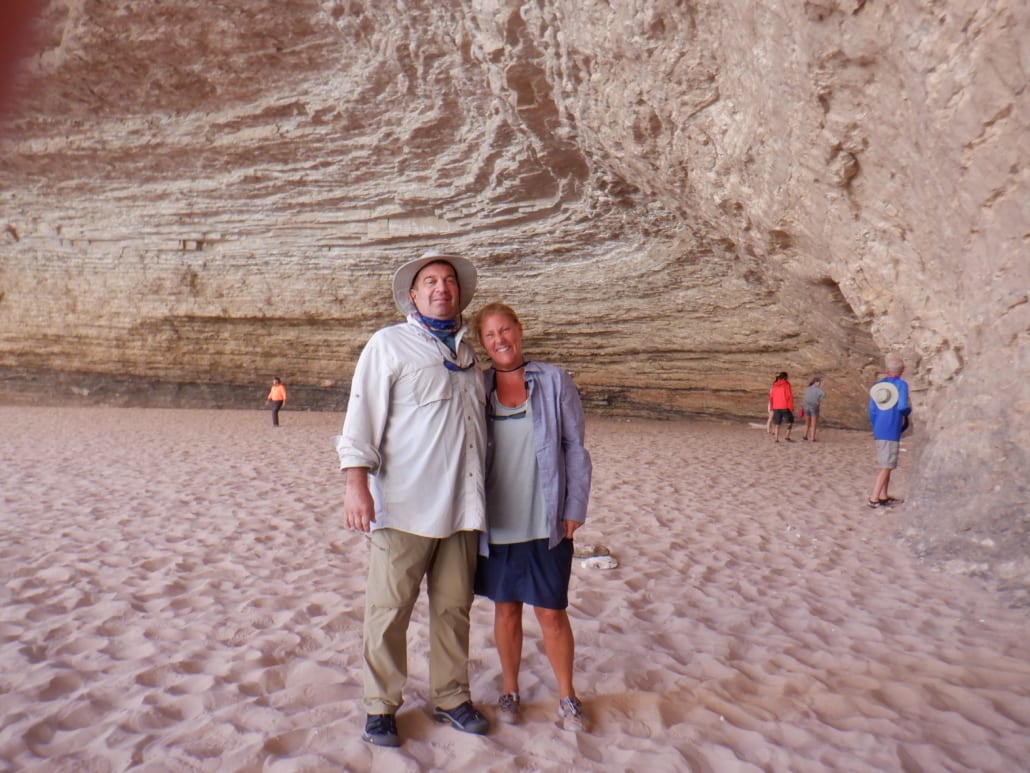
My name is Jodi Capobianco, I am 54 years old and have a permanent ileostomy.  Five years ago I was diagnosed with severe off-the-charts constipation and was to receive a temporary loop ileostomy.

I am so thankful that I did not let having an ostomy get in the way of me missing out on this awesome adventure.

Shortly after my surgery, I began having problems. To make a long story short, my colon became diseased and they removed it giving me a permanent ileostomy.  Unfortunately, shortly after my colon was removed I developed an abscess.  I actually ended up developing seven more before an amazing surgeon figured out that I had a leak.  He performed a small bowel resection and made my loop ileostomy an end.  That was over two years ago.  I was so weak when I came home I was using a walker.  I can honestly say life is now amazing. In fact, I just got back from rafting the Colorado River in the Grand Canyon for eight days.
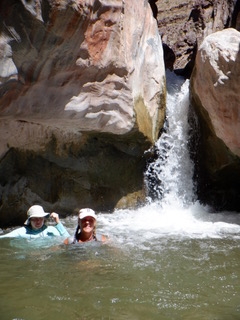
There were no bathrooms, heck there was no nothing just the big outdoors. I went with my husband, our trip started on a Saturday morning when we flew from Boston to Arizona. I was pretty pumped when my ostomy was not an issue while going through security.  Not that it is a big deal to be patted down, but it was nice to be able to skip it.  When I fly I try to limit my intake so I am not having to empty on the plane.  I also stay away from anything carbonated when I am out, so no bubbles.  We arrived in Arizona after traveling for about 9 hours. We headed to our hotel, where of course our room was not ready and got lunch.  I knew I would be near a bathroom for the afternoon and evening so I ate what I wanted.

That night was the orientation for the trip. I learned we would on the bus for about three hours the next morning with no bathroom break. Departure time was 6:45 am.  I decided not to eat breakfast but brought a bagel with me. I ate about an hour into the trip. I knew I would be able to use a porta-potty at the boat launch.  On the morning of the trip I changed out everything.  I ended up using wafers that were precut.  I usually cut my own but I did not want to have to deal with that. I used closed-ended bags that were waterproof. I am usually a drainable girl, but again I knew there really would not be a place to drain anything especially during the day. I also used three brava strips for reinforcement, and I use a ring under my wafer.

I had two complete changes in my dry bag, then in my shorts or pants I had three bags in a zipper pocket, I also kept a bag in my backpack in case we went hiking.

We were all given two dry bags for our stuff, one we could get to during the day and one we could not.  In my day bag, I had enough supplies to do two complete changes, 5 disposable closed ended bags as well as five bags I could put the disposable bags in.  The first night when we stopped at camp I was given my own ammo box.  This was a metal box that sealed.  I was able to put all my waste into it.  In the morning I would give the box to the trip leader, she would empty it and then when we stopped at camp for the night she would discretely give it back to me. The only bathroom in the camps were either behind a tree or rock and they consisted of a yellow bucket with a toilet seat on it to pee in and a metal bucket that contained waste.  I would pee in the yellow bucket but luckily did not have to deal with the smelly bucket for pooping in.  I would simply pop bags on and off when I needed to.
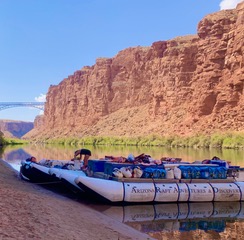
When we arrived at the camp for the night, which generally was a large sandy area by the side of the river, we all helped unload the boats.  Once the boats were unloaded, one would find their campsite for the night, lay out a tarp and sleeping pad. This is when I would take a minute to get organized. For me, this consisted of placing two closed-ended bags and baggies in a plastic cup near my sleeping bag.  This was so I could change in the middle of the night if I needed to. I also would place my headlamp nearby so I could find it easily in the dark and see what I was doing.

When popping a pouch on and off, I would place a small baggie (I used the blue ones that came with my bags) under the disposable bag so when I unclicked and popped it off it went right into that bag.  Next, I would pop on a new pouch and be good to go.  For the most part, I changed bags when we got to camp, right before bed, once in the middle of the night and when I woke up.

Having the precut wafers and closed ended pouches made all the difference in the world.

During the day I would set myself up as follows:  I had two complete changes in my dry bag, then in my shorts or pants I had three bags in a zipper pocket, I also kept a bag in my backpack in case we went hiking.  I would change bags after breakfast before getting on the boat and when we stopped for lunch.  I was generally good until we got back to a camp.
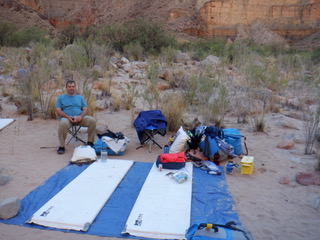
To change I would hide behind a rock or a tree or sit on my sleeping bag with my back to everyone.  I also had a small package of biodegradable baby wipes with me.

There were two times I had to change everything.  The first was three days into the trip.  I got off the boat and my skin itched.  This is generally a sign for me that something is leaking.  I had been in the water a ton this day so I was not surprised.  I peeled off all the adhesive from the brava strips as best I could, dried the area off, and put on a new wafer and popped on another bag.  The second time was two days later.  I knew that this time I really needed to wash the area and try to get a bit of the adhesive off my skin.  So, I went down to the river with a small washcloth that I had packed.  I took everything off and dipped the washcloth in the river and then scrubbed my skin as best I could.  I dried the area, covered my stoma with the cloth and went back to my campsite where I put on a new ring, wafer, brava strips and pouch. I did this all while trying not to get any sand on my skin.  Having the precut wafers and closed ended pouches made all the difference in the world.
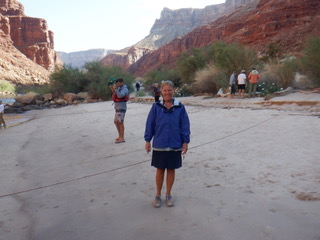
The last day on the river was a half day.  Once we got off the boats we are onto a bus for three hours.   Luckily there was a real bathroom stop.  Here I just switched out bags.  We got back to the hotel and into the shower I went.  I had so much adhesive on my skin.  I used a ton of adhesive remover, then took a face cloth and washed the whole area.  My skin looked pretty good for being engulfed in adhesive for 8 days lol.  It took a while to get all the adhesive off.  It felt amazing when it was.  Obviously, when I got out of the shower I dried off and put on a new ring, wafer and bag, no brava strips.  My skin was very happy for this.

I am so thankful that I did not let having an ostomy get in the way of me missing out on this awesome adventure. I refuse to let anything get in my way of living.  I attribute the success of this trip to closed-ended bags, precut wafers, being organized but also for patting myself on the back and having an awesome attitude.


Related

October 12, 2020
Tags: adventure, bag, boat, camp, camping, canoe, diet, flying, ostomy bag, pouch, precut wafers, rafting, river trip, Swimming, white water
Share this entry
  • Share on Facebook
  • Share on X
  • Share on WhatsApp
  • Share on Pinterest
  • Share on LinkedIn
  • Share on Tumblr
  • Share on Vk
  • Share on Reddit
  • Share by Mail
https://www.ostomy.org/wp-content/uploads/2020/10/larger-file-camping-1-scaled.jpg 1920 2560 Contributor https://www.ostomy.org/wp-content/uploads/2017/02/UOAAlogofinal2.png Contributor2020-10-12 11:34:222021-01-07 10:36:16River Rafting Camping Trip with an Ostomy
You might also like
Coronavirus Effects on the Ostomy Community
Barrier considerations to obtain your fit
Shining a Light on WOC Nurses
Even You Can Raise Ostomy Awareness
Why Larry David’s “Colostomy Bag” Curb episode is making me speak out about my ostomy after 48 years
Why do some people with ostomies name their stoma?

Our Categories

Advocacy (78) Caregivers (19) Colorectal Cancer (19) Colostomy (138) Continent Diversions (8) Digital Sponsor (77) Disaster Preparation (4) Emotional Health (61) Events (32) Exercise/Sports (48) Fashion/Clothing (11) Healthcare (21) IBD (53) Ileostomy (182) J-Pouch (7) jejunostomy (7) Membership (3) Nutrition (19) Ostomy 5k (20) Ostomy 5k (16) Ostomy Awareness (55) Ostomy Basics (55) Ostomy News (94) Ostomy Nurse (13) ostomy reversals (12) Ostomy Supplies (2) Ostomy Tips (93) Ostomy Videos (4) Patient Stories (97) Pediatric Ostomy (4) Personal (64) Research (3) Sexuality (12) Short Bowel Syndrome (16) Skin Care (9) Social Life (5) Support Group News (12) Support Resources (15) Teens (3) Travel (11) UOAA Conference (17) UOAA History (3) UOAA Volunteers (4) Urostomy (111) Young Adult (7)

Support Us:

Your Donation Funds UOAA Educational Programs:

DONATE TODAY
SUSTAINING GIFT
BECOME A MEMBER
UOAA E-NEWS SIGN UP
Get updates on events, national advocacy and important topics in the ostomy and continent diversion community.

Contact Us


United Ostomy Associations of America
P.O. Box 2293
Biddeford, ME 04005-2293

Virtual Ostomy Clinic

Contact UOAA

Donate Your Supplies

Call us toll-free at: 1-800-826-0826.
Our Information Line hours are Monday-Friday, 9am to 3pm EST. If you have an emergency, please dial 911 or contact your local medical professional.

Please understand that UOAA is a private, nonprofit, advocacy and informational organization. We are not a medical facility and we do not have medical or legal professionals on staff. Therefore, UOAA does not provide Medical, Mental Health, Insurance or Legal Advice. Visit UOAA Virtual Ostomy Clinic provided by The Wound Company for non-emergency, virtual ostomy support.

Privacy Policy

Get Involved

UOAA is the leading organization proactively advocating on behalf of the ostomy community. Recognizing that we are always stronger together, we encourage everyone to get involved by joining our Advocacy Network. We’ve also created several Advocacy Tools and Resources to help you successfully advocate on behalf of the ostomy community to ensure every ostomate receives quality care.

UOAA Run for Resilience Logo

UOAA does not and shall not discriminate on the basis of race, color, religion (creed), gender, gender expression, age, national origin (ancestry), disability, marital status, sexual orientation, or military status, in any of its activities or operations.

Digital Health Award
© 2005-2026, UOAA. All Rights Reserved l Design by Tap House Media
  • Link to Facebook
  • Link to X
  • Link to Pinterest
  • Link to LinkedIn
  • Link to Youtube
  • Link to Mail
  • Link to Instagram
Link to: Jerry Pittman’s Story Link to: Jerry Pittman’s Story Jerry Pittman’s Story Link to: That’s a Wrap! Ostomy Awareness Day 2020 Highlights Link to: That’s a Wrap! Ostomy Awareness Day 2020 Highlights That’s a Wrap! Ostomy Awareness Day 2020 Highlights
Scroll to top Scroll to top Scroll to top