United Ostomy Associations of America
  • HOME
  • OSTOMY INFORMATION
    • Ostomy Information
      • What Is An Ostomy?
      • Living with an Ostomy: FAQs
      • Diet + Nutrition
      • Ostomy Skin Care
      • Sexuality
      • Bill Of Rights
      • New Ostomy Patient Guide
    • My Ostomy
      • Ileostomy
      • Colostomy
      • Urostomy
      • J-Pouch
      • Continent Diversions + Other Ostomy Types
      • Temporary Ostomy
      • Short Bowel Syndrome
      • Español
    • Children to Young Adults with Ostomies
      • Infant/Toddler (0-3 Years)
      • Preschool (3-5 Years)
      • Elementary School (6-9 Years)
      • Pre-Adolescent (10-13 Years)
      • Adolescent (14-18 Years)
      • Young Adult (18-25 Years)
      • Parents & Clinicians Resources
      • Know Your Rights
      • What To Expect After Surgery
      • Odor Control
      • Fast Facts
      • Ostomy Game
    • Crohn’s Disease & Ulcerative Colitis Information
      • Defining, Caring and Treating
      • Preparing for Ostomy Surgery
      • Common Issues, Managing Diet, Mental Health
      • Intimacy, Fertility and Pregnancy
      • Resources
    • General Information
      • UOAA Ostomy Marketplace
      • Product + Supply Information
      • UOAA Resources Library
      • Resources for Nurses/Home Health
      • Travel Tips + TSA
      • Donate Your Ostomy Supplies
      • Emergency Supplies
      • Related Links
      • UOAA Virtual Ostomy Clinic
      • Outpatient Ostomy Services Locator
  • SUPPORT
      • discussion
        Ostomy 101:
        Easily communicate “What is an ostomy?" with our infographic.

        Read More

    • Find Support
      • Support Group Finder
      • Support Group Websites
      • UOAA Virtual Ostomy Clinic
      • Online Peer and Ostomy Support Programs
      • Outpatient Ostomy Services Locator
      • Find a Mental Health Provider
      • Find an Ostomy Nurse
      • Online Discussion Board
      • Apps for Ostomates
      • Emotional Concerns
    • Connect With Us
      • Start/Affiliate Your Group With UOAA
      • Resources For ASGs
      • National Membership
      • Sign Up for Our E-Newsletter
    • Participate
      • Attend An Event
      • Become An Advocate
      • Join Us for a Conference
      • Make A Donation
      • Become a Member of The Phoenix Society
      • Donate Your Ostomy Supplies
      • Take A Survey
  • ADVOCACY
      • portal
        Roadmap to Establishing Outpatient Ostomy Services
        Documents that are available as PDFs to download and print.

        Read More

    • About
      • Advocacy Program
      • Advocacy Priorities
      • 10 Questions to Help You Speak Up and Self-Advocate
    • Get Involved
      • Understanding the Medicare Competitive Bidding Program 2025 Ruling
      • Take Action
      • Join Advocacy Network
      • How to Be An Ostomy Champion
      • Ostomy Awareness Day
      • Roadmap to Establishing Outpatient Ostomy Services
    • Tools and Resources Library
      • Non-Medical Switching Resources
      • Ostomy and Continent Diversion Patient Bill of Rights
      • Restroom Access Self-Advocacy Tools
      • Travel Tips + TSA Communication Card
      • Swimming with an Ostomy
      • Mythbusters Infographic
      • Workplace Resources
      • Aging with an Ostomy or CD
    • Take Control of your Healthcare
      • UOAA Virtual Ostomy Clinic
      • Know Your Ostomy Checklist
      • Know Your Ostomy Supplies Checklist
      • Physician Visit Checklist
      • Know Your Health Care Insurance
      • Know Your Pouching System
      • Know What’s in Your Medical Record
  • WHO WE ARE
      • Have a Question for Us?
        UOAA is a 501(c)(3) nonprofit organization that supports, empowers, and advocates for people who have had or who will have ostomy or continent diversion surgery.

        Contact Us

    • About Us
      • Our Mission + History
      • Our Leaders
      • National Sponsors + Partners
      • National Membership
      • Contact Us
    • How We Help
      • Advocacy
      • Awareness
      • Support
      • National Conference
      • Ostomy Nurse Scholarship
    • Get Involved
      • Volunteer
      • Become A Leader
      • Join A Committee
      • Career Opportunities
      • Sign Up for Our E-Newsletter
  • LATEST
  • EVENTS
    • Ostomy Awareness Day
    • Run For Resilience 5K
    • Ostomy Academy
    • Educational Webinars
    • 2025 National Conference
    • Calendar
  • GIVE NOW
  • SEARCH
  • Menu Menu

Sheri Denkensohn’s Story

Colostomy, Ostomy Awareness, Patient Stories

My Colostomy Saved My Life

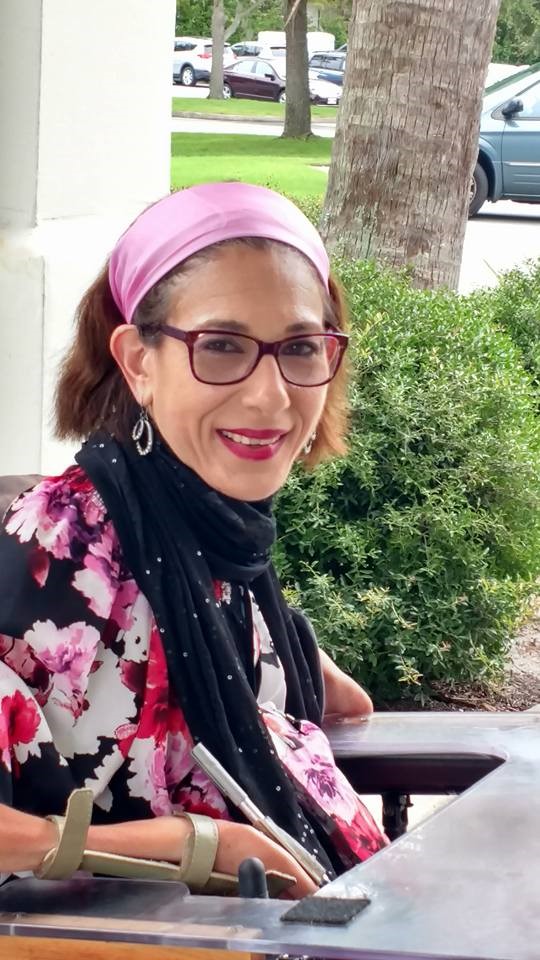
Without a colostomy, I would likely not be here to write this blog. It saved my life. I am a quadriplegic as a result of a spinal cord injury (SCI) that occurred when I was 16. That was 36 years ago. I am paralyzed from the neck down and SCI impacts the operation of the bowels. In simple terms, to move your bowels you have to use some type of stimulation because the regular nervous system is unable to work on its own.
For many years, I successfully used suppositories for my bowel routine. When they stopped working, I switched to a different type of suppository and began to use numerous stool softeners. Approximately three years ago, my system began to limp along. I couldn’t fully evacuate my bowels and I was losing my appetite.

And then one day my bowels stopped working. At that point I was using multiple enemas without success. I went to the hospital. Unfortunately, I had a history of bowel obstruction surgeries, so no doctor was willing to do a colostomy because of the risk of perforation of my bowels. As an attorney with the Federal government, I was unable to keep up with my job and had to retire on disability. I was bloated as if I was expecting triplets and felt horrible and weak. My quality of life was significantly impacted and my husband was cooking as much soup as he could, and that didn’t even help when it came to my appetite and nutrition. I tried acupuncture, stomach massage, herbal tea, you name it. I was depressed, exhausted, and scared.

My gastroenterologist suggested that I go to Mayo Clinic as a last resort. I traveled from Virginia to Minnesota with low expectations, hoping that the medical team could even just figure out something to help me go to the bathroom.

To my great surprise, Mayo Clinic agreed to do the colostomy. The surgery took place in late June, 2018, and since then I have regained my quality of life and feel like a new person. I have never been healthier. I have energy for work (my husband and I started a business, Happy on Wheels, LLC), social life, and exercise.

Many factors contributed to getting it right. First, colostomy nurses are my heroes. They marked the site for the surgery, fitted me with appliances to start off with, and explained how to apply everything. They trained my attendant on how to attach the flange and we examined the different types of pouches. I left with an initial supply, but they were very clear that it would be trial and error.

The ostomy nurses were spot on about flexibility. Every person is different and trying out different appliances is a necessity. There have been accidents and leaks and I have made adjustments. I have high output and cannot change my bag independently, so I devised a way to use an irrigation bag as a regular colostomy bag during the day, and I use a smaller pouch at night when I’m in bed. Additionally, figuring out the amount of supplies needed is unknown in the beginning. For the first couple of months we were frantically running around because I would run out of flanges and pouches. After about three months, I knew what I needed was able to establish a consistent ordering system.

My advice to anyone considering a colostomy is that the surgery is not the hard part. It is the period afterward when flexibility is needed. It is a learning process and each person is different. No pun intended, but there is no one size fits all.

Don’t get frustrated if your particular appliance doesn’t work. The companies that sell supplies, such as Hollister, Coloplast and Convatec, have very helpful representatives and are willing to send free supplies to try. I encourage new ostomates to also reach out to others who can provide tips on what has and has not worked for them. I have a good friend with a colostomy and her advice has been very helpful. The bottom line is that if you are open-minded and don’t get frustrated, within six months you should have things settled and develop a routine.

Getting a colostomy was a miracle for me. I intend to advise all quadriplegics that after a certain number of years they should talk to their doctor about proactively getting a colostomy before their bowels stop working. I am a happy bag lady!


Related

October 3, 2019
Tags: bowel routine, disability, paralyzed, quadriplegic, spinal cord injury
Share this entry
  • Share on Facebook
  • Share on X
  • Share on WhatsApp
  • Share on Pinterest
  • Share on LinkedIn
  • Share on Tumblr
  • Share on Vk
  • Share on Reddit
  • Share by Mail
https://www.ostomy.org/wp-content/uploads/2019/10/sheri-homepage.jpg 960 540 Contributor https://www.ostomy.org/wp-content/uploads/2017/02/UOAAlogofinal2.png Contributor2019-10-03 11:56:252019-10-03 11:58:52Sheri Denkensohn’s Story
You might also like
Do You Know Where We Stand?
Does an Ostomy Qualify as a Disability?
Resilience Story: The Wheelin’ Sportswoman
Traveling with a service dog Traveling With Your Service Animal
Dementia Stoma Care
2 replies
  1. Liza Goya
    Liza Goya says:
    November 9, 2019 at 7:58 pm

    Thank you for your story. What a beautiful soul you have and I wish you the best! We do have to stand up for ourselves when doctors don’t believe us. I’m so glad you are doing better. (I have an illeostomy, not reversable, due to a botched gastric sleeve surgery. I am currently on long term disability.)

  2. K Hayes
    K Hayes says:
    December 12, 2021 at 9:33 pm

    Thank you for your post. I am researching for my husband who had been a T-12 paraplegic for almost 50 years. He has always done digital stimulation, but with age it is now too difficult to do the toilet transfer. He is scheduled for a colostomy in one week, however it has already been postponed once due to hospital numbers. Any advice is greatly appreciated.

Comments are closed.

Our Categories

Advocacy (78) Caregivers (19) Colorectal Cancer (19) Colostomy (138) Continent Diversions (8) Digital Sponsor (77) Disaster Preparation (4) Emotional Health (61) Events (32) Exercise/Sports (48) Fashion/Clothing (11) Healthcare (21) IBD (53) Ileostomy (182) J-Pouch (7) jejunostomy (7) Membership (3) Nutrition (19) Ostomy 5k (20) Ostomy 5k (16) Ostomy Awareness (55) Ostomy Basics (55) Ostomy News (94) Ostomy Nurse (13) ostomy reversals (12) Ostomy Supplies (2) Ostomy Tips (93) Ostomy Videos (4) Patient Stories (97) Pediatric Ostomy (4) Personal (64) Research (3) Sexuality (12) Short Bowel Syndrome (16) Skin Care (9) Social Life (5) Support Group News (12) Support Resources (15) Teens (3) Travel (11) UOAA Conference (17) UOAA History (3) UOAA Volunteers (4) Urostomy (111) Young Adult (7)

Support Us:

Your Donation Funds UOAA Educational Programs:

DONATE TODAY
SUSTAINING GIFT
BECOME A MEMBER
UOAA E-NEWS SIGN UP
Get updates on events, national advocacy and important topics in the ostomy and continent diversion community.

Contact Us


United Ostomy Associations of America
P.O. Box 2293
Biddeford, ME 04005-2293

Virtual Ostomy Clinic

Contact UOAA

Donate Your Supplies

Call us toll-free at: 1-800-826-0826.
Our Information Line hours are Monday-Friday, 9am to 3pm EST. If you have an emergency, please dial 911 or contact your local medical professional.

Please understand that UOAA is a private, nonprofit, advocacy and informational organization. We are not a medical facility and we do not have medical or legal professionals on staff. Therefore, UOAA does not provide Medical, Mental Health, Insurance or Legal Advice. Visit UOAA Virtual Ostomy Clinic provided by The Wound Company for non-emergency, virtual ostomy support.

Privacy Policy

Get Involved

UOAA is the leading organization proactively advocating on behalf of the ostomy community. Recognizing that we are always stronger together, we encourage everyone to get involved by joining our Advocacy Network. We’ve also created several Advocacy Tools and Resources to help you successfully advocate on behalf of the ostomy community to ensure every ostomate receives quality care.

UOAA Run for Resilience Logo

UOAA does not and shall not discriminate on the basis of race, color, religion (creed), gender, gender expression, age, national origin (ancestry), disability, marital status, sexual orientation, or military status, in any of its activities or operations.

Digital Health Award
© 2005-2026, UOAA. All Rights Reserved l Design by Tap House Media
  • Link to Facebook
  • Link to X
  • Link to Pinterest
  • Link to LinkedIn
  • Link to Youtube
  • Link to Mail
  • Link to Instagram
Link to: Ostomy Awareness Day: Ostomies are Life-Savers Link to: Ostomy Awareness Day: Ostomies are Life-Savers Ostomy Awareness Day: Ostomies are Life-Savers Link to: Ostomy Awareness Day 2019 Highlights Link to: Ostomy Awareness Day 2019 Highlights Ostomy Awareness Day 2019 Highlights
Scroll to top Scroll to top Scroll to top