If you’ve ever woken up at 2 a.m. to wet sheets, or lifted your shirt to confirm what you suspected, you know: an ostomy leak is rarely just a practical problem. There’s the mess and inconvenience, yes, but there’s also the emotional weight. A leaking pouch can be rattling and disheartening, capable of pulling you back to the hardest parts of adjusting to ostomy life.
Leaks are one of the most common fears among people with an ostomy. Research shows that 92% of ostomates worry about them, including those new to ostomy life, those who’ve lived with an ostomy for decades, and even those who follow their routine exactly as instructed.
The good news is that most leaks have a clear cause, and there are steps you can take to help reduce or prevent them altogether. Understanding why they happen is the first step.
What is happening when your ostomy bag leaks
Your baseplate, or barrier – the adhesive wafer that attaches your ostomy pouch to your skin – is what stands between output and your body. When it fails, stool or urine can find its way underneath and cause a leak.
Most leaks trace back to a handful of causes.
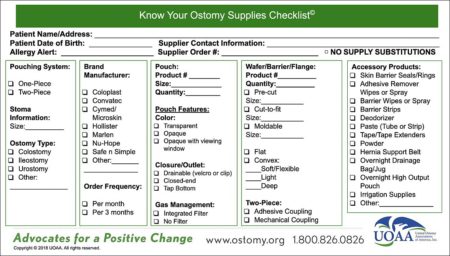
- The barrier opening doesn’t fit your stoma. Your barrier should fit snugly around your stoma. If the opening is too large, your peristomal skin is exposed to output, compromising adhesion of the barrier and opening a path for leaks.
- Your skin isn’t fully dry at application. Moisture is the enemy of adhesion. Even a small amount – from a shower, sweat, or cleaning the area around the stoma during a bag change – can prevent the seal from forming. Skin folds, the area around the belly button, and any place moisture collects are especially vulnerable.
- Your peristomal skin is irritated. Healthy skin is the foundation of a secure seal. When it’s damaged, adhesion suffers. Irritation creates an uneven surface that can worsen with each change as the barrier pulls on already‑sensitive tissue.
- Your stoma is flush, retracted, or sits in a skin fold. A stoma that protrudes well above the skin gives output a clear path into the pouch. But when a stoma is flush, retracted, or positioned near a fold or crease, output can spread sideways under the barrier instead. In these situations, the barrier may not be appropriately matched to your stoma’s profile.
What to do if leaks keep happening
When leaks continue despite your best efforts, it may mean that something in your current setup, routine, or anatomy needs a closer look.
- Investigate the pattern. When do your leaks occur: morning, overnight, after meals, during activity? Where do they begin: along a specific edge, beneath the barrier? The timing and location of a leak can help narrow down whether it is related to fit, movement, moisture, or another issue
- Check the opening of your barrier. Stomas shift, and what you traced when your stoma was new may not reflect its current size and shape. Use a stoma guide to re‑measure regularly, and cut the barrier opening to match your stoma’s exact size and shape.
- Respect wear time – in both directions. Wearing a barrier too long can lead to breakdown, but changing too often can irritate your skin. Aim for a schedule that protects both your skin and your seal.
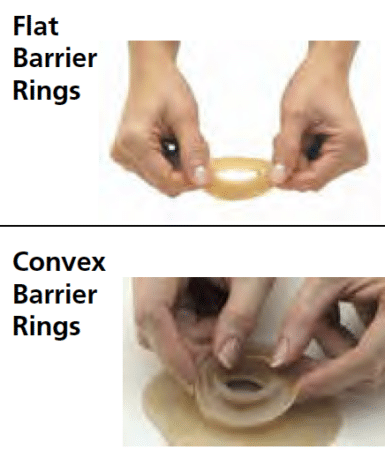
- Reassess your barrier type. If your stoma is flush, retracted, or near a skin fold, a flat barrier may not provide the support you need. A convex barrier can provide gentle pressure that helps guide output into the ostomy bag instead of underneath the adhesive.
- Consider adding accessories to your routine. The right supporting products can address the specific vulnerabilities that cause your barrier to fail – whether that’s uneven skin, moisture, or edges that lift.
- Protective seals or barrier rings mold to the skin around your stoma, filling creases and uneven contours that can compromise barrier adhesion and allow output to undermine the seal.
- Stoma powder helps absorb moisture on compromised or weeping peristomal skin, creating a dry surface for better adhesion.
- Elastic barrier strips reinforce the outer edges of the barrier, where lifting most commonly begins.
- See a WOC nurse. A WOC (Wound, Ostomy and Continence) nurse specializes in stoma care, and identifying the right fit, the right products, and the right technique is exactly what they’re trained to do. They can assess your stoma, evaluate changes in your abdominal contours, identify skin complications, observe your change routine, and recommend products for your specific anatomy and output. If you don’t currently have a WOC nurse, consult the WOCN Society’s online directory to find one in your area.
You don’t have to settle for ostomy leaks
While leaks are a relatable experience among ostomates, they aren’t something you have to accept as “just part of it.” Think of them as information, a signal that something in your fit, routine, or system isn’t quite right for your body right now.
With troubleshooting, small adjustments, and the right support, you can build a system that holds – one that lets you stop worrying about your pouch and puts your energy back into what matters most to you.
References
Jeppesen PB, Vestergaard M, Boisen EB, Ajslev TA. Impact of stoma leakage in everyday life: data from the Ostomy Life Study 2019. British Journal of Nursing [Internet]. 2022 Mar 24;31(6):S48–58
Coloplast develops products and services that make life easier for people with intimate healthcare needs. Working closely with the people who use our products, we create solutions that are sensitive to their special needs. Our business includes ostomy care, continence care, wound & tissue repair, interventional urology, and voice & respiratory care.
Follow Coloplast on Instagram, Facebook, and YouTube, or visit us online at https://www.coloplast.us/
Editor’s note: This blog is from a UOAA digital sponsor, Coloplast. Sponsor support along with donations from readers like you help to maintain our website and the free trusted resources of UOAA, a 501(c)(3) nonprofit organization.
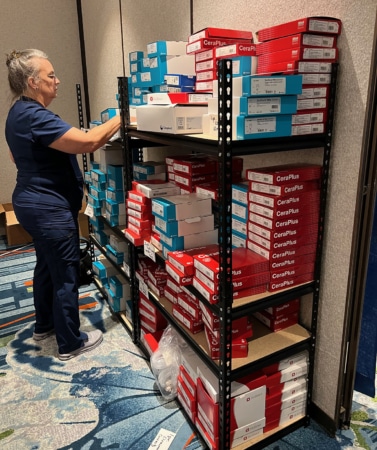
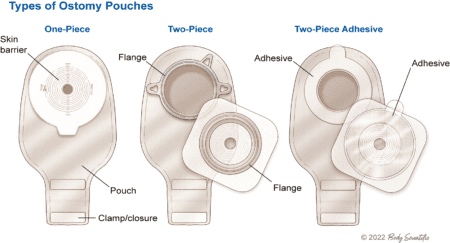
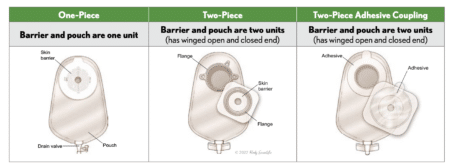
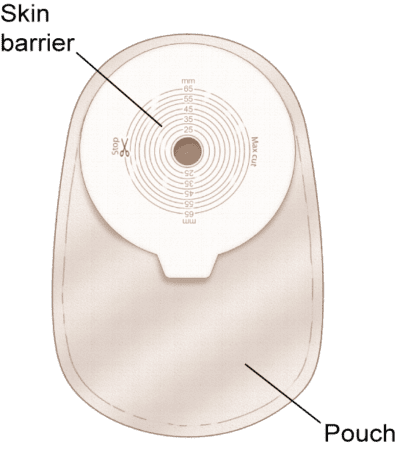
 Picking the best skin barrier is critical since it protects the skin around the stoma and enables a secure seal and fit. Your choice depends on your stoma, output, and other factors, such as sensitivity. Frequent changers may ask about gentle adhesion options while those with liquid output may require a stronger adhesion. If your stoma size is changing or oval you may want to get cut-to-fit or moldable skin barriers while, if it is stable and round, pre-sized are a convenient option.