What Is An Ostomy?

An ostomy is a surgically created opening in the abdomen that allows stool or urine to exit the body when natural function is impaired. The three main types are colostomy, ileostomy, and urostomy. Ostomies may be temporary or permanent depending on medical need. This page explains how ostomies work, why they’re performed, what recovery looks like, and how people live full lives with an ostomy.


An Ostomy

Causes a change in the way urine or stool exits the body as a result of a surgical procedure. Bodily waste is rerouted from its usual path because of malfunctioning parts of the urinary or digestive system. An ostomy can be temporary or permanent.

A Stoma

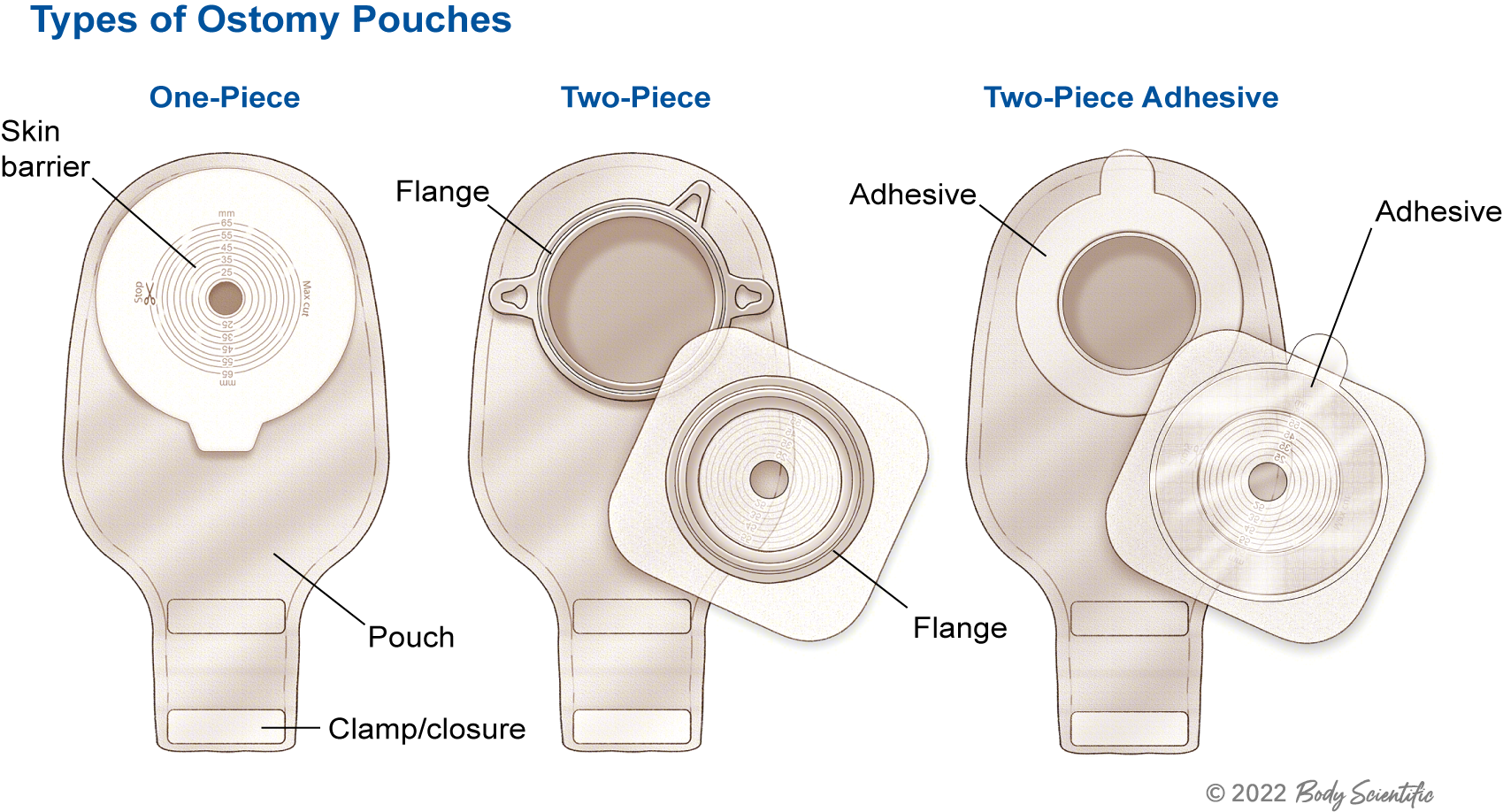
The opening created by ostomy surgery. It is located on the abdomen and is dark pink in color. For most ostomies, a pouch is worn over the stoma to collect stool or urine. For some people it is possible to have a continent diversion,  an alternative to a conventional ostomy that eliminates the necessity for a pouch.

What is Ostomy Surgery?

Ostomy surgery is a life-saving procedure that allows bodily waste to pass through a surgically created stoma on the abdomen into a prosthetic known as a ‘pouch’ or ‘ostomy bag’ on the outside of the body or an internal surgically created pouch for continent diversion surgeries. An ostomy may be necessary due to birth defects, cancer, inflammatory bowel disease, diverticulitis, incontinence and many other medical conditions. They are also necessary in cases of severe abdominal or pelvic trauma resulting from accidents or from injuries sustained during military service.

Ostomy or continent diversion surgery can occur at any age and does not lower life expectancy but is the start of a “new normal” life.

woman with an ostomy

Types of Ostomies

The most common specific types of ostomies are described below. Click for more info.

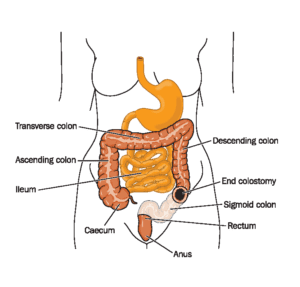
Colostomy

The surgically created opening of the colon (large intestine) which results in a stoma. A colostomy is created when a portion of the colon or the rectum is removed and the remaining colon is brought to the abdominal wall. It may further be defined by the portion of the colon involved and/or its permanence.

What is a Colostomy Video

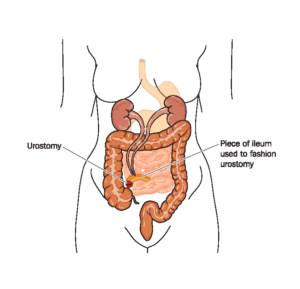
Urostomy

This is a general term for a surgical procedure which diverts urine away from a diseased or defective bladder. The ileal or cecal conduit procedures are the most common urostomies. Either a section at the end of the small bowel (ileum) or at the beginning of the large intestine (cecum) is surgically removed and relocated as a passageway (conduit) for urine to pass from the kidneys to the outside of the body through a stoma. It may include removal of the diseased bladder.

What is a Urostomy Video

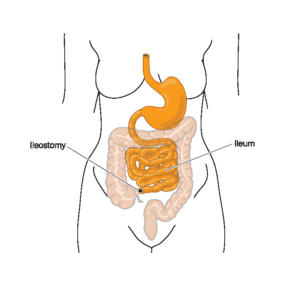
Ileostomy

A surgically created opening from the ileum, the lowest part of the small intestine. The intestine is brought through the abdominal wall to form a stoma. Ileostomies may be temporary or permanent, and may involve removal of all or part of the colon.

What is an Ileostomy Video

Continent Urostomy

There are two main continent procedure alternatives to the ileal or cecal conduit (others exist). In both the Indiana and Kock pouch versions, a reservoir or pouch is created inside the abdomen using a portion of either the small or large bowel. A valve is constructed in the pouch and a stoma is brought through the abdominal wall. A catheter or tube is inserted several times daily to drain urine from the reservoir.

READ MORE HERE

J-Pouch

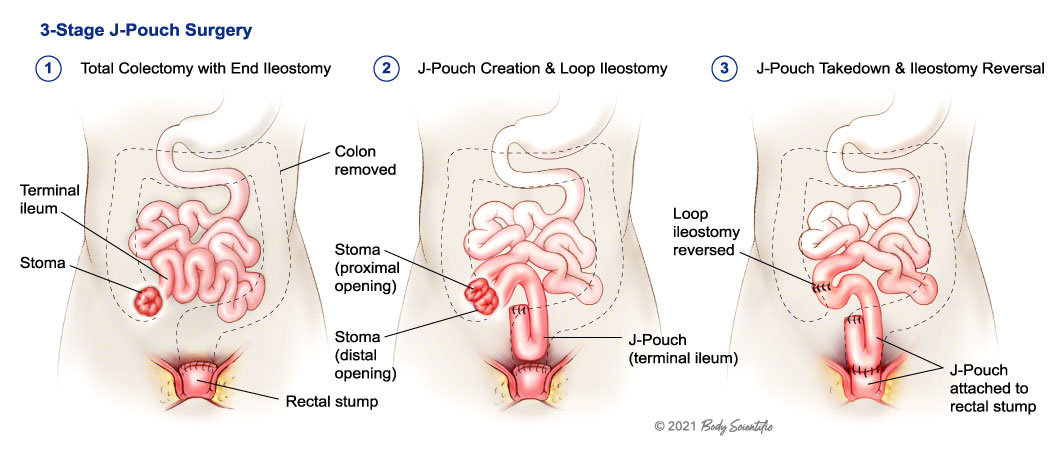
A surgically created (J-shaped) internal reservoir made from an individual’s own small intestine as an alternate way to store and pass stool. The ileal pouch anal anastomosis (IPAA) surgery is the most common pelvic pouch (see also, S, W, Kock pouch) surgery performed and most typically used to treat those with ulcerative colitis and inherited conditions such as familial adenomatous polyposis (FAP). J-Pouch creation is most often a multi-step surgery that requires a temporary ileostomy (stoma) on the abdomen and the use of an external pouching system to eliminate waste. When successful the stoma is reversed and patients return to expelling waste through the anus. Talk to your doctor about the benefits and serious risks of this surgery.

READ MORE HERE

Understanding J-Pouch Surgery

A step-by-step visual of the three stages of J-pouch (IPAA) surgery, showing how the pouch is created, connected, and restored for normal bowel function.

Stages of J-Pouch Surgery

Ostomy & J-Pouch Awareness:
Real Voices, Real Stories

An empowering PSA that bridges living with an ostomy and understanding surgical options like J-pouch reconstruction — inspiring confidence and clarity for patients and caregivers.

Emotional support with an Ostomy

Emotional Support for Ostomy Patients: Why It Matters and How to Find It

UOAA Affiliated Ostomy Support Groups and Resources Are Available to Everyone.

Find Ostomy Products, Supplies and Services in the UOAA Marketplace

Explore trusted ostomy products, supplies, accessories and support resources all in one convenient marketplace.

A Wide Variety of Ostomy Supplies
Are Available to Meet Every Need

Find what works best for your unique stoma, skin and body type.

Did You Know…

  • Approximately

    100,000 ostomy surgeries are performed annually in the United States.

  • You’d Likely

    never know if you met a person with an ostomy. Modern pouching systems are discreet and odor-proof.

  • People with ostomies live

    full and meaningful lives that include swimming, working, playing sports & having relationships.

  • You have special patient rights!

    Learn about the Ostomy and Continent Diversion of Patient Bill of Rights (PBOR).

Ostomies Save Lives!

Get the Facts about Living with an Ostomy below:

Frequently Asked Questions About Ostomies

Clear, trusted answers to the most common questions from new and experienced ostomy patients.

An ostomy is a surgically created opening in the abdomen that allows stool or urine to leave the body when the usual route is not safe or no longer works. The opening is called a stoma and it may be needed because of disease, injury, or other medical conditions.

An ostomy may be done for conditions such as colorectal or bladder cancer, inflammatory bowel disease (Crohn’s disease or ulcerative colitis), diverticulitis, birth defects, severe infection, or traumatic injury to the bowel or bladder. In these situations, an ostomy can protect healing tissues, prevent complications, and be a life-saving surgery.

No. Some ostomies are temporary and are reversed once the bowel or urinary tract has healed, while others are permanent because the affected organ has been removed or cannot safely be reconnected. Your surgeon will explain whether your ostomy is intended to be temporary or permanent and why.

The three most common ostomies are colostomy, ileostomy, and urostomy. A colostomy diverts stool from the large intestine, an ileostomy diverts stool from the small intestine, and a urostomy diverts urine when the bladder has been removed or bypassed. Each type is created for different conditions and has specific care needs.

Yes. People with ostomies work, travel, exercise, swim, play sports, and have relationships. Once recovery is complete and the right pouching system is found, most people return to an active daily life with family, friends, and work. Check out our Ostomy Mythbusters infographic  – Facts and Truth to Fight Ostomy Stigma.

In the United States, it is estimated that approximately 725,000 to 1,000,000 people are living with an ostomy, and about 100,000 ostomy surgeries are performed each year. This means you are far from alone, even if you may not realize how many others have an ostomy.

UOAA provides trusted information, a New Ostomy Patient Guide, educational programs, and a nationwide network of affiliated support groups and online resources. These services connect you with peers, support groups, ostomy nurses, and tools to help you adjust emotionally and physically and to thrive with an ostomy.

UOAA provides a dedicated resource page for children, teens, and young adults living with an ostomy. This guide offers age-appropriate education, emotional support tools, and practical tips to help families navigate surgery, school life, sports, social confidence, and daily care. It also includes links to pediatric specialists, support groups, and programs that connect young people with peers who understand their experience. It’s designed to reassure families, empower young patients, and help them thrive at every stage of development.
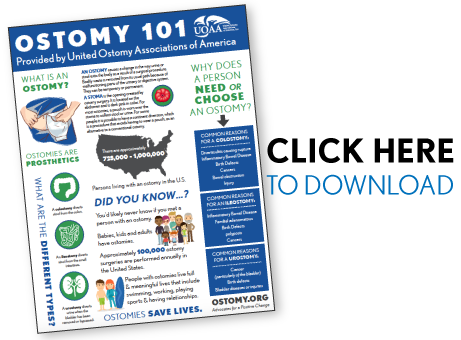
Ostomy 101 INFOGRAPHIC

Print and hand out our Ostomy 101 Infographic to raise ostomy awareness and easily communicate “What is an ostomy?”.

English Version

Spanish Version

OUR DIGITAL NATIONAL SPONSORS

United Ostomy Associations of America (UOAA) in a 501(c)(3) nonprofit organization and is grateful for the support of its national sponsors in recognition of its mission to promote quality of life for people with ostomies and continent diversions through information, support, advocacy and collaboration.

– Digital Patron –

Coloplast
Convatec forever caring
Hollister

Ostomy Patient Guide

UOAA understands how important it is for you to have trusted information. In the New Ostomy Patient Guide you will find surgery specific answers from medical professionals to many basic questions. Also included are information and tips about living with your ostomy, and profiles of people who have returned to a full and productive life after surgery.

New Ostomy Patient Guide
Click Here to Download