New Sensory Signals
After surgery, part of your bowel may no longer send fullness and urge signals like it used to. At the same time, the bowel above your stoma, or your pouch, sends its own new signals to your brain.
These changes can make you feel disconnected from your body at first. Some people even feel phantom rectal pressure, or a “ghost” urge to have a bowel movement. This feels a lot like a phantom limb sensation after an amputation. It happens because your brain’s inner map of your body needs time to catch up.
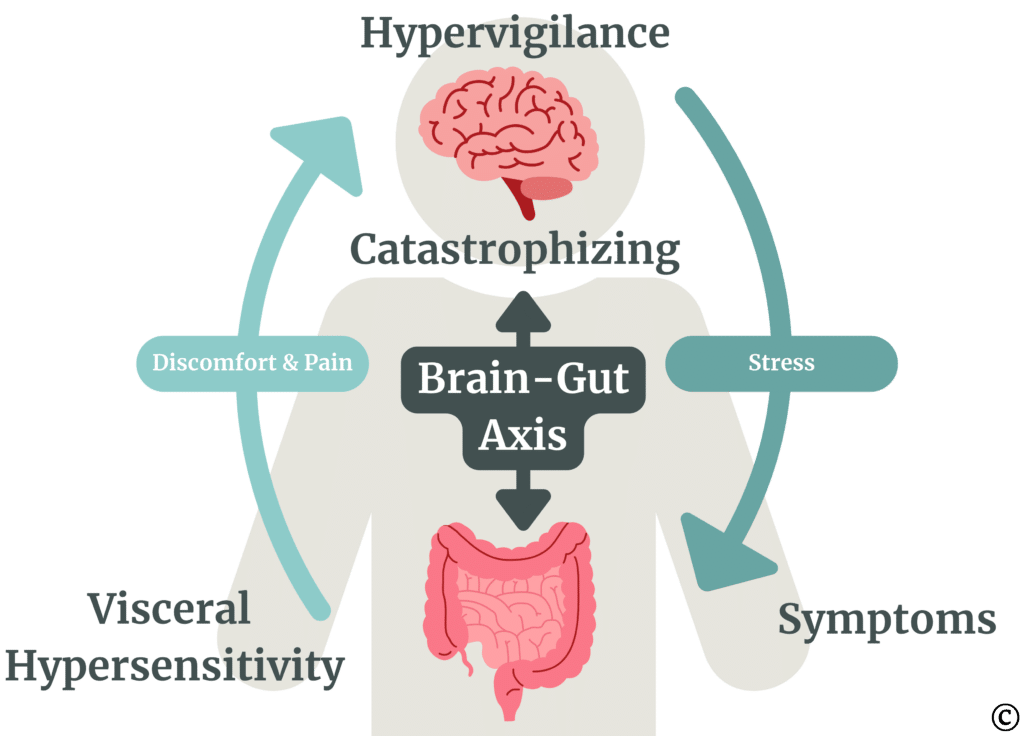
A Brain on High Alert
In the months after surgery, your brain can interpret unfamiliar sensations as threatening, especially following complications, pain, leakage, or frightening medical experiences. This can make normal pouch activity, like gas moving through or your pouch filling, feel scary instead of routine. You may start checking your pouch often or feeling on edge about every sound.
Retraining the Brain-Gut Connection
Here is the good news: your brain can change and adapt at any age.
With practice, it can learn to read your body’s new signals correctly again, instead of treating them as danger. Gut-directed hypnotherapy and cognitive-behavioral therapy can help. Step by step, these tools help you retrain and rebuild your trust in your body’s signals.