Practical Guidance for
Eating Well After Ostomy Surgery

If you’re looking for the one perfect “ostomy diet,” I’m going to save you time: it doesn’t exist. There’s no single ostomy diet, because individual tolerance varies a lot. What matters is learning what works for your body, at your stage of recovery, with guidance from your medical team.

This guide is the practical, real-life version of that idea: how to reintroduce foods safely, reduce surprises, and protect yourself from the big issues—especially dehydration and blockages (which matter most for ileostomies).

UOAA’s Diet + Nutrition guidance is clear: follow your nurse/doctor’s instructions at each stage of post-op adjustment, because what’s “fine later” might not be smart early on.

That means your best plan isn’t internet rules—it’s:

  • recovery stage + ostomy type
  • how your output behaves
  • how you personally tolerate foods

The trial and learn method (without turning every meal into a gamble)

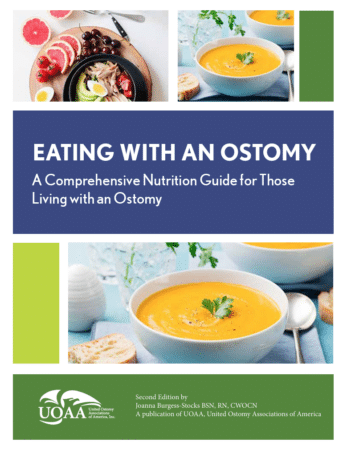
We recommends learning by trial because sensitivity varies, and they point to tools like their Eating With An Ostomy guide, Food Reference Chart, and Food Journal to make that trial process less chaotic.

A simple way to do it

  • Introduce one “new” food at a time (especially early on).
  • Keep the portion modest the first time.
  • Track what happens for the next 12–24 hours (output, gas, discomfort).

This is exactly what a food journal is for—turning “I think it was the salad?” into “Yep, that’s the pattern.”

Special considerations: ileostomy blockage + dehydration risk

People with ileostomy surgery are most at risk of blockages and dehydration—and for everyone, two habits help a lot: hydrate properly and chew thoroughly.

Tips:

  • If you suspect a blockage, it can require quick attention and often an ER visit—and they provide an Emergency Blockage Card for guidance.
  • Their Food Reference Chart specifically notes that certain food types should be approached cautiously for ileostomies and introduced slowly after surgery, with careful chewing.

Tell-it-like-it-is tip: if you’re ileostomy post-op and you’re experimenting aggressively with high-risk foods, you’re playing life on hard mode. Go slower. It’s not forever—it’s just smart during adjustment.

Hydration isn’t a wellness trend — it’s part of ostomy management

Because dehydration is one of the major risks (especially for ileostomies), hydration is not optional “good behavior.” It’s basic maintenance.

Practical hydration habits

  • Sip consistently across the day (not just chugging at night).
  • Increase fluids when it’s hot, when you’re active, or if output increases.
  • If output changes dramatically or dehydration signs show up, involve your care team.

If you’re not sure what “enough” looks like for you, track what you drink + what your output is doing for a few days. Data beats guessing.

When nutrition support becomes part of the conversation

Nutrition support is most commonly used for vitamin B-12 absorption issues, and in severe cases, IV or tube feeding may be needed. They also point to the Oley Foundation for additional support related to nutrition support.

An important mention: if someone is dealing with absorption problems, “eat better” isn’t the fix—medical nutrition support might be.

Short Bowel Syndrome and malabsorption (know the red flags)

Short Bowel Syndrome (SBS) is a rare but severe malabsorption issue that can happen when a large part of the small intestine has been removed, and encourages people to know symptoms and talk to a doctor about risk.

If SBS is in the picture, nutrition and hydration strategy becomes even more specialized — and that’s where clinician guidance matters most.

Diet with IBD + an ostomy: different layer of complexity

If you’re living with IBD, you may run into nutrition challenges that are different from someone without Crohn’s or ulcerative colitis. UOAA highlights resources that can help you manage your diet, connect with a registered dietitian who understands digestive diseases, and learn about concerns like Avoidant Restrictive Food Intake Disorder (ARFID).

If you’re supporting an ostomate with Crohn’s/UC, you’re not just balancing “what works with the stoma,” you’re balancing disease-specific triggers too.

The simplest success checklist for ostomy eating

  1. Follow your provider’s stage-specific guidance.
  2. Introduce foods gradually and track patterns using a food journal.
  3. Chew thoroughly, especially if you have an ileostomy.
  4. Hydrate consistently instead of guessing day to day.
  5. Use a food reference chart to guide smarter experimentation.
  6. Keep an emergency blockage card available if you’re at risk.

Frequently Asked Questions

No. There is no single ostomy diet; tolerance varies widely.

Introduce foods gradually, follow your care team’s stage-specific guidance, and track how your body responds (a food journal can help).

People with an ileostomy are most at risk, and recommends thorough chewing and proper hydration as good practice for all.

A suspected blockage requires quick attention and often an emergency room visit, and they provide an Emergency Blockage Card.

UOAA provides resources like an Eating With An Ostomy guide, Food Reference Chart, and Food Journal.

Learn more here!